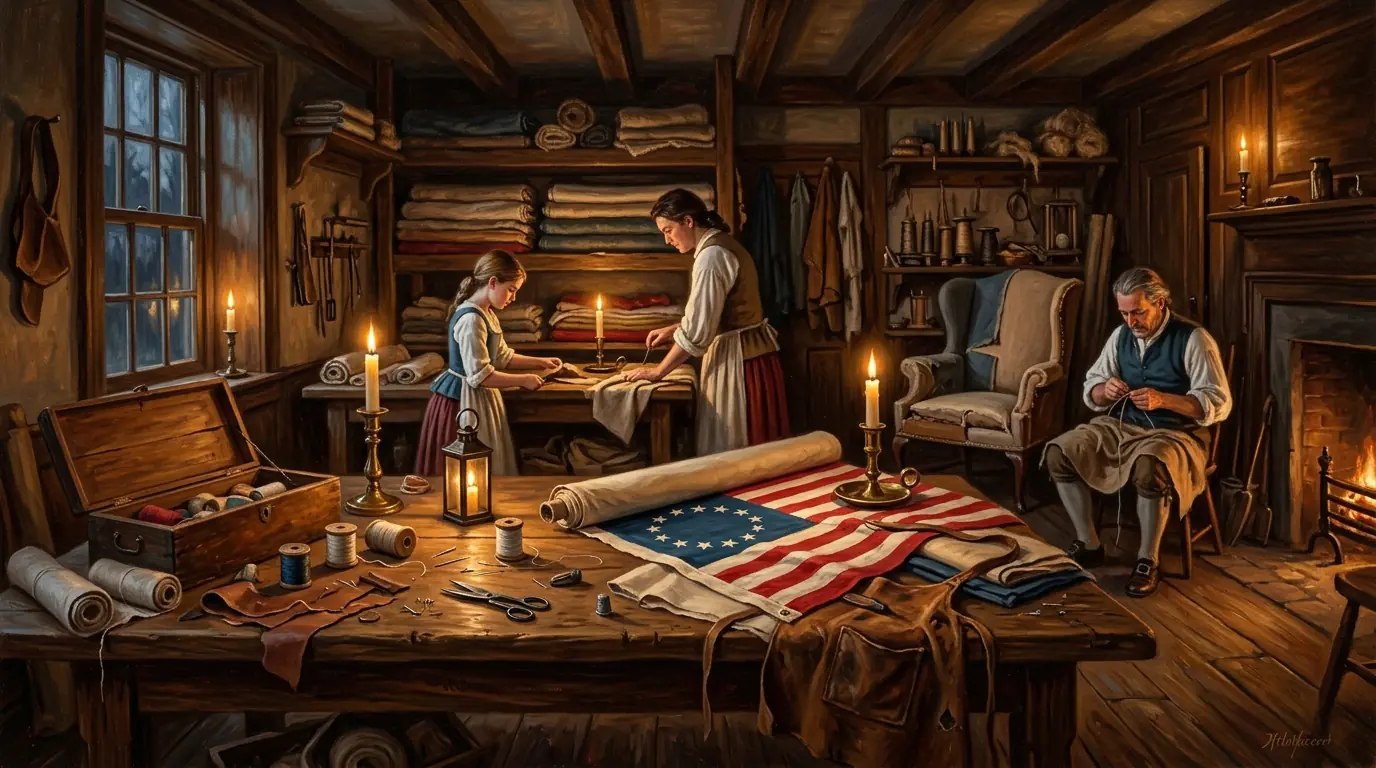
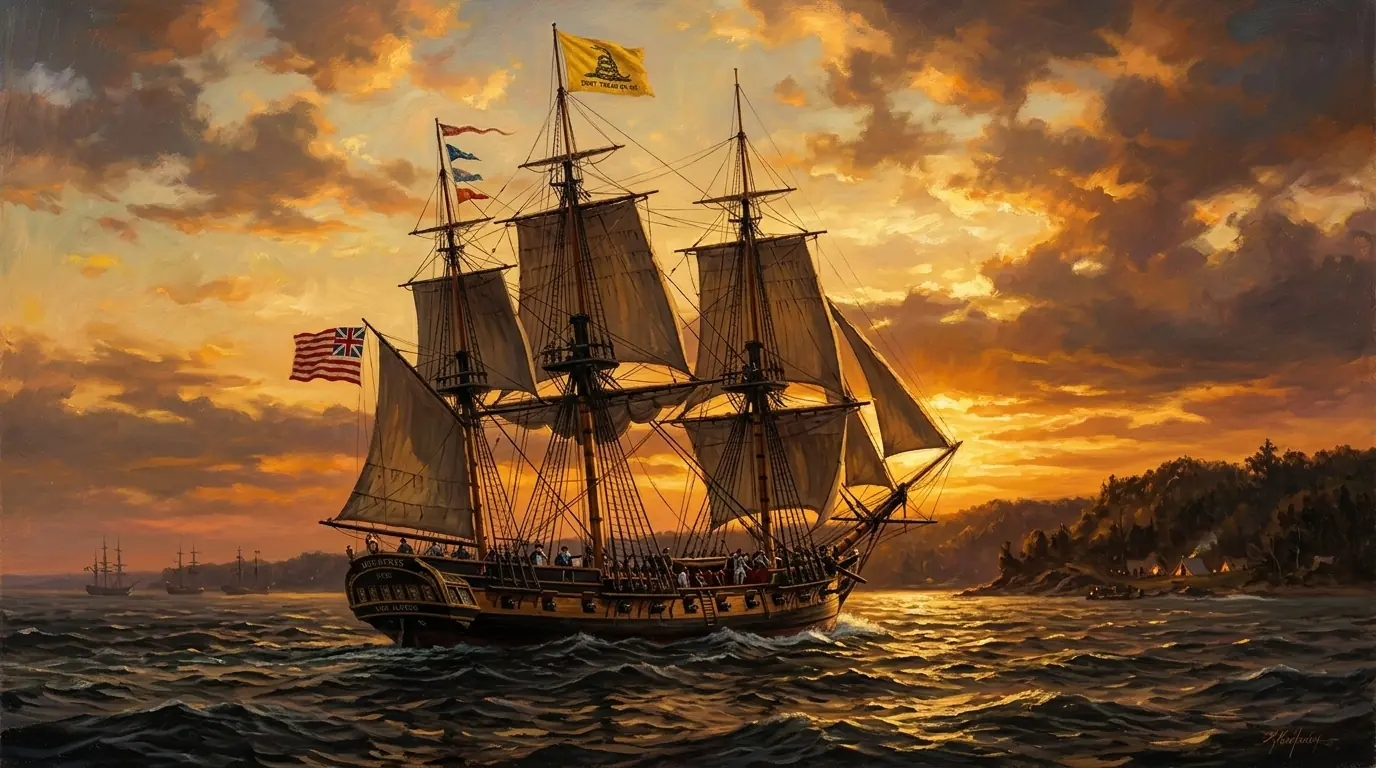
Ask ten people what "the Confederate flag" looks like, and nine will describe the same thing: red background, blue X, white stars. Now ask those same ten people what it means, and you'll get answers so different they might as well be describing different countries. That gap — between a shared image and fractured meaning — is the entire story of this flag. What follows covers the actual flags the Confederacy used (spoiler: the famous one wasn't among them), what their creators said they represented, how a veterans' memorial symbol became a segregation weapon, and where the law draws the line today.
The Actual Confederate Flags — Why What Most People Picture Was Never Official
Here's a fact that catches almost everyone off guard: that red flag with the blue X and white stars — the one plastered on bumper stickers, bandanas, and heated social media arguments — was never the official flag of the Confederate States of America. Not even close.
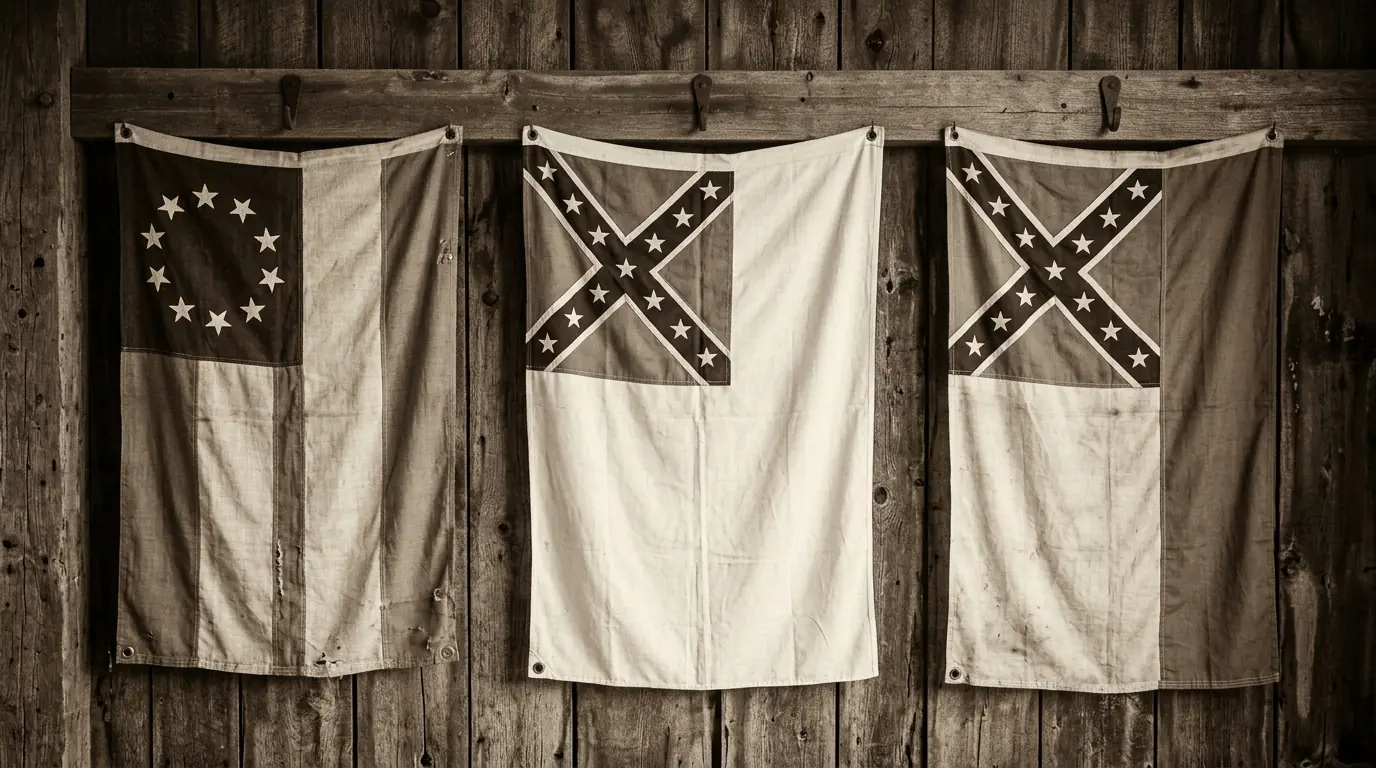
The Confederacy actually adopted three different national flags during its four-year existence, and none of them looked like the one you're picturing right now.
The first was the Stars and Bars, used from March 1861 to May 1863. Three horizontal stripes (red, white, red) with a blue canton holding a circle of stars — 7 at first, eventually 13. It looked so much like the Union flag that soldiers on both sides couldn't tell friend from foe in the smoke and chaos of battle. That confusion nearly cost General Beauregard a victory at the First Battle of Manassas in July 1861. He watched Jubal Early's brigade approach and couldn't identify them until the wind unfurled their flag. That moment changed everything.
The second national flag, the Stainless Banner (1863–1865), was mostly white with a small battle flag in the upper corner. The third, the Blood-Stained Banner (1865), added a red vertical stripe because the Stainless Banner kept getting mistaken for a white surrender flag. The Confederacy collapsed weeks after adopting it.
1st
Stars and Bars (1861-1863)
Three stripes with blue canton — too similar to the Union flag
2nd
Stainless Banner (1863-1865)
Mostly white — kept getting mistaken for a surrender flag
3rd
Blood-Stained Banner (1865)
Added red stripe — adopted weeks before the Confederacy collapsed
So where did the famous "rebel flag" come from? After the Manassas confusion, Beauregard pushed for a distinct battlefield standard. He wrote to Congressman William Porcher Miles — who'd actually proposed an X-pattern flag before secession but got rejected because critics said it looked like "suspenders." By late November 1861, Richmond seamstresses had sewn roughly 120 silk battle flags for the Army of Northern Virginia.
The square battle flag and the rectangular navy jack were different things. What most people fly today is actually closer to the navy jack variant — rectangular, not square. Most folks arguing about "the Confederate flag" don't realize they're arguing about a flag the Confederacy itself rejected as its national symbol. If you're curious how flag grommets and construction details vary across historical and modern flag reproductions, those details matter for display context too.
Origins in the Civil War — What the Flags Were Designed to Represent
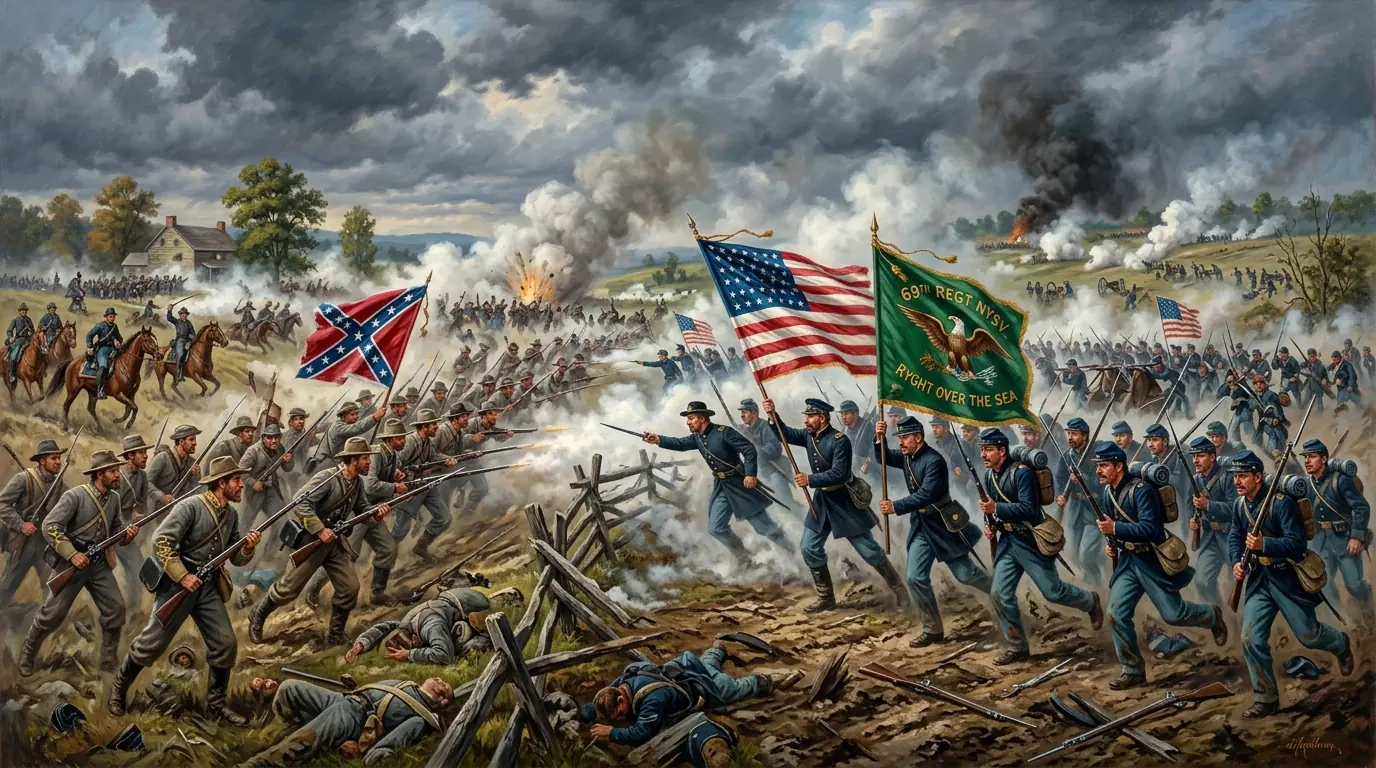
The Stars and Bars wasn't designed to break from American identity. It was designed to claim it. Many Confederates genuinely believed they were the rightful heirs of the American Revolution — that they were doing what the Founders did in 1776. The visual similarity to the U.S. flag was intentional.
The 13 stars on the battle flag represented the 11 states that actually seceded, plus Missouri and Kentucky — two border states the Confederacy claimed but never fully controlled. That detail matters. The Confederacy was projecting strength it didn't have, even in its own symbols.
But the second national flag reveals something the "heritage" argument has trouble explaining. William T. Thompson, the designer of the Stainless Banner, didn't leave his intentions to interpretation.
He wrote that the white field represented "the supremacy of the white race." Those are his words, published in the Savannah Morning News. Not a modern critic's interpretation — the designer's stated purpose.
The Confederate Constitution makes it even harder to separate these flags from slavery. Unlike the U.S. Constitution, which danced around the word, the Confederate version protected slavery explicitly. Article IV, Section 3 prohibited any Confederate territory from ever banning it. Mississippi's declaration of secession opened with: "Our position is thoroughly identified with the institution of slavery." Understanding flagpole history alongside flag symbolism gives you the full picture of how these symbols were meant to be displayed and seen.
And then there's the Cornerstone Speech. CSA Vice President Alexander Stephens, on March 21, 1861, declared:
The new government's foundations rested "upon the great truth that the negro is not equal to the white man." This wasn't some fringe figure. This was the vice president, three weeks before the war started, explaining what the whole project was about.
You can argue about what the flags mean now. But what they meant then — at least to the government that created them — isn't really up for debate. The Confederates themselves were remarkably clear about it.
From Veterans' Symbol to Segregation Weapon — The Flag's Post-War Transformation
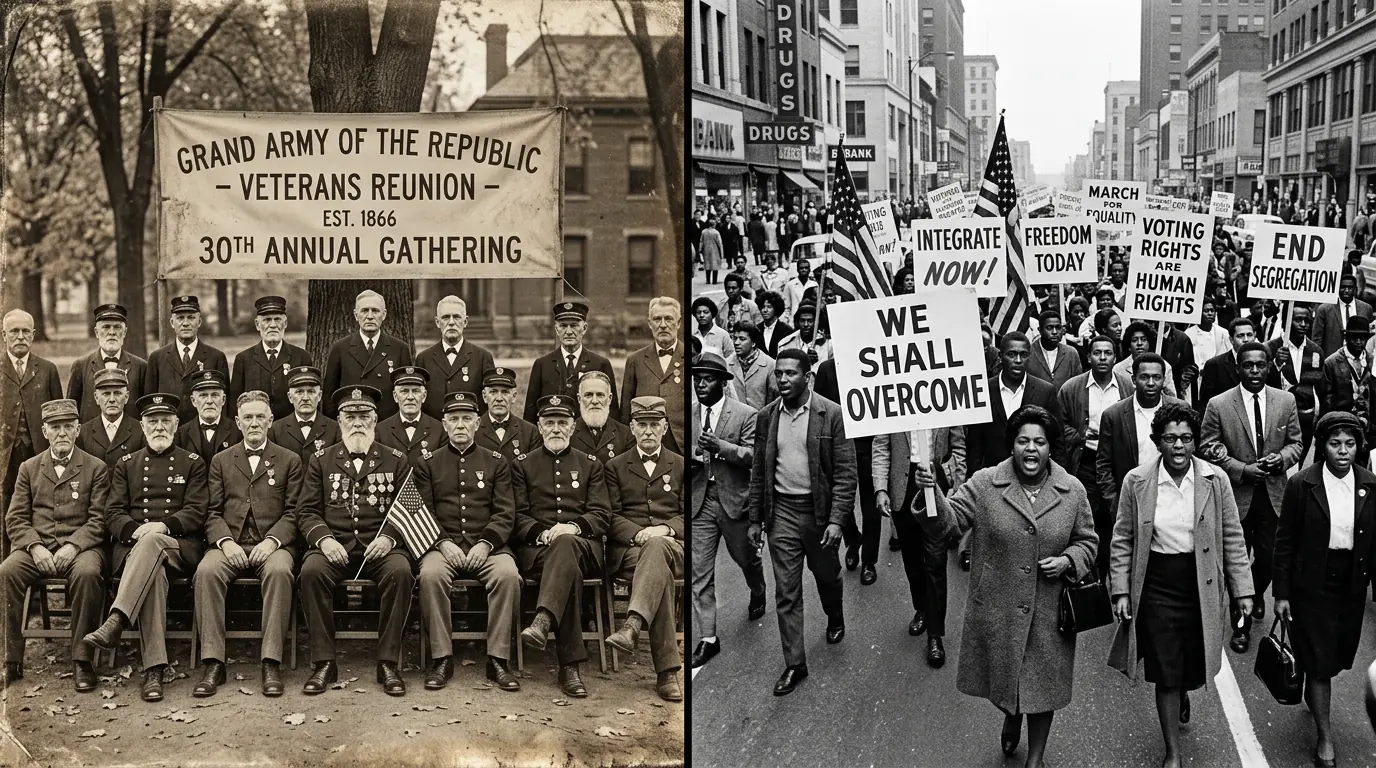
For about 80 years after the war, the battle flag mostly stayed where you'd expect: at veterans' reunions, on graves, in museum cases. Confederate widows' associations maintained it as a memorial symbol. There wasn't much broader controversy because the flag hadn't yet been weaponized for a new political cause.
Turning Point: 1948
That changed in 1948, and the shift was neither gradual nor accidental.
When President Truman pushed a civil rights platform — including anti-lynching legislation and desegregation of the military — Southern Democrats revolted. The States' Rights Democratic Party, better known as the Dixiecrats, held their convention in Birmingham, Alabama. Their candidate was Strom Thurmond. Their symbol? The Confederate battle flag. The message was unmistakable: this flag now meant opposition to Black civil rights.
The second wave hit after the Supreme Court's Brown v. Board of Education decision in 1954. As federal courts ordered school desegregation, Southern state governments grabbed the battle flag as a symbol of resistance. Georgia redesigned its state flag in 1956 to incorporate the Confederate battle emblem. South Carolina raised the battle flag over its statehouse dome in 1962 — not to honor Civil War dead, but as a direct response to the civil rights movement. The way a flag is displayed outdoors carries powerful political messaging, as this era made unmistakably clear.
This is where the "heritage not hate" argument runs into its biggest problem. The flag's resurgence in American public life wasn't driven by historical preservation. It was driven by opposition to racial equality. The timing isn't coincidental — it's documented. State legislators in Georgia and South Carolina weren't shy about their reasons.
The KKK had been using the flag since the late 1940s too. So by the 1960s, the battle flag carried two layers of meaning simultaneously: veterans' memorial (fading) and segregationist resistance (growing). Those two meanings have been fighting each other ever since.
The Modern Removal Movement — From Charleston to Mississippi

For decades, removal efforts moved at a crawl. Politicians in the South treated the flag as untouchable — electoral poison for anyone who suggested taking it down. Polls consistently showed white Southerners favored keeping it, and that was that.
June 17, 2015 broke that stalemate.
Dylann Roof murdered nine Black churchgoers during a Bible study at Emanuel AME Church in Charleston, South Carolina. Photos surfaced of Roof posing with the Confederate battle flag. Within weeks, the political calculus that had protected the flag for half a century collapsed. South Carolina Governor Nikki Haley — a Republican — called for removing the flag from the statehouse grounds. On July 10, 2015, it came down.
The SPLC tracked what happened next:
4
Removed 2015
36
Removed 2017
94
Removed 2020
Then Charlottesville happened in August 2017 — white supremacists marched with Confederate flags and tiki torches, and a counter-protester was killed. That year, 36 symbols came down. The numbers dropped back to single digits in 2018 and 2019. Major retailers like Amazon and Walmart pulled national flags and Confederate merchandise from their platforms within days of the Charleston shooting.
Then George Floyd's murder in May 2020 triggered another wave — 94 removals that year alone. Mississippi, the last state with Confederate imagery in its official flag, finally acted. The state legislature voted in June 2020 to retire the old flag, and in November, voters approved a new magnolia design. This was the same state where voters had chosen to keep the Confederate emblem by 65% in a 2001 referendum. Twenty years changed the math completely.
The 2021 National Defense Authorization Act mandated renaming military installations named after Confederate officers. The federal government was drawing a line it had refused to draw for over a century.
Before
Fort Bragg
Fort Hood
Fort Hood
After
Fort Liberty
Fort Cavazos
Fort Cavazos
Heritage vs. Hate — The Central Debate That Won't Resolve
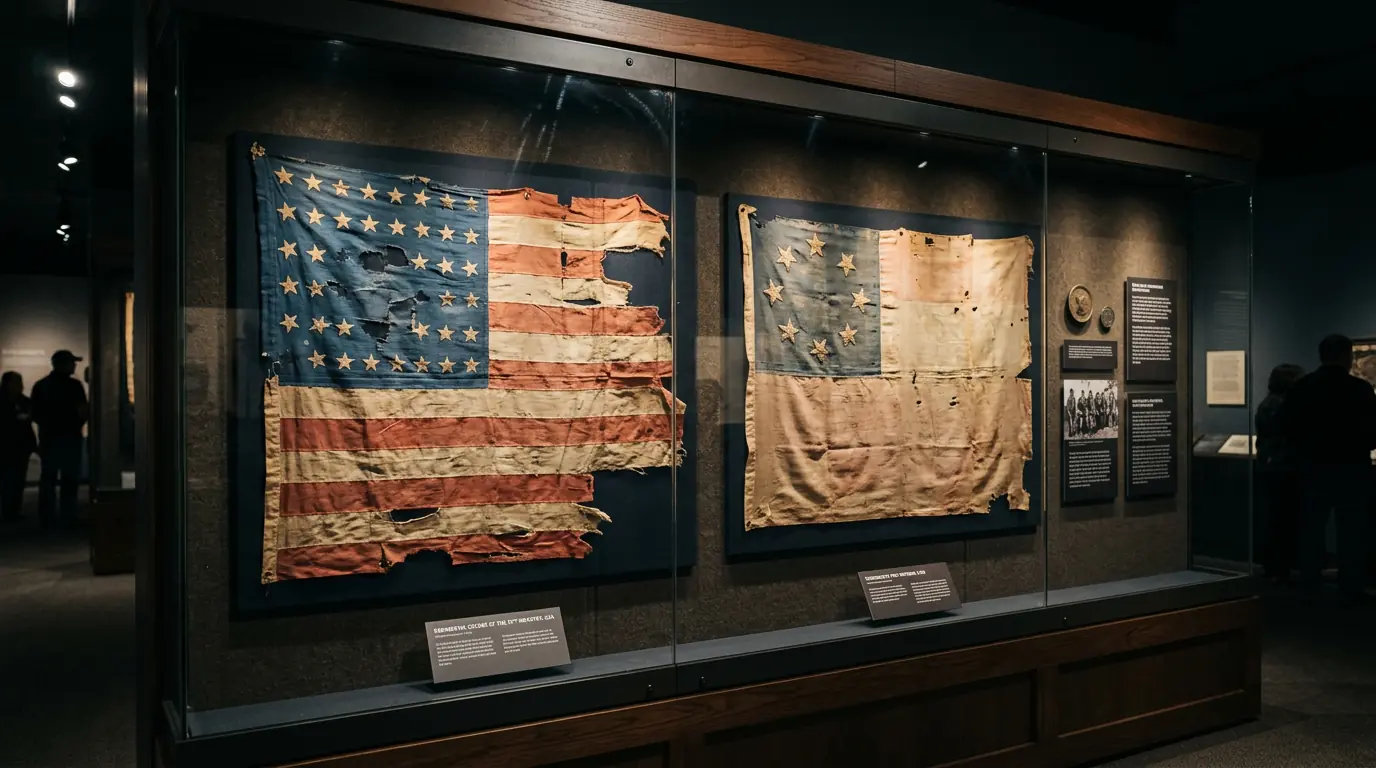
Poll numbers tell you exactly why this argument never ends — people are looking at the same flag and seeing completely different objects.
A 2015 CNN/ORC poll found 57% of all Americans viewed the Confederate flag as a symbol of Southern pride. But break that number down and the "consensus" vanishes:
Saw "Southern Pride"
66% of white Americans
75% of white Southerners
79% of conservatives
Saw "Racism"
72% of Black Americans
61% of adults under 30
81% of liberals
That's not a disagreement — that's two parallel realities. Age splits the data too. Only 39% of adults under 30 saw the flag as pride, compared to 60% of those over 45. Political affiliation was the sharpest divide.
So which side is right? Both are describing their actual experience, and that's what makes the debate so stuck. A white family in rural Georgia whose great-great-grandfather died at Gettysburg isn't lying when they say the flag means sacrifice and family history. A Black family whose ancestors were enslaved isn't wrong when they see a symbol of the system that enslaved them — especially when the flag was revived specifically to oppose their civil rights.
Museums have found the most defensible middle ground: display the flags with full historical context, documentation of what the Confederacy said it stood for, and explanation of how the symbol's meaning shifted across 160 years. A proper flag display system in a museum context tells a story that a bumper sticker simply cannot. That approach treats adults like adults — here are the facts, make your own judgment.
My own read: the flag's meaning isn't fixed, and that's actually the point. A symbol that meant one thing in 1861, another in 1962, and something else again in 2015 doesn't have a single "true" meaning. But the people choosing to fly it today should understand all of its meanings, not just the one they prefer.
Looking for custom flags? Whether for reenactments, museums, or events, we produce historically accurate custom flag reproductions with period-correct materials and printing.
Where the Confederate Flag Stands in Law and Commerce Today
The legal picture is clearer than the cultural one. The First Amendment protects your right to fly a Confederate flag on your own property, wear it on a T-shirt, or tattoo it on your arm. The government cannot punish you for private display.
But government itself can choose what it endorses. In Walker v. Texas Division, Sons of Confederate Veterans (2015), the Supreme Court ruled that specialty license plates are government speech — meaning Texas could refuse a Confederate flag plate without violating the First Amendment. Public schools have similar authority. In Melton v. Young (1972), a court upheld a student's suspension for wearing a Confederate flag jacket, ruling the school had legitimate interest in preventing disruption.
The commercial landscape shifted fast after Charleston. Amazon, eBay, Walmart, and Sears pulled Confederate flag merchandise within days of the 2015 shooting. Apple removed Civil War games that displayed the flag (then reversed course after backlash). The military followed — the Marine Corps banned Confederate flag displays in 2020, and the broader DoD issued guidelines restricting it on military installations. Understanding flag materials and printing also matters here: modern reproductions can look very different from period-accurate historical pieces.
Private employers can ban Confederate flag display in the workplace without any First Amendment issues. The Constitution limits government action, not private companies. Several employees have been fired for Confederate flag displays and lost their wrongful termination claims.
Reenactors and museums occupy a protected space. Historical reproduction and educational use hasn't faced serious legal challenge, and likely won't. A Civil War reenactment group flying period-accurate battle flags is doing something fundamentally different from someone flying one off their pickup truck, and the law recognizes that distinction. Those who need historically accurate flags for educational purposes can work with a reputable flag manufacturer specializing in period reproductions.
The practical bottom line: you have the legal right to display it. Your employer, your school, and your government don't have to help you do it.
What This Means for You
Three things worth holding onto:
1. Not the National Flag
The flag most people argue about was never the Confederacy's national flag — it was a battlefield standard that got repurposed. Knowing that changes the conversation.
2. Tied to Civil Rights Opposition
The flag's resurgence in public life was tied directly to opposition to civil rights, not historical preservation. The timeline is documented and hard to dispute.
3. Legal but Not Beyond Criticism
The legal right to display it is solid, but that right says nothing about whether doing so is wise or kind.
If you sell, collect, or display historical flags, context is everything. A battle flag in a museum case with documentation tells a story. The same flag on a bumper sticker tells a very different one. The object is identical. The message depends entirely on who's displaying it, where, and why — and whether they've bothered to learn the full history behind it. For those interested in historically informed flag making, authenticity of design and materials carries its own responsibility. Collectors wanting to understand custom flag cost for reproduction pieces should factor in the purpose — museum display versus casual use changes everything about how a flag should be made and presented.
Video Guide
Related Posts