You have seen the Gadsden flag — yellow background, coiled rattlesnake, “Don’t Tread on Me” in block letters — and you probably already have an opinion about it. The problem is that your opinion might be based on whoever was holding the flag last time it showed up in your news feed. A Tea Party protester. A January 6 rioter. A libertarian at a pride parade. A kid who got kicked out of school for having it on his backpack. The Gadsden flag has become one of those symbols where everyone is sure they know what it means, and almost no one agrees. This is the flag’s full story — from a commodore’s warship in 1775 to a federal courtroom in 2025 — so you can decide for yourself what the rattlesnake stands for.
Christopher Gadsden and the Birth of “Don’t Tread on Me” in 1775
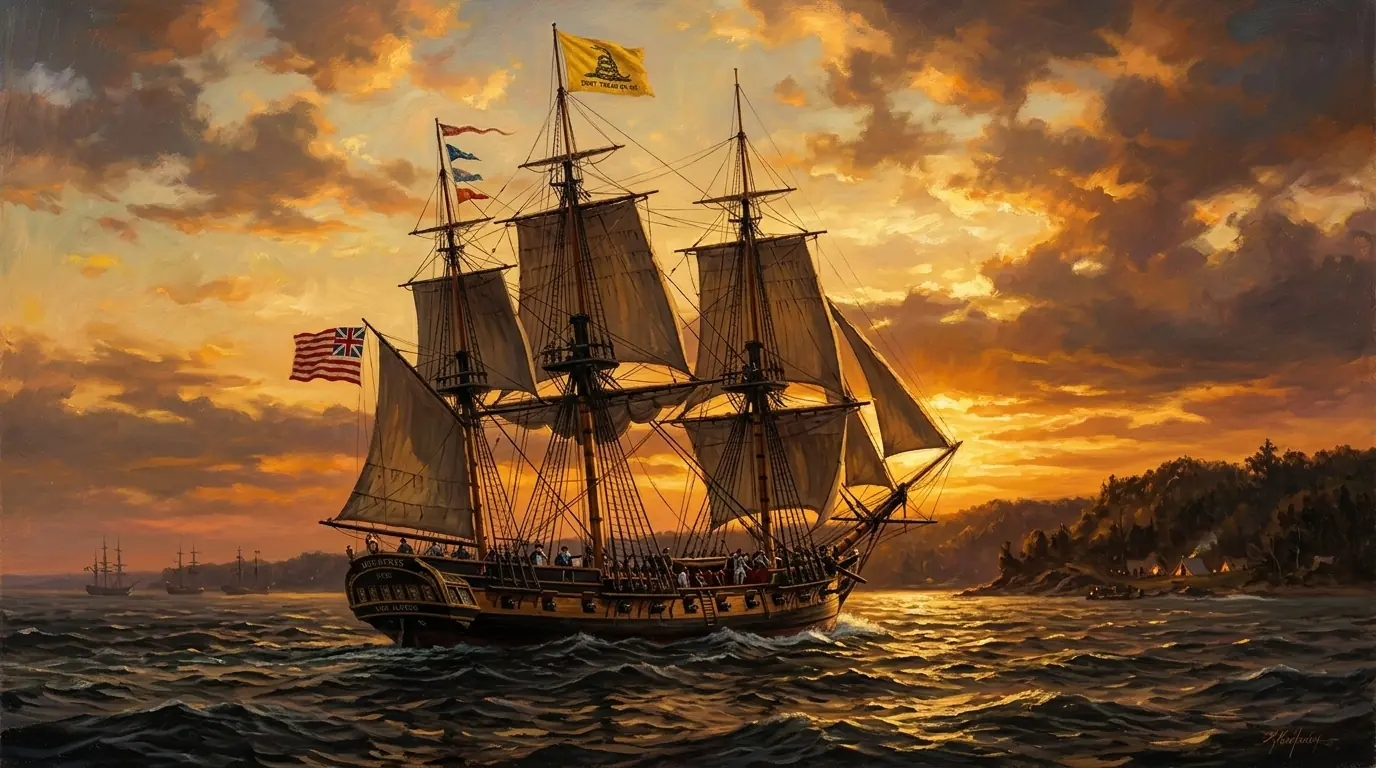
On December 20, 1775, something unusual happened aboard the USS Alfred, anchored in Chesapeake Bay. Commodore Esek Hopkins — the first commander-in-chief of the Continental Navy — ran a bright yellow flag up the main mast. On it: a coiled rattlesnake and four words that would outlive everyone on that ship by centuries. “Don’t Tread on Me.”
The flag came from Christopher Gadsden, a South Carolina delegate to the Continental Congress and brigadier general who had a specific problem to solve. The new Continental Navy needed its own standard — something that said “we are not the British Navy” in a language everyone on the water could read. Gadsden’s answer was a rattlesnake ready to strike on a field of yellow. If you want to understand the craft behind custom national flags and how a design choice can define a movement, this is the founding case study.
Less than two months later, on February 9, 1776, Gadsden walked into the South Carolina Provincial Congress and handed the flag to William Henry Drayton, the body’s president. The congressional journal recorded it with the kind of formal language people used when they knew they were making history:
“An elegant standard... being a yellow field, with a lively representation of a rattlesnake in the middle in the attitude of going to strike.”— South Carolina Provincial Congress Journal, February 9, 1776
Drayton ordered it displayed in the congressional hall.
Here is what most people miss about the Gadsden flag’s origin. It was not a protest symbol. It was a military standard — a piece of battlefield communication designed for a navy that barely existed. The Continental Marines flew it alongside the Liberty Flag. Hopkins flew it whenever he was aboard. The rattlesnake was not metaphorical anger. It was an operational insignia for a country that had been independent for about five minutes and needed to look like it meant business on the open sea.
That practical origin matters, because almost everything that happened to this flag afterward pulled it further and further from the deck of the USS Alfred.
Benjamin Franklin’s Rattlesnake — Why a Snake Became America’s First Symbol
The rattlesnake did not start as a symbol of defiance. It started as a joke.
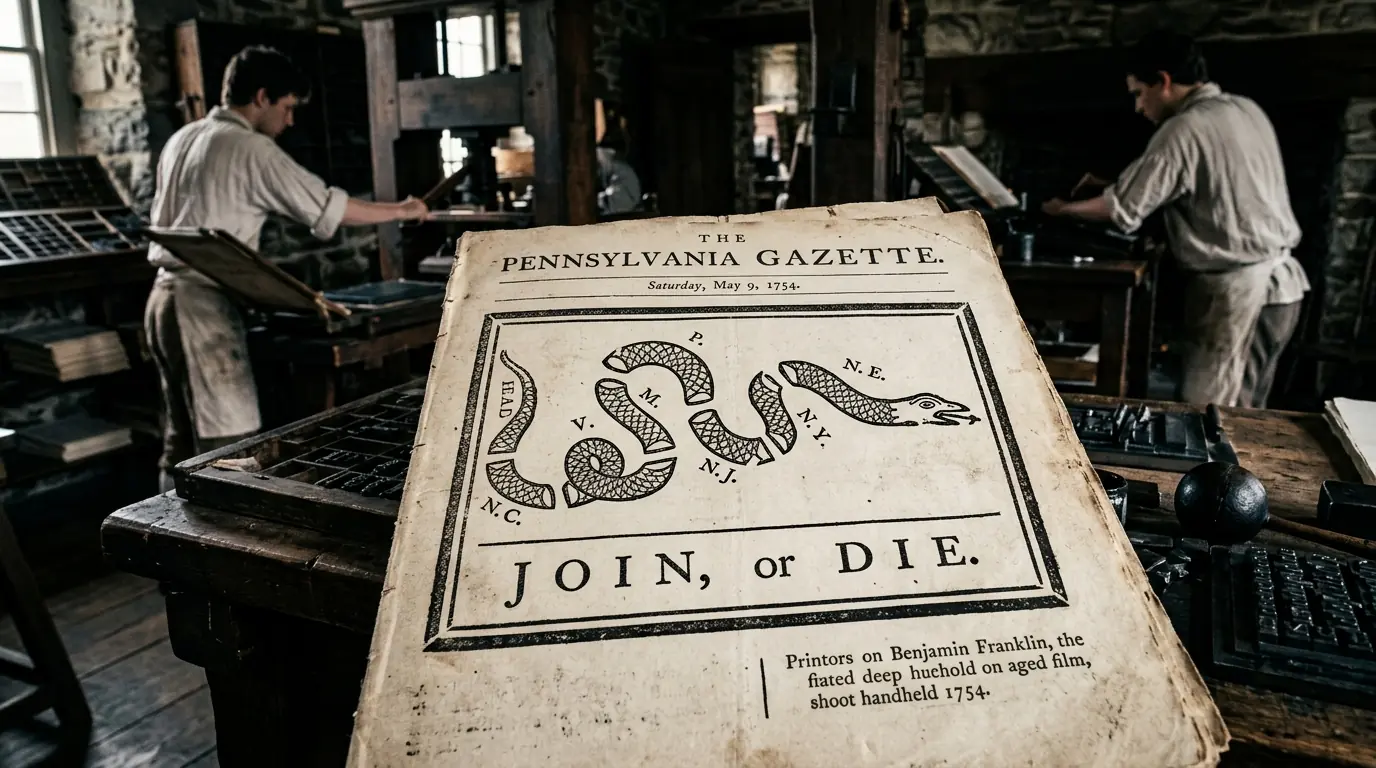
In May 1751, Benjamin Franklin published a piece in the Pennsylvania Gazette suggesting that Americans send rattlesnakes to England — a thank-you gift for all the convicted felons Britain kept shipping to the colonies. The tone was pure Franklin: polite on the surface, vicious underneath. Three years later, in 1754, he published “Join, or Die” — a woodcut of a rattlesnake chopped into eight segments, each one representing a colony. New England was the head. South Carolina was the tail. It became one of the first political cartoons in American media, and the message was blunt: get together or get killed.
By December 1775, Franklin had dropped the satire and gone sincere. Writing as “American Guesser” in the Pennsylvania Journal, he laid out why the rattlesnake deserved to stand for the colonies. His reasoning holds up better than most 250-year-old arguments. The rattlesnake is native to America and found nowhere else. It never strikes first but fights without hesitation if provoked. Its eyes never close — permanent vigilance. And the thirteen rattles on its tail matched the thirteen colonies, a coincidence Franklin treated as destiny.
That same winter, the rattlesnake with “Don’t Tread on Me” started showing up on Continental Marines drums during recruitment drives in Philadelphia. The image moved from newspaper columns into physical military hardware in a matter of weeks.
What Franklin understood — and what made the rattlesnake work where an eagle or a bear might not have — is that the snake is a defensive animal. It does not hunt you. It does not chase. But if you step on it, you have a serious problem. That framing gave the colonies exactly the moral posture they needed: we are not aggressors, but we will kill you if you push us. Two and a half centuries later, people are still arguing about who counts as the snake and who counts as the boot.
The Civil War Tug-of-War — When Both Sides Claimed the Gadsden Flag
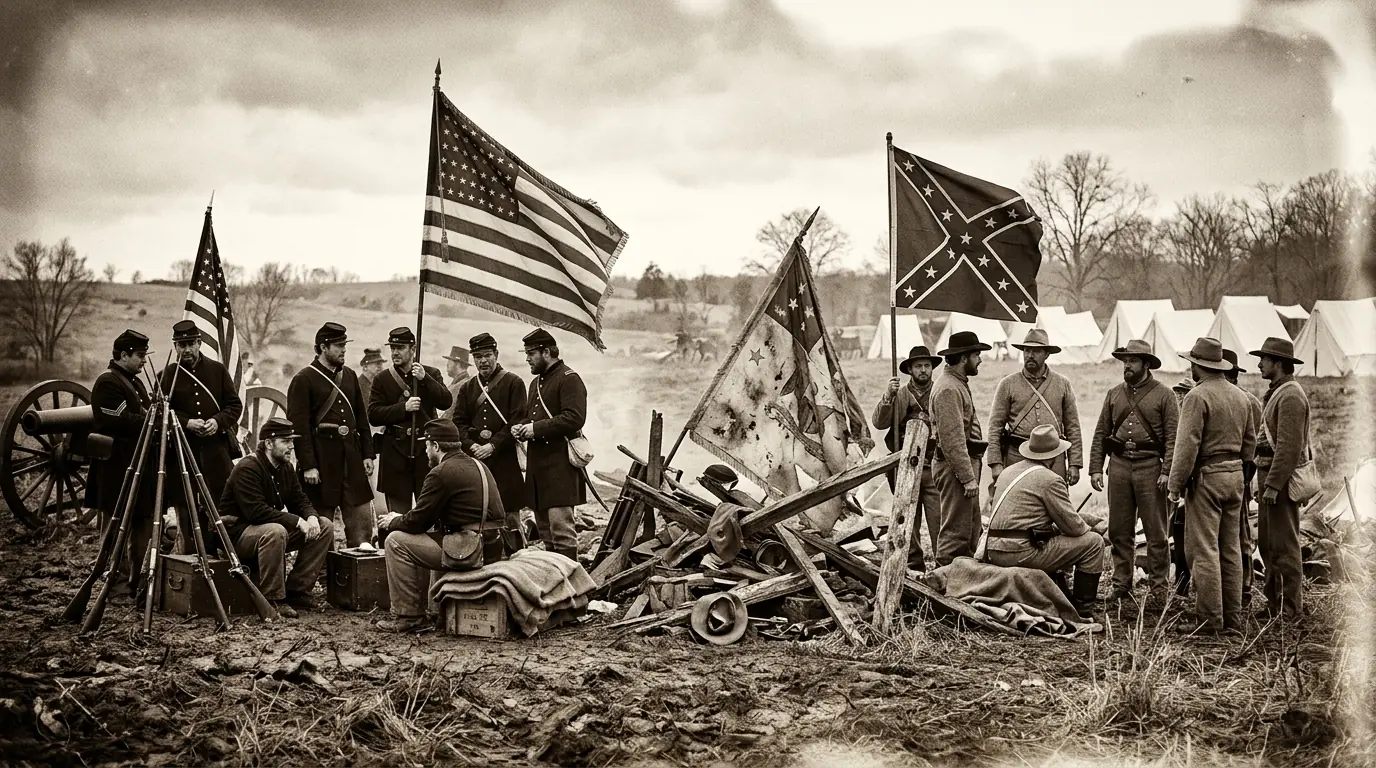
Most flag histories skip what happened to the Gadsden flag between 1783 and 2009, as if the symbol went into storage for two centuries. It did not. The Civil War turned it into a contested weapon — and the fight over who owned the rattlesnake tells you something about how American symbols actually work.
The Confederacy grabbed it first. In November 1860, right after Lincoln’s election, the Young Men’s Southern Rights Club in Savannah displayed a banner over Johnson Square featuring a coiled rattlesnake and the motto “Southern Rights and the Equality of the States.” By March 1861, Baltimore printers were circulating cards showing the Confederate flag wrapped around a rattlesnake hissing “Don’t Tread on Me.” Confederate envelopes carried the snake with a tweaked slogan — “Don’t Tread on Us” — and newspapers started calling it the unofficial Flag of the Confederacy.
The logic made sense from the Southern perspective. The rattlesnake said “leave us alone or face consequences,” and that mapped onto the secession argument without any editing. The Confederacy saw itself as the new colonies, the Union as the new Britain. Same snake, different boot.
The North had a problem. The rattlesnake belonged to everyone’s shared Revolutionary heritage, and letting the South monopolize it was not an option. So the Union flipped the image. Instead of flying the rattlesnake, Northern illustrators started drawing eagles ripping snakes apart — “The Eagle shall bear the Rattlesnake in his beak and rend him with his talons.” The snake went from patriot to traitor in a single editorial pivot.
The Confederacy eventually dropped the rattlesnake in favor of the Southern Cross battle flag, which became the dominant symbol of the rebel cause. The Gadsden flag went dark for over a century after 1865. No major political movement picked it up. No one flew it at rallies. It sat in history books, waiting.
That dormancy matters. When the flag resurfaced in the 2000s, most Americans had no memory of its Civil War chapter — which meant it could be reintroduced as a clean Revolutionary symbol. Whether that reintroduction was honest depends on how much history you think a flag is required to carry. The same debate comes up whenever someone orders a custom flag loaded with historical imagery they want to reclaim.
Tea Party to Today — How the Flag Got Pulled Into Modern Politics

April 15, 2009 changed the Gadsden flag’s trajectory more than any single day since 1775. Over 300 Tax Day Tea Party events across all 50 states featured the yellow rattlesnake flag, and the “Don’t Tread on Me” message got redirected from a foreign enemy to the domestic federal government. That shift — from “Britain, back off” to “Washington, back off” — is the single most important thing that happened to this flag in the modern era.
2009
Tea Party Adoption
300+ Tax Day events across all 50 states
2014
Bundy Standoff & EEOC Case
Armed ranch standoff + workplace harassment complaint
2017
Charlottesville Rally
Appeared alongside Confederate and Nazi flags
2021
January 6 Capitol Riot
One of the most visible symbols at the event
The Tea Party adoption made a certain kind of sense. The original flag was about resisting a distant, taxing authority. The Tea Party protesters saw the IRS and federal spending the same way. But the adoption also stripped the flag of its military context and turned it into something closer to a bumper sticker — a general-purpose expression of anti-government sentiment that anyone could project their own grievances onto.
Things escalated. In 2014, Cliven Bundy’s standoff with federal agents in Nevada featured armed supporters flying Gadsden flags alongside .50 caliber machine guns. Bundy promised to become “a den of rattlesnakes” against the government. The flag had traveled from a commodore’s ship to a ranch standoff in 239 years, and the distance was not just chronological.
Then came the events that made the flag genuinely toxic for many Americans. At the 2017 Unite the Right rally in Charlottesville, the Gadsden flag appeared next to Confederate and Nazi flags. On January 6, 2021, it was one of the most visible symbols at the Capitol riot. For critics, these appearances represented the flag’s capture by movements that had nothing to do with colonial self-defense.
A 2014 EEOC case (Shelton D. v. Megan J. Brennan) complicated the picture further. An African American postal worker filed a harassment complaint after a coworker wore a Gadsden flag cap to work, citing designer Christopher Gadsden’s history as a slave owner. The EEOC acknowledged the flag’s non-racial Revolutionary origins but noted its recent “racially-tinged” uses and ordered an investigation. No final liability finding was ever made — but the case established that context of display matters as much as original intent.
Key Legal Insight
The EEOC ruling established a precedent: context of display matters as much as original intent when evaluating a symbol’s meaning in workplace and public settings.
The flag did not change between 1775 and 2021. The people carrying it did. Understanding how you display any flag outdoors — the company it keeps, the context around it — shapes meaning as much as the design itself.
Pro Tip: For bulk orders of patriotic and historical flags over 100 pieces,
contact us for special pricing and custom sizing options.
The Flag’s Surprising Flexibility — LGBTQ, Crypto, and Global Protest Movements
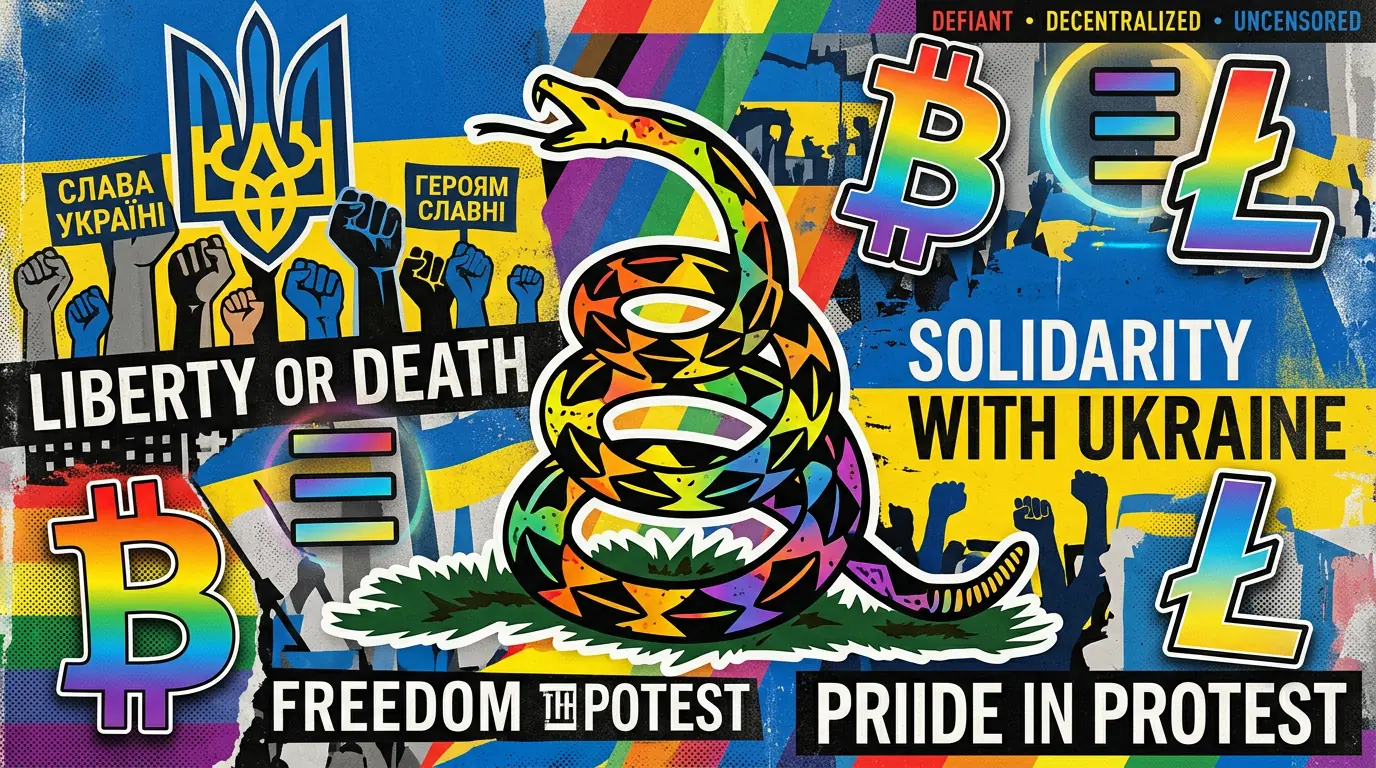
If the Gadsden flag only belonged to one political camp, this article would be shorter. But the rattlesnake has proven far more adaptable than either its supporters or critics tend to admit.
The Libertarian Party picked up the flag in the 1960s and 1970s, years before the Tea Party existed. For libertarians, “Don’t Tread on Me” was not about taxes or foreign wars — it was about the belief that government should stay out of people’s lives, period. That framing opened a door that a lot of different groups walked through.
The LGBTQ community produced one of the more striking variants: the rattlesnake and motto overlaid on a rainbow flag background. This version dates back to the 1970s, when Colors of the Wind produced them in Santa Monica. The message was a direct application of the original logic — if “Don’t Tread on Me” means individual liberty, then it means individual liberty for everyone, including people the flag’s conservative fans might not have had in mind. Liberals have pointed out the same tension from a different angle, noting that “Don’t Tread on Me” sits awkwardly next to strong support for police and other government authority figures.
The flag jumped international borders too. Grunt Style, a veteran-founded apparel company, released a Gadsden variant with Ukrainian blue and yellow colors during the Russia-Ukraine war, with proceeds going to Ukrainian relief. The rattlesnake found a new “don’t tread on us” context an ocean away from Philadelphia. That same adaptability is why sports and event flags so often borrow established patriotic imagery — the emotional charge travels with the symbol.
And then there is the internet, which did what the internet does. The “No Step on Snek” meme — a deliberately crude redrawing of the Gadsden flag that originated on 4chan — turned the symbol into a joke that somehow also functions as political commentary. It is hard to maintain that a flag is a sacred patriotic emblem when a cartoon version of it is getting shared 50,000 times on Reddit.
This flexibility is the flag’s most underrated feature. A symbol that can be claimed by libertarians, LGBTQ activists, Ukrainian solidarity movements, and internet shitposters is not a symbol with a fixed meaning. It is a blank sentence with a strong verb — “don’t tread on me” — where the speaker gets to define both “me” and “tread.”
Where the Gadsden Flag Stands Legally and Commercially Today
Fly a Gadsden flag in your yard and you are on solid legal ground. The First Amendment protects it as a historic symbol of liberty, and no nationwide ban exists or is likely to exist. But “legal” and “uncontested” are different things, and recent court cases show that the flag’s meaning is still being litigated — sometimes in the literal sense.
In 2025, a federal judge in Colorado ruled that a student named Jaiden Rodriguez could proceed with a lawsuit after his school removed him from class for wearing a backpack with a Gadsden flag patch. The school district had called the flag “dangerous” and tried to link it to slavery. Judge Crews rejected that reasoning, affirming that the First Amendment applies in schools and that suppressing “out-of-step” views is not a legitimate educational interest. The Mountain States Legal Foundation represented Rodriguez, and the case became a flashpoint for whether schools can treat political symbols as disciplinary problems.
2025 Legal Precedent
Whatever the Gadsden flag means in a cultural argument, it qualifies as protected patriotic expression in a legal one. Banning a specific historic flag requires more justification than “some people find it offensive.”
On the commercial side, the flag is doing better than it has in decades. The American Legion sells 3x5 foot nylon Gadsden flags for outdoor display — made with the same attention to flag materials and printing quality that serious collectors and display buyers demand. Grunt Style moves Gadsden-themed shirts at .95 each. The flag shows up laser-etched on gun accessories, printed on bumper stickers, stitched onto patches, and inked as tattoos. Industry sources expect demand to spike heading into the nation’s 250th anniversary in 2026, with the Gadsden flag joining the Betsy Ross and Bennington flags in what retailers are calling an “extremely high” demand category.
The commercial picture reveals something the political debate often misses. The Gadsden flag’s market crosses ideological lines. The same design sells to Second Amendment supporters, libertarian college students, history enthusiasts who own zero guns, and people who just think a coiled rattlesnake on yellow looks cool on a wall. If you want to know the real cost of owning one, check what custom flag pricing looks like across different sizes and materials. The flag’s commercial life has outrun its political life — and that gap keeps widening.
For businesses and organizations looking to fly the Gadsden or any patriotic flag properly, understanding flagpole requirements and flag display systems ensures the presentation matches the symbolism. The top flag manufacturers in the USA handle both historic reproductions and entirely original designs through the same custom flag production process.
Conclusion
The Gadsden flag started as military hardware, became a forgotten relic, got pulled into a culture war, and somehow ended up on both rainbow flags and gun accessories. Three things worth keeping straight:
Key Takeaways
1
The flag’s original meaning was narrow and specific — a naval ensign for a country that did not have a navy yet.
2
Every group that has claimed it since — Confederates, Tea Party, libertarians, LGBTQ activists — has used the same “don’t tread on me” logic to mean something different.
3
The flag is constitutionally protected, commercially thriving, and not going anywhere.
If you are deciding whether to fly, wear, or buy a Gadsden flag, the honest answer is that it will say whatever the people around you think it says. That is how symbols work.
Next steps:
Read the Source
Benjamin Franklin’s 1775 “American Guesser” essay for the original rattlesnake argument
Know the Law
Check the Rodriguez v. Harrison School District 2 ruling for the current legal framework on displaying the flag
Fly Your Own
A custom promotional flag lets you add context that the plain yellow version cannot — your state, your unit, your cause
Video Guide
Related Posts