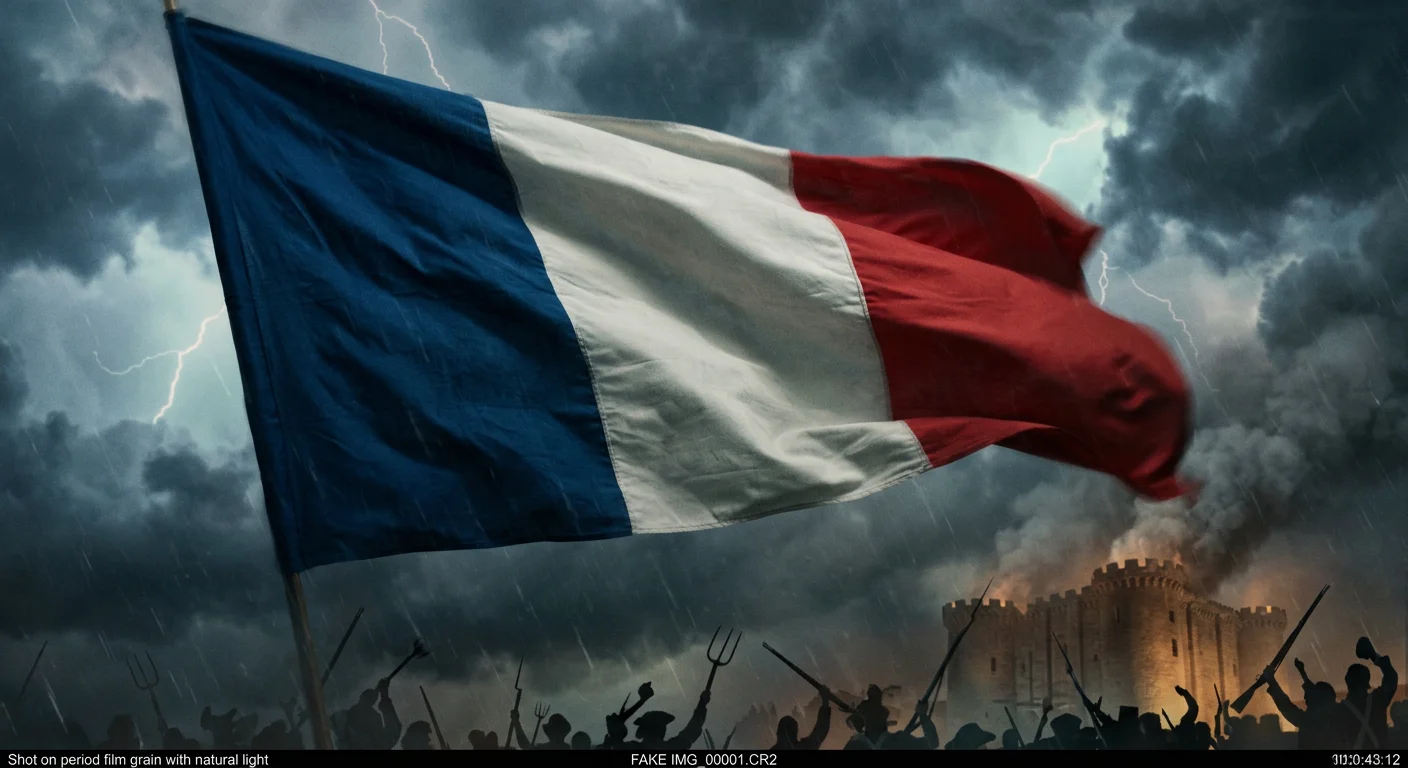
On February 15, 1965, a new flag rose over Parliament Hill — and a country let out a long breath. This wasn't a simple administrative decision. It was one of the most charged political battles in Canadian history. For years, Canadians argued about who they were, where they came from, and what they wanted the world to see when they looked up.
The Canadian flag design change replaced the old Red Ensign with a single bold maple leaf. That wasn't just a rebrand. It was a full reckoning with national identity.Today, the flag’s clean geometry and bold symbolism are still studied by Canada flag manufacturers worldwide, because the maple leaf design remains one of the most recognizable and technically balanced national flag layouts ever produced.
This guide takes you through every heated debate, every rejected design, and every defining moment that shaped the flag the world recognizes today.
Canada's Flag Before 1965: The Red Ensign Era and Its Colonial Legacy
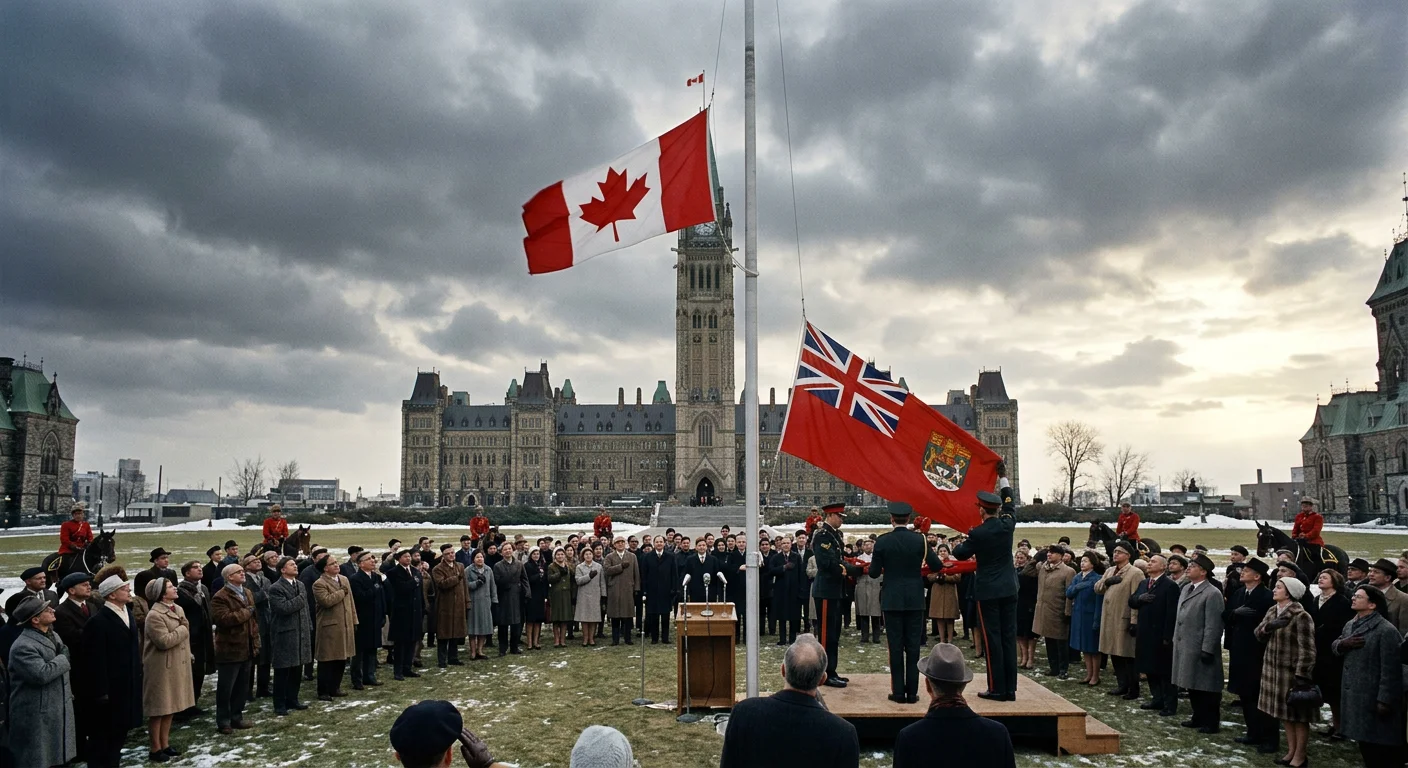
For most of its history, Canada flew someone else's story.
The flag that hung over Parliament before 1965 — the Canadian Red Ensign — drew from a British naval design dating back to the 17th century. In the upper left corner: the Union Jack. On the right: Canada's coat of arms, updated in 1921 when King George V granted Royal Arms to the country. Every visual element pointed toward Britain first. Canada came second.
It wasn't always the official national flag, either. The Red Ensign flew from government buildings abroad starting in the 1920s. It didn't reach Parliament until 1945. Canada had governed itself since 1867 and held full sovereignty since 1931 — yet the flag it raised still carried the emblem of another nation's monarchy.For historians and designers creating a modern custom Canada flag, the Red Ensign period reveals how deeply national symbols can reflect political allegiance rather than independent identity.
That tension was real. In 1956 , it became painfully concrete.
Canadian troops deployed to Egypt as UN Peacekeepers during the Suez Crisis flew the Red Ensign. Egyptian observers read it as the flag of an invading force. Britain, France, and Israel had just attacked Egypt. Canada was supposed to be the neutral peacemaker. The flag told a different story.
The Canada flag before 1965 had split Canadians long before that moment. Some saw the Union Jack as a symbol of liberty — the flag under which generations of immigrants had built new lives. Others saw it as a relic of colonial rule. To them, it felt out of place and dishonest about what Canada had become.
Two attempts to replace it had already failed — in 1925 and again in 1946 . Prime Minister William Lyon Mackenzie King shelved both. He feared the political fallout of the debate more than the flag itself.
The problem, it turned out, wasn't the design. It was the question the design forced everyone to answer.
Why Canada Needed a New Flag: The Political Forces Behind the 1965 Change
Lester B. Pearson had a problem. He knew it. His cabinet knew it. And by 1963, the entire country was about to find out how urgent it had become.
Pearson first raised it in 1960, still serving as Leader of the Opposition. He called the lack of a Canadian flag "the flag problem." He became Prime Minister in 1963, leading a fragile minority government. The problem hadn't shrunk. It had grown teeth.
Canada was cracking along its oldest fault lines. Quebec nationalism was climbing fast. Many in Ottawa feared Confederation itself might not survive. Pearson placed a bold bet: a new national flag — one tied to no colonial past, no borrowed monarchy, no hyphenated identity — could serve as a rallying symbol. Something every Canadian could stand beneath without hesitation.From a production perspective, the simplicity of the final maple-leaf design later proved highly practical for large-scale manufacturing in any modern Canada flag factory, where clarity of color blocks and clean geometry reduce distortion when flags are viewed in motion.
He promised it would happen before 1967, the centennial year. That promise lit the fuse.
The Great Flag Debate: Parliament Divided
What followed was one of the most bruising political fights in Canadian parliamentary history. And 1964 was already the worst year Pearson's government had faced.
On June 15, 1964 , the House of Commons opened formal debate on Pearson's preferred design: a three-leaf, white-on-blue pattern with space for the Union Jack on formal occasions. The reaction was immediate and furious.
Progressive Conservative leader John Diefenbaker — a fierce defender of British heritage — accused Pearson of staging a one-man show. He charged that Pearson had chosen the design on his own, briefed the Queen too early, and used procedural muscle to bulldoze Parliament. He called the entire process "flag by closure."
He wasn't far off about the speed. Outside Parliament, the country split openly:
Pro-Red Ensign demonstrators gathered on Parliament Hill
Counter-demonstrators showed up
The RCMP deployed
A parliamentary committee formed under a six-week deadline. More than 2,300 designs flooded in. Each submission carried the same core argument in a different visual language: What is Canada — and whose story should its flag tell?
The committee voted on October 22, 1964 . It chose a design by George Stanley , Dean of Arts at the Royal Military College of Canada. His concept drew inspiration from the RMC's own flag. The maple leaf at its center started with 13 points, drawn by heraldist Alan Beddoe. Graphic designer Jacques St-Cyr then redrew it to 11 points — a shape engineered to stay readable at a distance and in wind.
John Matheson , Pearson's parliamentary secretary and the key force behind the final consensus, guided the design through to its finished form.
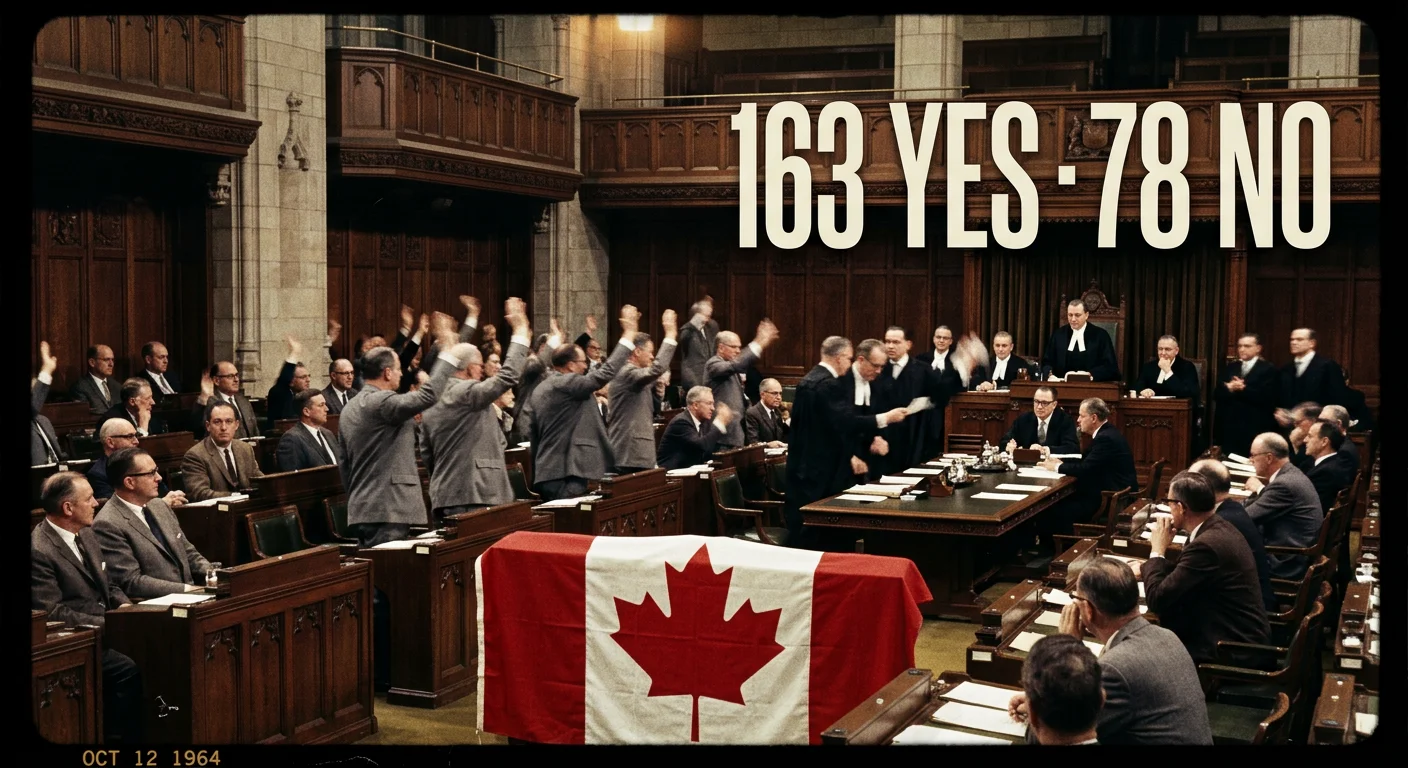
The Commons closure motion passed 152–85 on December 15. Two days later, at 2:15 in the morning on December 17 , the House voted 163–78 — after 270 speeches . The Senate followed. On January 28, 1965 , Queen Elizabeth II signed the proclamation.
The flag problem — forty years in the making, two failed attempts behind it — was settled at last.
The Great Canadian Flag Debate of 1964: A Nation Divided
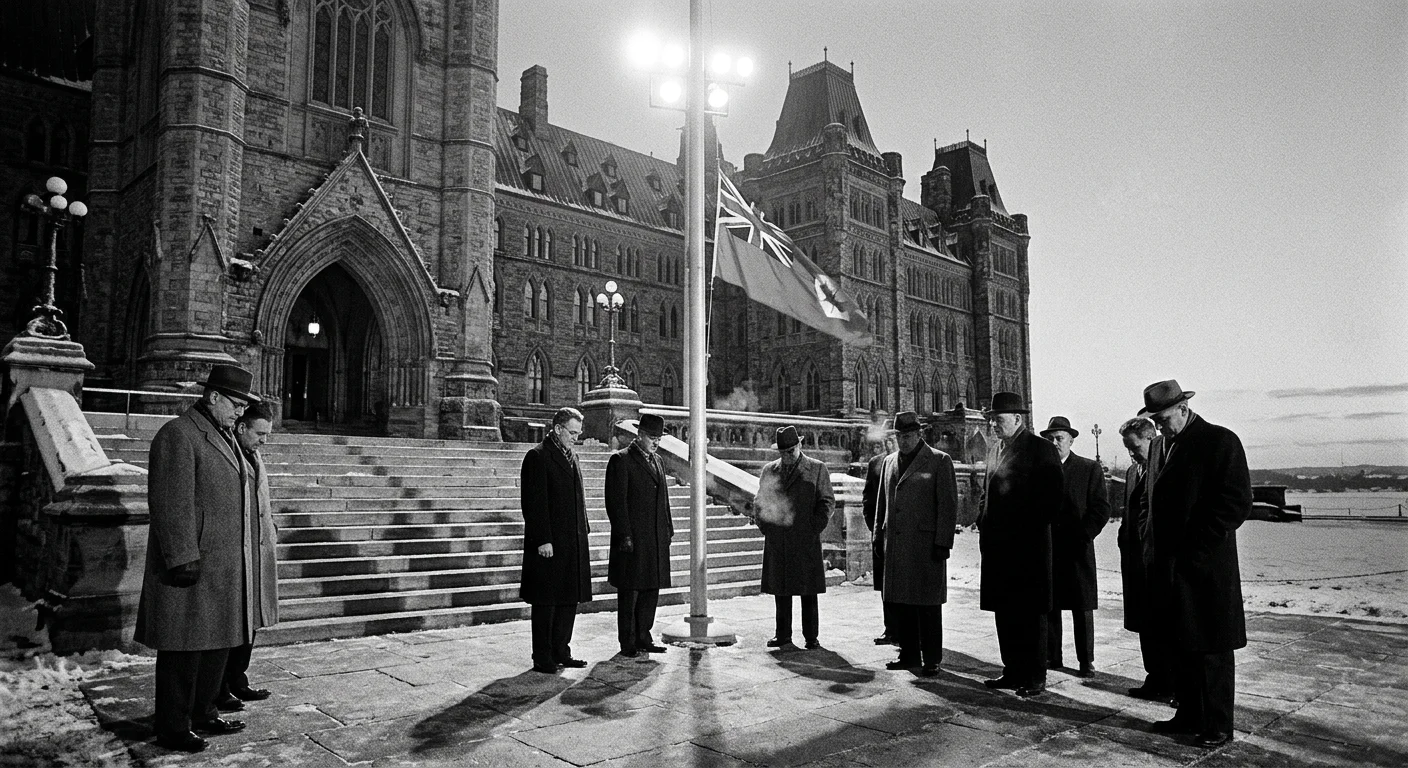
The numbers alone tell you how ugly it got. 270 speeches. A final vote held at 2:15 in the morning. A country that had been arguing about a piece of cloth for forty years — forced to stop.
270
Speeches
163
Votes Yes
6,000
Designs Submitted
But the polls told a quieter story. It started long before Parliament erupted. By 1958, more than 80% of opinionated Canadians wanted a flag that looked like no one else's. 60% favored the maple leaf. Pearson's Liberals surveyed 2,262 Canadians in April 1963. 52% supported adopting a new national flag outright. Just 18% still wanted the Red Ensign. The public had moved. Parliament hadn't caught up.
80%
Wanted Unique Flag
52%
Supported New Flag
18%
Kept Red Ensign
June 1, 1964 brought open conflict. Red Ensign supporters gathered on Parliament Hill. Counter-demonstrators pushed back. The RCMP stood between them. Two weeks later, Pearson addressed 2,000 veterans at the Capitol Theatre . Many wore Red Ensign pins as a direct rebuke. He wore his First World War medals. Neither side blinked.
The Flag Committee got announced on September 10 — fifteen MPs across five parties. The real negotiation started there. What broke the deadlock wasn't drama. It was arithmetic.
Robert Thompson persuaded the Social Credit bloc to vote yes.
Paul Martineau flipped key Conservatives.
Léon Balcer and Réal Caouette shifted francophone Conservative support toward the Liberals on closure — no fanfare, no speeches, just votes.
The closure motion passed 152–85 on December 15. Two days later, 163 MPs voted yes. 78 voted no. Almost everyone who had just finished fighting stood up and sang O Canada .
From 3,500 Designs to One Maple Leaf: How the Final Flag Was Created
Three thousand, five hundred envelopes. Each one held somebody's vision of Canada.
The Flag Committee opened submissions in the autumn of 1964. What arrived wasn't a neat shortlist of professional proposals. It was a flood — beavers, moose, hockey sticks, crosses, Union Jacks with maple leaves jammed on top. Canadians had opinions . Strong ones. And they'd been holding them in for a long time.
The committee worked through that mountain of tempera paint and strong feeling. They narrowed it down to three finalist groups. One design stood out from the rest — and it looked nothing like what Pearson had wanted.
The Blue-Striped Contender Nobody Remembers
One serious finalist told a very different visual story before the red-and-white flag took its place. Its central element was a single red maple leaf on a white background — that part survived. But on each side sat five blue vertical stripes , ten in total, representing Canada's provinces.
The design was a tempera painting, 38 by 76 centimeters — precise and deliberate. It now sits in Library and Archives Canada, filed under Acc. No. 1979-075 PIC. A quiet artifact of the road not taken.
The blue stripes didn't make the cut. The final design stripped everything back to three bands: red, white, red . One maple leaf. Eleven points. No provincial counting. No color symbolism borrowed from anyone else's tradition.
That act of subtraction was the whole point.
George Stanley's design won because it removed the argument. No stripes to debate. No heraldic clutter to interpret. Just a leaf — clear at a glance, impossible to mistake for anyone else's flag.
The simplest version of Canada was the one that lasted.
Official Votes, Royal Proclamation, and the Historic Moment on Parliament Hill
The paperwork arrived. And somehow, after all of it, the moment felt almost small.
270 speeches. Two overnight sessions. Forty years of national frustration. The closing steps moved quietly and without drama. The House voted 163–78 on December 17, 1964. The Senate offered little resistance. One thing remained — the signature.
On January 28, 1965 , Queen Elizabeth II signed the Royal Proclamation. A parliamentary committee had worked through the details. A design competition pulled in over 3,500 entries. A summer of open street confrontations had tested the country's patience. All of that effort came down to ink on parchment.
Then came February 15.
At noon, the new flag rose over Parliament Hill. The Red Ensign came down. A military band played. Veterans who had fought under the old flag stood in the cold and watched. Some wept. Some just looked. Prime Minister Pearson struggled to hold himself together.
It wasn't a moment of pure triumph. It was heavier than that — the feeling of a country closing a chapter it had spent two generations fighting over. Canada's national flag symbolism broke free from borrowed monarchy and colonial roots.
The maple leaf was flying. The debate was done. Canada had picked its own story and raised it into the wind for everyone to see.
What the Maple Leaf Flag Symbolizes: Meaning Behind Canada's National Identity
The maple leaf didn't appear in 1965. It had been telling Canada's story for centuries before anyone thought to center it on a flag.
Indigenous peoples recognized the maple long before European settlers arrived. By the 1700s, the leaf was showing up in songs, on coins, and in regimental badges. During the First World War, Canadian soldiers wore it on their cap badges. It marked the gravestones of the fallen. Long before it flew over Parliament Hill, it had traveled to the worst places on earth — carried by the people who went there.
That history matters. Artist Jacques St-Cyr redesigned the leaf from 13 points down to 11. The goal was simple: keep it readable in wind and at distance. This wasn't a decorative choice. It was built to be recognized .
The colors carry equal weight:
Red
Speaks to sacrifice -- the armed forces, the coasts, the vast land running shore to shore
White
Holds peace, neutrality, and the long Arctic winters that shaped the country's character
Both colors had been Canada's since 1921. King George V made it official. The flag didn't create them. It made them impossible to ignore.
2010 Ipsos Reid Poll
59% of Canadians named the maple leaf as their top national symbol. The beaver, the Mountie, and hockey each landed at just 9%. The flag wasn't just accepted. It became what Canadians reached for when they needed to say this is us — no explanation needed.
Canada Flag Timeline: Visual Evolution from Colonial Ensign to Maple Leaf (1867–1965)
98 years. That's how long Canada spent flying someone else's design as its own.
Period | Flag | What It Showed |
|---|---|---|
1867–1965 | Canadian Red Ensign | Union Jack canton; variable provincial shields; never made official |
1963 proposal | Pearson Pennant | Three maple leaves, blue borders — Pearson's personal vision |
1964 committee pick | Stanley/Beddoe design | Single 13-point leaf, red-white-red bands |
1965 final | Maple Leaf Flag | 11-point leaf, 2:1:2 proportions, protected by law |
The Red Ensign was never Canada's official national flag. It just stuck around — carried by habit and political avoidance. Two committees tried to replace it: 1925 and 1946 . Mackenzie King killed both efforts before they went anywhere.
Then Pearson arrived. First a promise in 1960 . Then a premiership in 1963 . Then close to 6,000 submitted designs — and one maple leaf that held.
Canadian Red Ensign vs. Maple Leaf Flag: A Side-by-Side Comparison
Two flags. One country. Two very different answers to the same question.
Aspect | Canadian Red Ensign | Maple Leaf Flag |
|---|---|---|
Base Design | British Red Ensign (red field) + Union Jack in upper-left corner | Red-white-red vertical triband |
Central Element | Canadian coat of arms (varied 1892–1965) | Single stylized red maple leaf, 11 points |
Colors | Red, white, blue, gold, green | Red and white |
Proportions | 1:2 | 2:1 |
Official Status | De facto, never given an official designation | Official — proclaimed January 28, 1965 |
The Red Ensign carried three colors drawn from European national flag traditions. Its coat of arms changed shape twice — green-leaved from 1922 to 1957, then shifted to red and gold. The Union Jack sat in the corner and made one thing clear: Canada's ties to Britain ran deep.
The Maple Leaf answered with silence. No coat of arms. No colonial emblem. Just a leaf that six out of seven Canadians already claimed as their own.
One detail often gets overlooked. The Flag Committee's internal vote favored a modified Red Ensign — a golden maple leaf replacing the coat of arms — by 23 to 1 . Pearson rejected it. No unanimity, no deal.
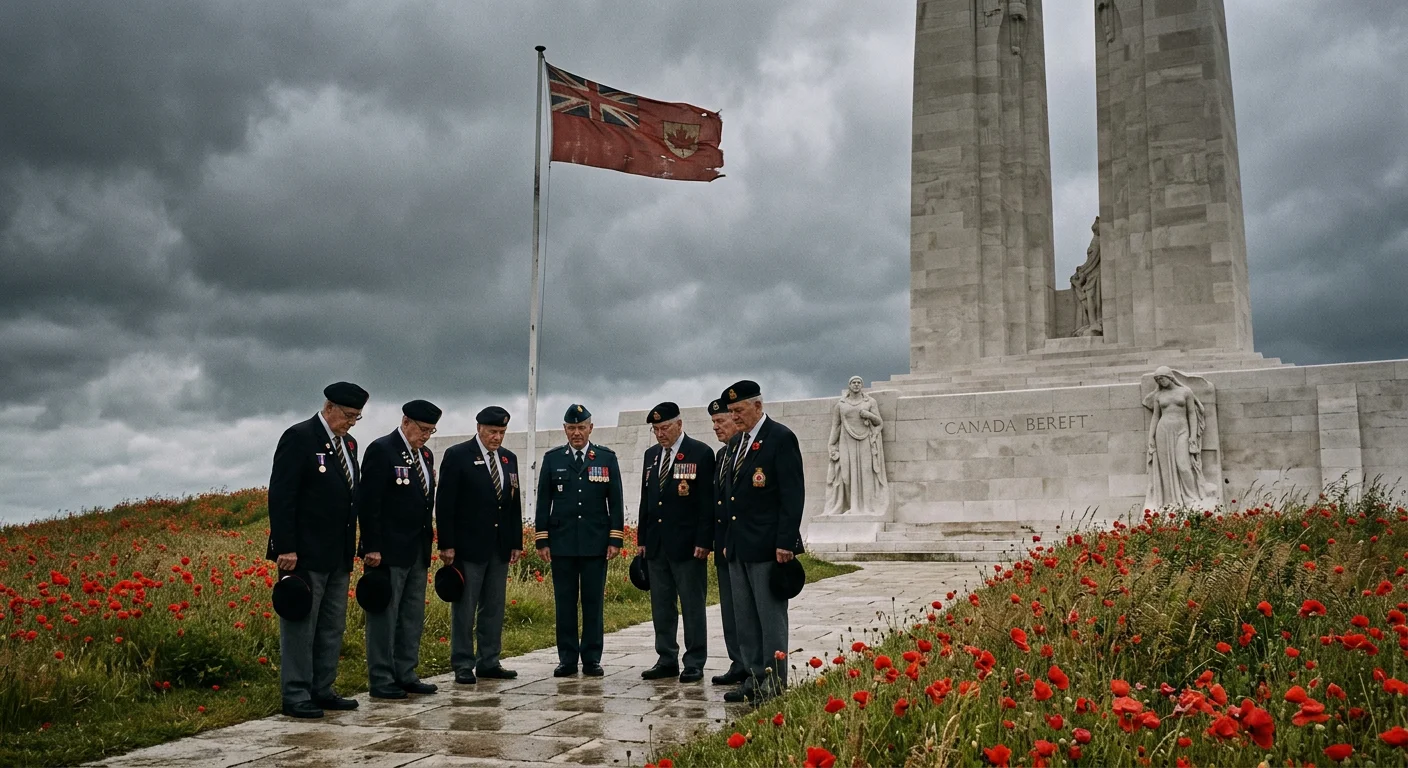
The Red Ensign didn't disappear. It still flies at Vimy Ridge. Veterans' groups carry it. For many, it remains the flag tied to a specific sacrifice. That weight is real, and it belongs to the flag fair and square.
FAQ: Most Asked Questions About Canada's 1965 Flag Change
Sixty years later, the questions keep coming. Here are the ones people ask most.
When did Canada adopt the maple leaf flag?
Queen Elizabeth II signed the Royal Proclamation on January 28, 1965. The flag rose over Parliament Hill at noon on February 15, 1965. Canada now marks that date as National Flag Day — a title confirmed in 1996.
Who designed it?
Three people share the credit.
- George Stanley came up with the core concept. He drew inspiration from the Royal Military College flag.
- Alan Beddoe created the first version — a maple leaf with 13 points.
- Jacques St-Cyr reworked the design. He cut the points down to 11, producing a leaf that stays clear and sharp in wind and from a distance.
- John Matheson, Pearson's parliamentary secretary, told Stanley on December 15 that his design had won.
How many designs were submitted?
Close to 6,000. The parliamentary committee sorted through all of them and picked three finalists — in just six weeks.
What were the final three contenders?
Three flags made the shortlist:
- The Pearson Pennant — three red maple leaves on blue-white-blue bands
- A design combining the Union Jack, a maple leaf, and the royal banner of France
- Stanley's single red maple leaf on red-white-red bands
How close was the final vote?
163 yes. 78 no. Not a landslide — but enough to close forty years of back-and-forth debate.
Custom Canada Flags: Bringing the Maple Leaf Tradition to Your Brand or Event
The maple leaf took sixty years to earn its place on a flag. Putting it on yours takes about ten business days.
At runcustomflag.com , we produce custom Canadian flags right here in Canada — out of facilities in Ontario and British Columbia. The same print methods government and commercial clients use are the ones we use for your order:
Screen Printing
Built for high-volume runs. Ink presses deep into the fabric for richer color that resists fading over time.
Digital Acid-Dye Printing
Great for smaller custom national flag orders. The image passes clean through the fabric, so the reverse side looks just as sharp.
Dye-Sublimation
Delivers full through-print results. Double-sided flags, where both sides read the right way, cost 60-70% more than single-sided options.
Every flag ships with quadruple-stitched fly ends and UV-resistant fabric treatment for outdoor display. You also choose your own finish: grommets, pole sleeves, or rope-and-toggle.
Send your artwork as a vector or file with Pantone color codes. Our art team builds a proof first. Nothing goes to production until you approve it.
Bulk orders get volume pricing built in. Resellers can also ship orders straight to customers under their own brand through private-label drop shipping.
Sixty years ago, Canada picked its symbol with purpose. Your flag deserves that same level of care.
Conclusion

Some flags are just fabric. Canada's maple leaf is something else.
Lester B. Pearson saw it clearly. The Great Canadian Flag Debate — bruising, brilliant, and bitter — proved it too. A nation's symbol carries the full weight of its identity. Dropping the Red Ensign wasn't erasure. It was evolution. Canada chose to plant its own image into history. No borrowed crowns. No colonial footnotes. Just a clean, hard-won symbol that stood on its own.
The 1965 maple leaf flag adoption stands as one of democracy's most fascinating arguments. Messy. Passionate. Deeply human. And worth knowing about.
That story means something. So does your flag. At RunCustomFlag , we help brands, communities, and events build banners that carry real meaning — not just color and cloth.
The best flags tell the truth about who you are. Canada proved that.
[Design Your Custom National Flag Today →]
Video Guide
Related Articles