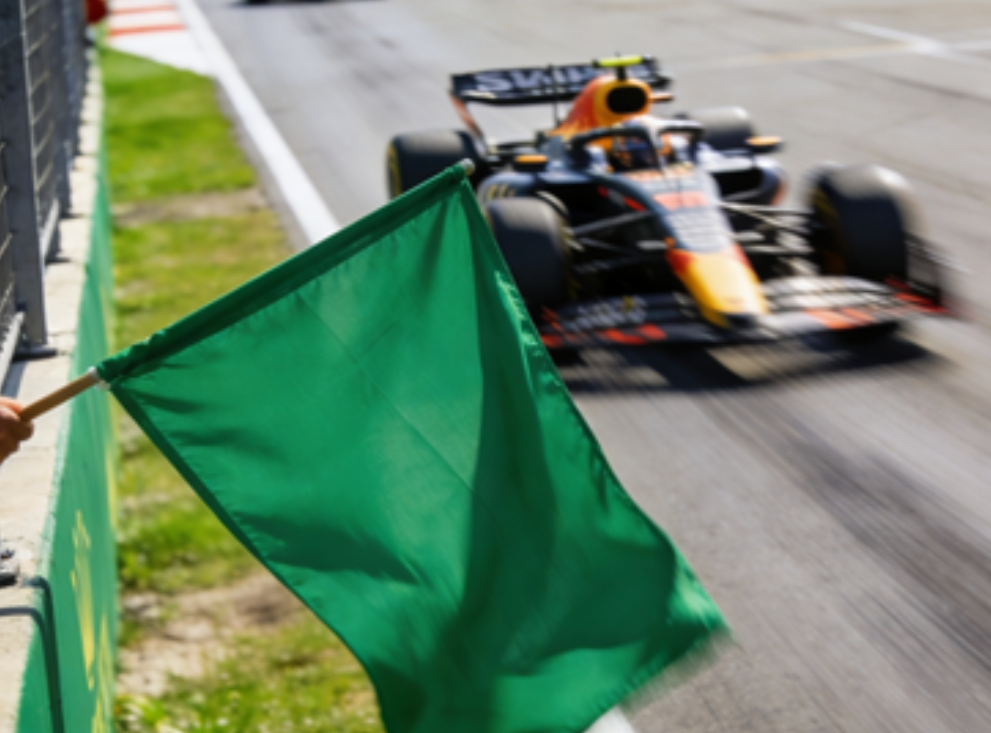
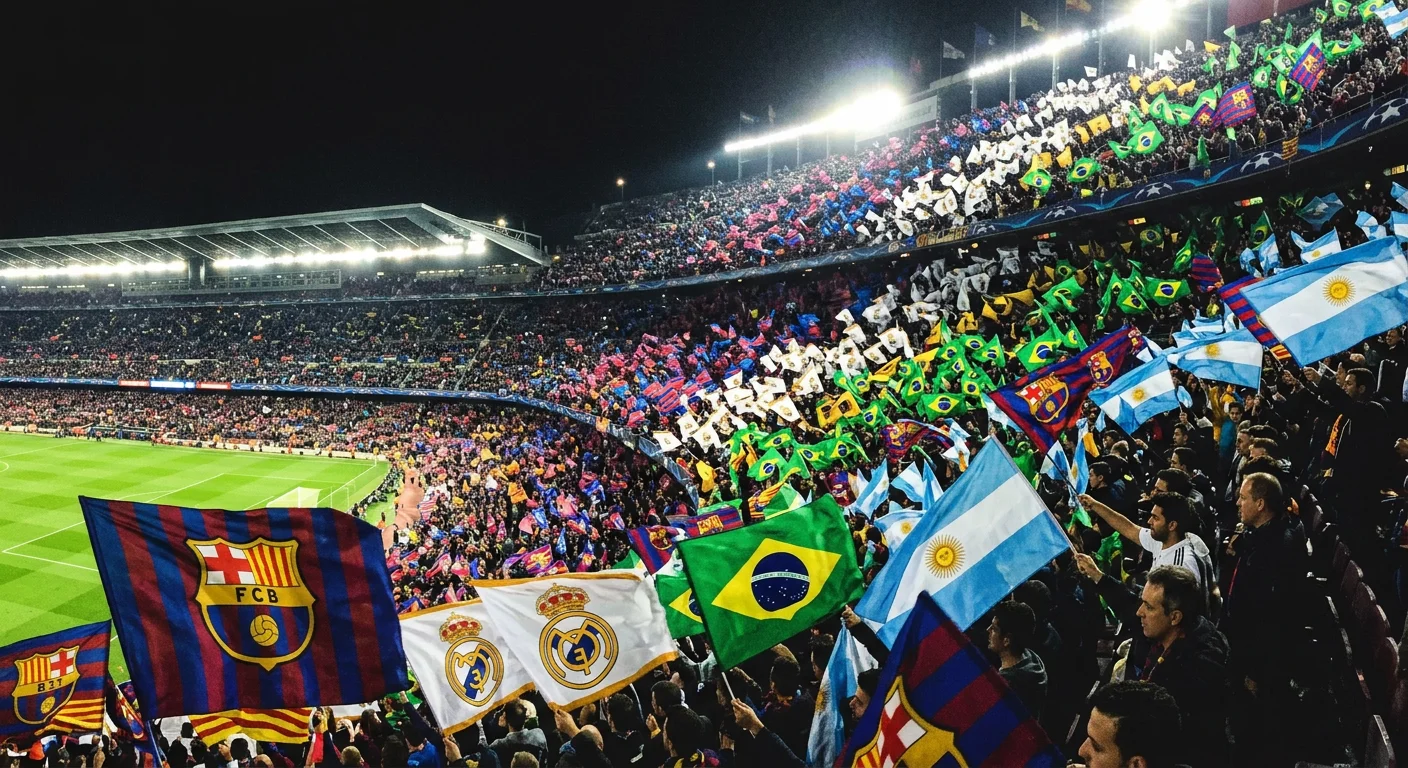
That waving piece of colored cloth flying above the track? It's not decoration — it's the language of racing. Every driver on that grid speaks it.
For fans, teams, and even businesses working with Nascar Flags manufacturers, understanding these signals isn’t optional — it’s part of the sport’s DNA.
New to NASCAR and confused about why everything slowed down? Or maybe you've been a fan for years but can't explain what that blue flag with the diagonal stripe means. Either way, you're in the right place.
NASCAR flag meanings run far deeper than the iconic checkered flag at the finish line. There's a full visual communication system built into every race. It covers caution periods, penalties, final-lap drama — all of it.
This guide breaks it down flag by flag. No more guessing what's happening on track.
Green Flag — What It Means When the Race Starts or Restarts
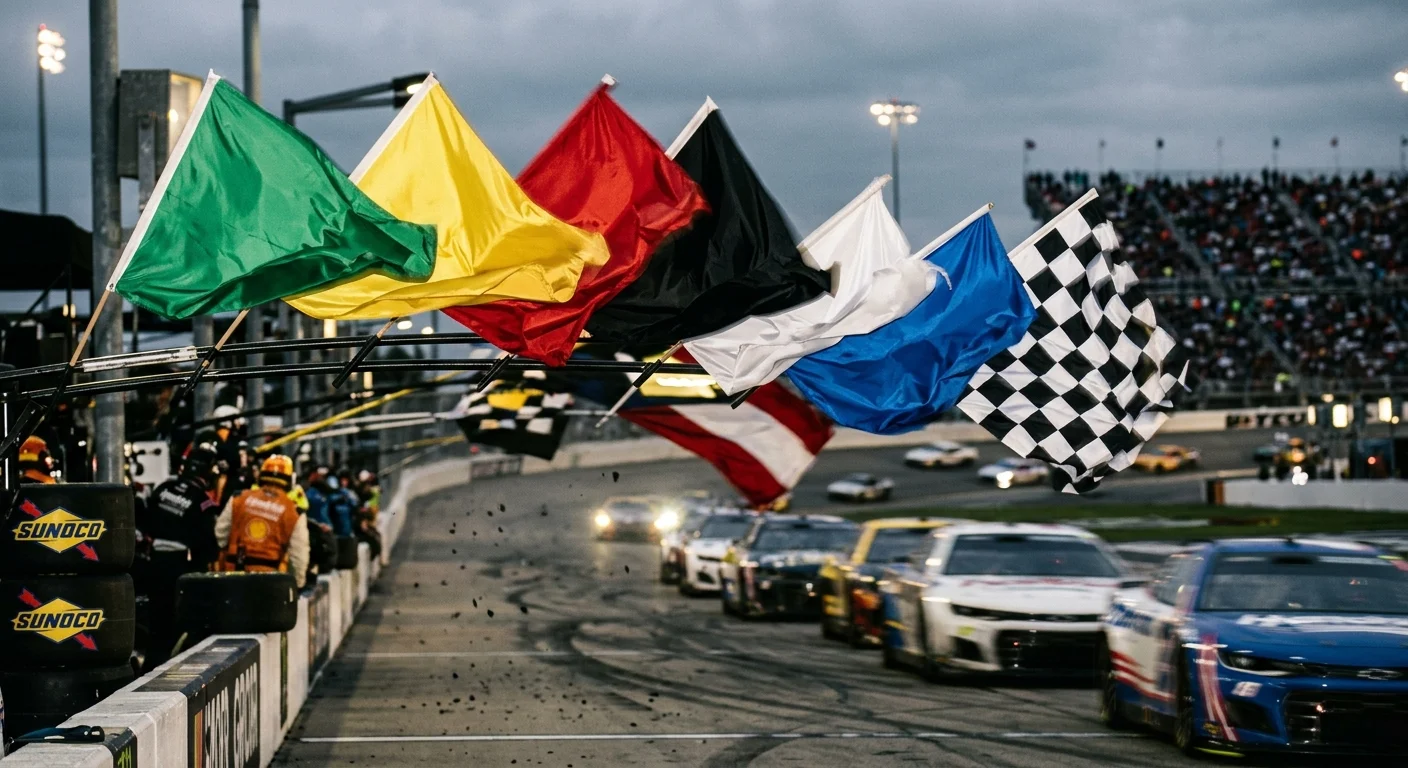
Green means go. It sounds simple enough, right? But there is a lot more to it. You start noticing when that flag drops. You also see why it matters. Top Nascar Flags wholesalers ship these iconic green banners to retailers and event organizers nationwide. This meets the massive fan demand on race day. They know it represents the first signal fans wait for.
That bright green flag signals one main thing. Full-speed racing is live. You might observe the chaotic opening lap of the Daytona 500. Or you might watch a tense restart after a long caution period. That waving cloth sends the same message to every driver on the grid. They must bury the throttle. They fight for position and hold nothing back.
You will see the green flag in a few key moments:
The initial race start at the beginning of the event.
Stage restarts after the previous stage finishes.
Resuming competition after a yellow flag caution clears.
Casual viewers miss a strategic layer here. The green flag drops. Pit road opens immediately. Teams make real-time calls on green flag pit stops. They trade premium track position for fresh tires. Sometimes they just grab a splash of fuel. This causes a high-stakes gamble every single time. Plus, this trackside drama keeps Nascar Flags wholesalers busy. They supply gear to passionate fans. These buyers want to recreate that intense race-day energy at home or at tailgates.
Not every green flag plays by the exact same rules.
The Green-White-Checkered (GWC) overtime restart is a different beast entirely:
Regular Green | GWC Green | |
|---|---|---|
Laps | Open-ended | 2 laps maximum |
Trigger | Race/stage start or post-caution | Caution inside final 2 laps |
Attempts | Single restart | Repeats until clean 2-lap run |
That difference shapes race outcomes more than most fans realize.
2021 Green Flag Runs
20%
lasted fewer than 5 miles
Median Run Distance
24 miles
GWC stints under 5
Yellow Flag (Caution Flag) — NASCAR's Most Common Racing Flag
The yellow flag dominates more of a NASCAR race than any other signal. By 2005, crews averaged 2.5+ debris cautions per race alone — and that's before counting crashes, spins, or scheduled stage ends.
Yellow waves. One rule takes over: hold your position . No passing. No heroics. Every car slows down and lines up single-file behind the pace car. The running order locks in from the moment the caution hits the track.
What triggers the yellow flag:
- Crashes (NASCAR's most common trigger — accidents reached 199 total in the 2005 season)
- Debris on track (averaging 2.24 cautions per race on mile-plus ovals since 2004)
- Spins and stalled cars
- Scheduled stage endings
- Weather changes
Caution periods don't spread out across a race. Data from 148 cautions in 2020 shows they pile up hardest in Q2 and Q4. That's the middle stretch and the final push — two points where tire wear spikes and drivers get more aggressive at the same time.
For teams, yellow is opportunity. Every car pits under caution without giving up track position. Crew chiefs track debris patterns to guess when a yellow might drop. Get that pit stop timing right, and it can flip the race result.
Two types of cautions work in different ways:
Type | What Triggers It | Effect |
|---|---|---|
Stage Caution | Scheduled stage end | Brief (4–5 laps), awards stage points, resets field |
Full Caution | Incident, debris, weather | Unscheduled, averages 5+ laps, full cleanup |
NASCAR made one rule permanent after 2003: "racing back to the caution" is banned . Before that change, drivers would sprint to gain spots the second an incident happened. Now? Any pass after yellow waves gets you a black flag, position loss, or lap disqualification — no exceptions.
1980s Average
6.69 laps
per accident caution
2000s Average
5.4 laps
per accident caution
Cleanup crews got faster. Safety protocols improved. Pace car deployment got sharper.
Red Flag — NASCAR Stops the Entire Race
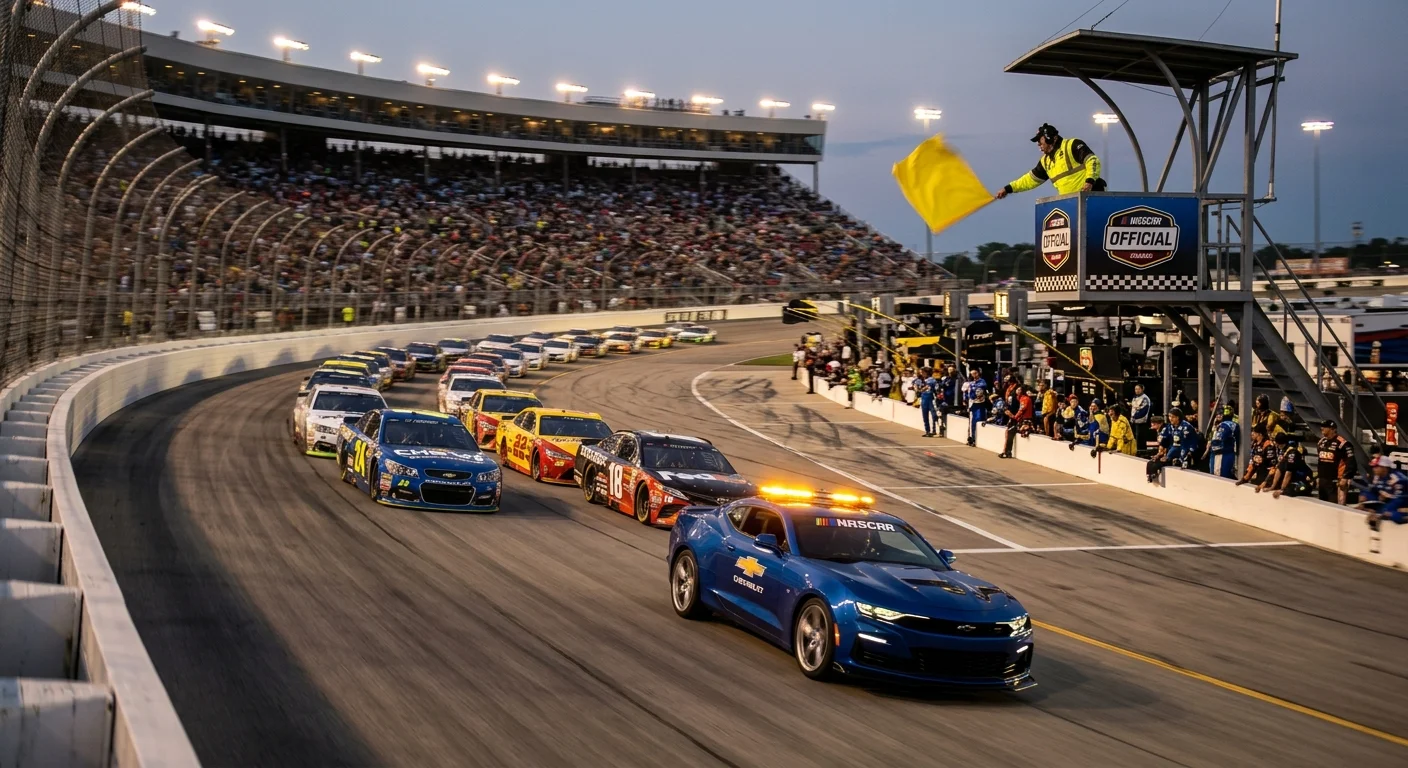
Everything stops. Not slows — stops.
That's the red flag's job. No halfway. The yellow flag keeps the field moving in a slow, single-file line. The red flag kills the whole event. Engines off. Cars parked on track or pit road. Nobody touches anything until officials give the word.
What forces NASCAR to throw a red flag:
- Severe weather — heavy rain is the top reason
- Major accidents that need extended track cleanup
- Debris or track damage too serious to clear at pace car speed
In 2022, the NASCAR Cup Series threw 14 red flags total:
6
Accidents
6
Rain Events
2
Other Causes
That's a wider range of triggers than most fans expect.
The yellow-vs-red difference matters most in the final laps. Red comes out inside the last 5 laps — or during overtime — the race ends right there. No restart. Officials use the last completed green-flag lap before the red flew to set the final order. Positions lock. The checkered flag never waves.
Flag | Race Status | Driver Action |
|---|---|---|
Yellow | Running (reduced speed) | Hold position, no passing |
Red | Race halted | Stop car, shut engine off |
Pit crews face a strict rule during red flag stoppages: no contact with cars on track . No tire changes. No fuel. No adjustments. The crew sits and waits for official release. No exceptions.
Black Flag — NASCAR's Penalty Flag Explained
Some flags warn of danger. The black flag delivers consequences.
NASCAR officials wave it at your car number. No guessing, no gray area. You broke the rules. You're getting called in. What comes next depends on how fast — and whether — you respond.
Two versions of the black flag exist, and they mean different things:
All-black flag : Get to pit road now. This one covers serious infractions — safety violations, intentional aggression, equipment problems that need fixing right away.
Black flag with white cross : Your laps stopped counting. You're still on the track, but you're off the official scoring sheet. Every lap from that point is a ghost lap — it doesn't exist on record.
The two-lap rule applies to both. NASCAR displays the black flag at your number. You get two laps to pit. Miss that window and lap counting stops. Keep ignoring it and disqualification enters the picture.
What triggers a black flag?
The 2025 NASCAR season logged 179 total pit road penalties — and the violations followed a clear pattern. Kyle Busch picked up two crew-over-wall-too-soon penalties at Daytona. Ty Gibbs crossed the commitment line at Kansas. Christopher Bell hit the same violation at Richmond. Carson Hocevar combined a safety issue with a tire violation at Phoenix Fall, pulling two penalties in a single stop.
Look at the 2020 data — 337 in-race penalties that season — and the pattern gets sharper. About 75% of crew penalties fell into three categories: crew over the wall too soon (20% of total), too many men over the wall, and commitment line infractions. Ryan Newman and Quin Houff each led the driver side with 16 penalties apiece. Newman's numbers told their own story — 69% of his penalties came from driver-error calls, not crew mistakes.
Real-race examples show how specific these infractions get:
Violation Type | Example |
|---|---|
Commitment line | #54 Ty Gibbs, Kansas |
Illegal passing | #23 Bubba Wallace, Kansas; #99 Daniel Suarez, Las Vegas |
Equipment (tires) | #2 Austin Cindric, #9 Chase Elliott, Las Vegas |
Safety (ballast) | #34 Todd Gilliland, #51 Cody Ware, Daytona 500 |
Driving through pit boxes | #12 Ryan Blaney, #11 Denny Hamlin, Daytona |
The ballast violations at the 2023 Daytona 500 hit hard. Two cars had ballast installed wrong. Each team lost 10 driver and owner points, and crew chiefs got ejected on top of that. Equipment penalties don't stop at the finish line. They chip away at your standings long after the race ends.
Post-race penalties carry their own separate weight.
Black flags on the track handle in-race rule breaks. NASCAR also reviews what happened after the checkered flag drops.
Intentional Wrecking Penalties
25-50 points deducted • $50,000 - $100,000 fine • 1-race suspension
Intentional wrecking — the most serious behavioral charge — carries the heaviest consequences. Denny Hamlin faced a penalty two days after a race for an intentional crash on Rashed. The Michael Waltrip Racing manipulation scandal pulled some of the largest organizational fines in NASCAR history, and it hit multiple drivers in the playoff standings.
Post-Race Appeal Results (Since 1999)
160 appeals filed
112 upheld
34 reduced
11 overturned
2 increased
Fighting a penalty doesn't always work in your favor.
White Flag — The Final Lap Signal in NASCAR
One lap left. That's all the white flag ever means — but that single lap carries more tension than the previous 499 combined.
The white flag drops. The race isn't over. It's entering its most dangerous minute. Drivers know it. Crews know it. NASCAR's rulebook even has entire clauses dedicated to what happens inside that final lap.
Here's the rule that catches fans off guard: a yellow flag appears after the white flag waves, and the race ends right there. No restart. No GWC attempt. Officials lock in the running order using the last recorded timing interval or video evidence. That's your final result.
Real races have ended this way:
2007 Daytona 500 — A last-lap tri-oval wreck triggered caution. Race over on the spot.
2009 Aaron's 499 — Carl Edwards went airborne into the catch fence on the final lap. Race ended under yellow, no restart.
2013 Daytona 500 — A Turn 2 wreck at the back of the pack froze the field before the checkered ever waved.
Leading by a mile means nothing once that yellow flies. Greg Biffle once coasted across the finish line losing fuel, cars passing him under caution — and still won. He held the lead at the moment the yellow dropped. That's all that mattered.
The white flag also bookends NASCAR's overtime format. A Green-White-Checkered restart runs two laps. The white comes first, then the checkered. That white flag is the last signal before everything gets decided.
Checkered Flag — The Most Iconic Symbol in All of Motorsport
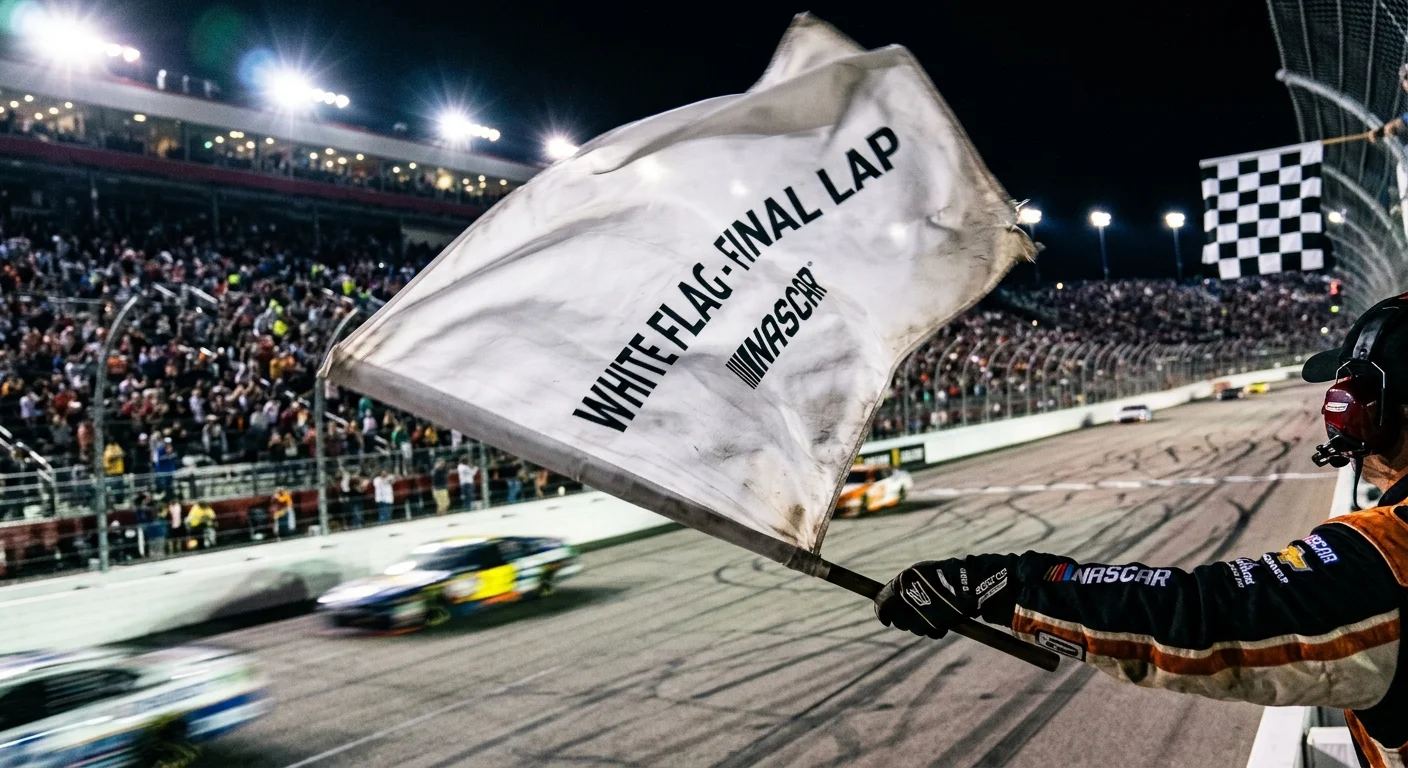
The checkered flag sits somewhere between legend and hard fact. No one can pinpoint exactly where it started.
The clearest evidence points to 1906 — the Vanderbilt Cup on Long Island, New York. Flagman Fred Wagner waved that black-and-white pattern to send Louis Wagner's Darracq across the finish line at 62.7 mph. Historian Fred Egloff spent years tracking this story down. He traced its roots to Sidney Waldon, a Packard Motor Car Company employee. Waldon created the pattern to mark checkpoints along Glidden Tour rally routes. Racing picked it up. The world never let it go.
Why black and white? Early dirt tracks threw up thick dust clouds. A high-contrast pattern cut right through the haze — a principle that still guides modern flag design rules today. It was simple. It worked. It stuck.
By 1935, the checkered flag had spread well beyond motorsport. NFL end zones at Yankee Stadium flew it. Today, every driver on the planet knows what it means the second it drops.
Blue Flag with Yellow Diagonal Stripe — The Lapping Flag Most Fans Misunderstand
Seventy percent of casual NASCAR fans think this flag means "move over right now." They're wrong — and that misread changes how they see entire stretches of a race.
The blue flag with a yellow diagonal stripe is NASCAR's lapping signal. A faster car is closing from behind. The lapped driver needs to yield — move right, create space, let the lead-lap car through clean. No position is lost. The driver just needs to yield at the right moment.
Here's what sets NASCAR apart from every other major series: that yield isn't mandatory .
Rule | NASCAR | F1 |
|---|---|---|
Must yield? | Advisory only | Yes — within 5 laps |
Penalty risk | Rare | 10–30s time penalty or DQ |
Enforcement | No fixed deadline | Stewards watch and act |
In Formula 1, ignoring the blue flag costs you hard. NASCAR treats it as a courtesy. Enforcement kicks in only when the blocking looks deliberate.
One more thing most fans miss: a solid blue flag (road courses only) signals a stationary hazard ahead. Slow down. Don't pass. That's a different signal from the blue-yellow diagonal, which means moving traffic — yield right, then racing picks back up. Same color family. Two very different messages.
Red Flag with Yellow Cross — NASCAR's Pit Road Closed Signal
Pit road isn't always open — and this flag is how NASCAR tells you it's shut.
The red flag with a yellow cross shows up on road courses only, posted at the pit road entrance. It means one thing: do not enter . The pits are closed. Pull in anyway, and you're facing penalties right away.
You'll see it in two situations:
- At the start of a caution period, before the field catches the pace car
- With two laps left in an early race stage
Once the field catches the pace car under caution, the flagman pulls the flag back. Pit road reopens. Not a moment before.
Break that rule, and the penalty hits fast. You get a drive-through penalty or a restart from the back of the field. NASCAR enforces this on the second lap post-restart under yellow. Rule 9-15 lists the exact violations: crossing the pit entrance line after it's closed, speeding on entry or exit, and passing on pit road.
Teams don't count on the flag alone. Spotters watch the flagman at the pit entrance live. Crew chiefs confirm the status over the radio at the same time. That two-step check exists for good reason. A mistimed pit stop on a closed road wipes out a team's full restart position.
Flag | Meaning | Where |
|---|---|---|
Red with yellow cross | Pit road closed | Road courses only |
Yellow | Caution — field slowing | All tracks |
Black with white cross | Driver not being scored | All tracks |
Yellow and Red Striped Flag — Debris Warning on Road Courses
Road courses hide problems that ovals don't. Elevation changes, varied surfaces, tighter corners — hazards show up in specific zones, not spread across the whole track.
That's what the yellow and red striped flag is for.
This flag stays stationary at a single corner station. It doesn't wave. It doesn't signal the whole field to slow down. It marks one specific patch of track — oil, coolant, gravel, standing water, debris — where grip has disappeared.
Racing continues at full speed. That's the critical difference most fans miss.
Yellow & Red Striped | Full-Course Yellow | |
|---|---|---|
Display | Still, at one corner | Waved at all stations |
Racing status | Live — no slowdown required | Caution — hold position |
Passing | Permitted outside hazard zone | Prohibited |
Drivers treat it as a heads-up, not a halt. Slight speed reduction through the flagged zone. Mirror check. Then full throttle once past it.
The flag stays posted for two laps as a standard rule. That gives every driver enough time to register the hazard. After that, officials assume full awareness across the field. They pull the flag earlier if the surface gets cleaned up. Back it goes if conditions worsen again.
You won't see this flag on oval tracks. Oval surfaces stay consistent lap after lap. Road courses don't — and that's the core reason this flag exists.
Pro Tip: Planning a race-day watch party or motorsport event? Browse our custom sports event flags collection for authentic racing flag designs in all standard sizes.
Green-White-Checkered (GWC) Overtime — NASCAR's Unique Finish Rule
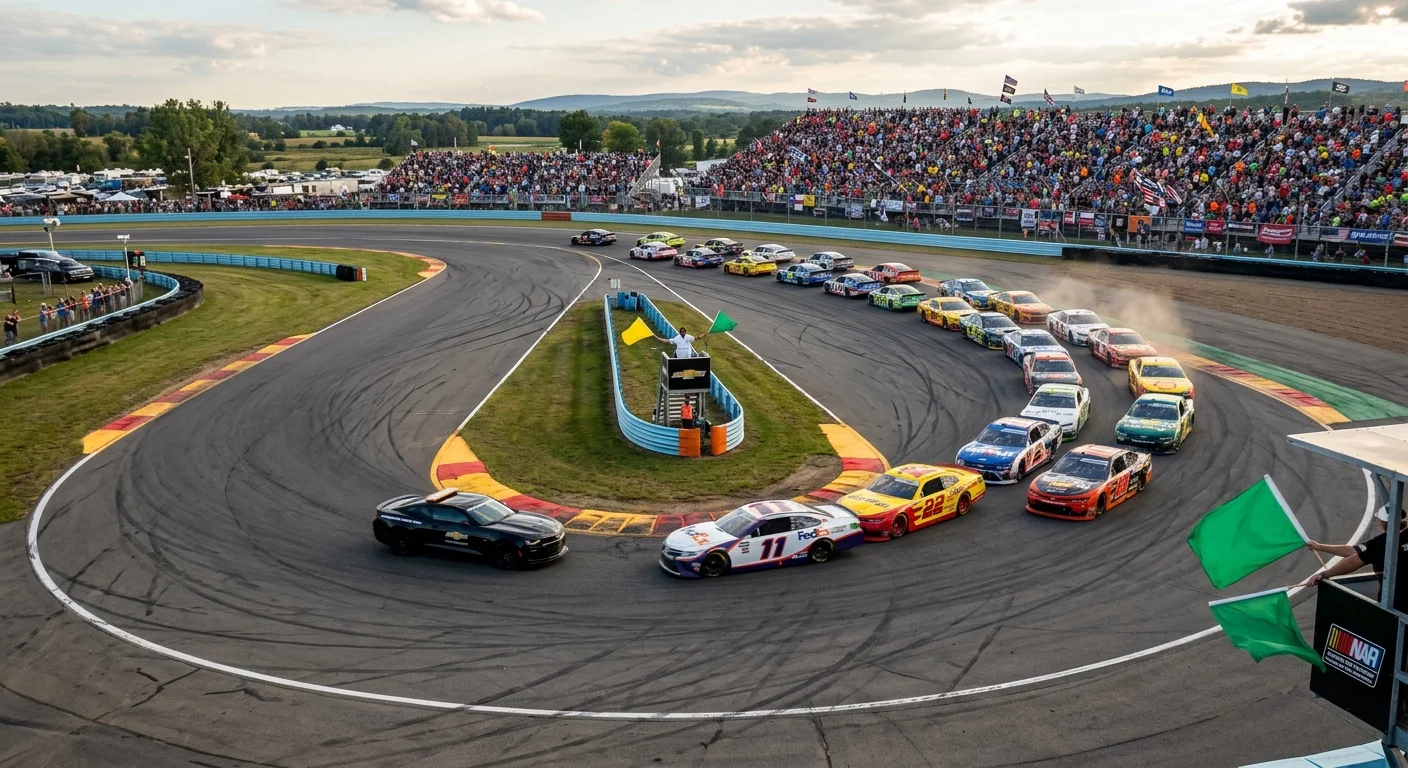
NASCAR invented its own ending. A race shouldn't be decided by a wreck in the final two laps.
That's the problem GWC was built to fix. Back in 2004, a late spin brought out a yellow flag near the end. Fans got an anticlimactic finish no one wanted. NASCAR fired back with a system that locks in at least two more laps of clean, green-flag racing. It kicks in any time a caution hits inside the final two laps.
Here's how GWC overtime works:
Yellow drops within the last 2 laps — overtime begins
Green flag restarts the action (lap 1)
White flag waves (lap 2) — leader must complete a full green lap first
Checkered drops at the end of the white-flag lap
Another caution fires before the white flag? The whole thing resets and runs again
The rules have changed a lot since 2004:
Era | Overtime Attempts Allowed |
|---|---|
2004–2009 | 1 attempt only |
2010–2015 | Maximum 3 attempts |
2016–present | Unlimited attempts |
Unlimited restarts changed the game. No more races dying on a fluke caution after one failed attempt.
The numbers show how much this rule matters:
114
Overtime Finishes
40
Different Winners
502
Extra Laps Raced
That means 35% of those races went to a driver who wouldn't have won under the original lap count.
Some races burned through those laps fast:
Race | Extra Laps | Outcome |
|---|---|---|
2015 Fontana | 8 | Logano declared winner after Harvick triggered wreck on 2nd GWC |
2014 Kansas | 7 | Johnson won on 2nd attempt |
2013 Talladega | 6 | Keselowski held on |
2018 Sonoma | 4 | Truex spun on final restart, fell to 20th |
Overtime flips strategy on its head. Crew chiefs crunch fuel loads for two to eight extra laps. That gap separates a risky short-pit from a fuel-stretch gamble. Tire calls turn brutal fast. Fresh rubber gives you restart grip — but you lose track position. Truex found that out in 2018. He pitted for tires before a GWC restart and dropped the lead. On the flip side, drivers like Johnson exploit clean-air restarts. They shoot to the front before anyone else can settle in.
In 2018 alone, seven Cup races ended in GWC overtime — 35 extra laps of racing that the old rules would have cut entirely.
Brief History of Racing Flags — From 1900s to Modern NASCAR
Racing flags didn't start on an oval. They started on a rally route.
In 1906, officials at the Glidden Tours road rally waved a black-and-white checkered pattern to mark checkpoints and end race segments. That same year, the first photo proof of a checkered flag finishing a race showed up at the Vanderbilt Cup on Long Island, New York. One image. One moment. A tradition that outlasted everything around it.
Before flags, officials shouted verbal commands to manage race traffic. That system couldn't keep up with speed. Visual signals took over from words — and the change stuck.
NASCAR's own flag history follows a clear progression:
Year | Milestone |
|---|---|
1949 | Green flag used at the first Stock race, Charlotte Speedway |
1980 | Twin checkered flags adopted from IndyCar's Duane Sweeney tradition |
2004 | Green-White-Checkered overtime added; Sunoco logo replaced UNOCAL 76 on the checkered flag design |
2017 | White-and-green checkered variant added to signal stage endings |
Each change solved a real problem. GWC fixed finishes that felt flat and disappointing. Stage flags gave the whole field a clear, structured rhythm. The twin checkered flags? Pure ceremony — but ceremony that means everything to any driver who has crossed that line first.Behind that ceremony is production quality most fans never think about. Every race-ready flag is built for visibility, durability, and consistency — the kind of standards you’d expect from a professional Nascar flag factory working under race-day demands.
At the same time, the influence goes beyond the track. From events to fan gear, custom Nascar flags services make it possible to recreate those same iconic designs with the same visual impact.
Physical flags are still NASCAR's standard today. No software crash can wipe out a hand-waved signal.
Custom NASCAR Flags for Fans, Events, and Garages
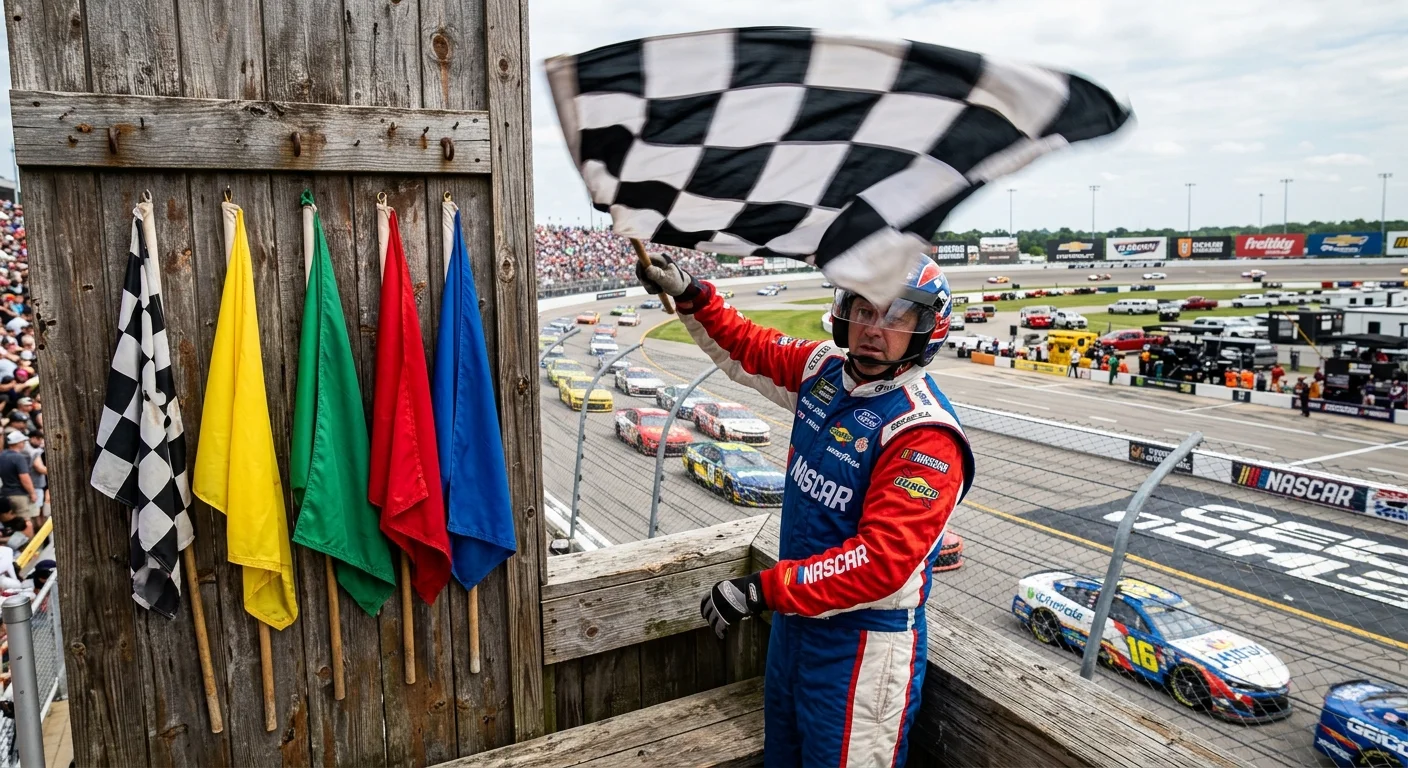
Knowing what every flag means is one thing. Owning one is a different story.
Decking out your garage? Throwing a race-day party? Running a local karting event? The right flag makes the whole setup feel real. Here's what to check before you buy.
Size matters more than most people think:
- 24" x 30" — the official NASCAR standard; great for garage walls and track display
- 3' x 5' — the fan-favorite size for banners, viewing parties, and event decorations
For material, 70 denier nylon is the top choice. It holds color outdoors, handles wind without tearing, and weighs more than standard ripstop. That's the same spec professional flaggers use.
Mounting hardware is easy to miss. Look for flags pre-stapled to 32" x 5/8" wood dowels with heavy-duty steel arrow-tip staples. Pole sleeve options come in 1.5" white canvas or color-matching nylon. Both fit standard 5/8" dowels.
Color accuracy matters for display flags. Professional-grade flags follow verified Pantone specs:
Red
186C
Yellow
YellowC
Green
348C
Black
BlackC
You get consistent, true-to-race colors every time.
runcustomflag.com builds complete custom Nascar flag sets. You'll find checkered patterns, solid racing colors, and personalized designs. Full kits come with dowels and sleeves. Sizes work for garages, race parties, and track events.
Conclusion
Every flag that waves over a NASCAR race tells a story — and now you know how to read them all.
You might be watching your first Daytona 500. Or maybe you've been trackside for decades. Either way, knowing the difference between a yellow flag caution and a debris warning stripe changes everything. Understanding what the green-white-checkered finish means for your favorite driver's championship hopes? That's what separates a passive viewer from a genuine insider.
That's the real upgrade here: not just knowing the rules, but feeling the race the way it's meant to be felt.
The black flag unfurls. The white flag signals that final heart-pounding lap. You'll know what's at stake — and so will everyone sitting next to you.
Ready to take your NASCAR fandom further? Check out custom racing flags at runcustomflag.com . Bring the energy of race day to your garage, tailgate, or next event. It's an easy way to show up like a true fan.
The green flag is waving. Go.
Video Guide
Related Articles