That yellow flag spiraling through the air stops the play — but does it stop your understanding of the game?
For millions of fans in the stands or on the couch, a referee's flag is a make-or-break moment. The call either makes sense or leaves you confused.
Football officiating flags are not just random fabric tossed onto the field. Every color matters. Every throw means something. Every hand signal that follows tells a clear story about what just happened on the field.Behind the scenes, demand for these on-field markers is tracked by football flags wholesalers in football game equipment markets that supply leagues, schools, and training programs.
This guide covers every flag in the game — from the classic yellow penalty flag to the coach's red challenge flag. You're a first-time viewer trying to keep up? It's got you covered. You're a seasoned fan checking a controversial call? Same. You're a flag football parent learning the rules alongside your kid? This is for you too. No more guessing. No more confusion.
The Yellow Penalty Flag: What It Means and When Referees Throw It
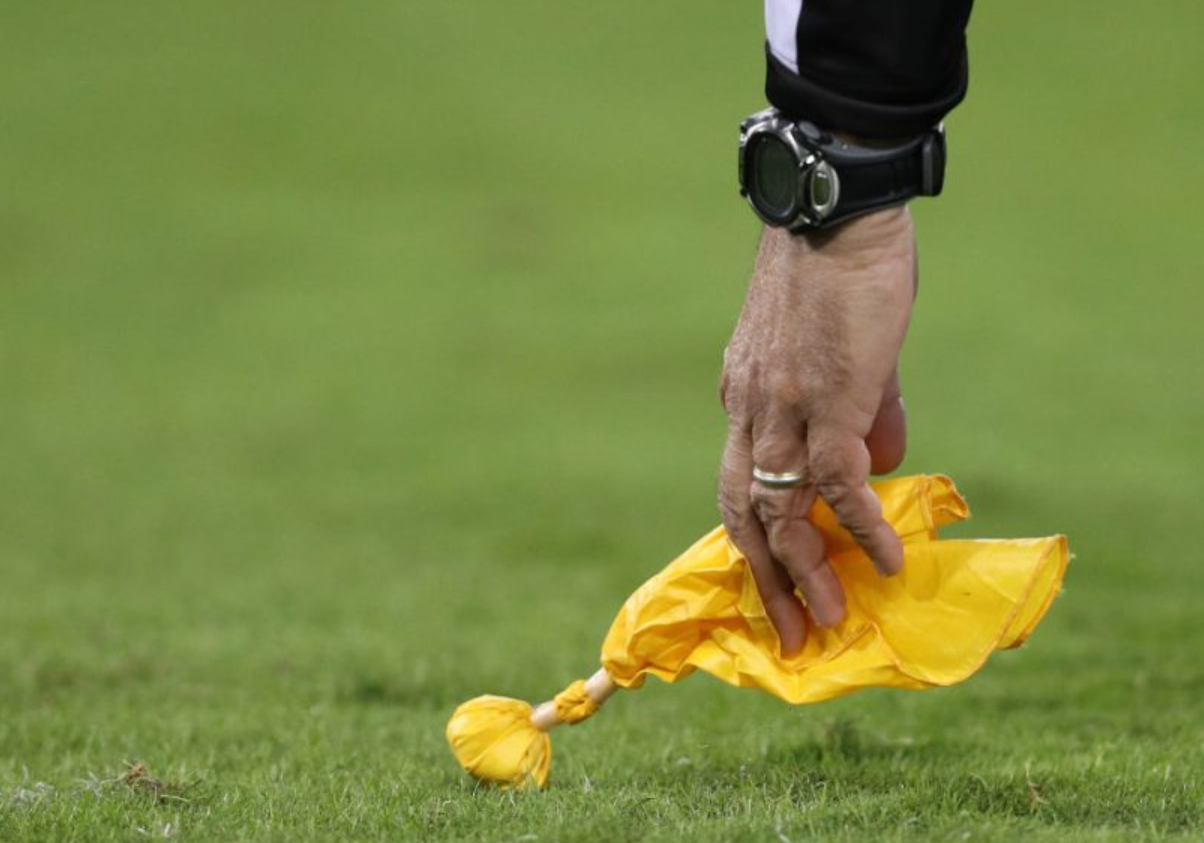
The yellow flag has been flying over NFL fields since 1965. Officials switched it from orange because yellow stands out better — visible against grass, turf, and mud. That single design decision made it one of the most recognized objects in American sports.Interestingly, the same visibility principles are also studied by top 8 Most Popular Football Team Flags suppliers when designing large stadium supporter flags meant to stand out in massive crowds.
Here's how it works: a referee spots a foul during live play and throws the flag. The whistle stops the clock. Then comes the announcement — foul type, offending team, yardage penalty. At that point, the non-offending team's captain makes a choice: accept the penalty or decline it.
That choice matters more than most fans realize.
In 2025, NFL officials threw 3,565 flags across the season, totaling 28,672 penalty yards . Of those, 147 were declined and 535 resulted in offsetting fouls. That means about one in five flags thrown had zero effect on the scoreboard.
3,565
Flags Thrown
28,672
Penalty Yards
147
Flags Declined
535
Offsetting Fouls
The most common yellow flag calls in 2025:
False Start — 681 flags (2.39 per game), the single most frequent violation
Defensive Pass Interference — 289 flags (1.01 per game)
Defensive Holding — 183 flags, with 75 offsetting
Delay of Game — 182 flags
Not all flags work the same way. A live-ball foul — like pass interference or defensive holding — gets enforced on the next snap from the spot of the foul. A dead-ball foul , like delay of game, gets enforced from the end-of-play spot. It carries a flat 15-yard penalty with no automatic first down.
Key Stat
Road teams absorb 53% of defensive pass interference calls. That gap has held steady across 15+ seasons of NFL data.
The Red Challenge Flag: How the Coach's Replay Challenge System Works
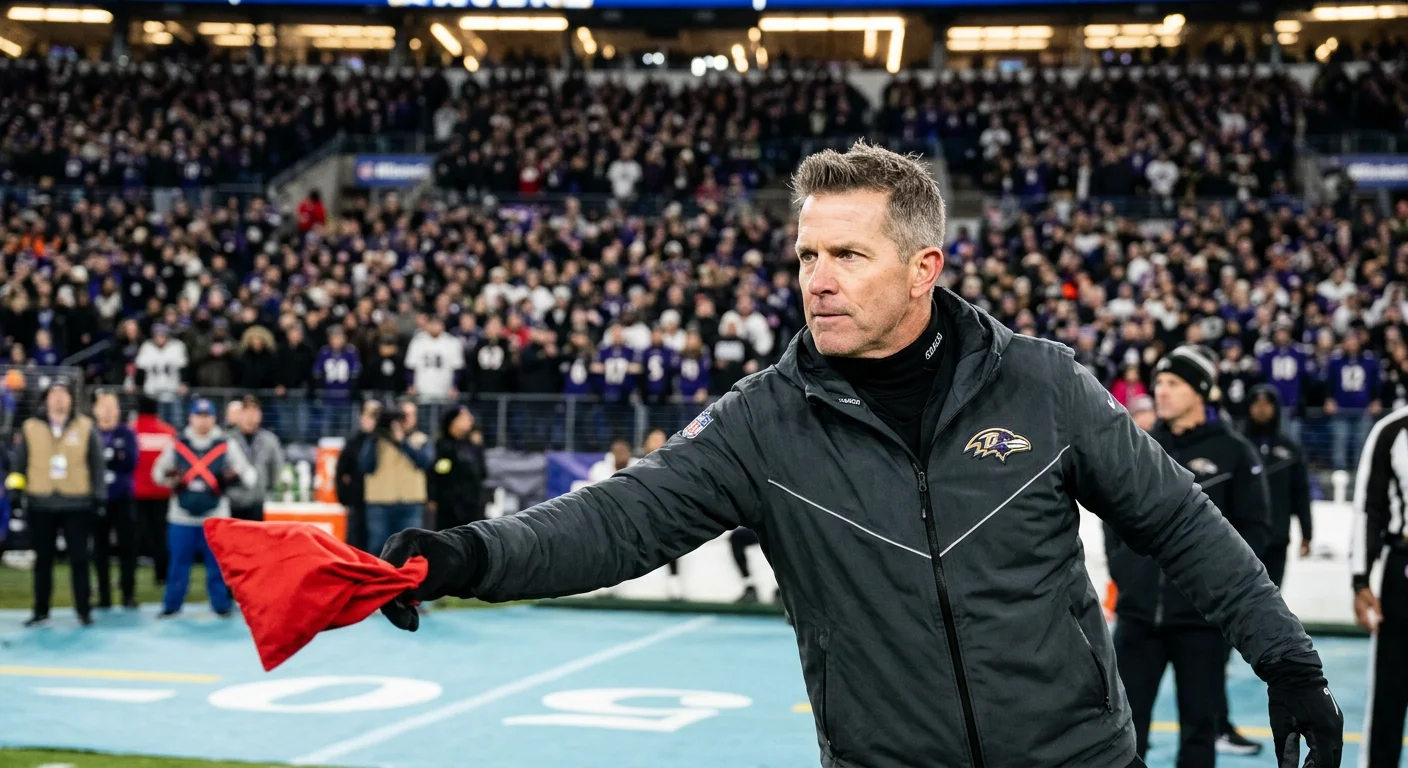
The red flag doesn't come from the officials. It comes from the sideline — and that changes everything.Replica versions of this sideline signal are commonly produced by custom Football Team Flags suppliers creating fan merchandise and team-branded sideline gear.
A head coach who disagrees with a ruling on the field pulls a small red flag from his pocket and throws it. That single throw freezes the play and triggers a formal replay review. The booth upstairs pulls the video. The referee walks to the sideline monitor. The stadium waits.
Here's the structure every fan should know:
Each team gets 2 challenges per game — win both, and you earn a third
A challenge costs one timeout — lose the challenge, you lose that timeout for good
Win the challenge , and your timeout is returned. The call gets reversed. Play resumes in your favor.
Inside the final 2 minutes of each half, coaches cannot challenge. All reviews shift to the booth on their own
The red flag covers specific play types only — scoring plays, turnovers, pass completions, runner down-by-contact rulings. Penalties are not reviewable by challenge. That line frustrates fans, especially after a contested pass interference no-call goes unaddressed.
Coaches who burn challenges on marginal plays early in the game run out of options late in the fourth quarter. No flags left means no recourse — even on a call that decides the outcome. The red flag is a resource. The best coaches treat it like one.
Offensive Penalty Flags Explained: Fouls That Hurt Your Own Team
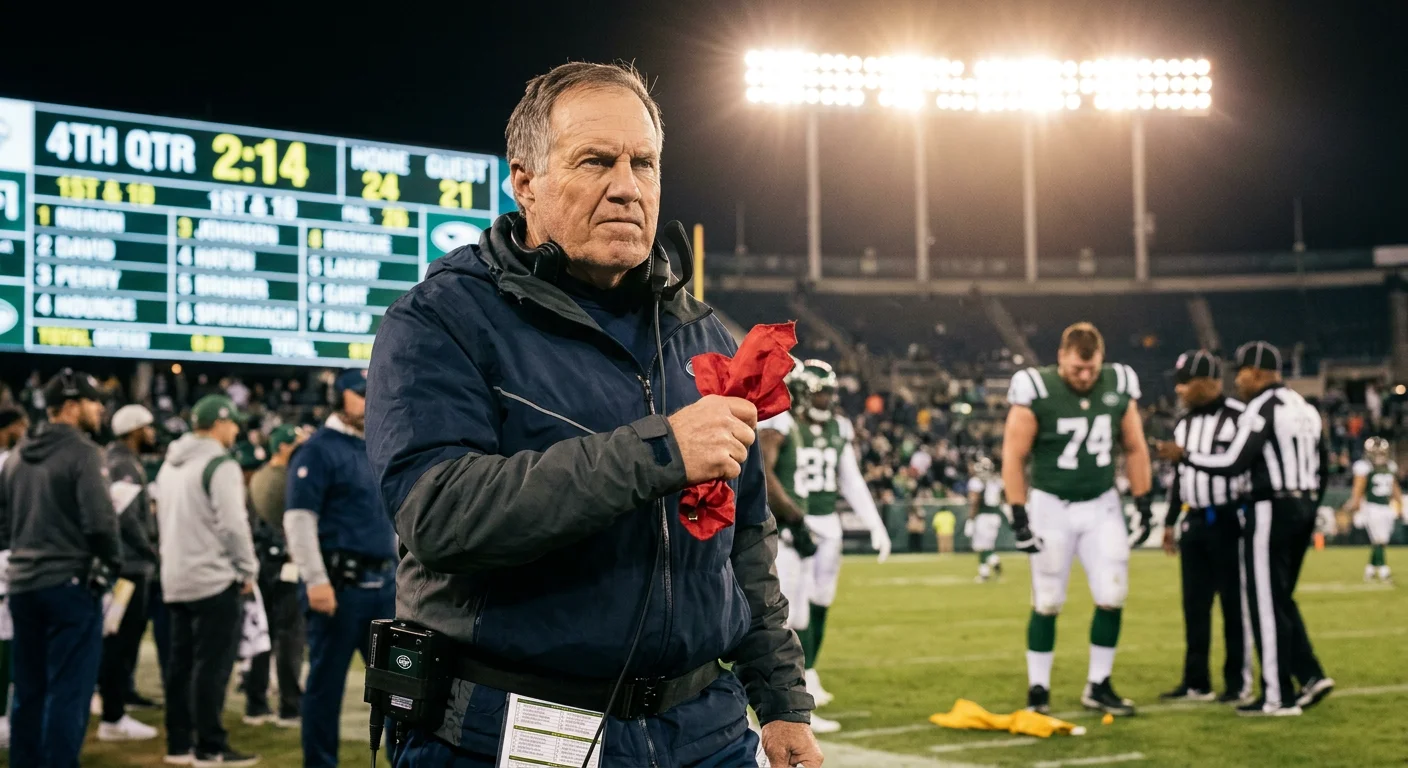
Offensive penalties are the cruelest kind. Your team executes the play, gains the yards, celebrates the first down — and then a flag appears from nowhere, wiping out every inch of it.
In 2025, NFL offenses gave up 28,672 penalty yards to their own mistakes. Standardized yellow penalty flags like these are mass-produced in specialized football Team Flags factory facilities that supply leagues from youth football to professional officiating crews.The yellow flag thrown against your own team doesn't just cost yardage. It kills momentum, burns clock, and hands the defense a second chance they didn't earn.
Here's what's happening each time that flag hits the turf on the offensive side.
Holding: The Flag You'll See More Than Any Other
Offensive Holding led all penalties in 2025 — 684 calls, 2.40 per game . Every lineman in the NFL holds on every snap. Coaches will tell you that straight up. The penalty happens when an official catches it. The call costs 10 yards from the spot of the foul, and the down replays.
56% of offensive holding calls were declined by the opposing defense. Defenses sometimes get more value from the result of the play than from the penalty yardage. Good defensive coordinators know exactly when to take which option.
Dallas led the league with a 1.824 holding rate per game . The LA Chargers weren't far behind at 1.778 . Hold that much, and you're handing the defense free field position every other possession.
The referee signal: both hands grip an imaginary jersey across the chest — a hard pulling motion that's easy to spot from the upper deck.
False Start vs. Offensive Offside: Not the Same Call
These two get mixed up all the time. The difference matters more than most fans realize.
A False Start is a dead-ball foul. An offensive lineman flinches before the snap, and the play dies before it starts. -5 yards , back to the line. No live action. Nothing athletic required to stop it. The referee raises both hands to the shoulders, elbows bent outward — a movement violation signal.
Offensive Offside works differently. It's a live-ball foul. The play runs all the way through the whistle. Just 22 calls in 2025 (0.08 per game) — one of the rarest flags on this list. Same -5 yard penalty, but the rules around it are completely different.
The Costly Errors: Passing Game Violations
Three passing fouls stand out. Each one stacks a loss of down on top of the yardage hit. That double punishment can flip field position in one snap.
Illegal Forward Pass — Just 8 calls in 2025 (0.03 per game), but the damage is real. A quarterback releases the ball past the line of scrimmage — or throws a second forward pass — and it's -5 yards plus a lost down . New Orleans led all teams at a 0.118 rate, a number that jumps off the stat sheet.
Intentional Grounding — 59 calls in 2025 (0.21 per game). A quarterback throws the ball away to dodge a sack, with no real pass attempt behind it. Officials flag it on the spot. The penalty is -10 yards or the spot of the throw , whichever hurts more. The down is gone no matter what. The referee waves both hands toward the ground — a hard, clear signal.
Offensive Pass Interference — 72 calls in 2025. Pittsburgh's offense drew flags at a 0.389 per game rate . Cincinnati came in at 0.353 . An eligible receiver pushes or pulls a defender outside the one-yard contact zone. That costs -10 yards and the down . About half — 49% — of these calls got declined. Defenses often take the incomplete pass result over the penalty yardage. The math usually works in their favor.
The Supporting Cast
Two more fouls round out the most common offensive violations:
Illegal Use of Hands — 61 calls (0.21/game), -10 yards . An offensive player grabs or holds a defender away from the ball in ways that fall outside the standard holding definition.
Illegal Block Above the Waist — 57 calls (0.20/game), -10 yards . This one shows up most on special teams and in run blocking. A blocker makes contact above the waist in a restricted zone or situation, and it gets flagged.
The hand signals for these fouls are clear once you've seen them a couple of times. You'll read the call before the announcement even comes. A referee stretching both arms out flat, palms down, signals offensive pass interference. Arms crossed at the wrists above the head means illegal forward pass. Every motion is set and standardized — built to read from 50 yards away.
Offensive penalties don't just cost yards. They cost the rhythm an offense spends the entire first half building. The flag isn't just a call. It's a reset button the defense never had to press.
Defensive Penalty Flags Explained: Fouls That Give the Offense Free Yards
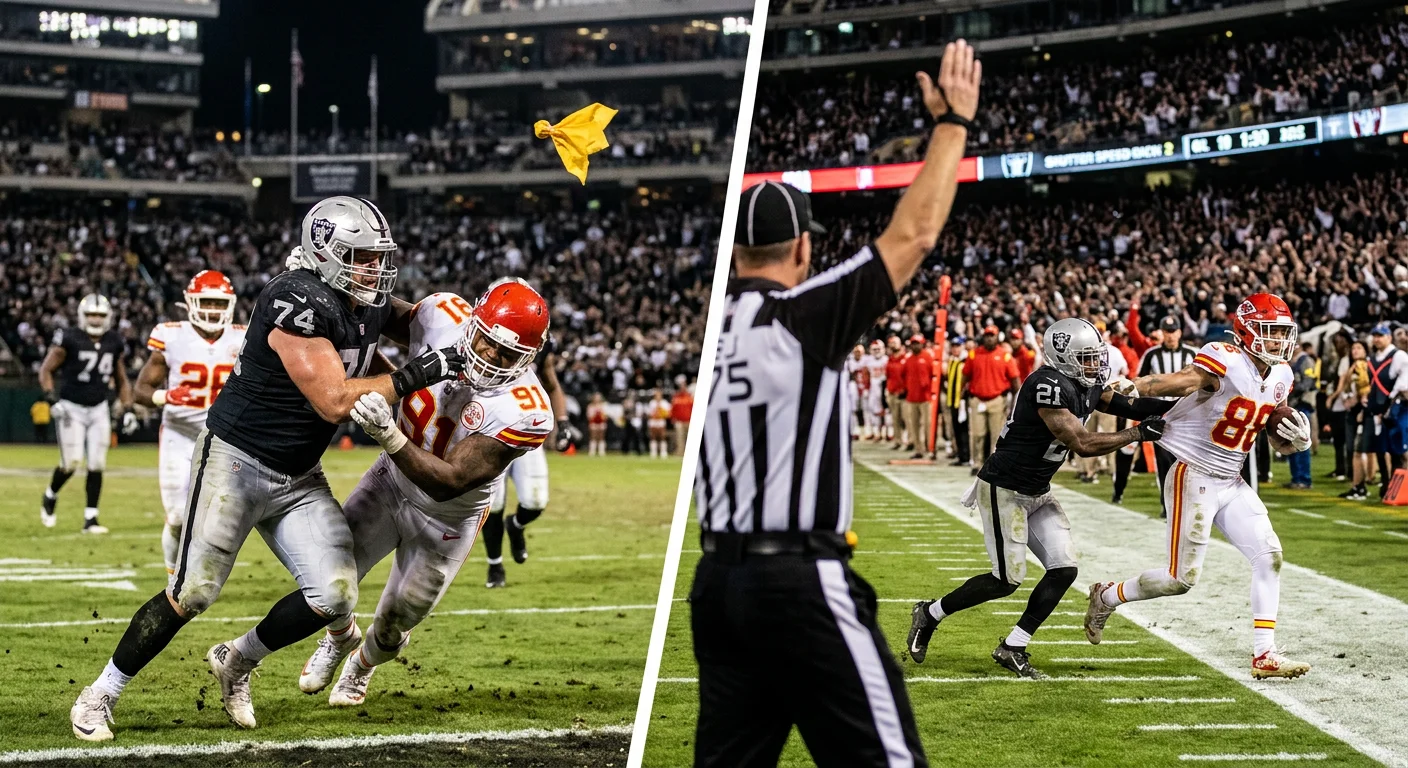
Defensive penalties don't just punish a team — they hand the offense yards it never had to earn.
No broken play. No contested route. No scramble. A defensive back grabs a receiver's jersey for half a second too long. The offense is now 15 yards closer to the end zone with an automatic first down. That's the real cruelty of defensive flags: the penalty does the offense's job for it.
Pass Interference: The Most Expensive Flag on the Field
Defensive Pass Interference generated 4,406 yards across 289 calls in 2025 — an average of 15.46 yards per call . No other defensive penalty comes close to that damage per flag.
The pain comes from the rule structure. DPI is a spot foul . The ball moves to wherever the contact occurred — 30 yards downfield, 40 yards, wherever. The offense also gets an automatic first down. There's no cap, no ceiling, no mercy. One bad hand from a cornerback wipes out an entire defensive series.
Dallas led the league at 1.176 DPI flags per game . Denver wasn't far behind at 1.053 . New England's C. Davis racked up 9 DPI calls alone across the season — 187 penalty yards tied to his name, 0.62 flags every single game.
Compare that to Defensive Holding — 183 calls, 849 yards, 2.98 yards per flag . The gap comes down to structure. Holding carries a fixed 5-yard penalty plus an automatic first down , no matter where the contact happened. It stings, but it's survivable. Detroit absorbed the most holding flags at 0.765 per game , Houston at 0.684 .
Offsides, Encroachment, and Neutral Zone Infractions
These three fouls get mixed up all the time. They're not the same call.
| Foul | Yards | What Triggered It |
|---|---|---|
| Offsides | 5 | Defender crosses the line at the snap, no contact |
| Encroachment | 5 | Defender makes contact with an offensive player pre-snap |
| Neutral Zone Infraction | 5 | Defender disrupts the neutral zone and causes a false start reaction |
Defensive Offside produced 146 flags and 697 yards in 2025, averaging 0.51 per game. The LA Chargers led at 0.611 per game . Five yards and a first down may sound minor. Inside the red zone, though, it turns into points.
Roughing Penalties: The 15-Yard Shots
Roughing the Passer and Roughing the Kicker both carry flat 15-yard penalties with automatic first downs . These are protection fouls — built to shield players in the most exposed positions on the field.
Roughing the Passer gets called on late hits after the throw, low contact below the knees, helmet-to-body contact, or driving a quarterback into the ground. Roughing the Kicker works the same way: any contact during the kicker's follow-through motion earns the flag. Both calls shift field position in a single play.
Defensive flags are the offense's best friend — and a secondary's worst nightmare. The flag hits the turf, the chains move, and no one on defense even touched the football.
Special Teams Penalty Flags: Kicks, Punts, and Returns
Special teams penalties don't grab headlines. But they decide field position — and field position decides games.
The flags thrown on kicks, punts, and returns follow their own rulebook. Same yellow flag. Different consequences.
Kickoff Out of Bounds costs 5 yards from the line of scrimmage. The kicking team re-kicks, or the receiving team takes possession at the 30-yard line. In 2025, seven "Player Out of Bounds on Kick" flags were called. Baltimore, Las Vegas, and Tampa Bay each led that list at 0.059 per game. Small number. Massive field position swing every time.
Interference with Fair Catch brings a flat 15-yard penalty and an automatic first down. A returner raises his hand, he gets a one-yard bubble of protection. Touch that bubble, and the offense gains 15 yards without running a single route.
Block in the Back costs 10 yards. You see it all the time on punt and kick returns — a blocker pushing from behind instead of engaging head-on. The flag flies the moment hands touch the back.
League Worst
The Chicago Bears led all teams with 120 special teams penalties in 2025. That's not bad luck. That's a unit breaking rules on a routine basis — and giving up field position every single week because of it.
Unsportsmanlike Conduct & Personal Foul Flags: The 15-Yard Penalties
Fifteen yards. That's the price of losing your composure.
Unsportsmanlike conduct flags don't come from a blown assignment or a missed block. They come from a player making a split-second decision — often emotional — to say or do something that crosses a clear line. Officials have full authority to call it. The flag hits the turf. The yardage follows. The whole team pays for one person's moment.
The penalty is always flat: 15 yards , assessed after the play ends. The defense commits it? The offense gets an automatic first down on top of the yardage. After a scoring play, the 15 yards come off the kickoff — shifting field position in a way most fans never notice.
What gets flagged:
Taunting — including planned celebrations and drawn-out theatrics (rule in place since 2004)
Verbal abuse directed at officials
Helmet removal on the field during live play
Excessive celebrations with props or group choreography
A substitute leaving the bench during a fight
Flopping to draw a roughing the kicker call
Goaltending at the crossbar to block a field goal
Illegal timeout calls meant to ice a kicker
That last group — flopping, goaltending, illegal timeouts — carries the 15-yard penalty but no ejection risk . The rules are clear: disqualification applies to conduct fouls of a different nature. Not these.
For everything else, two unsportsmanlike conduct fouls in one game can end your day early. The NFL locked in that two-foul ejection standard in 2016. It came after the Odell Beckham Jr. versus Josh Norman incident that took over the news cycle. Giants center Weston Richburg became the first notable player to fall under the new rule that same season. He got ejected in Week 3 after a second foul — a cheap shot on Norman that gave officials no room to let it slide.
The NCAA draws an even harder line. Two unsportsmanlike conduct fouls mean automatic ejection . No judgment call. No exceptions.
In 2025, the league averaged 1.22 unsportsmanlike conduct penalties per team . Across an 8-game sample, 13 flags flew over 108 team-games — 157 total penalty yards . Flagged players included Seattle's J. Smith-Njigba, Kansas City's K. Hunt, and Dallas's T. Diggs — each taking a clean 15 yards. A few calls landed lighter. D. Lenoir and D. Porter each drew 8-yard marks. That's a reminder that officiating judgment still carries weight on the edges of these calls.
One pattern stands out: unsportsmanlike conduct flags spike in the final five minutes of each half. Tensions rise. Stakes climb. Referee scrutiny tightens at the same moment. The flags follow the emotional clock as much as the game clock.
The NFL put this penalty under a microscope in 2021, targeting taunting, baiting, and demeaning acts during dead-ball periods. Flags jumped that season. That wasn't a coincidence.
Flag Football Flags Explained: A Different Game, Different Rules
Flag football borrows the name but rewrites the rulebook.
Here, the flags don't come from referees. They come from the players themselves. Each player wears two nylon strips clipped to a belt at the waist. Each strip measures 2" x 14" and snaps into place with plastic pop-off fasteners. Pull one free, and the play stops. Dead ball at the spot. No tackle required. No contact needed. The flag is the tackle.
That's the core difference. Referee penalty flags still fly — bright yellow, same as any NFL Sunday — and they still call holding, pass interference, and illegal motion. But player flags replace something far more physical. They replace collision.
Two fouls define flag football's unique penalty system:
Flag Guarding — A ball carrier who shields his flags with a stiff-arm, or covers his belt, loses 10 yards and replays the down. The flags must stay exposed. Always.
Illegal Flag Pull — Yanking a flag before the snap, or pulling one from a player without the ball, costs 10 yards from the spot plus an automatic first down.
Then there are No-Run Zones — cones placed 5 yards from each end zone. Inside that boundary, the quarterback cannot run. He must throw. A flag pull inside the zone triggers a safety: 2 points and an immediate possession change. This pushes the game toward passing and takes the quarterback scramble off the table as a weapon.
NFL FLAG programs for younger players (ages 5–14, running 5v5 or 7v7) tighten things up further: 40-yard fields, 4 downs to gain 20 yards, a 7-second QB rush clock, and zero blocking allowed. The flags get brighter. The rules get tighter. The game gets faster.
Same yellow flag flying. A completely different game underneath it.
Boundary & Field Flags: The Non-Penalty Flags You See on the Field
Not every flag on a football field means somebody cheated.
Some flags are there to define the space the game lives in. They're bright, fixed, silent markers. They show players where the field ends and out-of-bounds begins. No penalty. No yardage. No announcement over the PA. Just a flag, doing its job while the noise happens everywhere else.
The ones you'll spot without a referee throwing anything:
End zone pylons — eight orange markers, one at each corner of both end zones. A ball breaking the plane of any pylon counts as a touchdown. They're also reviewable on replay.
Sideline boundary markers — small flags or posts marking the edges of the field. They keep the out-of-bounds line physical and visible, not just painted.
First down chain markers — the poles on the sideline connected by a 10-yard chain. Not flags in the traditional sense, but field markers that officials use to measure forward progress.
These markers don't generate calls. They generate clarity. Every player on the field reads them. The cornerback watches his feet near the sideline. The receiver checks if he can get both feet down. The returner decides whether to step out or take the hit.
The field isn't just grass. It's a mapped environment. These flags are the map.
Pro Tip: For bulk orders of custom team flags, sideline banners, or fan section displays over 100 pieces,
contact our specialists for volume pricing and free design assistance.
How to Read Referee Hand Signals Alongside the Flags
The flag lands. Then the hands start moving.
Flag first, hand signal second. That's how officials communicate every penalty call to everyone in the stadium. The flag tells you something happened . The hands tell you what .
Read both together, and you'll know the call before the PA announcer opens his mouth.
The basic system works like this:
Every signal is standardized. Every motion is built to read from 80 yards away. See each one two or three times, and they stick.
Here's what to watch for on the most common calls:
Holding — Both hands grip an invisible jersey at chest height, pulling hard toward the body. Offensive or defensive, the motion is identical. Context tells you which team it's on.
False Start / Illegal Motion — Both forearms rotate in tight circles in front of the chest. A rolling, winding motion. Dead-ball foul. The play never lived.
Offside / Encroachment — Hands placed flat on top of the hips. Still and even on both sides. Easy to spot from the upper deck.
Pass Interference — Both hands push straight out from the chest, palms forward. A blocking motion. The call says someone did that — pushed when they shouldn't have.
Intentional Grounding — Both arms wave downward toward the turf, crossing low in front of the body. The quarterback threw it nowhere. The signal says so.
Roughing the Passer — One open hand swings down onto the top of the opposite helmet-height fist. A striking motion. It flags illegal contact on the quarterback.
Unnecessary Roughness / Personal Foul — One wrist crosses over the other above the head. Crossed arms, raised high. It's one of the most dramatic signals in the game, and it brings one of the heaviest penalties: 15 yards.
Unsportsmanlike Conduct — Arms stretch straight out to each side, palms down, flat and parallel to the ground. A wide, deliberate gesture. It marks a behavioral violation, not a physical one.
Touchdown / Field Goal Good — Both arms shoot straight overhead, palms together. The crowd already knows. The signal makes it confirmed.
One key distinction: a flag drops near the sideline, and you see an official hold his flag straight up without moving. He's telling the head referee a foul occurred — but he's waiting for the whistle before giving specifics. The hold-and-wait is part of the system, not hesitation.
The hand signals don't replace the flag. They complete it. Read them together, and you're watching the game the way officials call it.
FAQ: Common Questions About Football Flags
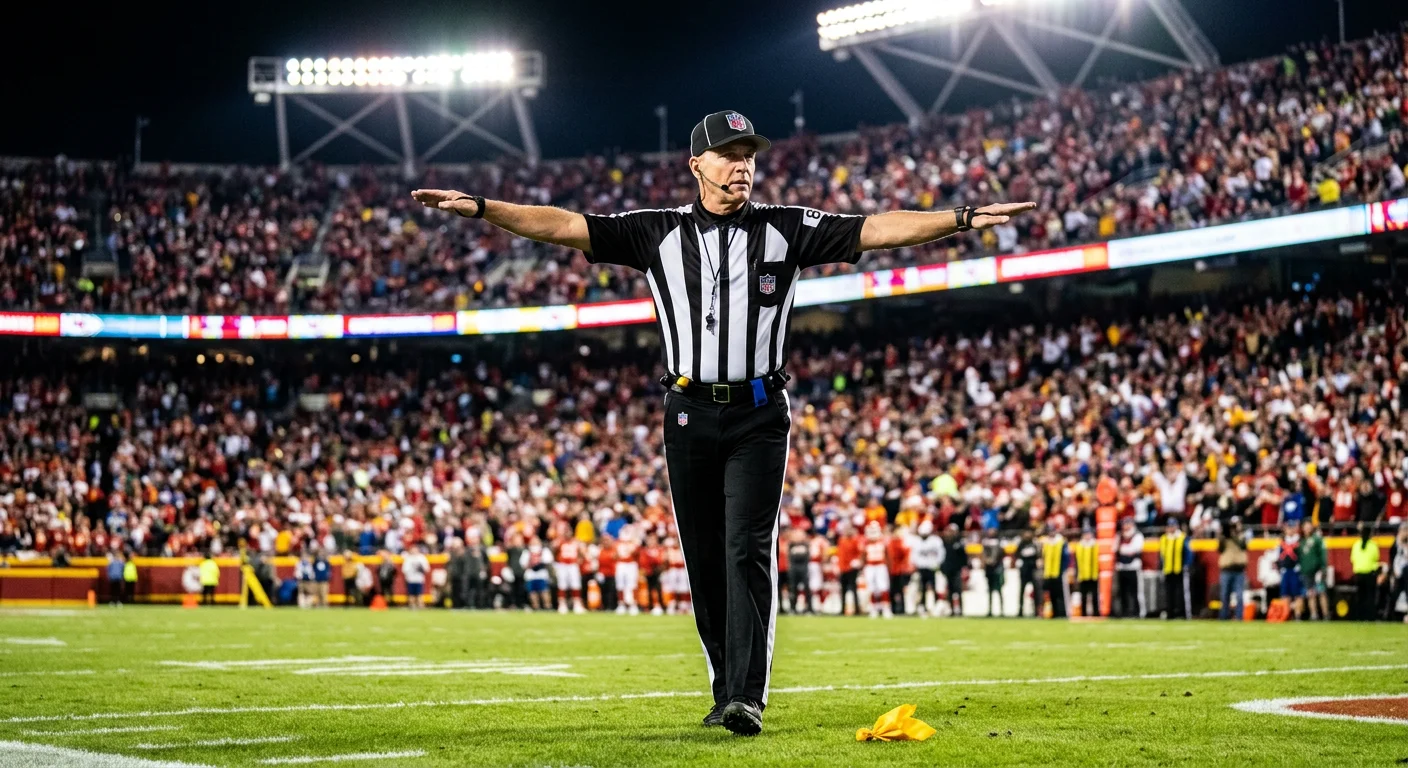
Fans ask the same questions every season. Here are straight answers.
What does a yellow flag mean in football?
A penalty. An official spotted a foul during live play and threw the flag to stop action. After the whistle, the referee announces the violation, the offending team, and the yardage. The captain of the non-offending team then decides: accept the penalty or decline it.
Can a team decline a penalty flag?
Yes — and it happens more than most fans realize. In 2025, 147 flags were declined across the NFL season. Defenses wave off offensive holding calls when the play result puts them in better field position than the 10-yard penalty would.
Why do coaches throw red flags?
To challenge a ruling on the field and trigger a video replay review. Each head coach carries two red flags per game. Win the challenge, keep your timeout. Lose it, and that timeout is gone. No challenges are allowed inside the final two minutes of each half.
Are penalty flags the same in flag football?
The yellow penalty flag is identical. What changes is the player flag — the nylon strips worn on the belt. Those strips must meet specific rules:
At least 2" wide and 14" long
A contrasting color to the opponent's flags
Attached with a one-piece quick-release belt using spring-loaded clips
No tape. No alterations. The flags sit at the hips and tailbone — exposed and reachable on every snap.
What is flag guarding?
A ball carrier uses a hand or arm to block defenders from grabbing the belt. That's flag guarding. It draws an automatic 10-yard penalty, and the down replays. The flags must stay accessible at all times. That's not a courtesy — it's a rule.
Do different leagues use different field sizes?
Yes. Field size depends on the organization. Standard flag football fields run 25 yards wide and 50 yards long, with 10-yard end zones. CIF fields stretch 30-40 yards wide and up to 80 yards long. Some youth formats go as narrow as 20 yards wide with 5-yard end zones. The field dimensions shift. The yellow flag stays constant.
Custom Football Flags for Your Team: From Sideline to Fan Sections
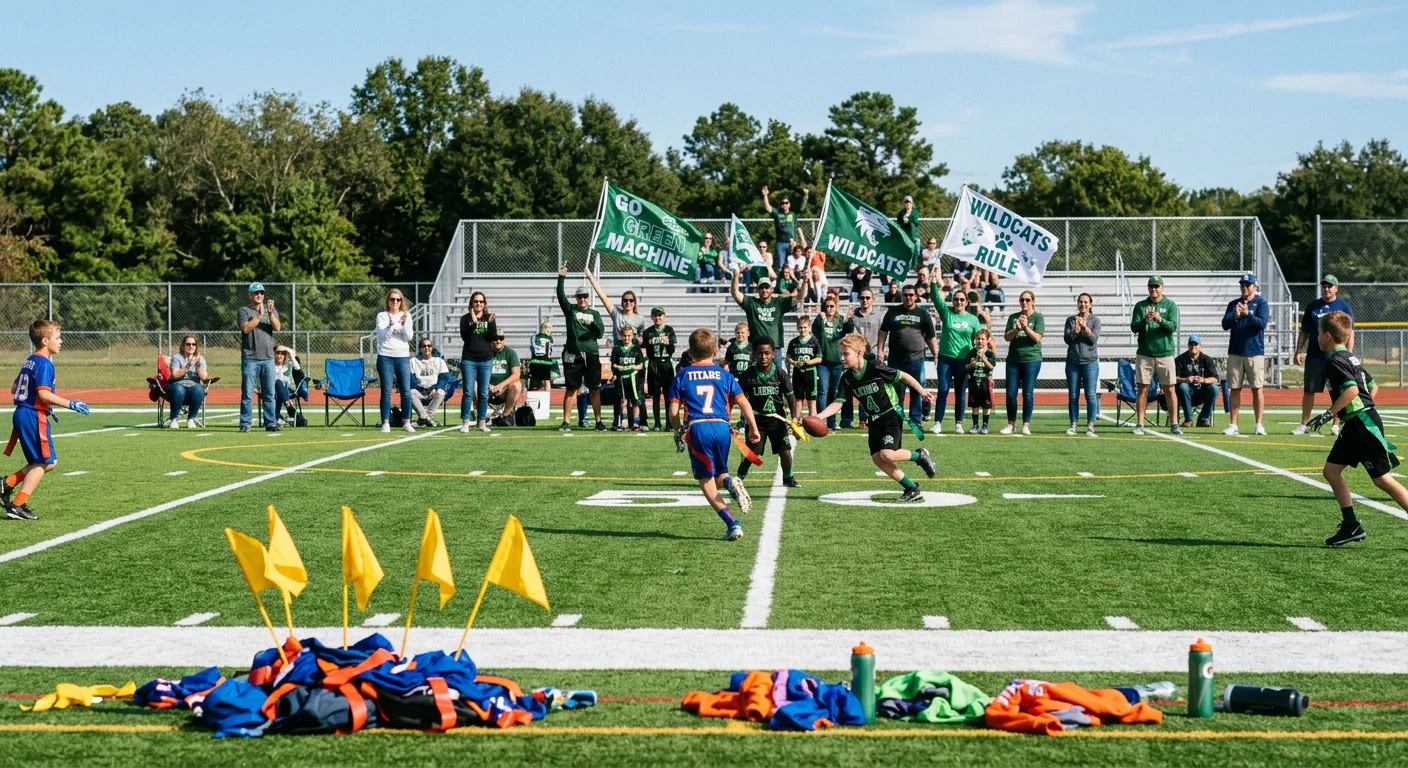
Flags don't just live on the field. They live in the stands, on the sideline, in the hands of 2.4 million kids playing organized flag football across the country.
$15.9B
Market Size 2025
48%
Fans Buy Yearly
2.4M
Kids Playing
The football merchandise market hit $15.9 billion in 2025 . Forty-eight percent of U.S. fans buy team gear every single year. Flags are part of that story — and most teams haven't claimed their spot yet with custom football flags.
Outfitting a youth sideline? Building a fan section identity? Branding a team that deserves its own colors in the wind? RunCustomFlag.com builds flags that hold up in real conditions. Bright colors. Durable materials. Built to your exact specs.
Your team already has the spirit. Give it something to wave.
Conclusion
Every flag on the football field tells a story. It's a split-second call that can flip field position, extend a drive, or change the entire outcome of a game. Learn what each football officiating flag means. Match it to the referee's hand signals in real time. You stop watching the game and start reading it.
Yellow flags for penalties. Red flags for challenges. Boundary markers doing quiet, steady work on the edges. Each one has a role — and now you know how to decode them all.
So the next time a flag flies across the field and the crowd erupts, you won't be asking "wait, what happened?" You'll be the one explaining it.
Building a team? Organizing a league? Showing up loud in the fan section? Custom football game flags make your presence impossible to miss.