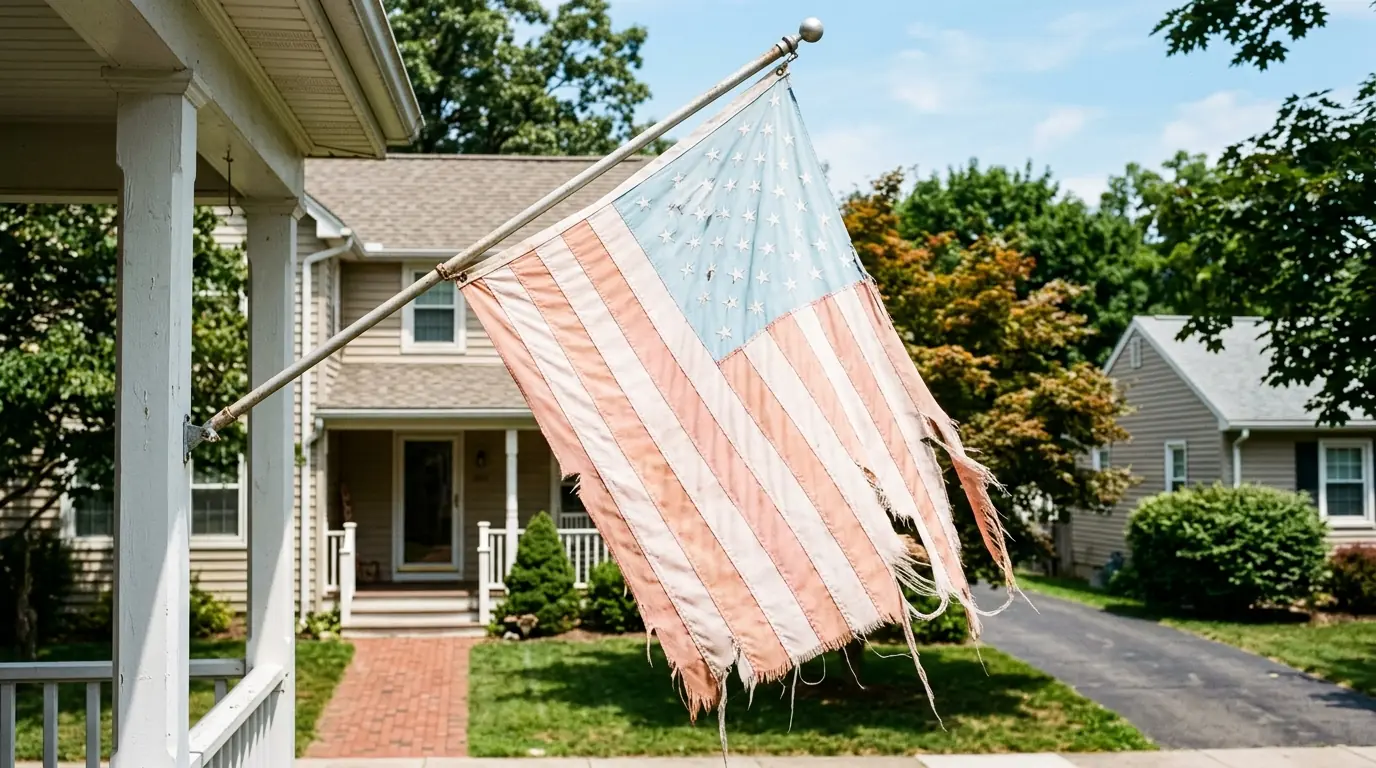
Your grandmother's flag survived a war and three decades on a porch pole, and you are about to ruin it with a plastic bag and a basement shelf.
Most flag damage happens during storage, not during use. The sun, wind, and rain that people worry about cause less long-term destruction than a poorly chosen container in an uncontrolled environment. The good news: proper flag storage costs very little and requires almost no ongoing effort once you set it up correctly.
This guide covers the complete process — from cleaning and drying through container selection, climate control, pest prevention, and the monitoring routine that keeps stored flags in display-ready condition for decades.
Pre-Storage Preparation: Cleaning and Drying Before Putting Away
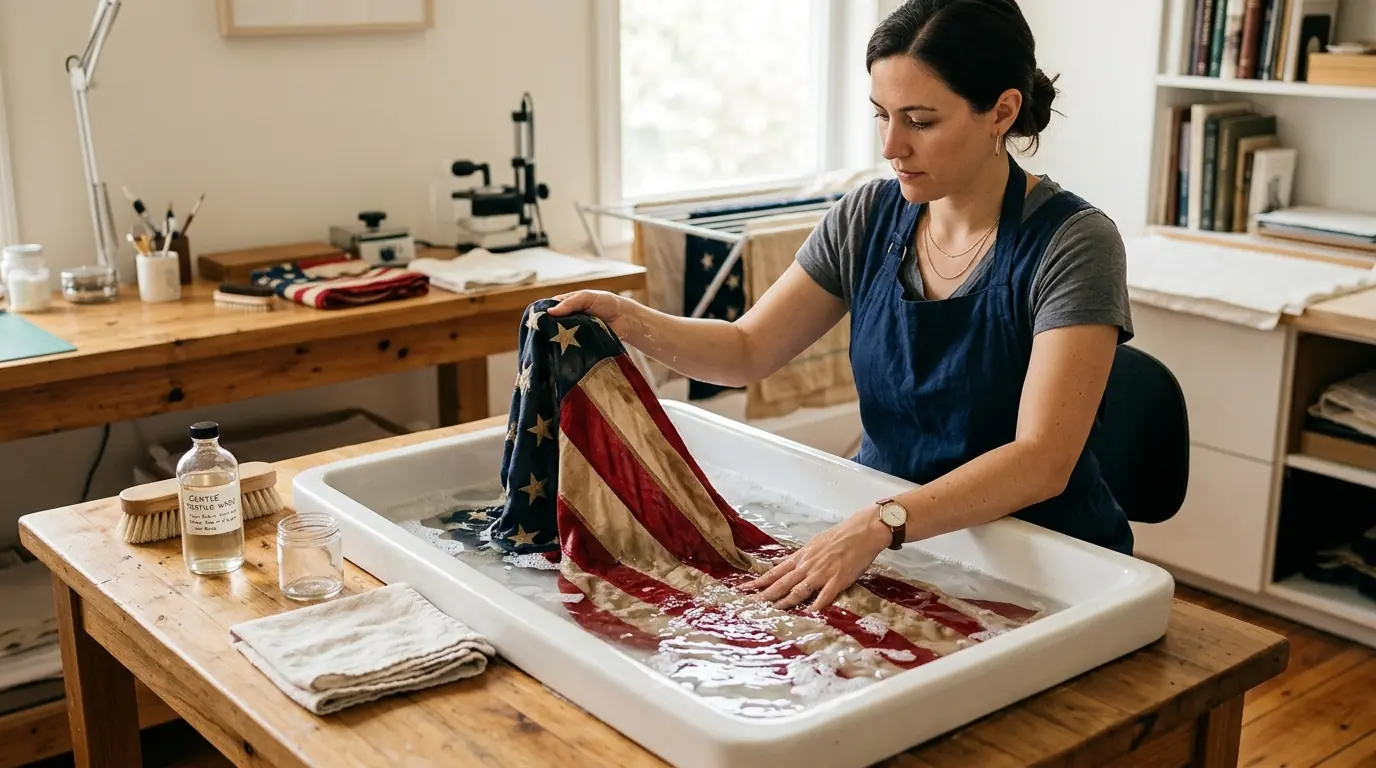
A flag that spent three summers on a porch pole has road dust ground into the fibers, UV-weakened stitching, and possibly a colony of mold spores waiting for the right humidity. Tossing it straight into a box is the fastest way to turn recoverable wear into permanent damage.
Start by inspecting every inch of fabric. Small tears and loose threads get worse under the tension of folding or rolling, so repair them first. Pull off any metal clips, carabiners, or snap hooks — grommets can stay, but anything that could scratch or rust against the fabric needs to go.
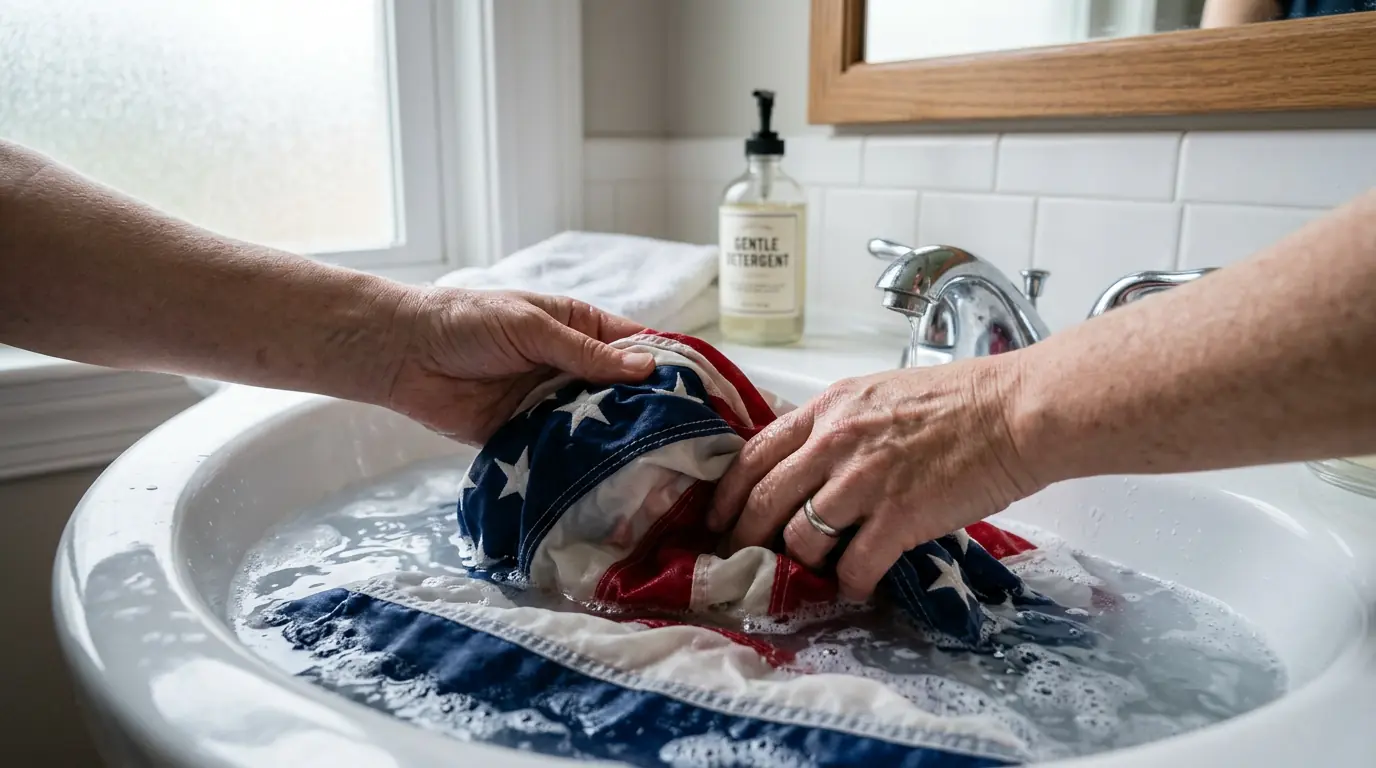
Cleaning depends on what your flag is made of. Nylon and polyester handle a gentle hand-wash in cold water with mild detergent. Skip the bleach entirely. Cotton flags bleed color more easily, so test a hidden corner before submerging. Cold water only. For vintage silk, put down the sponge. Vacuum the surface through a cheesecloth barrier instead. If the silk flag genuinely needs washing, Orvus WA Paste is what museum conservators reach for — but honestly, consult a professional before you risk it.
Rinsing matters more than most people realize. Soap residue left in the fibers attracts moisture and accelerates discoloration over time. Run cold water through the flag until it feels completely clean.
Drying is where people cut corners, and it costs them. Air-dry the flag flat or hung indoors, away from direct sunlight. Nylon melts at surprisingly low temperatures, so skip the dryer. Give the flag a full 24 to 48 hours. Moisture hidden in seams and hems creates mold inside a sealed container within weeks. The flag has to be bone dry before you store it.
Once dry, fold it into a triangle with stars facing out for short-term storage, or roll it on an archival tube if you plan to keep it stored for months or years.
Climate Control: Temperature, Humidity, and Light Requirements
The storage space matters more than the storage method. A perfectly rolled flag inside an archival tube will still degrade if you leave it in a garage that swings between freezing winters and 140-degree summer afternoons.
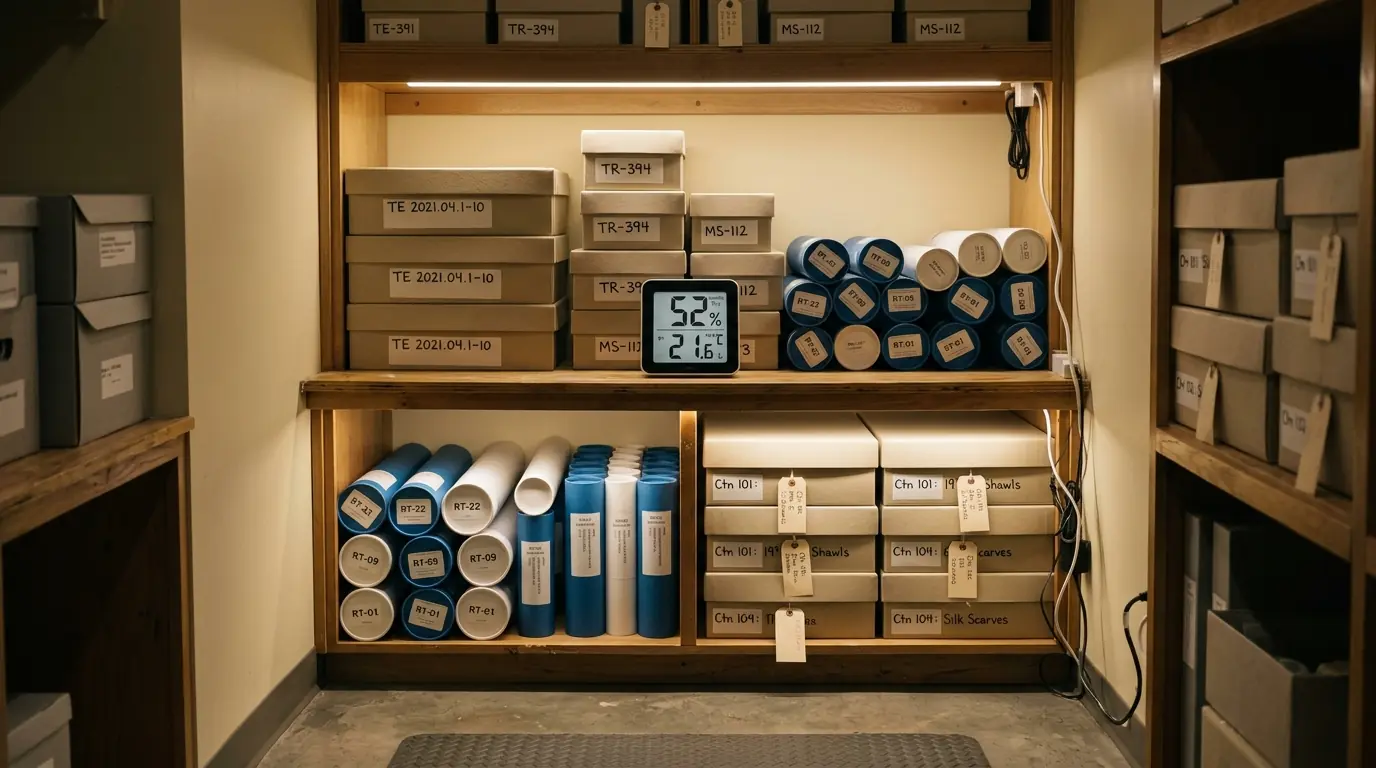
Aim for 60 to 75 degrees Fahrenheit and keep humidity below 50 percent. Those two numbers protect against most of the damage that ruins stored flags — fiber expansion, mold growth, and dye breakdown. A cheap digital hygrometer (under fifteen dollars) mounted inside your storage area tells you whether conditions are actually stable, rather than just feeling okay.
Basements seem logical but cause trouble. Even finished basements trap moisture behind walls, and that moisture migrates into fabric over weeks. Attics are worse. Summer attic temperatures routinely hit 140 degrees, turning fibers brittle and bleaching colors fast. Garages add chemical fumes and pest access to the temperature problem.
The best spot in most homes is a climate-controlled interior closet on a main floor. No exterior walls, no plumbing nearby, stable temperature year-round.
Light does cumulative damage that people underestimate. UV radiation breaks down dye molecules permanently — a flag stored near even indirect window light can lose 20 to 30 percent of its color vibrancy in a single year. Keep the storage area dark. If you need lighting, use LEDs. Fluorescent bulbs emit UV that adds up over months.
For humidity control inside containers, silica gel packets work well. Place two or three per storage box. The indicating variety changes color when saturated — blue or orange turning pink means it needs recharging. Heat the packets at 250 degrees for two to three hours and they work again indefinitely. That makes them more practical than replacement desiccants.
A dehumidifier handles room-level humidity if your storage area runs damp. Portable units sized for closets cost under a hundred dollars and prevent problems that no amount of silica gel can fix alone.
Rolling vs Folding: The Right Method for Different Flag Types
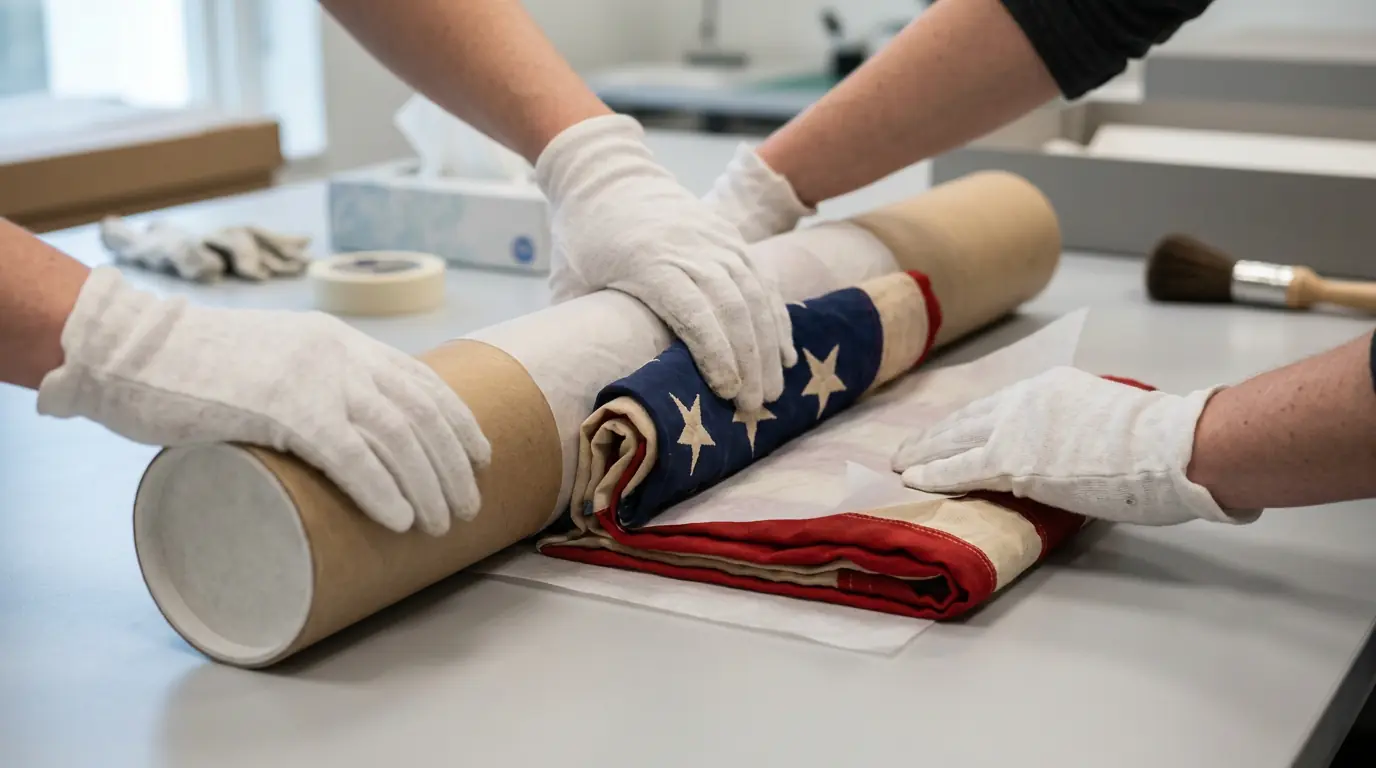
Rolling beats folding for long-term storage. That is the short answer, and it applies to almost every flag type.
Folding creates creases. Over months, those creases become permanent stress lines where fibers weaken and eventually crack. Vintage flags suffer the most — aged fabric tears along fold lines with very little provocation. The traditional triangle fold looks sharp for a memorial display case, but it concentrates pressure on a small number of fold seams.
If you do fold a flag (space constraints are real), pad every fold with acid-free tissue paper and refold in slightly different positions every three to six months. Stars face outward in the final triangle. Skipping the refolding schedule turns temporary creases into permanent ones.
Rolling eliminates crease damage entirely. Here is how to do it properly:
Get an archival storage tube at least three inches in diameter, and six inches longer than your flag's widest edge. That extra length prevents the edges from compressing against the tube ends. Wrap the tube in unbuffered acid-free tissue paper first.
Lay the flag face-up on a clean flat surface. Position the fly end on the tissue extending from the tube, keeping the flag parallel. As you roll, interleave a layer of unbuffered tissue between each rotation. Roll loosely — tight rolls create their own pressure damage. Smooth out any wrinkles as you go.
Cover the finished roll with pre-washed undyed cotton muslin or Tyvek, then tie with one-inch undyed cotton twill tape. Place ties two to three inches from each end and every 18 to 24 inches along the length.
Support rolled flags on ethafoam cradles or blocks so they do not flatten under their own weight on a shelf. Periodically unroll and rotate which side faces outward. This distributes any minimal light exposure evenly and gives you a chance to inspect the fabric.
One distinction worth knowing: buffered tissue paper works for cotton and synthetic flags, but wool and silk need unbuffered tissue. The buffering chemicals that protect plant-based fibers can damage protein-based ones.
Storage Containers and Materials That Protect (and Those That Destroy)
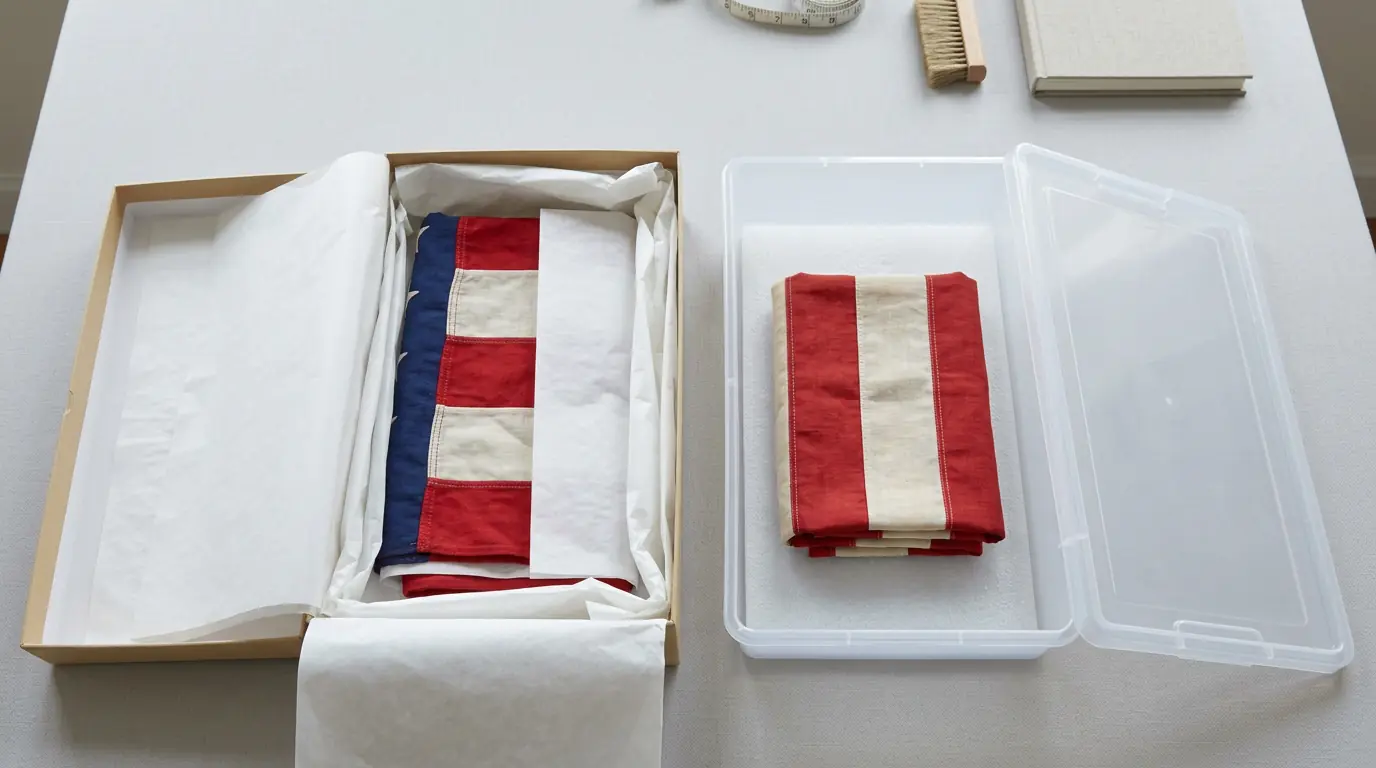
The container you choose either preserves your flag or slowly eats it. There is no neutral option.
Acid-free, lignin-free boxes rank as the gold standard. Look for boxes that pass the Photo Activity Test — that certification means the materials will not off-gas chemicals that yellow fabric or weaken fibers. Archival storage tubes serve the same purpose for rolled flags. Line either option with acid-free tissue paper or breathable cotton muslin.
Polypropylene containers offer a good alternative. They are chemically inert, moisture-resistant, and widely available. Polypropylene and polyethylene are both safe choices. Avoid PVC containers completely — polyvinyl chloride releases hydrochloric acid over time, which destroys fabric.
Regular cardboard boxes are one of the most common storage mistakes. Cardboard contains lignins and acidic compounds that off-gas continuously. Even a few months of contact can leave acid stains on white or light-colored flags. Wooden chests and drawers cause similar problems. If a wood chest is your only option, line the entire interior with archival board or muslin so the flag never touches wood directly.
Plastic bags and airtight containers seem protective but trap moisture inside. Cotton and natural-fiber flags absorb ambient humidity, and in a sealed container, that moisture cycles through condensation that feeds mold growth. Your flag needs to breathe.
Newspaper wrapping transfers ink and acid to fabric. Regular tissue paper contains dyes and acids that migrate into the flag over time. Only acid-free tissue qualifies as safe.
For memorial flags, triangle shadow boxes made from hardwood with UV-protective acrylic glass provide both display and protection. Line the interior with two-ply acid-free museum board to block wood acids. Mount the shadow box away from direct sunlight and heat. Small ventilation holes prevent moisture buildup inside the sealed case — a detail many shadow box manufacturers skip.
Pro Tip: Looking for flags that withstand years of outdoor display? Contact our team for factory-direct pricing on weather-resistant custom flags.
Preventing Mold, Mildew, and Pest Damage During Storage
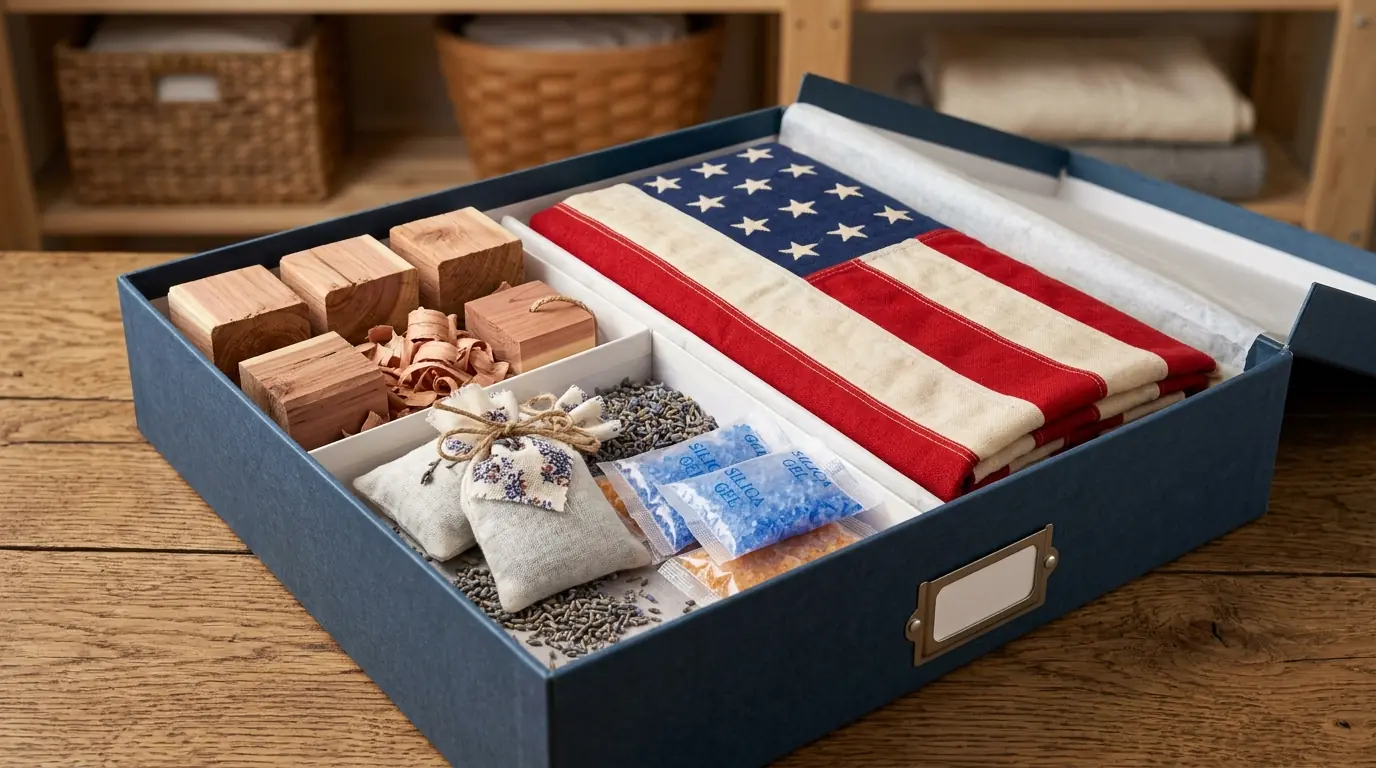
Mold and insects cause most of the flag damage that collectors discover too late. Both problems are preventable, but the prevention has to happen before you seal the container.
The single most important step is ensuring the flag goes into storage completely dry. Mold needs moisture and organic material. A dry flag in a dry container with controlled humidity gives mold nothing to work with. Target 30 to 50 percent relative humidity inside the container.
Silica gel packets handle the moisture side reliably. Place two or three at the bottom and top of each container. The indicating variety gives you a visual check — when the beads shift from blue or orange to pink or clear, they are saturated and need recharging. In humid climates, check every three to six months. A single recharge cycle at 250 degrees for two to three hours restores them fully.
For pest protection, cedar blocks outperform mothballs for every flag type. Cedar releases cedrol oil that repels moths and carpet beetles without touching the fabric chemically. Refresh the cedar by light sanding when the scent fades, usually every six to twelve months. Lavender sachets add a second layer of natural deterrent.
Mothballs deserve a harder warning than they usually get. The chemicals — naphthalene or paradichlorobenzene — degrade synthetic fabrics like nylon and polyester over time. They leave a persistent odor that is nearly impossible to remove from fabric. The EPA classifies them as pesticides. They belong nowhere near stored flags.
Learn to recognize early damage signs. Mold shows as fuzzy white, green, or black spots with a musty smell. Moth damage appears as small irregular holes with silky webbing in the folds. Silverfish feed on the surface of starched cotton, leaving thin yellowed patches. Carpet beetles chew irregular holes and leave shed larval skins behind. Catching any of these early — before they spread to other textiles — makes the difference between a minor cleaning and a total loss.
Monitoring Schedule: Periodic Checks to Catch Problems Early
Storing a flag properly and then forgetting about it for years defeats the purpose. Conditions change. Silica gel saturates. Pests find new entry points. A monitoring routine catches problems while they are still small.
For most stored flags, inspect every three to six months. High-value collectible or vintage flags warrant monthly checks during the first year until you confirm that storage conditions remain stable. After that first year, shift to quarterly if everything looks good.
Each inspection follows the same checklist. Open the container and smell it immediately — musty odor dissipates quickly, so catch it before it fades. Check fabric for new discoloration, yellowing, or stains. Gently test edges for brittleness, which signals heat or chemical damage. Look for insect frass (sandy droppings), holes, webbing, or shed skins near folds. Examine areas around grommets for rust or orange-brown staining. Feel the fabric and container walls for dampness or condensation.
While the flag is out, refold or reroll it in a slightly different position. This prevents permanent creases and distributes any uneven aging. Replace acid-free tissue paper if it shows yellowing or feels brittle — plan on annual replacement as a baseline.
Check your silica gel packets. If the color indicator has changed, recharge them before returning the flag to storage. A small digital hygrometer inside the container gives you a continuous humidity reading without opening it every time.
For collectible flags, keep a simple log of each inspection. Note the date, what you found, what you did about it, and the temperature and humidity readings. Photograph the flag from a consistent angle so you can compare condition over time. This documentation supports insurance claims and helps track slow-developing issues like gradual fading that you might not notice inspection to inspection.
If you find signs of active deterioration — mold, pest damage, increasing brittleness — consult a professional textile conservator rather than attempting treatment yourself. Amateur cleaning of degraded historic fabric often causes more damage than the original problem.
The difference between a flag that survives decades in storage and one that falls apart comes down to three decisions: dry it completely before storing, choose the right container, and control the environment.
Roll rather than fold for anything longer than a few months. Use acid-free materials and avoid plastic bags, cardboard, and mothballs. Keep storage areas between 60 and 75 degrees with humidity below 50 percent. Check on your flags every three to six months.
Start with your most valuable flag. Clean it, roll it on an archival tube with acid-free tissue, place it in a breathable container with silica gel packets, and store it in an interior closet. That single afternoon of work protects something irreplaceable.
If a flag already shows mold, pest damage, or brittleness, reach out to a textile conservator before attempting any treatment yourself.
Video Guide: Flag Storage and Preservation
Related Articles