You just bought a flagpole. Or maybe you inherited one with the house. Either way, you're staring at a catalog of flag sizes and nothing about it makes immediate sense. A 3x5 sounds right for a home, but will it look lost on a 25-foot pole? And what about that new commercial building — is 6x10 enough, or does 8x12 make more sense at highway distance?
Flag sizing is one of those topics where picking the wrong option wastes real money. Not because flags themselves are expensive, but because a mismatched flag-to-pole ratio looks visibly wrong and you'll end up reordering. This guide covers every standard flag size sold in the US, sorted by use case, with the pole-matching logic that actually matters. If you want to go deeper on what holds everything together, explore our flag materials and printing capabilities before you finalize your order.
The Size System: How Flag Dimensions Work in the US

Flag dimensions in the US follow a hoist-by-fly convention — hoist is the vertical side (attached to the pole), fly is the horizontal length that waves in the wind. Two aspect ratios dominate the market. Most flags you'll encounter use a 2:3 ratio, which gives you sizes like 3x5 and 6x10. Government and military flags follow a 1:1.9 ratio set by Executive Order 10834 — that's where the 20x38 garrison flag comes from.
The reason standard sizes exist at all is practical, not ceremonial. Flagpoles, brackets, grommets, and rope-and-thimble hardware are all manufactured around fixed dimensions. If you order a non-standard size, you'll pay custom pricing and likely wait longer for production. For outdoor display installations, pairing the right flag with commercial-grade flag poles from our factory ensures your setup performs as designed.
Here's the broad breakdown by category:
- Desk and tabletop: 4x6 inches, 8x12 inches, 12x18 inches
- Residential: 2x3 ft, 2.5x4 ft, 3x5 ft, 4x6 ft
- Mid-commercial: 5x8 ft, 6x10 ft, 8x12 ft
- Large commercial and government: 10x15 ft through 30x60 ft
The Quarter Rule
The single most useful rule for matching a flag to a pole: the flag's fly length should be roughly one-quarter of the pole height. A 20-foot pole takes a 3x5 or 4x6. A 50-foot pole needs an 8x12 or 10x15. Go too small and the flag disappears. Go too large and you risk mechanical stress on the halyard system — plus it just looks wrong, like a bedsheet hanging off a broomstick.
Desk and Miniature Flags: 4x6 Inches to 12x18 Inches

Desk flags don't get much attention in size guides, but they're the most commonly purchased flag format by unit volume. Conference rooms, trade show booths, diplomatic tables — the 4x6 inch desk flag is everywhere.
4x6 inches is the standard desk size. A short plastic pole (about 10 inches), a gold spear topper, a small weighted base. Single-side printed polyester. These run $2 to $8 retail, though bulk orders drop below a dollar each. The quality variance is huge at this price point — cheap versions fade within weeks under direct sunlight, which matters if your desk sits near a window.
8x12 inches is the hand-held parade and rally size. Mounted on an 18 to 24-inch wooden or plastic stick. Political campaigns buy these by the thousands. At $1 to $5 per unit, they're disposable by design.
12x18 inches serves double duty — it's the largest "miniature" flag and also the standard nautical courtesy flag for boats. On a 24 to 30-inch stick for parades, or grommeted for small wall mounts. Priced around $3 to $10 retail.
One thing worth noting: if you're ordering desk flags for a corporate setting, the base matters more than the flag itself. The cheap plastic bases tip over constantly. Spend the extra dollar or two on a weighted metal base and save yourself the annoyance. For branded conference table setups, a flag display system manufacturer can supply matching stands and hardware in bulk.
Residential Flags: 2x3 Through 4x6 Feet
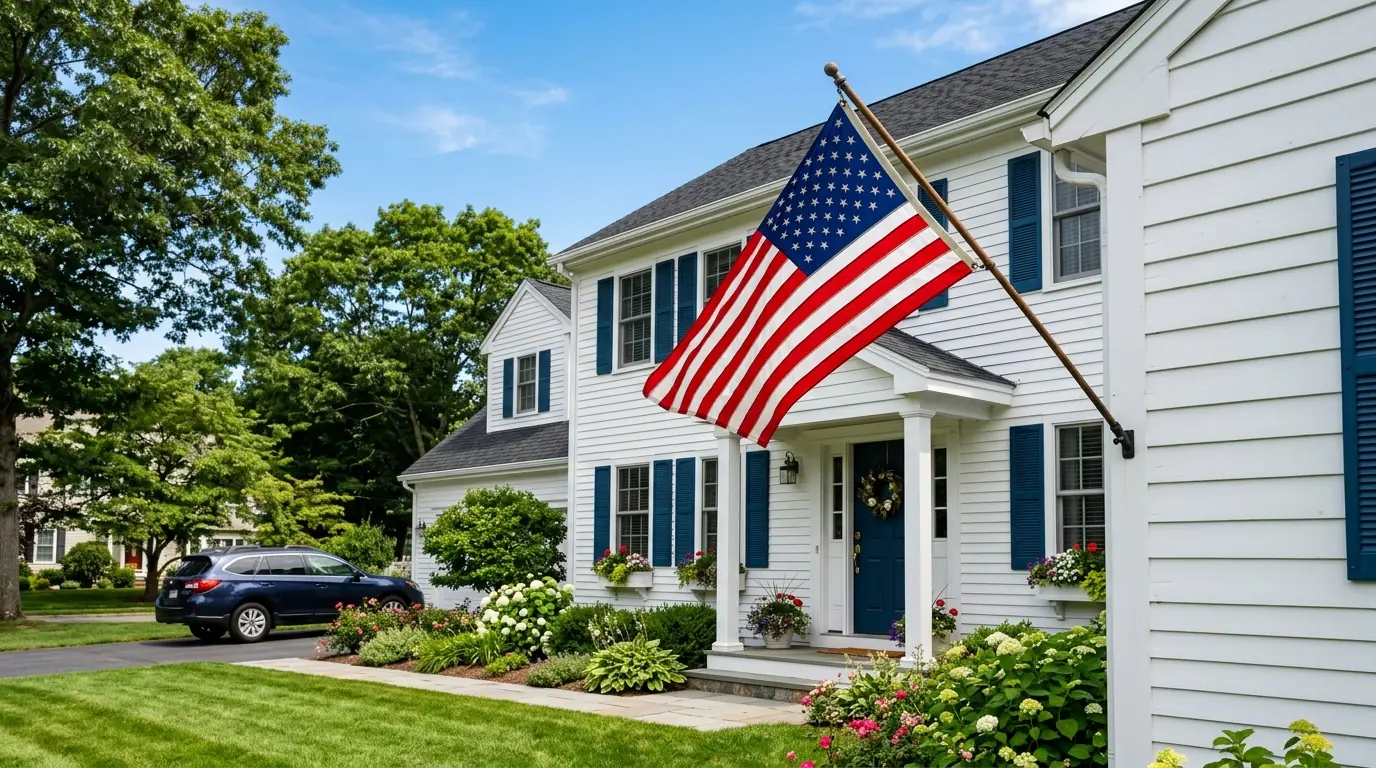
This is where most buyers land, and the 3x5 foot flag is the undisputed default. It's the best-selling flag size in the US for a reason — it fits the most common residential setup, which is a 5 to 6-foot wall-mounted bracket on a porch or garage.
But "most common" doesn't mean "always right." The size that works depends on your mounting situation.
2x3 feet works for apartments, townhouses, small porches, and any space where a larger flag would crowd the entryway or brush against siding. If your mounting bracket is under 5 feet or you have low roof clearance, this is your size. It also works well as a seasonal decoration flag where you're swapping designs frequently.
2.5x4 feet is the in-between option that doesn't get enough credit. For mid-size homes with 6-foot brackets, it fills the space better than a 2x3 without the bulk of a 3x5. I'd call it the most underrated residential size.
3x5 feet is the standard. Period. On a wall bracket, you want a 6-foot pole (the rule is bracket length equals twice the flag's hoist width). On an in-ground pole, this flag suits 15 to 20-foot heights. Nylon versions run $20 to $50 depending on quality.
4x6 feet is for larger properties with 20 to 25-foot in-ground poles or prominent estate displays. If your lot is over 5,000 square feet with an open front yard, this size gives proper visual weight. On a standard porch bracket, though, it's usually too much — the flag dominates the entryway and catches more wind load than most residential brackets handle well.
The column to focus on is the pole height match. A 3x5 on a 25-foot pole looks undersized. A 4x6 on a 15-foot pole overwhelms the setup. Get this pairing wrong and the flag either vanishes or looks like it's struggling.
Mid-Size Commercial Flags: 5x8 Through 8x12 Feet

Once you move past residential, flag sizing stops being about aesthetics and starts being about visibility at distance. A car dealership on a four-lane road needs a flag that reads from 200 feet away. A 3x5 won't cut it.
5x8 feet is the entry point for commercial display. It pairs with 25 to 30-foot poles and works for small business entrances, shopping center flag rows, and smaller commercial buildings. This is where most first-time commercial buyers start, and it's usually the right call for buildings under three stories.
6x10 feet handles mid-range commercial needs — parking lot visibility, street-facing retail, municipal buildings. You need a 35 to 40-foot pole minimum. At this size, fabric choice starts mattering more. Nylon is the default outdoor material, but heavy-duty polyester lasts longer in high-wind areas. The tradeoff is that polyester hangs heavier in low wind, so it doesn't display as well on calm days.
8x12 feet is where things get serious. Major industrial complexes, government buildings, properties that need to command attention from a distance. Poles run 40 to 50 feet. At this size and above, you'll start seeing rope-and-thimble attachments replacing standard brass grommets on government-spec versions — grommets can't handle the wind load reliably at this scale.
Pricing jumps noticeably in this range: $40-$80 for a 5x8, $80-$150 for a 6x10, and $100-$200 for an 8x12 in standard nylon. The construction quality matters more here than at residential sizes because the wind stress on a commercial flag is substantial. Reinforced canvas headers and fly-end hems aren't optional extras at this level — they're what keeps the flag from shredding in its first storm season. For large-scale outdoor event or promotional displays, a custom beach flag manufacturer for outdoor events can supply weather-tested alternatives alongside standard commercial sizes. Companies needing branded flags for multi-location rollouts should also look at working with a custom corporate flag manufacturer for consistent spec across all sites.
Large Commercial and Government Flags: 10x15 Through 30x60 Feet
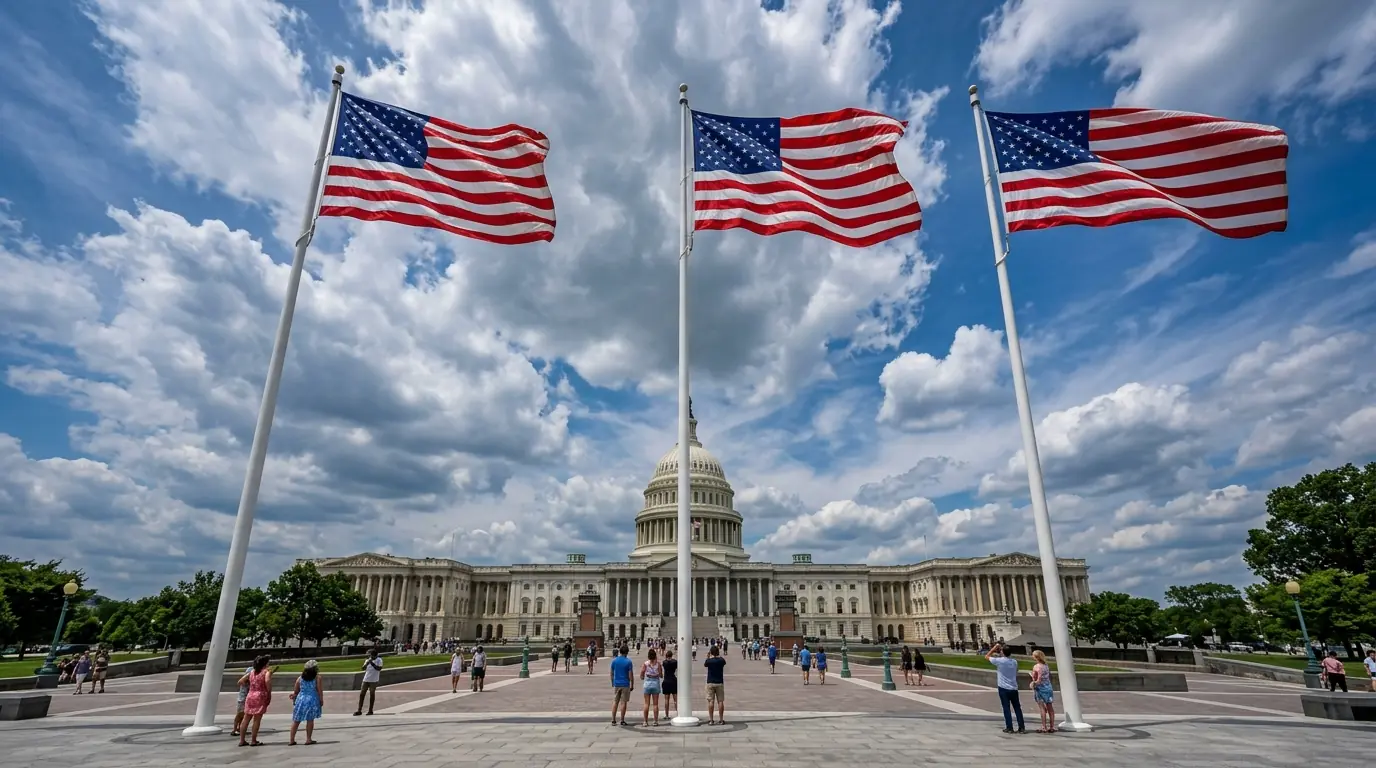
At this scale, you're not shopping at a hardware store anymore. These are engineered installations with specific pole requirements, wind load calculations, and often municipal permits.
10x15 and 12x18 feet cover most large commercial and institutional needs. Hospitals, industrial campuses, major office complexes. Pole heights range from 50 to 80 feet. These sizes maintain the 1:1.5 ratio and are the workhorses of large-scale flag display.
15x25 and 20x30 feet enter government and ceremonial territory. Federal buildings, military bases, large public spaces. An 80-foot pole is typical. At these dimensions, a flag weighs enough that installation requires rigging equipment, not just two people and a ladder. Embassies and official buildings sourcing at this scale often work directly with a national flag manufacturer for government installations to meet exact specification requirements.
20x38 feet is the garrison flag — the official US government size per Executive Order 10834. It flies at the White House and Capitol. The 1:1.9 aspect ratio sets it apart from commercial sizes. These need 90 to 100-foot poles and are almost always custom-ordered with government-spec construction: nylon fabric, rope-and-thimble attachment, and specific NSN part numbers for procurement.
30x60 feet is the largest standard commercial size. Auto dealerships love these — the "super flag" visible from the highway. You need a 100-foot-plus pole and should expect the flag itself to cost well over a thousand dollars. Replacement cycles are shorter too, because the wind stress at this size accelerates wear dramatically.
One reality that catches large-flag buyers off guard: the cost isn't just the flag. A 100-foot pole installation can run $15,000 to $50,000 depending on the foundation work, and you'll need a bucket truck or crane for every flag change. Budget for the full system, not just the fabric.
How to Match Flag Size to Your Situation
Skip the guesswork. Start with what you actually have — the pole or the mounting space — and work backward to the flag.
If you have a pole already, use the quarter rule: flag fly length should be 25% to 33% of pole height. Here's the quick reference:
If you're wall-mounting, measure your available space first, then go one size smaller than the maximum that fits. Clearance beats size every time — a flag brushing against gutters or bushes looks worse than a slightly undersized flag flying clean. The bracket should be twice the flag's hoist width (a 3x5 flag needs a 6-foot bracket minimum). For complete mounting setups, a wholesale flagpole supplier with bulk pricing can bundle the pole, hardware, and accessories into a single order.
If visibility at distance is the goal, match flag size to viewing range. A 3x5 reads clearly at about 50 feet. A 5x8 reaches 100 feet. An 8x12 works past 200 feet. For highway visibility or stadium use, start at 10x15 and go up from there. For advertising applications at events and roadside displays, a custom feather flag manufacturer can complement standard flags with tall vertical formats that work well in tight spaces.
The most common mistake I see is buying the largest flag that technically fits. Bigger isn't better if the proportions are off or the hardware can't support the wind load. When clearance is marginal, size down. A well-proportioned flag on the right pole always looks better than an oversized flag struggling on undersized hardware.
Your Next Step
If you're buying for a home and don't have strong feelings about it, get a 3x5 nylon flag and a 6-foot wall bracket. That combination handles 90% of residential situations and costs under $60 total.
For commercial properties, measure your pole height first — everything flows from that number. If you don't have a pole yet, decide on the viewing distance you need and work backward through the table above to find both your flag size and pole height together.
When in doubt between two adjacent sizes, go with the smaller one. An undersized flag on the right hardware is a minor aesthetic miss. An oversized flag on inadequate hardware is a maintenance headache and a potential safety issue in high wind. Start conservative, and upgrade later if you want more presence. Ready to order? Request a free custom flag quote and our team will confirm the right size and spec for your exact setup.
