Your flag looks great the day you hang it. Six weeks later, the colors have faded two shades, the fly end is fraying like a rope toy, and you're wondering whether you bought a defective product or just got unlucky with the weather. Neither, usually. Most flag damage comes from preventable causes — wrong material for the climate, skipped maintenance, bad storage habits, or simply not knowing when a quick repair could have saved months of useful life. This guide covers the full lifecycle of flag care, from picking the right fabric for where you live through daily upkeep, cleaning, repair decisions, seasonal rotation, proper storage, and dignified retirement when the time comes.
Choosing the Right Flag Material for Your Display Environment
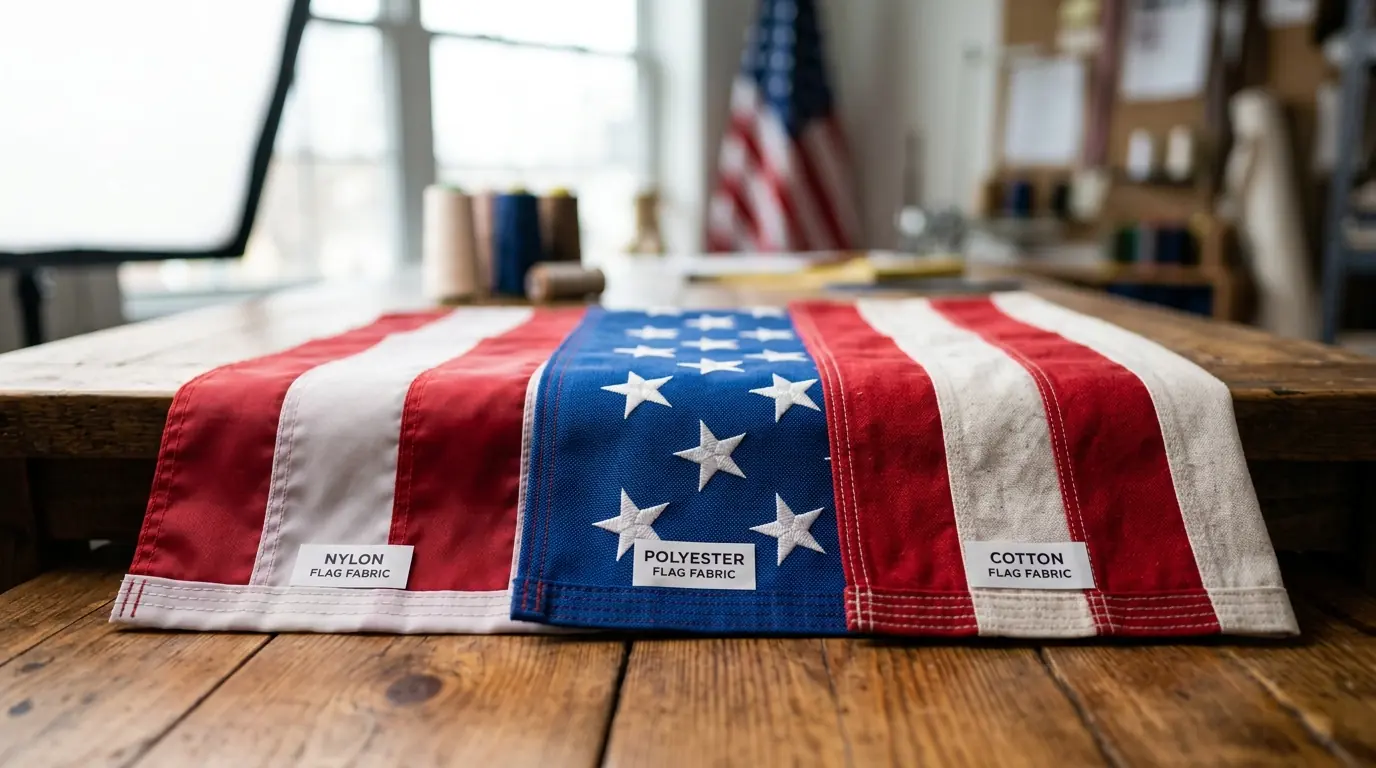
Most flags don't die of old age. They die because somebody hung the wrong fabric in the wrong spot and wondered why it shredded in six weeks. The material you pick determines about 80% of your flag's working life, so this choice matters more than any cleaning routine or storage trick you'll learn later.
Nylon is the default for most residential flagpoles, and for good reason. It's lightweight, catches even the laziest breeze, and the colors pop with a natural sheen that photographs well from the curb. But nylon absorbs water. In coastal areas or places where rain sits on surfaces for hours, those dyes start losing their grip faster than you'd expect — typically 3 to 6 months of continuous outdoor display before the fade becomes obvious.
Polyester is the workhorse. It's heavier, which means it needs actual wind to fly properly, but it handles abuse that would destroy nylon in half the time. Two-ply spun polyester laughs at sustained 25 mph gusts. The color bonding process is different too — polyester holds pigment deeper in the fiber, so a polyester flag at 9 months often looks better than a nylon flag at 4 months. If you live anywhere with real winters, coastal salt spray, or regular thunderstorms, polyester is the straightforward pick. Expect 6 to 12 months of outdoor life.
Cotton flags belong indoors. Full stop. They look gorgeous for ceremonies and display cases, but moisture destroys them quickly and UV resistance is essentially zero for extended outdoor use. A poly-cotton blend costs less and handles slightly more, but it's still not an outdoor-duty fabric.
Here's the decision shortcut I keep coming back to: coastal or windy means polyester, moderate residential means nylon, indoor or ceremonial means cotton. But if your situation involves both light summer breezes and harsh winter storms, the real answer is owning one of each and rotating by season — which we'll get into later.
Daily and Weekly Maintenance Habits That Extend Flag Life
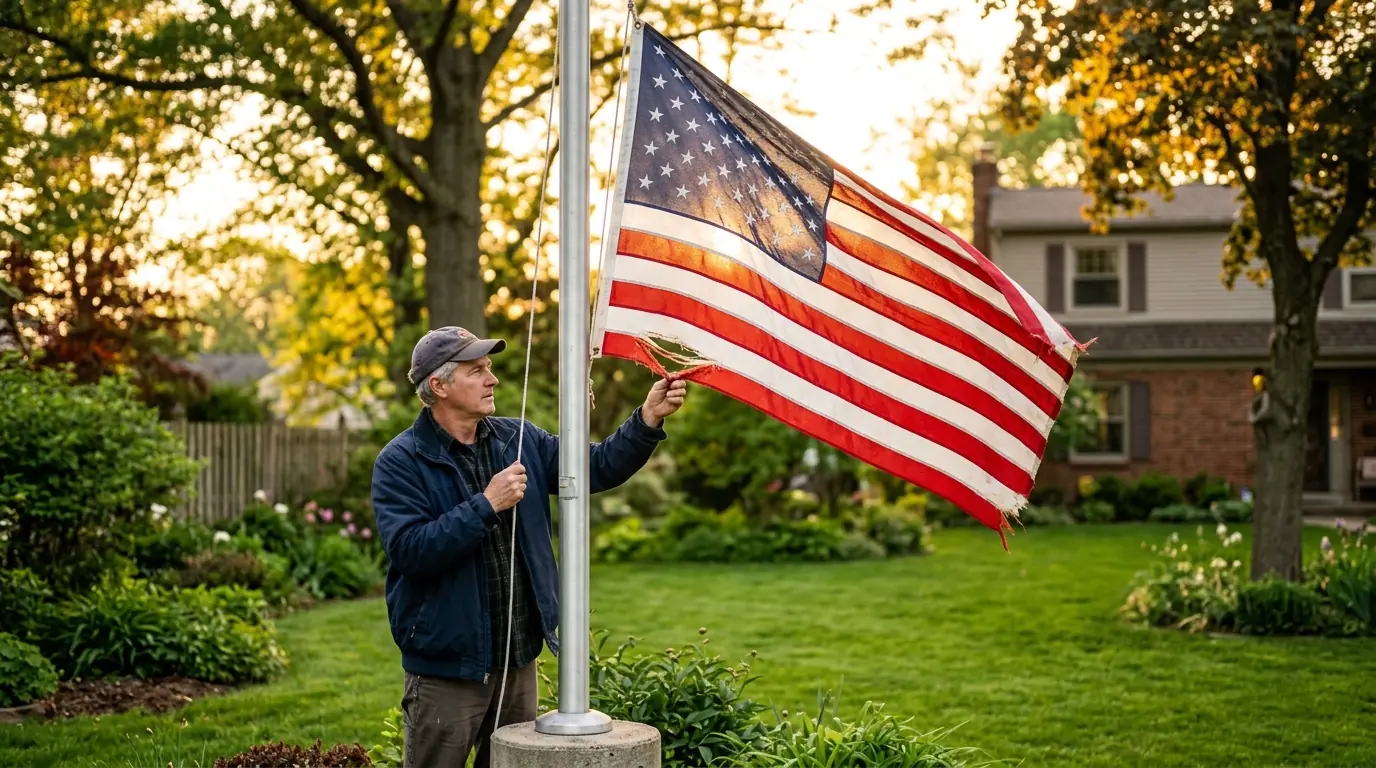
A flag that flies 24/7 without attention has a lifespan measured in weeks, not months. The difference between a flag that lasts 90 days and one that makes it past a year usually comes down to five minutes of daily awareness and a 15-minute weekly check.
Every morning, give the flag a quick visual scan. You're looking for frayed edges at the fly end, loose stitching, small tears, or any spot where the fabric has snagged on hardware. That last one matters more than most people realize — a flag rubbing against brick, shingles, or a rough bracket wears through fabric the way sandpaper works on wood. Slow, invisible, then suddenly catastrophic.
After rough weather — heavy rain, dust storms, anything that leaves residue — rinse the flag with a garden hose and let it air dry completely before putting it back up. Salt, pollen, and grit act as abrasives when the wind whips the fabric. Leaving that stuff on there is like flying a flag made of fine-grit sandpaper against itself.
The weekly routine adds a closer inspection. Fold out the fly end and run your fingers along it, feeling for loose threads. Check the header and grommets for wear. Look at the stitching along the canton — that seam takes the most stress and pops first. If colors look dull or dusty, hand-wash with mild detergent in cold water and dry flat in the shade.
One upgrade that pays for itself immediately: install a rotating flagpole top with ball-bearing swivels. Without one, wind wraps the flag around the pole, twists the fabric, and creates pressure points that accelerate tearing. A good swivel mechanism eliminates tangling and distributes wind stress evenly across the entire flag.
Lower the flag in severe storms. I know all-weather rated flags exist, and they do handle rain and moderate wind. But sustained high gusts are the primary killer of fly ends. Every hour in 40 mph wind shortens your flag's life measurably. Bringing it down for a thunderstorm isn't weakness — it's maintenance.
Cleaning Basics: When and How to Wash Different Flag Types
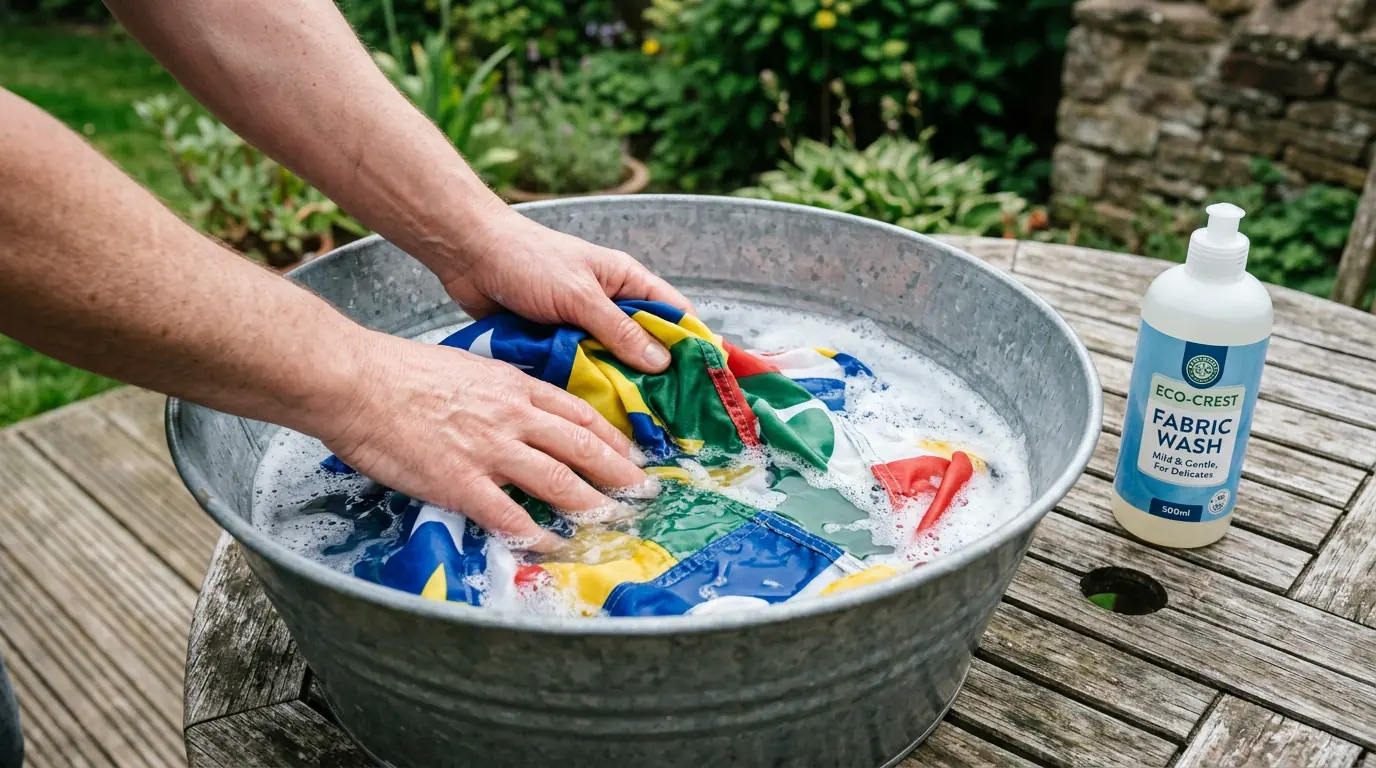
Flags don't need a washing schedule the way clothes do. Clean when the colors look dull, when you can see grime buildup, or when you've just pulled it through a week of rain and dust. Overwashing causes more damage than dirt does, so spot cleaning beats a full wash every time.
For nylon and polyester flags, machine washing on a gentle cycle with cold water and mild liquid detergent works fine. Hand washing is gentler and gives you more control, which matters if you've noticed any weak spots in the fabric. Either way, cold water is non-negotiable for synthetics. Warm water loosens dye bonds, and hot water causes outright color bleeding that ruins the flag permanently.
Cotton and wool flags need a different approach entirely. Hand wash only, cold water, with the gentlest agitation you can manage. Machine washing — even on gentle — risks tearing fibers that have already been weakened by age. For valuable or antique flags, skip home washing altogether and send them to a professional dry cleaner. Vintage flags older than 30 years shouldn't be washed at all; vacuum them with the lowest suction setting your vacuum offers.
Three hard rules on chemicals: never use chlorine bleach on any flag material, it destroys both fibers and colors. Skip fabric softener — it leaves residue that attracts dirt faster, making the flag dirtier sooner. And always spot-test for dye bleed before doing a full wash, especially on polyester where the printing process varies between manufacturers.
Drying matters as much as washing. Hang dry or lay flat in a shaded, ventilated area. Direct sunlight during drying accelerates the same UV fade you're trying to prevent. Never use a machine dryer — the heat causes shrinkage and damages synthetic fibers in ways you won't notice until the flag starts tearing at stress points weeks later. Make sure the flag is bone dry before storage. Even slight dampness creates mold conditions within days.
Recognizing Wear and Making the Repair-or-Replace Decision
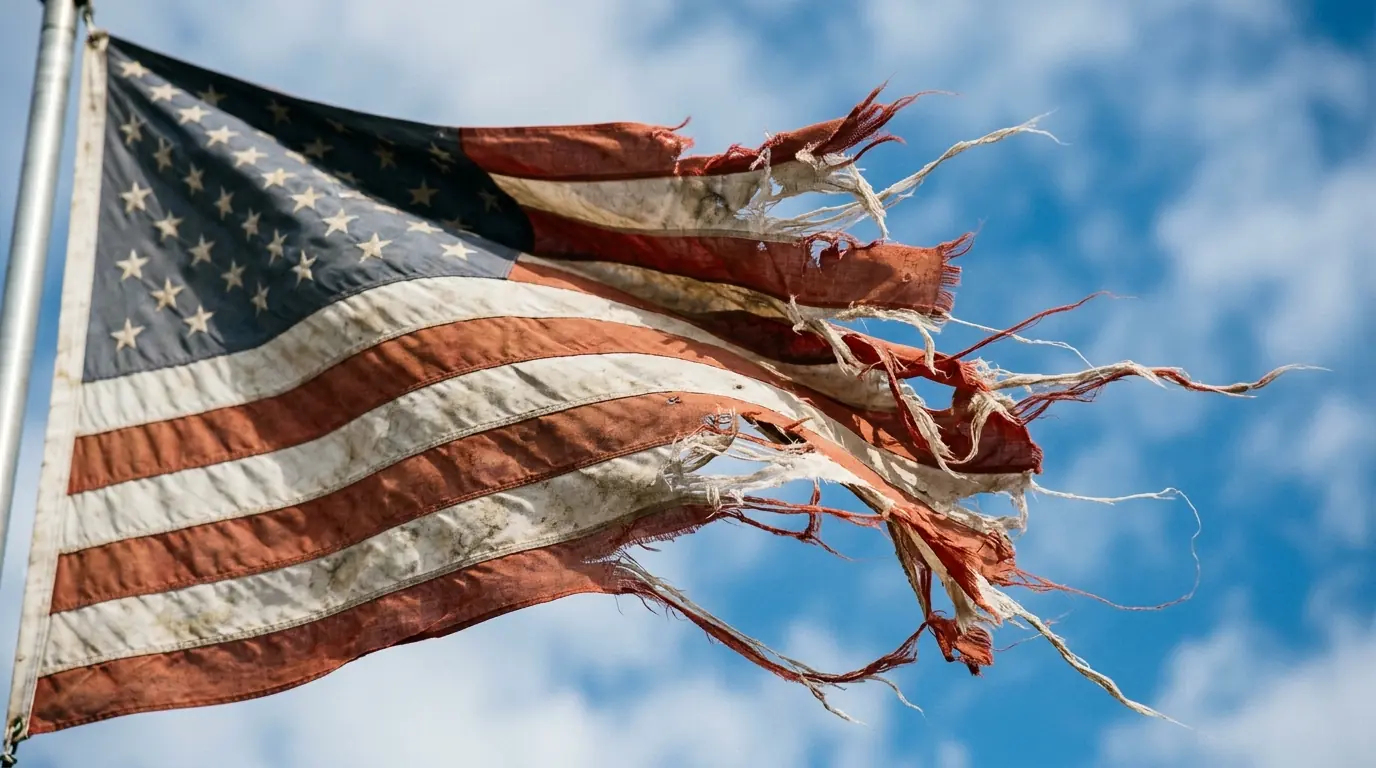
There's a window between "starting to show wear" and "too far gone" where a timely repair saves real money. Miss that window, and you're buying a new flag anyway. The trick is knowing where the line falls.
Small tears along edges, minimal fraying at the fly end, a popped seam — these are all worth fixing. A seamstress can reinforce stitching and re-hem a frayed fly end for a fraction of replacement cost. Some dry cleaners handle flag repairs too, though a dedicated flag repair service will do better work on specialty fabrics.
The fold test gives you a practical threshold for American flags specifically. Fold the flag where the blue field meets the stripes. If the damaged portion can be trimmed while leaving at least 6 inches of stripes beneath the canton, and the flag still looks proportionate afterward, repair makes sense. If trimming would make it look square or oddly shaped, you've passed the point of no return.
Replace when you see any of these: colors so faded the blue looks grey or the red looks pink, fabric thin enough to see daylight through, fraying that's spread across multiple edges rather than staying in one spot, or seam failures in more than one location. Once fraying begins spreading, it accelerates — what looks like minor damage this week becomes severe tattering by next month.
The cost calculation is straightforward. If repair would exceed 50% of a new flag's price, replace it. Professional repair is worth the money for one torn seam or a single frayed edge, but patching three problems on a flag that's already faded isn't preserving anything worth keeping.
Monthly inspections catch damage while it's still cheap to fix. Get in the habit of really looking at your flag on the first of each month — feeling the fabric weight, checking color against a fresh reference, tugging gently at seams. That five-minute check is the difference between a $15 re-hem and a $45 replacement. The U.S. Flag Code puts it simply: retire a flag when it's no longer a fitting emblem for display. Trust your eyes on that judgment.
Seasonal Rotation Strategy to Maximize Flag Lifespan
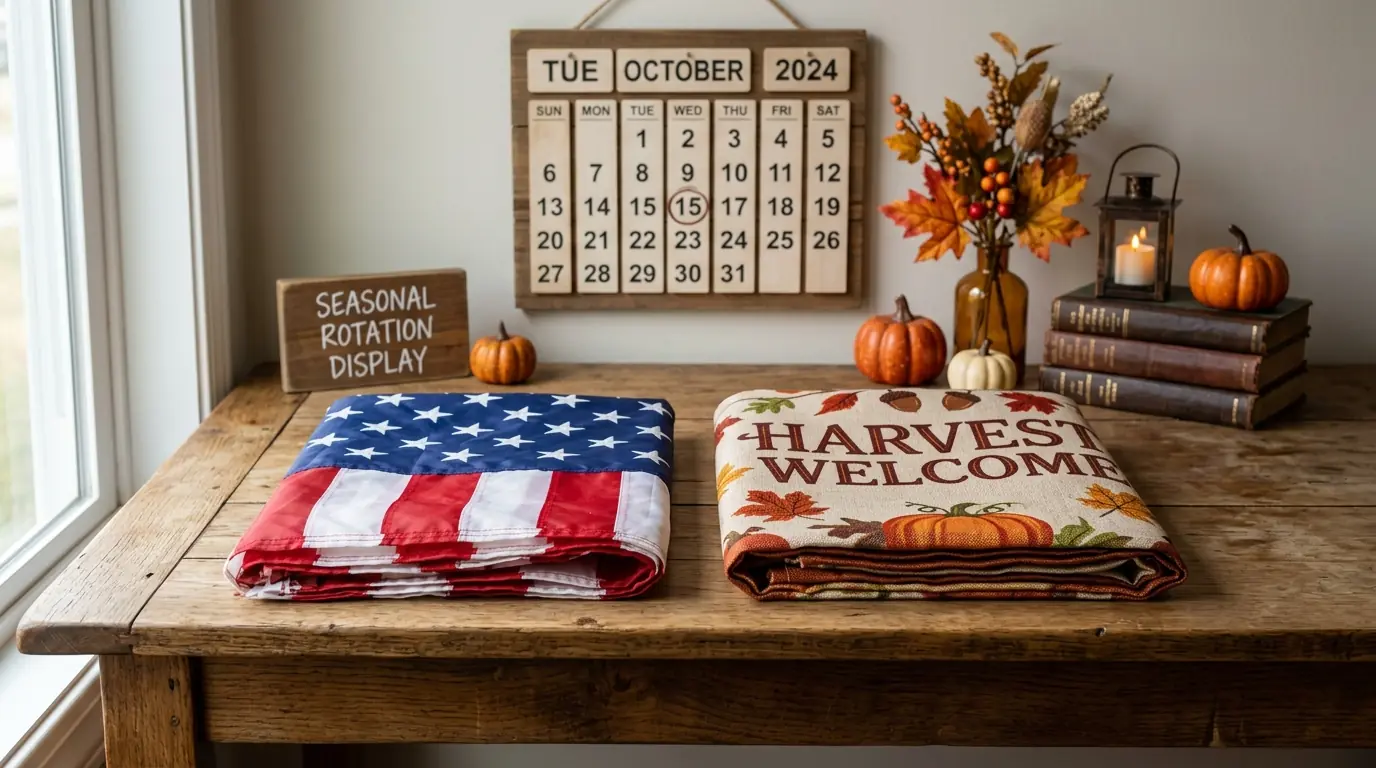
Owning two flags instead of one isn't doubling your cost — it's cutting your per-flag replacement rate roughly in half. A single flag flown daily from sunrise to sunset lasts about 90 days under normal conditions. Two flags rotated weekly can each last 6 months or longer, because rest periods between displays let fibers recover from wind stress and UV exposure.
The smartest rotation matches material to season. Fly nylon in spring and summer — it's lighter, catches gentle breezes, and the color vibrancy shines in good weather. Switch to polyester for fall and winter, when heavier fabric handles harsh conditions without the fraying and fade that would wreck a nylon flag in the same timeframe. This isn't just about durability. A nylon flag in January ice storms takes damage that shortens its useful life for the following summer too.
Gettysburg Flag Works, one of the larger specialty flag manufacturers, reports typical flag lifespans of 6 to 18 months with proper care. Rotation is the single biggest factor in reaching the upper end of that range. The math works out clearly: two $30 flags lasting 12 months each cost less than four $30 flags replaced every 90 days.
The rotation itself is simple. Swap flags every week or two during the active season, giving each one rest time. Before storing the off-duty flag, clean it thoroughly and make sure it's completely dry. Roll or fold it into a breathable cotton or nylon bag — not a sealed plastic container — and keep it in a cool, dry spot away from direct sunlight.
One detail that gets overlooked: take flags down during peak UV hours on extremely sunny days when you can. Cumulative sun damage is invisible day to day but compounds fast. Two hours of midday July sun does more UV damage than six hours of morning light in October. Strategic timing extends lifespan beyond what rotation alone achieves.
Pro Tip: Order a rotation set of 2-3 flags at once and save up to 30% on bulk pricing. Extending flag life starts with having spares ready.
Proper Storage Fundamentals for Short-Term and Long-Term Preservation
How you store a flag determines whether it comes out of the closet ready to fly or permanently creased and smelling like mildew. The difference between good storage and bad storage shows up the moment you unfold it.
For short-term storage between regular displays, fold the flag lengthwise twice with another person holding the opposite end flat. No crumpling, no balling it up. Place it in a breathable bag — cotton or uncoated nylon — and keep it in a dark, dry location. Check on it every few weeks for any developing issues. This approach works fine for flags you rotate weekly or store during bad weather stretches.
Long-term storage, the kind for seasonal flags or collectible pieces, requires more care. The biggest mistake is folding. A flag stored folded for months develops permanent creases that weaken the fabric along each fold line. Instead, roll the flag around a 3-inch diameter archival tube that extends about 6 inches beyond the flag's width on each side. Wrap it in acid-free, unbuffered tissue paper and secure with cotton tape. Lay the roll flat in a storage box — standing it upright puts pressure on one end and deforms the fabric over time.
Storage has five enemies: moisture causes mold and staining, UV fades colors even through windows, pests eat holes through fabric, temperature swings make fibers expand and contract until they crack, and acid from cheap paper or cardboard causes yellowing that's impossible to reverse.
The ideal storage environment sits between 60 and 75 degrees Fahrenheit with low humidity and no direct light. Interior closets and climate-controlled cabinets work well. Attics, garages, and unfinished basements are terrible — temperature and humidity swing wildly with the seasons. Throw a few silica gel packets in with stored flags as cheap insurance against moisture. Inspect every 3 to 6 months, even flags you don't plan to fly for a year.
When to Retire and How to Dispose of a Worn Flag Respectfully
Every flag reaches a point where no amount of care will make it presentable again. Recognizing that moment and acting on it is part of responsible flag ownership — not something to feel bad about.
The U.S. Flag Code, Title 4, Section 8k, states that a flag should be retired when it's no longer a fitting emblem for display, and destroyed in a dignified way, preferably by burning. The criteria are practical: colors faded beyond recognition, tears or tattering that can't be repaired without making the flag disproportionate, mold or mildew damage that won't come out, or fabric so threadbare it tears under its own weight.
For disposal, you don't need to organize anything formal. American Legion posts have maintained flag disposal boxes since 1937 — drop your worn flag in and they'll include it in their next retirement ceremony. VFW posts, Boy Scout and Girl Scout troops, many state and county government offices, and some police stations offer the same service. Call ahead if you're unsure; most of these organizations welcome the flags.
If you prefer handling retirement yourself, the process is simple and private. Fold the flag properly, recite the Pledge of Allegiance or a moment of silence, and burn it completely in a metal container until only ash remains. Keep water or a fire extinguisher nearby. The ceremony should feel solemn, not rushed.
Synthetic flags add a complication. Burning nylon or polyester releases chemicals from flame retardants that you shouldn't be breathing. For synthetic flags, the better option is recycling. Some nylon recycling plants accept flags, and community recycling programs for synthetic flag materials are becoming more common. The Stars for Our Troops program offers another path — cut out the stars and send them to service members, then dispose of the remaining stripes through recycling. Conduct a brief dignified ceremony before sending the material off, even if it's going to a recycling bin rather than a fire.
Conclusion
Flag care isn't complicated, but it does require consistent attention and a few deliberate choices. Pick the right material for your environment — that single decision prevents more damage than every other maintenance step combined. Build a quick daily inspection habit and a thorough weekly check. Clean only when needed, never with harsh chemicals, and always dry completely before storing. Learn the fold test so you catch repairable damage before it becomes replacement-level damage.
If you take one action today, make it this: buy a second flag and start rotating. The cost savings alone justify it within the first year, and your flags will look sharper every day they're flying.
Next steps to get started:
- Assess your location — coastal, moderate, or indoor — and confirm your flag material matches
- Install a ball-bearing swivel mechanism on your flagpole if you don't have one
- Order a second flag in the alternate material for seasonal rotation
- Set a monthly calendar reminder for a thorough flag inspection
- Locate your nearest American Legion or VFW post for future flag retirement
Video Guide
Related Articles
