Every flag tells a story — but the Taegukgi tells an entire philosophy. That circle of red and blue at its center isn't just a design choice. It's a 3,000-year-old conversation about balance, opposites, and the invisible forces that hold the universe together.
The four trigrams anchoring each corner carry real weight. They represent Confucian thought, Taoist cosmology, and a nation's hard-won identity — all packed into four simple symbols.Organizations preparing cultural exhibitions or international events often source accurate replicas through a custom South Korean flag manufacturer to ensure the Taegukgi’s trigrams and Taegeuk proportions follow official design standards.
Maybe you're a student building a cultural report. Maybe you're a K-drama fan who spotted the flag on screen and got curious. Or maybe you're planning an event and want a display that means something. Either way, learning the Taegukgi's history and symbolism changes how you see it. It stops being background imagery. It becomes something with a pulse.
The full story is right here — laid out in plain language, start to finish.
The Birth of Taegukgi: How Korea's National Flag Came to Be (1882–1948)
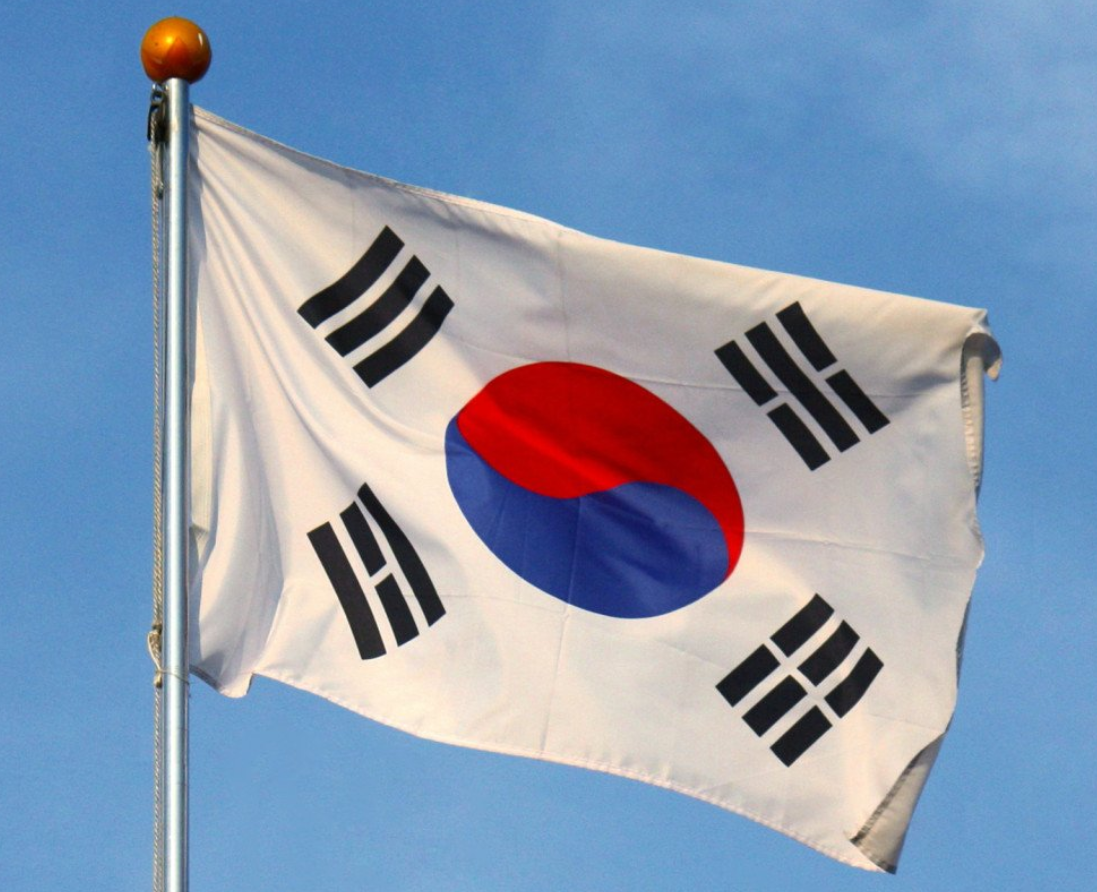
Korea didn't always have a flag. For centuries, the Joseon Dynasty used Chinese diplomatic symbols. That changed in 1882, when a single treaty negotiation forced a hard question: What emblem represents Korea to the world?
When historians reconstruct early diplomatic events like the 1882 treaty signing, they often commission historically accurate versions from a Taegukgi flag manufacturer for historical reproductions to reflect how the flag appeared during Korea’s first international negotiations.
The answer came fast, and from multiple directions at once.
On May 22, 1882 , a Taeguk flag appeared at the signing of the Joseon–United States Treaty. Weeks later, the U.S. Navy's Bureau of Navigation recorded its design — a red-and-blue yin-yang circle flanked by four black trigrams. That documentation predates the version tied to diplomat Park Yeong-hyo by two to three months.
History books give Park Yeong-hyo significant credit. In September 1882, he brought a refined version of the flag to Japan. He worked alongside interpreter Kim Man-sik, official Suh Kwang-pom, and British consul William George Aston . The flag flew in Tokyo on October 2nd. By January 27, 1883 , King Gojong made it official by royal order.
But "official" didn't mean "standardized." For the next six decades, the Taegukgi existed in dozens of variations — different trigram shapes, different proportions, no binding legal guidelines. The "Denny Taegukgi" is a clear example. It shows just how loosely people interpreted the design in those first years.
Then Japan annexed Korea in 1910. What happened next was remarkable.
The Taegukgi didn't disappear — it changed. It dropped its role as a royal symbol and became something rawer — a banner of resistance. Records connect it to around 1,500 independence demonstrations during the colonial period.
Historical Milestone
Between 1910 and 1945, the Taegukgi was banned by colonial authorities — yet it appeared at approximately 1,500 independence demonstrations, transforming from a royal symbol into a banner of resistance.
Liberation came in 1945. North and South Korea both used the Taegukgi at first, but that shared identity didn't last. On August 15, 1948 , the Republic of Korea took shape, and the Taegukgi became its national flag. North Korea chose a Soviet-style design instead. A 42-member standardization committee met in January 1949 to lock down the design for good — ending 67 years of beautiful, stubborn inconsistency.
The White Background: Korea's Cultural DNA Encoded in a Single Color
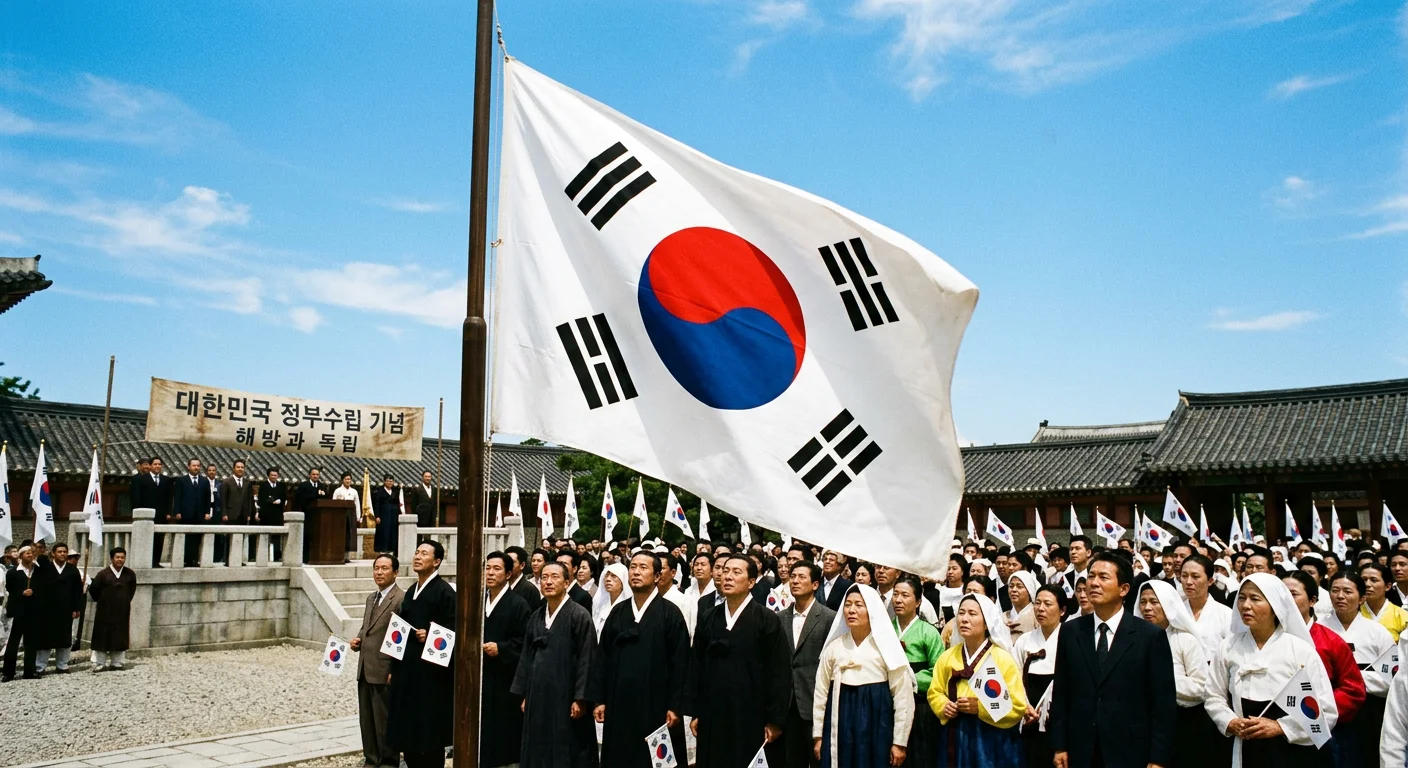
White isn't a neutral choice here. On the Taegukgi , the white background carries the full weight of Korean identity.Because the white field symbolizes the “white-clad people,” educational institutions and cultural festivals sometimes display large-scale versions produced by a South Korea national flag supplier for cultural events to highlight this historical identity.
Centuries of history, all pressed into a single color.
Koreans have called themselves 백의민족 ( Baegui-minjok ) — the "white-clad people." From the Three Kingdoms period through the post-Korean War era, ordinary Koreans wore plain white hanbok every day. Not as ceremony. Not as statement. As life. Every class, every region, every generation — wrapped in white.
That consistency became part of who they were.
Japanese colonial authorities (1910–1945) banned white hanbok as part of forced assimilation. So Koreans pushed back by bleaching their garments whiter . Japan called the white clothing a sign of backwardness and poverty. Koreans wore it as a second skin — dongpo , a bond holding a people together under pressure.
By the 1920s, "white-clad people" had become a symbol of national pride. The color stopped describing clothing. It started describing shared strength .
So that white field stretching across the Korean national flag isn't empty space. It stands for purity, peace, and a people who refused to disappear.
The white field stretching across the Korean national flag isn't empty space. It's the visual heartbeat of a people who wore white as a second skin for centuries.
The Taegeuk Circle Explained: Red, Blue, and the Philosophy of Cosmic Balance
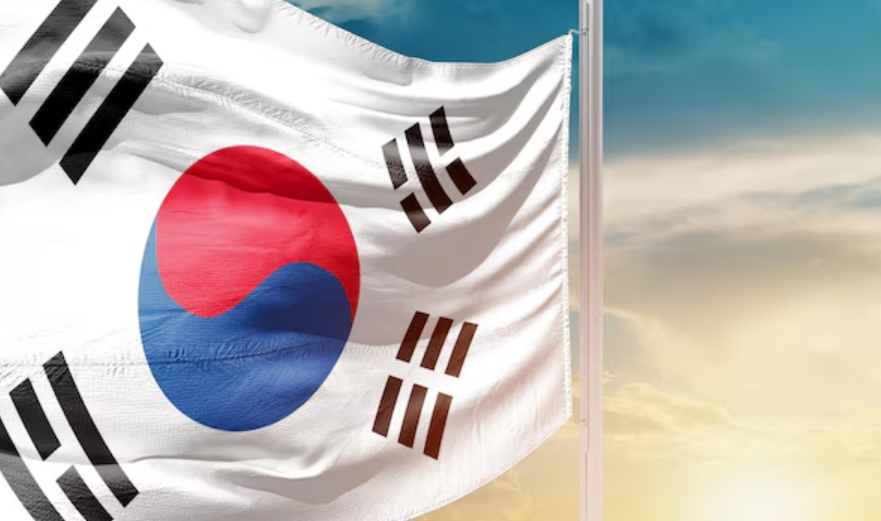
Take a good look at that swirling circle at the center of the Taegukgi. What you're seeing isn't decoration — it's an argument.
Producing that distinctive red-blue Taegeuk symbol with correct curvature and color balance is why many institutions rely on a professional Taegukgi flag manufacturer familiar with the precise geometry defined in Korea’s official flag specifications.
A 3,000-year-old argument about how the universe works.
The Taegeuk circle splits into two interlocking halves: red on top, blue on the bottom . Each half curves into the other along an S-shaped line. That shape suggests motion, not division. The S-curve carries a clear message. Opposites don't cancel each other out — they generate each other.
Red Above, Blue Below — and Why That Surprises People
Here's where the Korean flag's yin-yang symbol breaks from what most people expect.
In standard Chinese cosmology, red stands for yang — sky, heaven, the active force above. The Taegeuk symbol flips that on purpose. On the Korean flag:
Red (top half)
Positive cosmic forces, yang, earth and ground
Blue (bottom half)
Negative cosmic forces, yin, sky and heaven
Heaven below. Earth above. That feels backwards at first. But the Taegeuk isn't a copy of the Chinese yin-yang. It's a Korean reinterpretation , shaped by Confucian-Taoist cosmology rather than pure Taoism. The tension between these two forces isn't conflict. It's the engine of creation itself.
The official colors follow a fixed, government-defined standard:
Red
#CD2E3A · Pantone 186 C
Blue
#0047A0 · Pantone 294 C
Proportions That Carry Meaning
The circle's size isn't random. Its diameter equals half the flag's height — centered, balanced, and hard to miss. The four black trigrams around it are each sized to match the Taegeuk's radius. Each one sits at half a radius from the circle's edge.
Every measurement sends the same message: cosmic balance isn't a rough estimate . It's precise. It's deliberate. On the Korean national flag , that balance gets encoded into every dimension with mathematical accuracy.
The Four Trigrams (괘) Decoded: Earth, Water, Fire, Sky at Each Corner
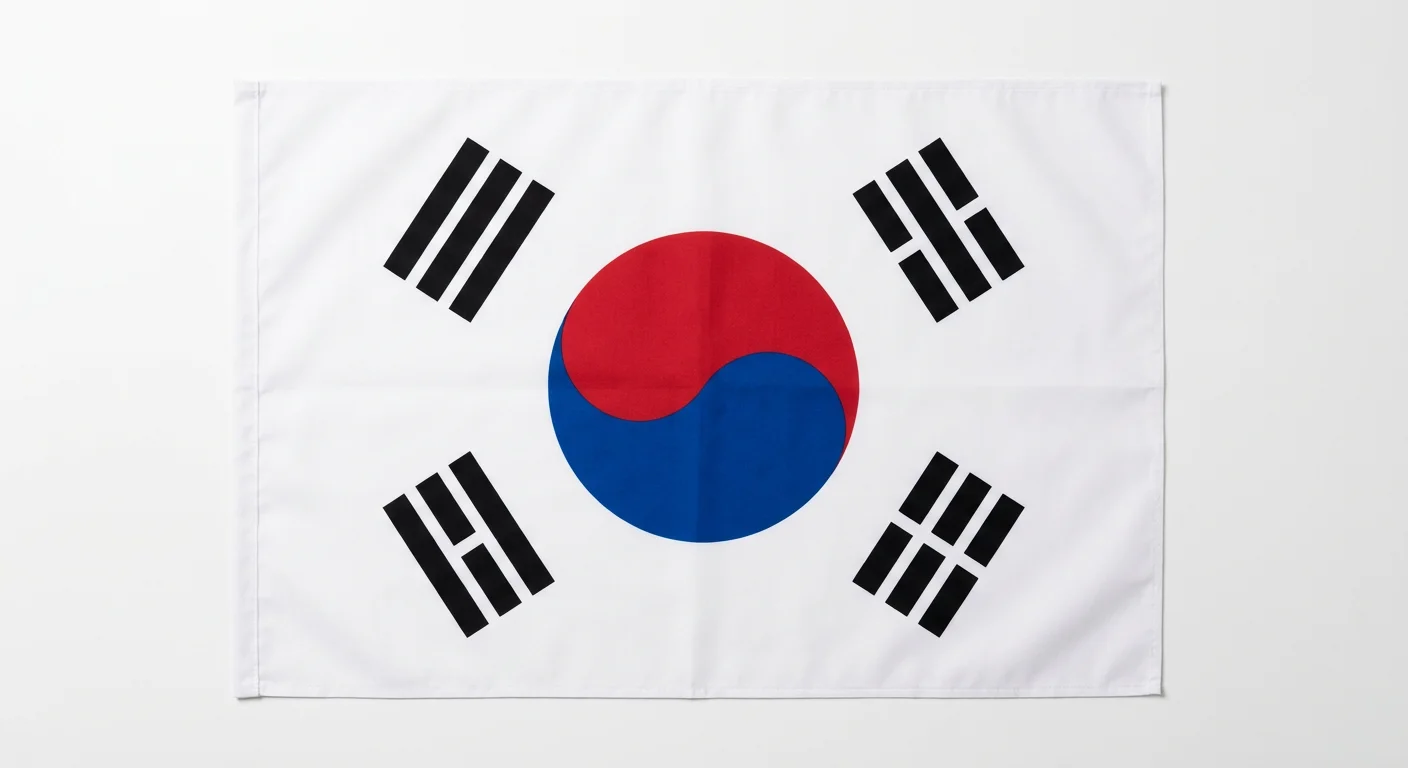
Four black symbols sit at the corners of the Taegukgi — and most people walk right past them. That's a shame. Those four trigrams (괘) are doing serious philosophical work.
Each one is built from a stack of three lines. Some lines are solid. Some are broken. The line combination sets everything: the element it represents, the direction it guards, the cosmic force it channels. The four trigrams on the Taegukgi map out a complete picture of natural order — drawn from the I Ching, shaped through centuries of Korean thought.
Here's what each one means:
Opposites Facing Opposites — By Design
The placement isn't decorative. It's deliberate. Heaven (☰) sits diagonal from Earth (☷) . Fire (☲) faces Water (☵) across the flag. Each pairing puts two opposing forces in direct tension — sky and soil, flame and flood, expansion and contraction.
That's the same logic driving the red-and-blue Taegeuk at the center. The Korean flag trigrams don't just frame that circle — they push its meaning outward to all four corners. The whole flag becomes one clear, unified statement about how the natural world works.
Reading the Lines
This is where people make mistakes. The trigrams aren't decorative borders or abstract patterns. Each line carries a precise meaning.
A solid line (—) represents yang energy: active, strong, moving outward. A broken line (– –) represents yin energy: receptive, yielding, drawing inward. Stack three solid lines and you get Heaven — pure creative force, the strongest yang form possible. Stack three broken lines and you get Earth — pure receptivity, maximum yin. Water and Fire sit between those two poles. Each one blends a solid line with two broken lines (or the reverse), capturing energy in the middle of a shift.
Each trigram also anchors a season and a phase of energy:
☲ Fire
Mid-summer, energy at its peak — bursting outward
☵ Water
Mid-winter, energy at its lowest — receding inward
☷ Earth
Late summer transition — settled, balanced, resting
☰ Heaven
Metal phase — contracting, clarifying
From Royal Banners to National Symbol
These weren't invented for a flag. Taegukgi history traces the trigrams back to Joseon Dynasty ritual banners. There, they marked royal authority and ceremonial space. They carried deep philosophical weight long before they carried national weight.
That shift matters. These symbols started as markers of dynastic power . They became markers of collective identity — the same transformation the flag went through during the resistance movement. Independence demonstrators raised the Taegukgi against Japanese colonial rule. Those four corner symbols were not just old decoration at that point. They were a declaration: this nation has deep roots, and they hold.
One last correction worth making. Some people dismiss these four trigrams as just a portion of the full eight-trigram Bagua system — interesting but incomplete. That reading gets it wrong. These four represent the primal configurations: great yang, lesser yang, lesser yin, great yin. The other four are built on top of them. On the Korean national flag , you're not looking at half a system. You're looking at the core of it.
What the South Korean Flag Represents: National Identity, Resilience, and Shared Memory
Flags get waved at parades. The Taegukgi gets carried into history.
That difference is real. South Koreans haven't just displayed this flag — they've hidden it under floorboards, smuggled it past colonial checkpoints, and raised it in the streets when the government itself became the threat. The Taegukgi has survived everything the modern Korean peninsula has thrown at it. That survival is the symbol.
A Flag Forged Under Pressure
The first real test came fast. During the Imjin War (1592–1598) , a prototype Taegeukgi flew as a resistance banner against Japanese invasion. This was long before Korea had a recognized national identity. The flag wasn't standing for a government institution. It was standing for a people who refused to give up .
Then came the hardest chapter. Japanese colonial authorities banned the Taegukgi outright between 1910 and 1945 . Displaying it could mean prison. Koreans flew it anyway. On March 1, 1919 , independence demonstrators flooded the streets waving the forbidden flag. The act was so coordinated and so visible that it became one of the most well-recorded resistance events in Korean history. The flag they were forbidden to carry became the strongest argument for why they needed it.
The Republic of Korea was established on August 15, 1948 . Raising the Taegukgi that day wasn't a ceremony. It was a statement that the ban had failed.
Memory That Lives in the Streets
The Taegukgi's role in public memory didn't stop in 1948. The Korean War (1950–1953) produced over 4 million casualties. It separated an estimated 10 million families. Through all of it, the flag became a rallying point for South Korean forces and civilians alike. It wasn't distant patriotism. It was a marker — proof of shared survival through enormous loss.
That thread runs straight into the present. During the 2016–2017 impeachment protests against President Park Geun-hye, more than 2 million people flooded Seoul carrying Taegukgi flags. The government recorded over 233 documented protest events tied to that movement. Citizens didn't reach for a new symbol when democracy felt threatened. They reached for this one — the same flag that had marked resistance for more than a century.
Today, the Taegukgi flies on every government building and school in South Korea , every single day. On national holidays like Independence Day (March 1) , public squares draw over a million people, flags in hand. The Ministry of Interior keeps strict standards for how it's displayed. A nation's treatment of its flag reflects what it believes that flag stands for.
The Taegukgi stands for this: purity, peace, and the memory of a people who kept showing up — through invasion, occupation, war, and internal fracture — carrying the same circle of red and blue.
The South Korean Flag in Modern Life: Sports, Holidays, and Cultural Celebration
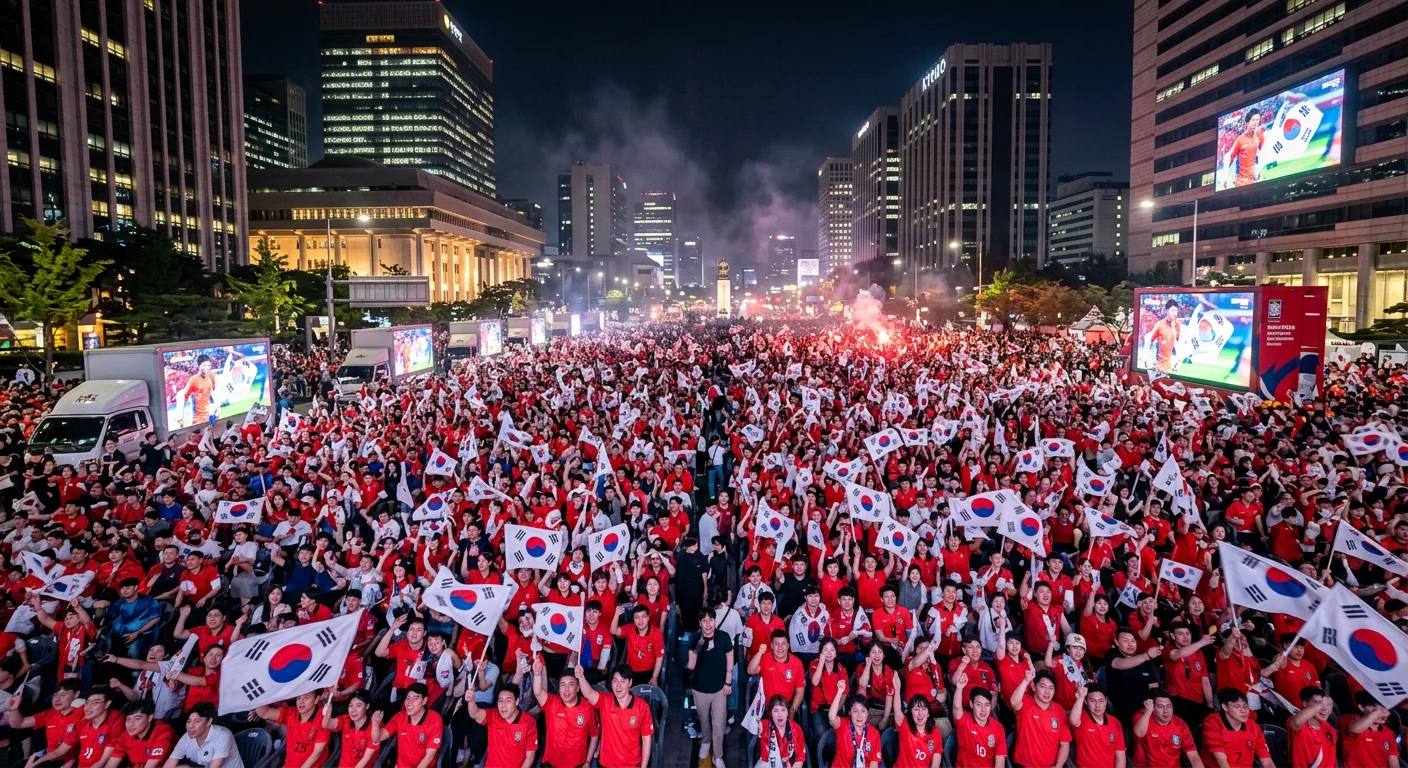
Six and a half million people flooded the streets. Not for a revolution. For football.
South Korea reached the 2002 FIFA World Cup semifinals, co-hosting with Japan. What followed was hard to predict. The Taegukgi didn't stay on government buildings. It poured into every intersection, every plaza, every screen-lit street corner in the country. Red Devils supporters in matching crimson shirts waved flags in massive numbers. 10+ million Koreans showed up for the semifinals alone.
6.5M
Street Supporters
10M+
Semifinal Viewers
2002
FIFA World Cup
That moment planted a seed. Street cheering culture — flags, chants, shared electricity — never faded. It became part of who South Koreans are.
From Stadiums to Holidays
That same energy shows up every March 1st (Samiljeol) and August 15th (Gwangbokjeol) . Both national holidays bring nationwide flag displays at schools and government buildings. Mass flag-raising ceremonies connect public memory to the 1919 independence movement and the 1945 liberation. These aren't just dates on a calendar. They carry weight.
By 2018, 115,303 sports-for-all clubs had grown to 5.58 million members. That's 10.8% of South Korea's population. These clubs organized flag-themed community events around both national holidays, keeping the tradition active year-round.
One Flag, One Complicated Moment
The 2018 PyeongChang Winter Olympics brought a striking change. South and North Korea marched together under a unified peninsula flag — white background, Korean Peninsula silhouette. Both sides set the Taegukgi aside. Hundreds of North Korean supporters joined the display.
It was a rare gesture. Two flags. Two governments. One complicated, very human wish.
The Hallyu Connection
K-pop fans have pulled the Taegukgi into their own celebration culture. At BTS global tours and idol support rallies, the flag shows up with the same instinct Red Devils supporters brought to 2002 — spontaneous, communal, proud. The cultural export is music and drama. But the flag travels with it.
South Korea's sports industry generated 81.03 trillion KRW in revenue in 2023 . Football alone holds the loyalty of 25% of fans surveyed. Behind every statistic is the same red-and-blue circle. Someone holds it high. They know what it means.
How to Choose and Display the South Korean Flag: A Practical Guide
Getting the details right matters. The flag you're displaying carries a lot of history, so it's worth doing it properly.
The official Taegukgi follows a strict 3:2 ratio (width to height). The Korean government sets standardized sizes. These range from 27×18 cm up to 540×360 cm. For most real-world needs, two sizes cover the majority of situations:
3×5 ft — the go-to for indoor events, school international days, and parades (pair with an 8 ft pole and nylon fringe)
4×6 ft — better for outdoor community festivals and high-visibility displays (brass grommets, canvas header)
Material choice is simple. Match it to your setting:
Sports cheering, cultural festivals
Community halls, school exhibits
Indoor nylon with fringe
Business exhibitions
5×8 ft grommeted outdoor canvas
One display rule to keep in mind: the Taegukgi takes center or top position any time it flies alongside other flags. That's standard protocol.
Need sizing and print specs that meet government standards? runcustomflag.com offers custom 3:2 ratio nylon South Korean flags built to official dimensions. You get a print-ready flag that fits your event, whatever the size or setting.
FAQ: Common Questions About the South Korean Flag Answered
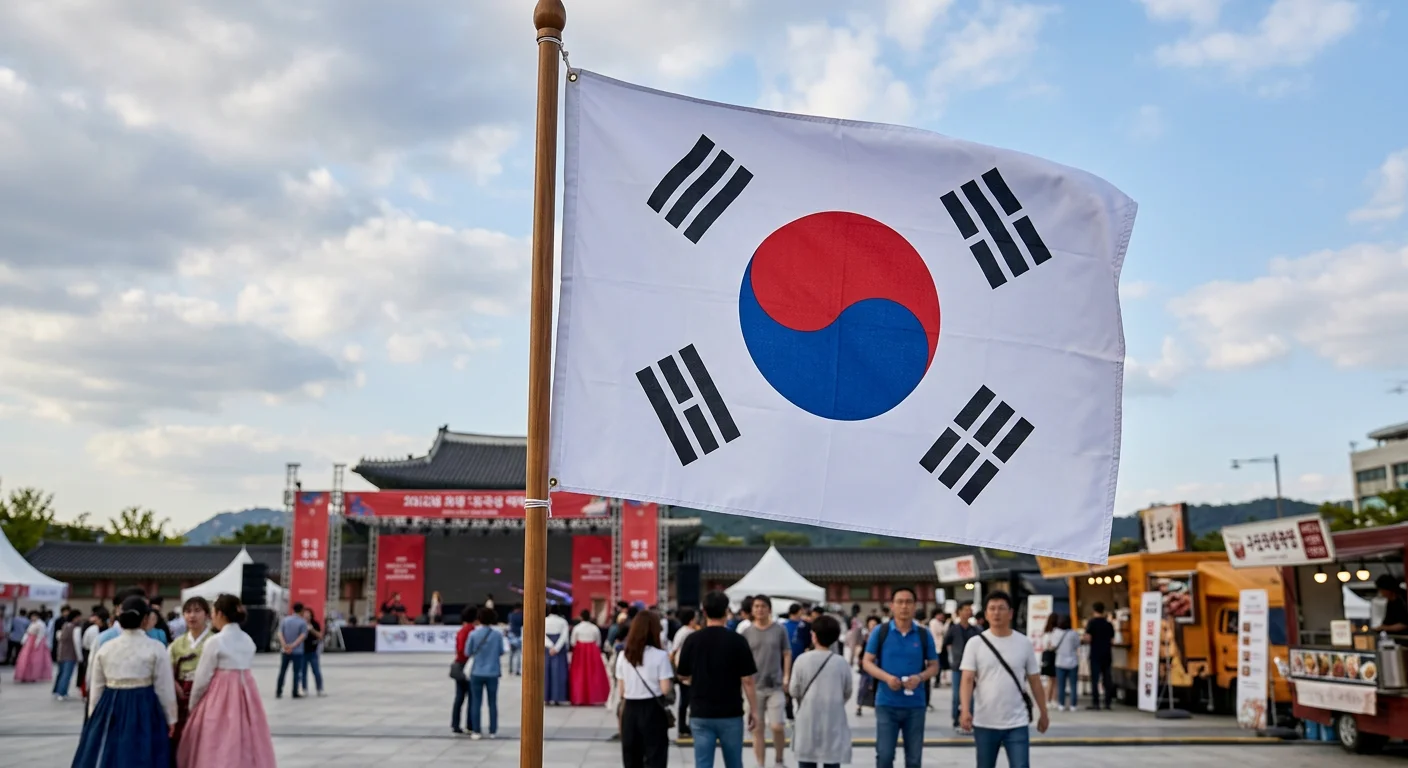
These questions keep coming up — from students racing against a cultural studies deadline, from K-drama fans who paused mid-episode to search something, from event organizers who need the details right. Here are straight, honest answers.
What do the symbols on the South Korean flag mean?
Three elements, one clear message. The white background stands for peace and purity. The central red-and-blue Taegeuk circle shows cosmic balance — red on top (yang, positive forces), blue below (yin, negative forces). The four black trigrams sit at each corner and each one points to a natural force: Heaven (☰) top-left, Water (☵) top-right, Fire (☲) bottom-left, Earth (☷) bottom-right.
Why is the Korean flag white?
White isn't just a background — it's a cultural statement. The white background ties back to centuries of Korean hanbok tradition. It also holds a legal meaning. Under the Republic of Korea Flag Act, white officially stands for purity and peace.
What are the official colors?
The colors are fixed and have no room for variation:
- Red: Pantone 186 C / #CD2E3A
- Blue: Pantone 294 C / #0047A0
- Black: #000000 / White: #FFFFFF
What are the exact flag dimensions?
The official ratio is 3:2 (width to height). The Taegeuk circle diameter equals half the flag's height. Standard sizes run from 27×18 cm up to 540×360 cm.
What's the difference between the four trigrams?
Each trigram is a unique stack of solid and broken lines. Three solid lines = Heaven (pure yang). Three broken lines = Earth (pure yin). Water and Fire sit in between. Each one blends both line types, showing energy in transition between those two poles.
Conclusion
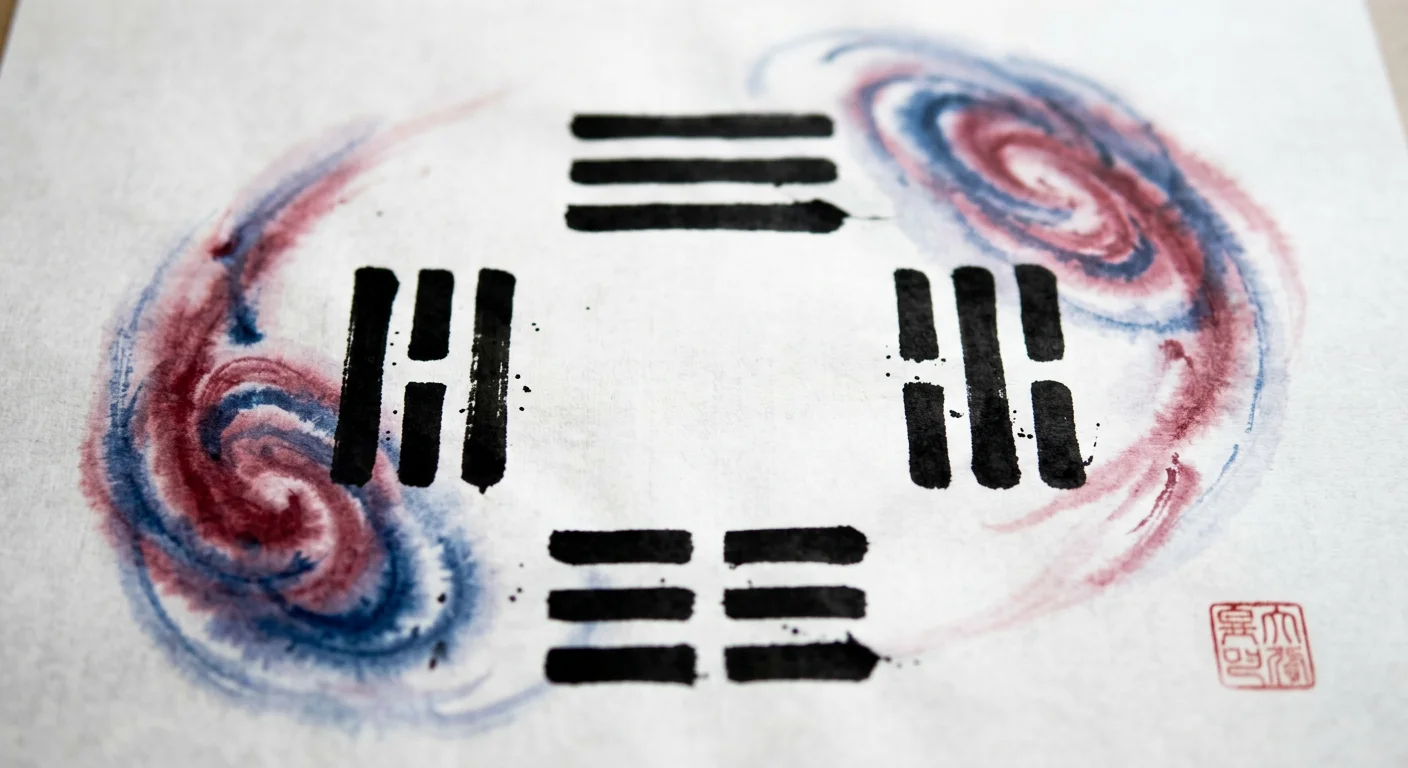
The Taegukgi isn't cloth and color alone. It's a living document. It encodes five thousand years of philosophy, resilience, and cultural identity into four trigrams, two swirling forces, and a field of white that stays honest.
Every element earns its place. The white speaks of purity and peace. The red and blue Taegeuk symbol always comes back to balance — opposites don't destroy each other. They complete each other. And those four corner trigrams? They're not decoration. They're a worldview.
A student, a cultural explorer, a community organizer planning a Korean heritage event — understanding this flag changes how you see it. You stop looking at a design. You start reading a story.
Ready to display it with the respect it deserves? RunCustomFlag.com crafts custom Korean flags built to honor every symbol within them — for a cultural festival, a classroom, or a stadium full of proud fans.
Some flags mark territory. This one carries a soul.
Video Guide
Related Articles