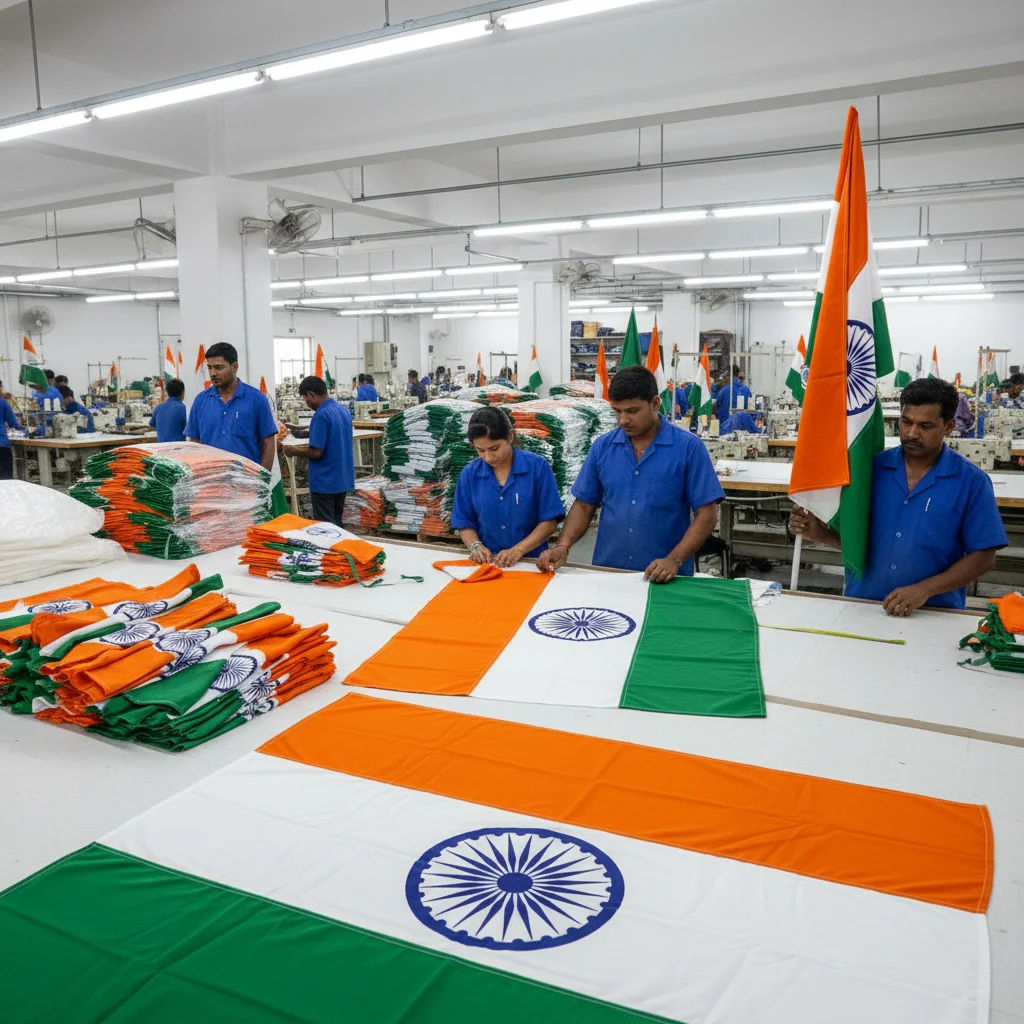
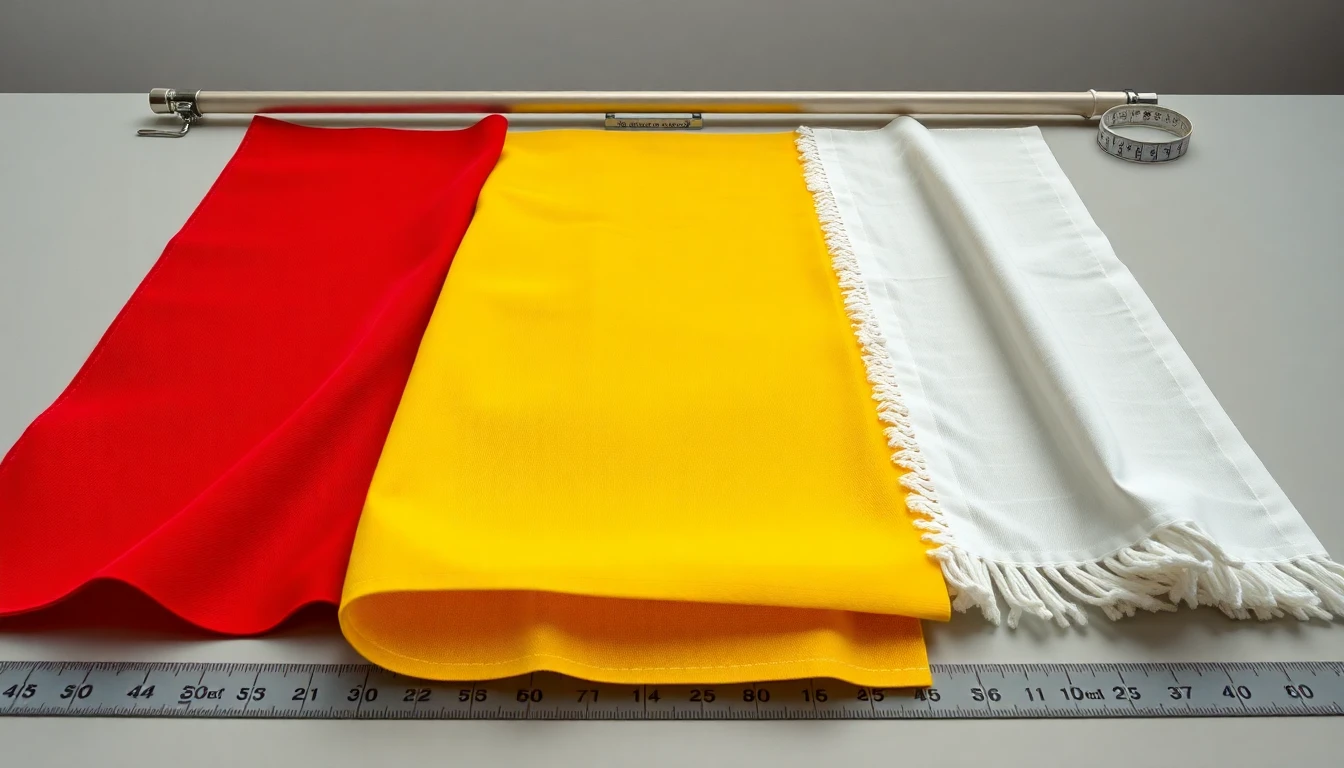
Every flag tells a story — but few carry the weight of a nation's soul the way India's Tiranga does. Those three bold stripes of saffron, white, and green hold a journey built across five decades of colonial struggle, quiet genius, and hard-won freedom.
Most people recognize the flag. Far fewer know the man who designed it — Pingali Venkayya , a freedom fighter and polyglot who gave 1.4 billion people a symbol to stand behind.
This guide covers it all:
The history of the Tiranga , from its earliest 1906 form to its official adoption on July 22, 1947
The meaning behind the Ashoka Chakra's 24 spokes
Who holds the authority to manufacture the flag today
Every detail is covered with the depth and precision this subject deserves.
1876
Designer Born
30+
Flags Studied
1947
Flag Adopted
4
Certified Makers
Pingali Venkayya: The Man Who Designed the Tiranga
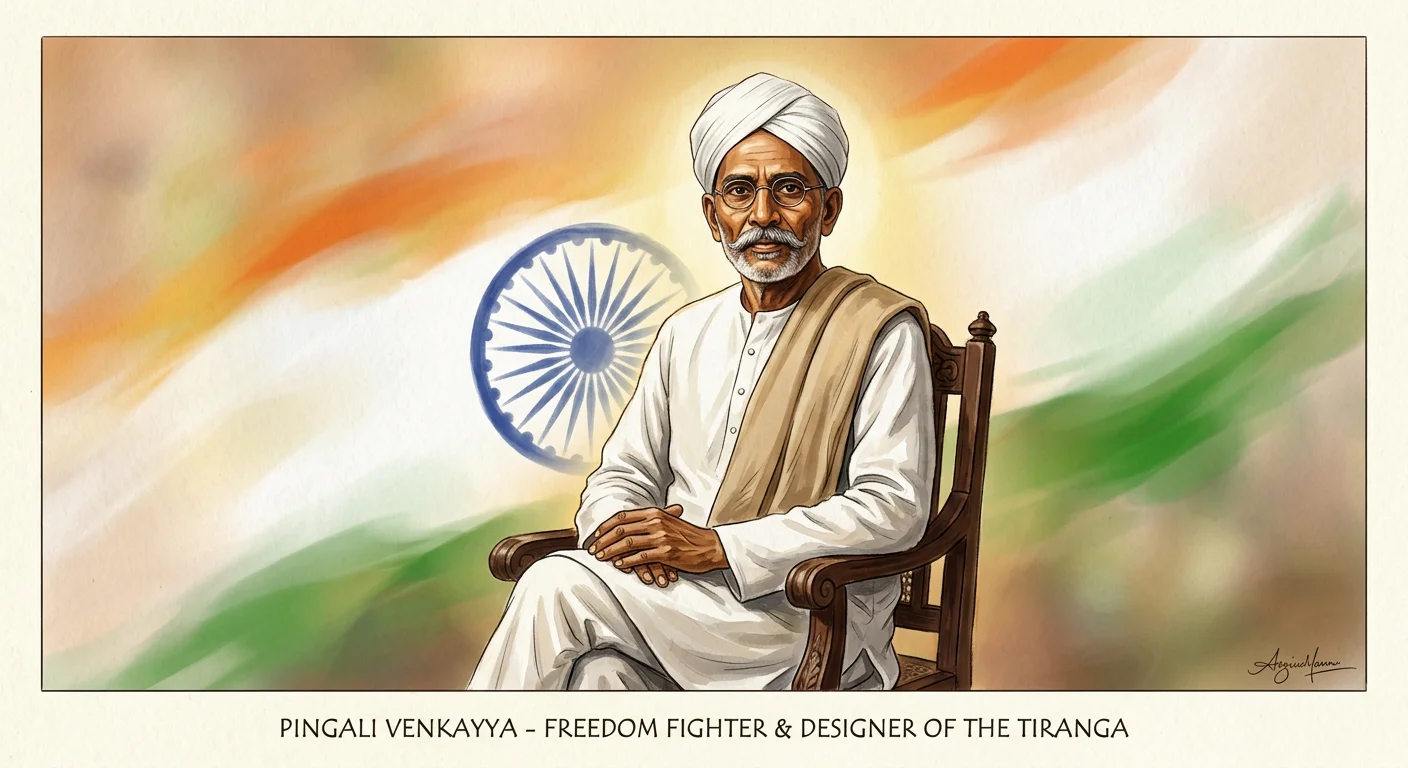
Pingali Venkayya was born on August 2, 1876, in Pedakallipalli — a small village in Andhra Pradesh's Krishna district. His life didn't fit one label. He was a soldier, a geologist, a linguist, a lecturer, and a freedom fighter. History, though, remembers him for one thing above all: he designed the flag of a free India.
The nickname says everything. People called him "Jhanda Venkayya" — Flag Venkayya. That's the kind of legacy that sticks.
From the Boer War to a National Symbol
The origin story starts in South Africa. Venkayya served in the Boer War (1899–1902) . He watched Indian soldiers fight and die under the British Union Jack. That image stayed with him — Indian men bleeding beneath a foreign flag. It planted one question he couldn't let go: why didn't India have its own?
It became an obsession. He studied more than 30 national flags , looking closely at design philosophy and cultural symbolism. By 1916, he had gathered his ideas into a published book — 'Bharatha Desaniki Oka Jatiya Patakam' — with 30 potential flag designs for India.
The book didn't go unnoticed. Gandhi read it.
Three Hours That Changed History
At the 1921 AICC session in Vijayawada (March 31–April 1), Gandhi asked Venkayya to submit a design. Venkayya delivered a basic khadi flag in three hours — red for Hindus, green for Muslims. Gandhi added a white stripe to represent all other communities. The design wasn't complete yet, but it gave everyone a starting point.
The flag kept changing from there. In 1931 , Congress reordered the stripes and swapped red for saffron. That brought the design closer to the Tiranga the world knows today. The final version got adopted on July 22, 1947 — just weeks before Independence.
Venkayya didn't receive a government pension until late in his life. He died on July 4, 1963 , largely forgotten by the state he helped shape. Today, statues in his honor stand across Andhra Pradesh — a small correction to a debt that took far too long to acknowledge.
The Tiranga's Evolution: A Flag Born Through Five Decades of Struggle (1906–1947)
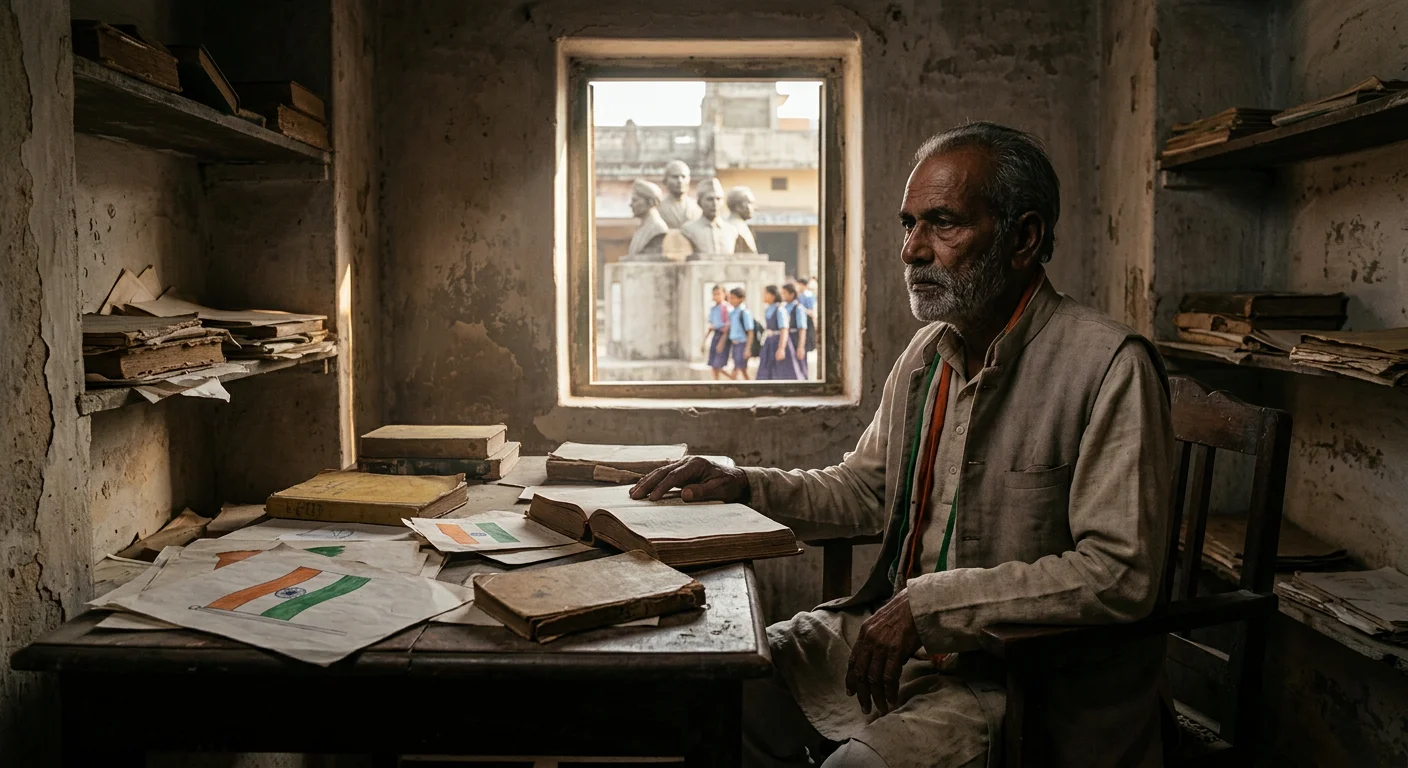
Six flags. Forty-one years. One nation finding its voice — one version at a time.
The Tiranga didn't arrive complete in 1947. It grew in stages. Each version was a direct response to the political moment. Each change showed a shift in how India saw itself. Trace the flag's history, and you're tracing the independence movement itself.
Here's how it happened.
1906: The First Flag Takes Shape
The story begins on August 7, 1906 , at Parsee Bagan Square in Kolkata. India was shaken by the Partition of Bengal. The Swadeshi movement was picking up speed. Against that pressure, Sachindra Prasad Bose and Hemchandra Kanungo hoisted what most historians consider India's first recognizable national flag.
It carried three horizontal stripes — green on top, yellow in the middle, red at the bottom. Across those stripes: eight lotuses, a sun, a crescent moon, and the words "Vande Mataram." Rich in meaning, but far from the final design.
A year later, on August 22, 1907 , Madame Bhikaji Cama raised a changed version at the International Socialist Congress in Stuttgart, Germany. It was the first time an Indian flag flew on foreign soil. A small act. A bold one.
1917: Stars, Stripes, and the Union Jack
The Home Rule Flag of 1917 looked nothing like its predecessor. Annie Besant and Bal Gangadhar Tilak created it together. It showed alternating red and green stripes. The British Union Jack sat in the top-left corner. Seven stars marked the Sapta Rishi constellation. A crescent moon and star completed the design. It captured the political tension of the time — still connected to Britain, but straining hard against that connection.
This flag didn't last. But it kept the debate alive.
1921: Gandhi Changes Everything
The 1921 AICC session in Vijayawada was the turning point. Venkayya brought Gandhi a red-and-green design. Gandhi reshaped it right away. He called for khadi fabric throughout. He added a white stripe to include communities outside Hinduism and Islam. At the center, he placed a charkha (spinning wheel) — a symbol of self-reliance.
The charkha was no decoration. It carried a clear message. Spin your own cloth. Cut the British supply chain. Feed your own people.
By 1929 , Gandhi shifted the color meanings away from religion. Red stood for sacrifice. White for peace. Green for hope.
1931 brought another step. The Indian National Congress adopted a revised design. Saffron replaced red. The three stripes now stood for courage, truth, and faith. The charkha stayed. This became the Swaraj flag — the symbol of the Quit India movement.
1947: The Charkha Steps Aside
The Constituent Assembly's flag committee gathered in July 1947 . Their job: settle on a final design for a free India. One question took over the room — what to do with the charkha.
The answer was clean and clear. The spinning wheel gave way to the Ashoka Chakra — a 24-spoked navy blue wheel drawn from the Lion Capital of Sarnath , carved around 250 BCE. It carried no communal weight. It pointed to something deeper and broader than any single religion or party: eternal law, moral order, and the continuous movement of time.
On July 22, 1947 , Jawaharlal Nehru presented the final design to the Constituent Assembly. Three equal horizontal bands — deep saffron, white, and dark green. The Ashoka Chakra sat at the center of the white stripe in navy blue. Both khadi-silk and khadi-cotton samples were on display.
Every member of the assembly voted yes. Unanimous.
Three weeks later, it flew over a free India.
The Evolution at a Glance
| Year | Key Feature | Significance |
|---|---|---|
| 1906 | Green/yellow/red stripes, lotus, "Vande Mataram" | First recognizable national flag |
| 1907 | Modified version by Bhikaji Cama | First flown on foreign soil |
| 1917 | Red/green stripes, Union Jack, seven stars | Home Rule Movement symbol |
| 1921 | Red/white/green + charkha (khadi) | Gandhi's unifying redesign |
| 1931 | Saffron/white/green + charkha | Official INC adoption |
| 1947 | Saffron/white/green + Ashoka Chakra | India's national flag |
The final design matters. But so does everything behind it. Every rejected version. Every political trade-off. Every shift in thinking — all of it is woven into those stripes. The Tiranga carries all of it.
Decoding the Three Colors: What Saffron, White, and Green Actually Represent
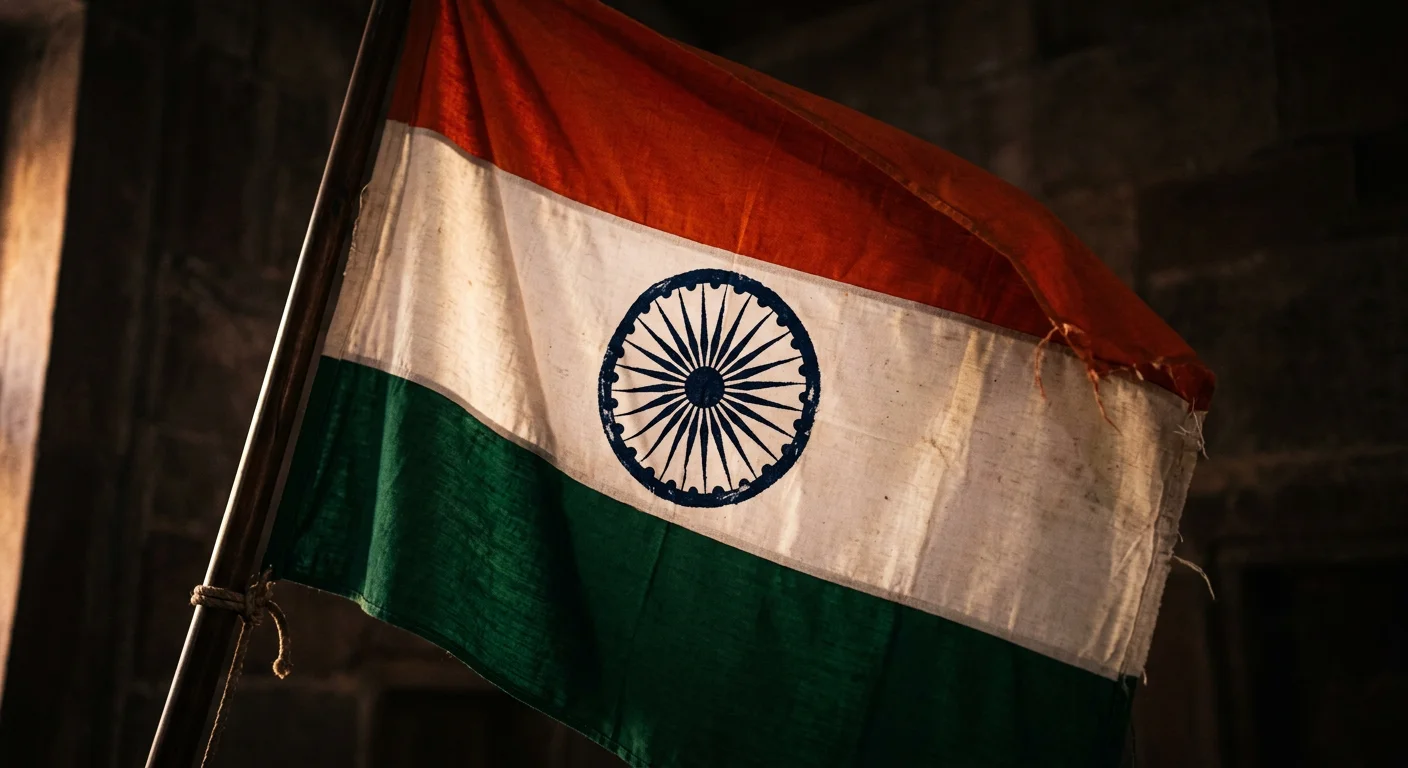
Three stripes. Three words. A whole national philosophy packed into colored cloth.
The colors of the Tiranga aren't decorative choices. Each one carries a clear meaning — and that meaning changed as India moved from a colony to an independent nation.
A Clear Shift Away From Religion
Here's what changed — and why it matters.
Before independence, the three colors mapped onto religious communities. Saffron for Hindus. Green for Muslims. White for everyone else.
That reading was dropped .
The Constituent Assembly gave each color a fresh meaning — values tied to national identity, not religious groups. Courage. Truth. Growth. No single community owns those. Every Indian does.
The final arrangement works like a quiet national statement: sacrifice at the top, principle in the center, shared earth at the bottom — a nation built on all three, belonging to no one group alone.
Official Flag Standards: The Rules That Govern Every Tiranga (Flag Code of India & BIS)
India doesn't leave its national flag to chance.
Every dimension, every stitch, every shade of saffron — all of it is locked down by law. The Flag Code of India 2002 and the Bureau of Indian Standards (BIS) specification IS 1:2002 form a two-layer framework. Together, they control how the Tiranga is made, displayed, and treated. Every flag flying over a government building, a school, or a citizen's home must carry the same precision and dignity.
The Flag Code: Shape, Size, and Structure
The Flag Code starts with the non-negotiables. The Tiranga must be rectangular . The length-to-width ratio is 3:2 — so the flag is always 1.5 times longer than it is wide. The three horizontal bands must be equal in width. The Ashoka Chakra sits centered on the white band in navy blue. It must be visible from both sides.
Nine standardized sizes exist in total, ranging from a massive 6,300 x 4,200 mm (Size No. 1) down to a compact 150 x 100 mm (Size No. 9). Every public use case has a matching size. Nothing is open to interpretation.
BIS IS 1:2002: The Technical Backbone
The Flag Code is the law. BIS IS 1:2002 is the engineering spec behind it. This standard controls the physical construction of every compliant flag.
Key requirements include:
Fabric weight : 205 +/- 20 g/m2 — tight enough to ensure consistent quality across all indian national flag tiranga manufacturers
Ashoka Chakra diameter : Scaled per flag size, always 30.8% of the flag's height . On a Size 1 flag, that's a 1,295 mm diameter with 120 mm spoke widths
Chakra production method : Screen printed, stencilled, or embroidered — all three are acceptable, as long as the color is navy blue (Variety 7, IS:1803)
Edge finishing : Turned in 5 mm and stitched; larger flags (Sizes 1–6) require triangular reinforcement at the corners
Size 7 (motor car flag) : Double-layer construction — a specific requirement that reflects the heavy, repeated use these flags take
The 2022 Rule Change: From Khadi Monopoly to Open Materials
For decades, handspun khadi cotton was the only legal fabric. That wasn't a technical decision — it was an ideological one. It tied back to Gandhi's self-reliance movement and the Swadeshi spirit woven into the flag's own history.
That changed in 2021–2022. The government amended the Flag Code to support the "Har Ghar Tiranga" (Every Home, a Flag) campaign . Machine-made polyester and cotton joined the approved materials list. The khadi monopoly — which had held for over 70 years — was over.
The goal was straightforward: make it easier for every Indian household to own and display a Tiranga. The result was a sharp surge in flag production and visibility across the country.
What Still Cannot Change
Material flexibility has its limits. BIS compliance stays non-negotiable, no matter what fabric selection of an Indian national flag manufacturer. That means:
No logos, text, or alterations to the design
Exact proportions must be maintained at every size
Correct color standards — India saffron (Kesari), bleached white, and India green, all per BIS specification
These rules aren't bureaucratic red tape. They're a legal commitment — that this flag, no matter where it flies, carries the same meaning.
Pro Tip: For bulk orders of patriotic or Indian-inspired flags over 100 pieces, contact our team for special wholesale pricing and faster delivery.
Approved Indian Flag Manufacturers: Who Is Certified to Make the Tiranga
Not everyone who sells a Tiranga is allowed to make one.
Manufacturing India's national flag is not something a business license or government tender can grant. The process runs through a strict, controlled system — and as of 2022–2023, four manufacturing factory of Indian National Flag Tiranga in the entire country hold valid BIS certification to produce an official Tiranga.
Four. For a nation of 1.4 billion people.
The Four Certified Manufacturers
Every genuine Indian national flag comes from one of these units:
The spread across these locations is no accident. Each manufacturer sits inside or near established khadi textile belts. These are regions with long histories of handspun cloth production.
KKGSS: The Flagship Operation
Of the four, KKGSS in Hubli, Karnataka stands out. Founded in 1954 , it is the oldest certified flag production center in the country. Many official sources list it as the primary authorized unit.
KKGSS does not produce off-the-shelf goods. Every flag uses hand-spun, hand-woven khadi cotton , sourced from two dedicated handloom units in the Dharwad and Bagalkot districts of Karnataka. The raw material comes from Garag village in Dharwad Taluk — a khadi production hub that existed before Indian independence.
KKGSS covers all nine BIS-specified sizes . It fills orders for government agencies, the Ministry of Defence , and para-military organizations across the country.
Who Issues the License — and Who Enforces It
Two bodies run the entire certification framework:
KVIC (Khadi and Village Industries Commission) — issues manufacturing licenses
Bureau of Indian Standards (BIS) — enforces production guidelines and holds authority to cancel licenses for violations
Either body can withdraw certification at any time. The manufacturer loses legal standing the same day. No appeals period. No grace window.
How to Verify a Flag Is Legitimate
Buying a flag from an unauthorized source is not just a grey area — it is a direct violation of the Flag Code of India . Check these points before you buy:
✓
Look for the BIS certification mark on the product label or packaging
✓
Cross-reference the manufacturer against the official KVIC and BIS portals — KKGSS should appear as a listed unit
✓
Confirm khadi material and hand-woven construction for official-use flags (post-2022 polyester is permitted for citizen display under the Har Ghar Tiranga campaign, but BIS compliance still applies)
✓
Ask the supplier for their KVIC or BIS license number — any genuine vendor will give you this without hesitation
The Online Marketplace Problem
A search on IndiaMart pulls up 20+ suppliers offering Indian flags in satin, polyester, and even paper. Prices drop as low as Rs 8–10 per piece at MOQs of 2,000–5,000 units. Some sellers, like Harsh Textile in Mathura, UP, list sizes ranging from 20x30" to 40x60" in satin finish.
None of these listings carry confirmed BIS certification.
That gap matters. Cheap, unverified flags flood the market — most visibly around Independence Day and Republic Day. They look right. They are priced to sell fast. But they do not meet the standards the Flag Code requires. Buying or selling them carries real legal risk.
The Tiranga is not just fabric and dye. It is a regulated national symbol. India put these four certified manufacturers of Indian National Flag Tiranga in place because some things carry too much weight to go unregulated.
Custom Patriotic & Indian-Inspired Flags: How to Order for Independence Day, Events & Wholesale
Patriotic flags see serious commercial demand. Two dates on the Indian calendar drive most of it: August 15 (Independence Day) and January 26 (Republic Day) . Schools, corporations, diaspora communities, and event organizers all need bulk patriotic displays — and they need them fast.
One key fact to know upfront: the official Tiranga cannot be customized for commercial use . That's protected by law. What is legal — and growing in popularity — is ordering Indian-inspired patriotic flags . These use saffron-white-green color schemes paired with your logo, organization emblem, or commemorative message. Corporate headquarters installs, trade show banners, veterans' memorials, employee gifts — all of these fit well within legal boundaries.
Choosing the Right Material
Three flag materials dominate the market:
Nylon (200D SolarMax)
Lightweight, quick-drying, flies in light wind. Best for outdoor events and everyday display. DuPont UV-resistant ink keeps colors sharp.
Open-weave Polyester
The top choice for high-wind environments and long-term bulk orders. It holds up under stress better than nylon.
Cotton
Traditional look, lower outdoor durability. Best for indoor framing or memorial display.
The most popular size is 3'x5' . Stock options run from 12"x18" up to 5'x8'. Custom dimensions of Indian national flag Tiranga are also on the table.
Bulk Pricing & How to Order
Wholesale discounts of Indian national flag Tiranga kick in based on quantity:
| Quantity | Discount |
|---|---|
| 3–25 | Price breaks applied online |
| 10–24 | 10% off |
| 25–49 | 15% off |
| 50–99 | 20% off |
| 100+ | Custom wholesale quote of Indian national flag Tiranga |
No minimum order required — single flags are welcome. Submit your vector artwork, approve the digital proof, and production wraps up in 2–3 weeks . For bulk quotes over 50 units, reach us at +86 177 0272 7677 or [email protected] .
Conclusion
The Tiranga is more than fabric and dye. It holds 50 years of struggle, one designer's fierce persistence, and a nation's shared identity — all stitched into 24 spokes of a spinning wheel.
Pingali Venkayya gave India its symbol. The freedom fighters gave it meaning. Today, strict BIS standards and the Flag Code of India make sure every Tiranga — whether on a rooftop, a stadium, or a government building — honors that legacy with care.
You might be here to learn the history of Tiranga . Or maybe you need patriotic flag designs for Independence Day events, bulk orders, or branded celebrations. Either way, knowledge is just the start. Action is what comes next.
Ready to bring that patriotic energy to life? Check out custom Indian-inspired flag designs at RunCustomFlag.com . Heritage meets craftsmanship there, and every order is made to leave a mark.
Flags carry history. Make sure yours tells the right story.
Video Guide
Related Posts