Last year, a friend wanted to sell custom flags. These flags were for sports teams and events. He found a supplier on Alibaba. He sent $3,000. Then he waited. Eight weeks later, a box of flags arrived. The colors were very different from his designs. The flags were almost impossible to sell. He lost money. He lost time. He almost gave up his idea.
He did not do anything wrong. He just missed important steps. These steps would have saved him.
You want to source custom flags from China. You want to make money. You need to know the materials. You need to find the right factory. Do not pick just any factory. Negotiate well. Check the flags before shipping. I have done this myself. I will show you how to do it. You will not lose money on new mistakes.
What to Source: Flag Types, Materials, and Details Factories Need
You need to know exactly what you are ordering. This is true before you talk to any factory. Some people email suppliers. They say, "I want custom flags." Then they get a quote that makes no sense. Factories need specific details. Badly prepared buyers get bad prices.
First, choose the flag type. There are many types. These include national flags, garden flags, feather flags, car flags, beach flags, teardrop banners, hand-waving flags, double-sided outdoor flags, and one-sided wall flags. Each type has a different build. It needs different parts. It has different prices. A hand flag costs $0.20-0.50 each. A standard wholesale polyester flag costs about $3.50-4.00 each. You must state the type early. This saves you a week of talking back and forth with your supplier.
Material matters. Most sellers use knitted polyester at 110g or 115g. It costs little. It prints well. 80% of the market uses it. Outdoor flags need to last in bad weather. For these, use 300D polyester. Nylon costs $1.20-2.00 per yard. It works well for high-end flags or government flags. Satin is for special events. Do not worry too much about this. For most online sellers, 110g knitted polyester is the right choice.
You might sell 3x5ft garden flags online. Your factory needs to know they are 100x150cm. They are on knitted polyester. They use sublimation dye print. This level of detail gets you a correct quote in one email. It saves you from sending five emails.
Your design files are key. Send vector files. Use AI or EPS format. Include Pantone color codes. Factories can use 300 DPI JPGs at 1:1 scale. Vector is always better. Do not forget this important detail: keep your artwork at least 5cm from all edges. This is for the bleed zone. Do not make lines thinner than 1mm. Your print will look unclear.
Common sizes are 60x90cm, 100x150cm, 120x130cm, 150x400cm, and 200x300cm. The biggest print width is 200cm. If your design is wider, it will need a seam. You need to know this beforehand.
Small sample runs of 1-10 pieces take 2-3 days. A real order of 100-500 pieces takes about 7 days. Write down HS Code 6307900090. You will need it for customs. You will also use it to figure out your full cost.
Finding Good Chinese Flag Factories: Where to Look and What to Check
You go on Alibaba. You search "custom flags." Over 1,000 suppliers appear. Half of them look the same. How do you choose?
You need to know where the factories are. Location tells you what a supplier does best.
Guangdong province (Foshan and Guangzhou) has the most flag factories. There are about 604 factories. They make over 50,000 square meters of flags daily. You need many flags quickly? This is the place. Foshan Yaoyang has worked for 9 years. They charge $1.20–$1.88 per unit. This is a good middle price range.
Zhejiang (Shaoxing, Yiwu, Linhai) is another big area. It has about 459 factories. Here you find established businesses. C&S in Linhai has 200 workers. They have been in business for 20 years. They make 10 million flags each year. Ningbo Aisa charges $1 per unit. You can order as few as 50 pieces. This helps you test a product line without buying too much.
Shandong is good for UV-protected outdoor flags. Xinhuizhan charges $1.58–$2.28 per unit. You can order as few as 10 pieces.
People often make a mistake on Alibaba. They filter by "Gold Supplier." They think this means it is a good factory. This is wrong. "Gold Supplier" is a paid service. Look for "Verified Manufacturer." This means an outside company checked their factory.
Also check Made-in-China.com. It is strong for fabric suppliers. Fewer people use it. This means fewer trading companies will try to act like factories.
I like Wuxi Stoter. They have worked for 13 years. They have over 60 staff. They charge $0.09–$0.19 per unit. They deliver on time 100%. They have a 4.8 out of 5 score. With these prices and this history, you should order a sample. Hefei Hanhang is also good. They have a 4.9 rating. You can order just 1 piece. This is rare.
The biggest mistake I see is choosing the cheapest price. Do not do this without checking how old the factory is, how many workers they have, and their reviews. A supplier that charges $0.09 and has 13 years of history is much better than one that charges $0.09 with 2 years and no reviews.
Getting Quotes and Negotiating: MOQ, Pricing, and Payment Terms
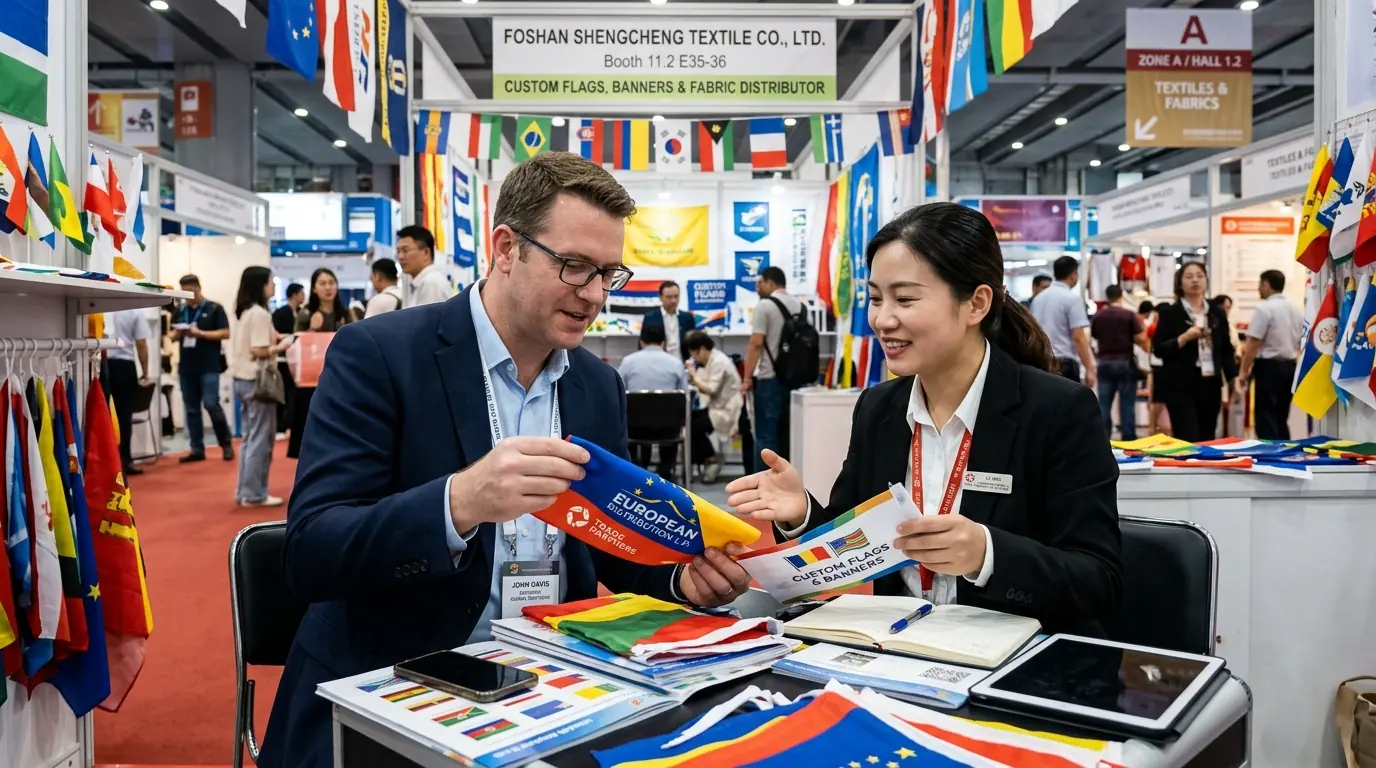
Most people lose money here. They find one supplier. They get one quote. They just use it. That is a mistake.
Need to ask for quotes from at least 3-5 suppliers. All quotes must have the same details. Use the same material. Use the same size. Use the same print method. Use the same quantity. Do not keep the details the same, compare different things. Will not know who offers a good price.
Ask each supplier for prices at three different amounts. Ask for 100, 500, and 1,000 pieces. This shows how they work. A regular custom 3x5ft polyester flag costs $0.80-$2.50 each buy 500+ items. Feather flags cost more. They are $3-$8 each for 100+ pieces. Someone quotes $4 for a simple polyester flag at 500 units. They either add extra cost or they are a middleman.
MOQ is almost always flexible. Most factories list custom MOQs between 50-1,000 pieces. Many will make 1-10 units for tests or samples. Standard designs can go as low as 10-50 pieces. Always ask. The worst they can say is no.
Imagine launch a new line of beach flags. Do not know which design will sell. Order 5-10 samples first. Do this before order a large number. Samples cost more per unit. Beach flags cost $2.80-$9.80 for small numbers. But it saves from a $2,000 mistake.
For payment, the usual way is a 30% T/T deposit up front. Then 70% before shipping. Do not argue with this. It is normal in the industry. For small orders under a few hundred dollars, some suppliers take PayPal or Western Union. This gives more buyer safety.
| Flag Type | Price Range | Minimum for Best Price |
|---|---|---|
| Custom 3x5ft polyester | $0.80–$2.50/pc | 500+ pcs |
| Feather flags | $3–$8/pc | 100+ pcs |
| Per square meter (Zhejiang) | $1.60–$3.00/sqm | Varies |
People forget to check two things. They forget to check Pantone color matching ability and lead times. They cannot match your exact Pantone colors. Your brand look will suffer. Lead times are 7-30 days. This depends on how complex the order is and its size. Plan this into your schedule. Do not promise customers anything before know.
The real large order discounts start at 500+ units. Aim for that number. Will get prices that make your profits work.
Skip the Middleman. Source directly from our factory in China — free samples, transparent pricing, quality guarantee. Get a Free Quote →
Sample Orders and Design Approval: Protecting Quality Before Mass Production
You found a supplier. The supplier offers you a good price on 500 custom flags. You like the price. You want to buy them right away. Do not do this.
Many people make a mistake. They skip the sample. They go straight to mass production. This saves time. Then 500 flags arrive. The colors do not match the design file. Suppliers do not take back custom-printed flags. You now own flags you cannot sell.
A sample costs $20-50. Express shipping costs $30-60 with DHL or FedEx. The total is about $100. This is good protection for a large order worth thousands.
Production takes 3-5 days. Delivery takes 3-5 days. You will get the flag in about two weeks. Plan your time well. Lead times are longer around holidays like Thanksgiving, Christmas, or Super Bowl.
Your sample arrives. Check these things:
| What to Evaluate | What You're Looking For |
|---|---|
| Color accuracy | Pantone match to your original file |
| Ink penetration | Bleed-through on both sides (especially for sublimation dye printing) |
| Stitching | Double-fold hems, reinforced edges that won't fray |
| Grommets | Strong enough to withstand wind without pulling out |
| Design placement | All elements within the safe area, nothing cut off at edges |
Your printing method is important. Sublimation dye gives bright, strong results. Screen printing works well for 8 colors or less. Digital printing handles designs with many colors. Ask about how well it holds up to washing and sunlight.
Do not approve mass production until you hold the sample. Photos from your supplier are not enough. Colors look different on a screen than in real life. Once you say yes, you cannot change your mind. Take your time with this step even if your supplier wants you to go faster.
Quality Control and Pre-Shipment Inspection
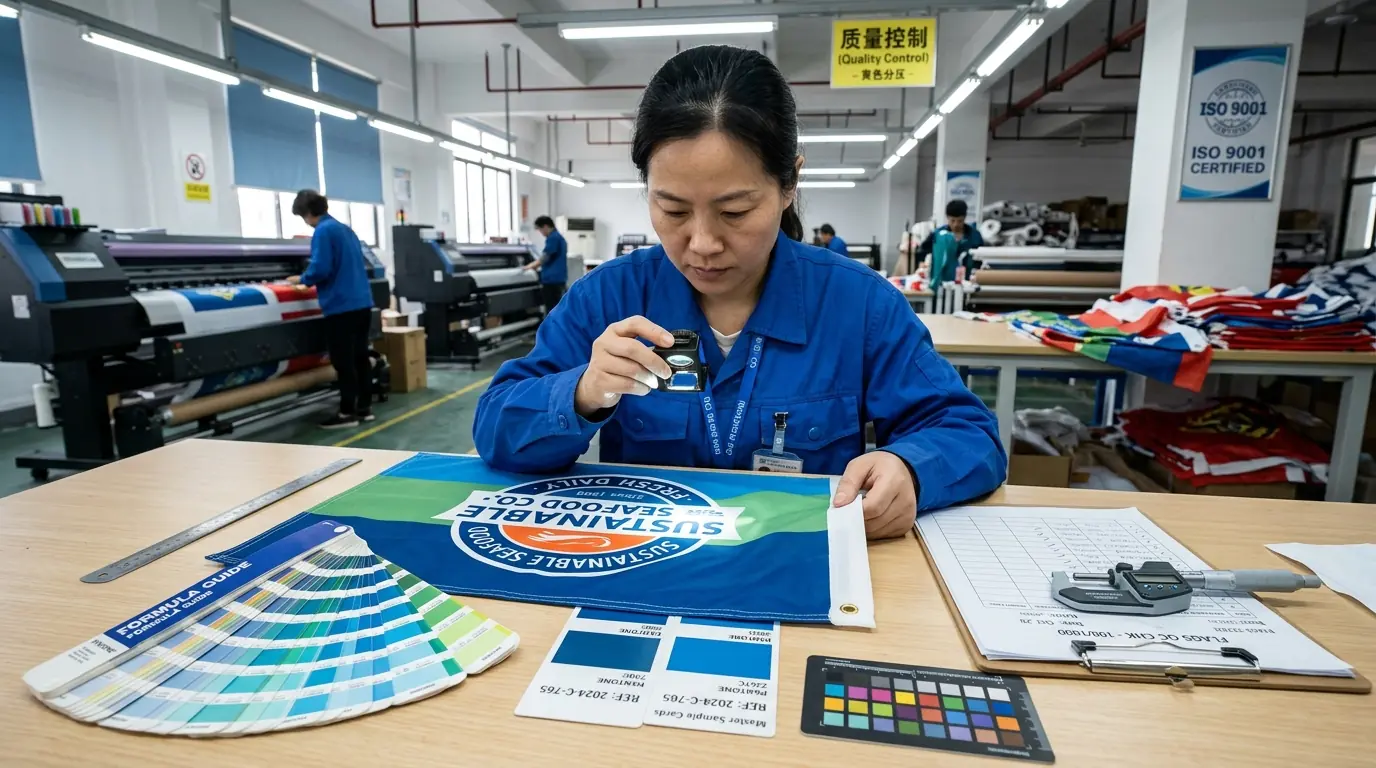
You found a supplier. You got a good price. Production is going well. Then 5,000 flags arrive at your warehouse. The colors are off. The grommets fall out easily. I have seen this happen. You can avoid this with good quality control.
Most people make one mistake. They think quality control is just one check at the end. It is not. You need a process with many steps. First, set your product details. Then, check raw materials with a Pre-Production Inspection (PPI). Do a During Production Inspection (DUPRO) when production is at least 50% done. Finally, do a Pre-Shipment Inspection (PSI) when production is 80-100% complete.
Do not do the final inspection yourself from far away. Hire a third-party inspection company. Some examples are SGS, Bureau Veritas, or Intertek. It costs $200-400 for each inspection. This sounds like a lot. But think about losing a $10,000 shipment of bad flags. This is the cheapest insurance you will ever buy.
Your inspector needs a clear list. These are the important checks for flags:
| Checkpoint | What to Look For |
|---|---|
| Print Alignment | Graphics in the middle, no turning or shifting |
| Color Consistency | Matches Pantone colors for the whole batch |
| Stitching | Even seams, no loose threads or bumps |
| Grommets/Hardware | Firmly attached, no rough edges |
| Fraying | Edges cut clean, hem finished well |
| Packaging | Folded correctly, labeled, poly bags not broken |
Use AQL (Acceptable Quality Level) sampling. Use 2.5 for major problems like wrong colors or broken grommets. Use 4.0 for minor problems like small packaging issues. These are standard levels in the industry. Any good supplier will know them.
These are warnings signs that should make you worry: the factory has no quality control records. They have no special inspectors. They cannot show you data on how well their products last. A good factory uses modern machines. It should make over 10,000 square meters per day per machine. It should have less than 2% waste. If their waste numbers are much higher, their quality system is likely bad.
After every order, follow up. Send your supplier a detailed report. Show what passed and what did not. This feedback helps an okay supplier become great over two or three orders.
Quality You Can Trust. We provide pre-shipment inspection photos and Pantone color matching for every order. Start Your Order →
Shipping, Customs, and Landed Cost Calculation
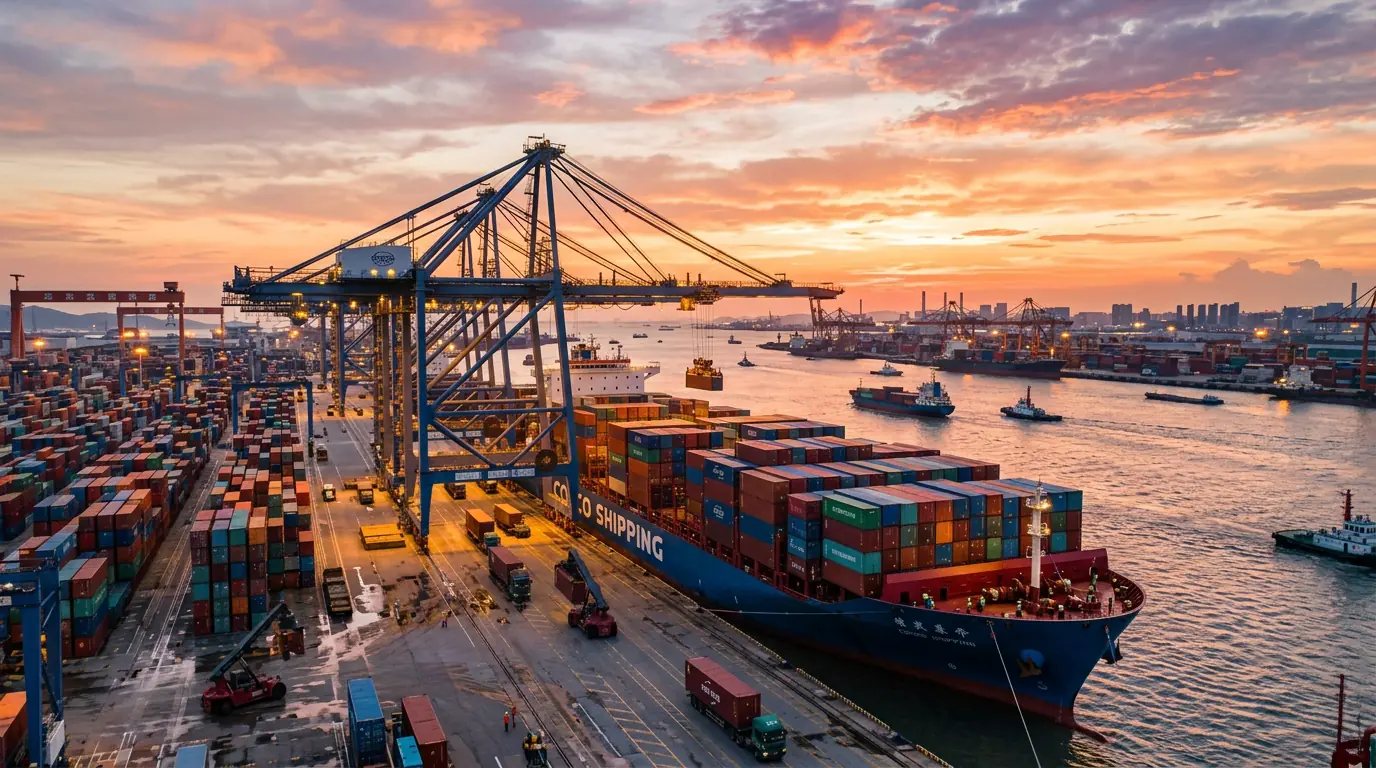
First-time importers often miss these costs. You agree on a good price with the factory. You feel good about your profit. Then shipping, duties, and port fees take 30-40% of your expected savings.
I will show you the real costs. You can then figure out your total cost before you order.
You have three shipping choices for custom flags:
A full container by sea (FCL) costs $2,000-4,000 for a 20ft container. It takes 25-35 days. You likely do not need a full container unless you order tens of thousands of flags. A shared container by sea (LCL) costs $50-150 per cubic meter. Most small and medium flag orders use this. Air freight costs $4-8 per kilogram. Your order arrives in one week. But it will cut deeply into your profit unless the order is urgent.
I think LCL ocean freight works best for most flag businesses. Flags fold flat, so your cubic meter costs stay low.
Things will get harder in 2025. The US put port fees on Chinese ships. These fees are $80 per net tonnage, plus $120 per container. This will go up to $250. Chinese-built ships will face fees up to $1.5 million for each US port visit. This is already happening. Shipping companies are changing routes. The industry believes this will add over $3 billion in costs each year. Some importers ship through Mexico or Canada to avoid these fees. But this adds more steps and time.
Your flags use HS code 6307.90. This has a 6-12% duty on the CIF value. The CIF value is your product cost, insurance, and freight cost. It is not just the product price.
Here is the landed cost formula you need:
| Cost Component | What to Budget |
|---|---|
| Product cost (FOB) | Your agreed price |
| Inland China freight | From factory to port |
| Ocean/air freight | LCL: $50-150/cbm |
| US port fees | $120-250/container (rising) |
| Customs duties | 6-12% on CIF value |
| US drayage | From port to your warehouse |
| Insurance | ~0.5-1% of CIF |
Figure out these numbers before you place your order. I have seen people give quotes to customers using only FOB pricing. They then struggle when the true costs appear. This can ruin a business.
Stop Scams and Keep Your Designs Safe
This situation worries me. You send your flag designs to a sourcing agent. Six months later, that agent patents your design in China. This happens often. Many people do not know this.
Let's talk about money. This is where people first get into trouble.
Do not pay 100% upfront. It does not matter how good the supplier seems. Pay 30% first. Pay the other 70% when they finish the work. This is the standard payment plan. A factory that wants full payment before starting is a big problem. Sourcing agents can overcharge. One agent added 40% to a $1 million order. He kept $400,000. This happened because the buyer did not check factory prices.
Checking facts is better than Alibaba badges. Many people do not know this: over 70% of Alibaba Gold Suppliers do not have third-party checks. The gold badge just means they paid a fee. Ask for a live video tour of the factory. Ask for their business license. Ask for the factory's direct contact details. If they only show pictures or will not let you talk to the maker, leave.
Protect your ideas before you share them. Sign up your designs with CNIPA. This is China's IP office. Use NNN agreements. This means Non-Use, Non-Disclosure, and Non-Circumvention. An American NDA will not work in China. The NNN agreement lets you take legal action against the maker in Chinese courts. This is the only place it matters.
Something else can hurt your business: shipping fraud. Some suppliers re-label flags made in China. They say they are from Vietnam or Thailand. This helps them avoid taxes. They also put fake "Made in USA" labels on them. This has gone up by over 100%. The DOJ has gotten over $58 million from customs fraud cases. CBP fines were $38.6 million recently. This is almost double the amount from FY2018. If your supplier gets caught, you are also responsible.
You must check everything yourself. Protect your designs in China by legal means before sharing them. Keep direct contact with the factory. Middlemen make things unclear. Scams happen when things are unclear.
Ready to Place Your First Order? Work directly with our factory — no middlemen, no hidden fees. Free design support included. Contact Us Now →
Your First Flag Order
Your first order should reduce risk. Do not try to save every penny. The lowest price almost always costs you more later.
Here is what to do now:
- Ask at least 3 suppliers on Alibaba for samples. Plan to spend $50-100 on this. This is money well spent.
- Order one sample using your actual design. Do not use their standard samples. Those samples always look perfect.
- Confirm payment terms and minimum order quantities in writing. Do this before you agree to anything. Get it on paper.
- Start with a small first order. Order 100-200 flags. The cost per flag might be higher.
You will likely make some errors. My wife and I made many errors when we first bought products from China. A $200 lesson is better than a $5,000 lesson. Order those samples today. Start learning.