Sourcing flags from Nepal sounds simple. But three weeks into a supplier search, you're staring at a pile of inconsistent samples — and your event deadline is closing in fast.
Finding a reliable flag manufacturer in Nepal takes more than a quick Alibaba search. Nepal's textile sector is competitive on price and craftsmanship. The problem is the gap between a real factory and a middleman with a catalog. That gap is wide enough to derail your entire bulk order.
This guide covers every stage of the process:
Locking down your specs before you contact any supplier
Vetting factories so you know who you're dealing with
Inspecting shipments before they leave the warehouse
You'll source smarter, negotiate from a stronger position, and get exactly what you paid for.
Step 1: Define Your Order Requirements Before Contacting Any Supplier
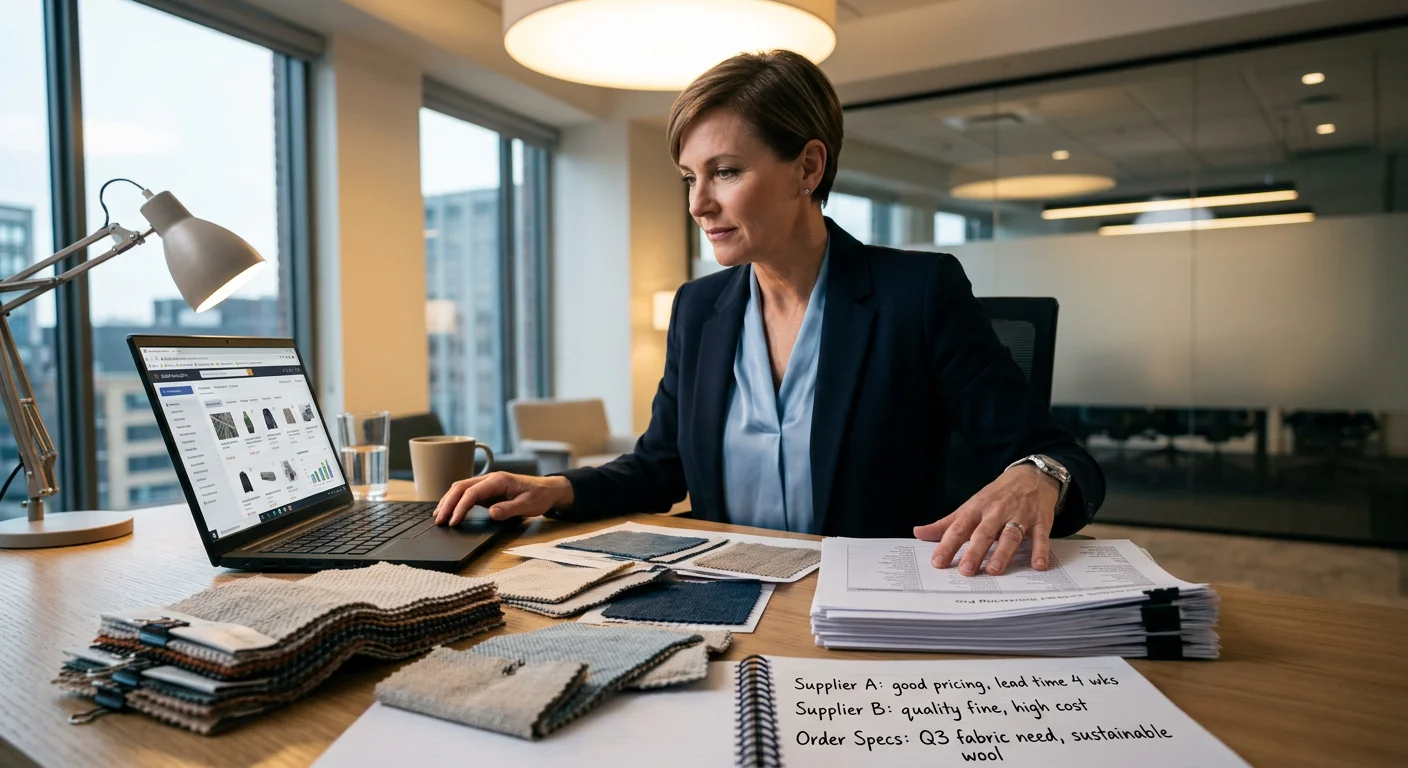
Most sourcing mistakes happen before the first email is sent.
Go into supplier talks without clear specs. You give them control over your order. That leads to the wrong material, wrong quantity, and a delivery date that slips three weeks.
Lock these down first:
Quantity & frequency — exact unit count, plus whether this is a one-time run or recurring order
Quality threshold — target defect rate (aim for >95% defect-free units), and what counts as a rejection
Delivery benchmark — on-time, in-full (OTIF) target above 95%
Budget parameters — unit price and total landed cost (shipping, packaging, customs)
Response standard — require PO acknowledgment within 48–72 hours
A supplier who can't confirm these details upfront won't get better once the order is running. That's a pattern, not a one-time slip.
Step 2: Where To Find Nepal-Based Flag Manufacturers (Verified Sourcing Channels)
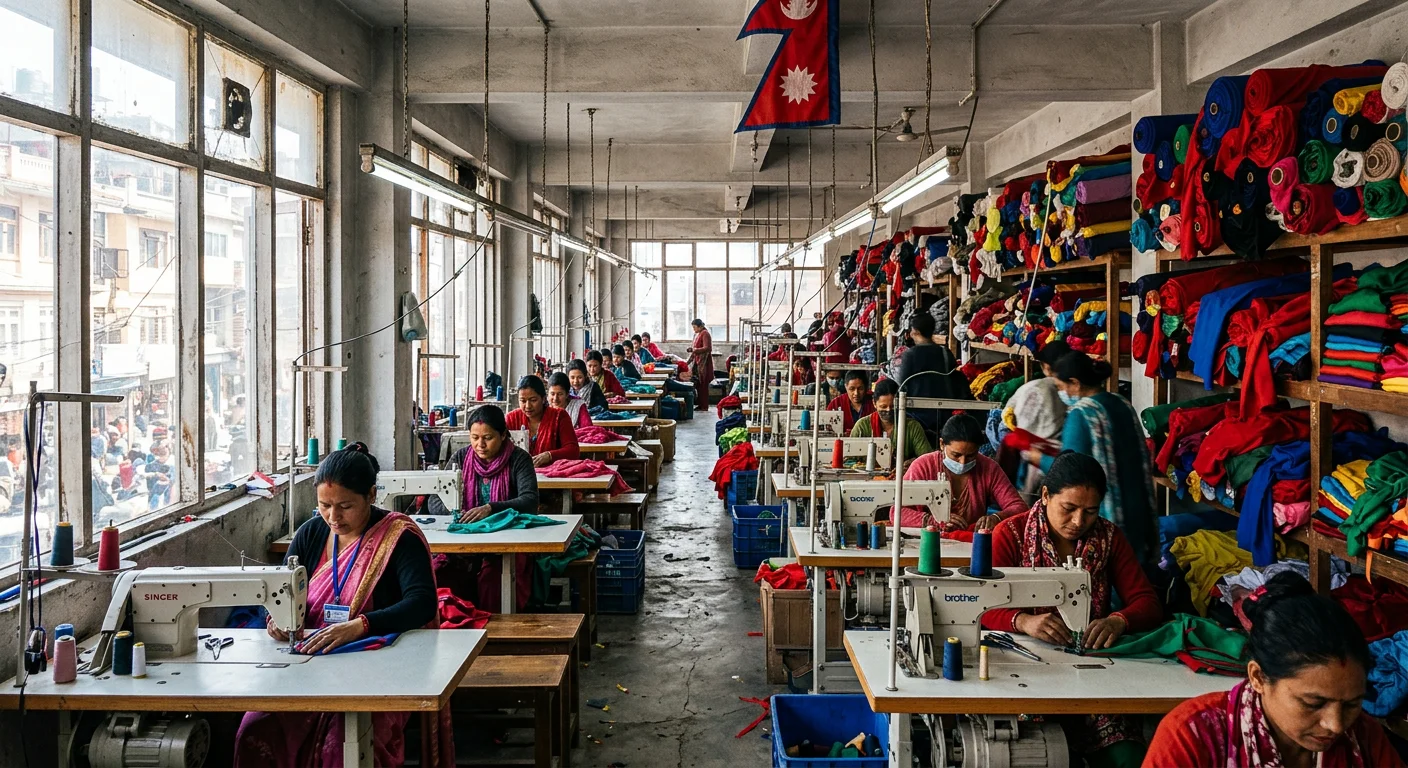
Nepal has over 2,000 registered national flag manufacturers on Panjiva alone. The real problem isn't scarcity. It's knowing which channels lead you to factories — not brokers.
Here are the sourcing channels that work:
B2B Platforms (Start Here, But Filter Hard)
Search "Nepal flag manufacturer" on Alibaba or Global Sources. Apply two filters right away: Location = Nepal and Gold Supplier badge . Gold Supplier status means the seller has at least one year of verified presence on the platform. Next, check transaction history. Focus on sellers with 50+ completed orders . Anything below that carries risk you don't need.
Trade Databases: Panjiva & ImportYeti
Panjiva lists 2,026 Nepali flag manufacturers. Search "flag," "handicraft," or "fabric export" to find relevant matches. Three names worth checking out: Fashion Craft Pvt. Ltd. , Panorama Apparels Ltd. , and Peace Enterprises (P) Ltd. — all have multiple recorded US and EU export shipments. Shipment history is much harder to fake than a supplier profile.
Industry Associations
Three directories worth saving:
Nepal Chamber of Commerce (nepalchamber.org) — 500+ members, filterable by textile/handicraft
Handicraft Association of Nepal (han.org.np) — ~300 exporters listed under fabric and textile categories
FNCCI Export Directory — 200+ textile firms, umbrella organization for Nepal's export sector
One Verified Name to Start With
Flags Nepal (flagsnepal.com) is the most direct starting point for custom flag sourcing in Nepal. They focus on premium flag printing and custom event flags. Plus, they have an actual contact page — not just a WeChat number.
LinkedIn & Exhibition Lists
Search "Nepal textile factory manager" or "Nepal flag manufacturer owner" on LinkedIn. Filter by Kathmandu location. Then cross-reference those names against the Asia Textile Expo Nepal exhibitor lists (2023–2025 editions). Around 20 Nepali booths show up per cycle. The overlap with Panjiva-verified exporters quickly shows you who's legitimate.
Step 3: How To Vet a Nepal Flag Manufacturer for Reliability (6-Point Checklist)
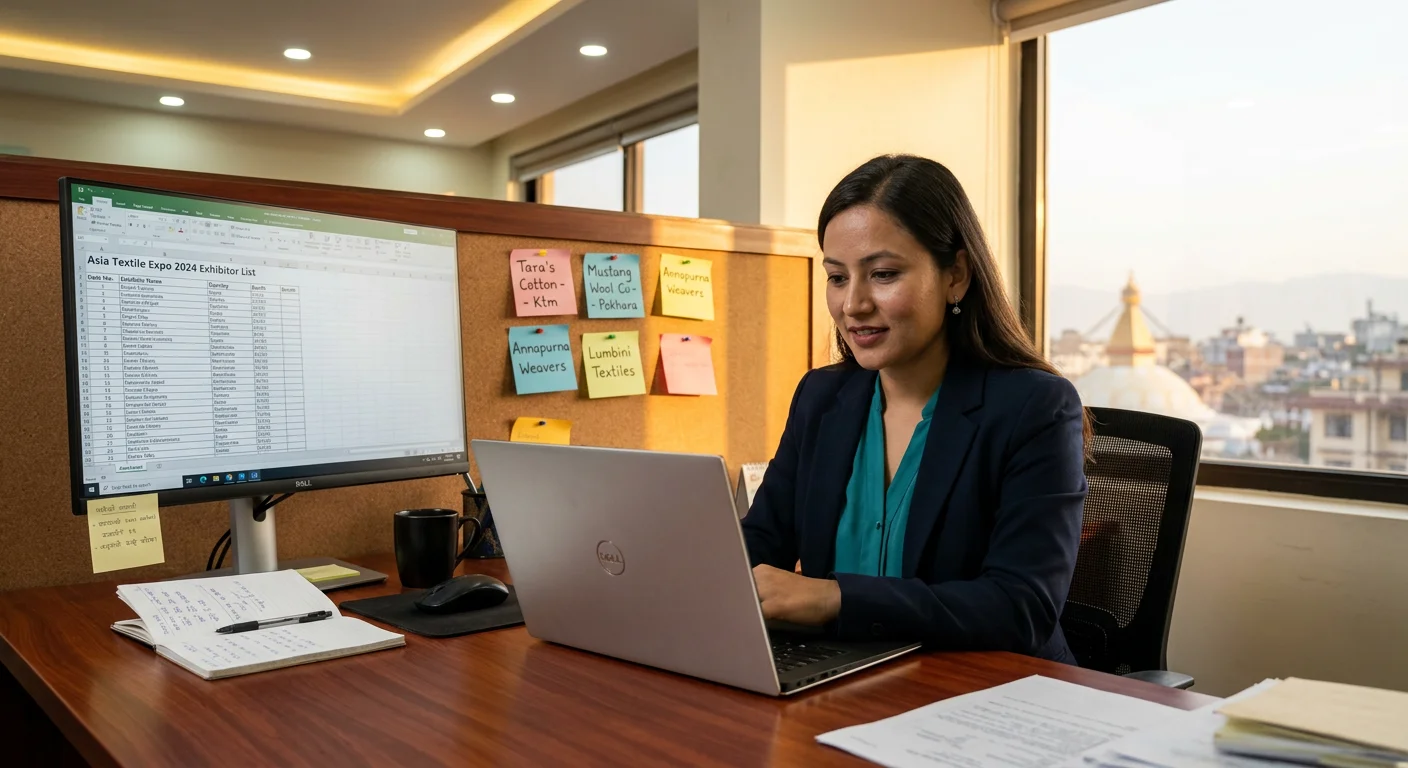
You found ten suppliers. Six look promising. Two sent samples within a week.
Now the real work starts.
A 2023 Nepal Exporters' Association audit found alarming numbers:
38%
Outdated Licenses
22%
Undisclosed Middlemen
That's not a minority problem. That's a structural one. So your vetting process has to be systematic, not instinctive.
Use this six-point checklist before you commit a single dollar to a Nepal flag manufacturer .
Point 1: Verify Legal Qualifications
Start with the Office of Company Registrar (OCR) database. Search the supplier's business name. Check four things: active registration status, registration date, authorized capital, and director names.
Then cross-check the Nepal Customs Department exporter list . Around 1,200 firms hold a valid direct export license. Your supplier isn't on it? They're either a broker or working through someone who is.
Request these four documents before anything else:
- Certificate of Registration
- VAT registration
- Proforma invoice (with full bank details)
- Exporter code
Red flags — end the conversation here:
- Scanned certificates with no OCR watermarks
- Invoices missing a GST/VAT number
- Bank details that don't match the registered company name
Point 2: Confirm Production Capacity — With Proof
Never accept a capacity claim without evidence. Ask for a real-time video walkthrough with geotagging turned on. The footage should cover raw material storage, worker stations, and the packaging area. Look for safety gear and bilingual signage. No sign of either? That's a warning.
Spend USD $150–$300 on a half-day local auditor, or bring in SGS or Bureau Veritas for a formal factory visit. That's cheap insurance against a five-figure mistake.
Push for specifics. A credible polyester flag manufacturer in Nepal or handcraft supplier can name exact material sources — like Chyangra goat wool from Humla District — not just "Tibet" or "local suppliers." Vague sourcing language means they don't control what they claim to control.
Green flags:
- They share artisan photos and production videos with worker consent
- Their stated capacity lines up with visible floor space and headcount
Point 3: Validate Client References (Call — Don't Just Email)
Ask for two international client contacts. Not domestic. International. Then pick up the phone.
Ask these two questions:
- "Did they ever miss a shipment without giving you notice?"
- "Did the final delivery match the pre-shipment sample?"
Those two questions reveal more than any questionnaire. Also run a Google and Trustpilot search, plus check relevant industry forums. Look for suppliers with five or more years serving the same European client. The relationship warrants it? Ask for three fiscal years of consistent export revenue shown in bank statements.
Point 4: Test Sample Quality Against Measurable Standards
"Good quality" means nothing. Get the numbers.
For custom printed flags Nepal orders, here's what to measure:
Color Fastness
AATCC 61 standard, minimum rating of ≥4
Seam Strength
Minimum 15 lbs/inch on pull test
Fabric GSM
150–200gsm for outdoor polyester flag applications
Ask for lab reports from SGS or Bureau Veritas for your specific batch. Don't accept generic industry certificates — any supplier can copy and reuse those.
Ordering Nepal national flags? The specs are fixed: height = 4/3 of width ; upper triangle height = 3/4 of flag height ; moon diameter = 1/8 of width . Any deviation is a failed unit. No exceptions.
Point 5: Verify Certifications — Go to the Source
Fake ISO and OEKO-TEX certificates are common across South Asia sourcing. Nepal is no exception. Don't accept a PDF and move on.
Go straight to the certifier's portal. Enter the certificate number yourself. Check that it links to that supplier's name and address — and that it hasn't expired.
Nepal has four recognized organic certifiers: IMO, Control Union , and two others with regional operations. Compare the certification address against the OCR-registered address. A mismatch needs an explanation — don't assume it's just a paperwork issue.
Also ask for a signed factory manager letter confirming compliance with the Nepal Labour Act 2017 . It should include minimum wage disclosure and worker ID documentation. Suppliers who welcome an SA8000 or Fair Trade audit? That tells you a lot about how they run things.
Point 6: Assess Logistics Transparency
A supplier's logistics setup tells you whether they can handle bulk flag orders or just sample-level shipments.
Green flags:
- Offers FOB Kathmandu or CFR pricing options
- Has an established freight forwarder relationship
- Gives real-time customs clearance updates
Red flags:
- EXW terms with no forwarder recommendation
- Refuses to share customs documentation
- Blames all delivery delays on "bureaucracy" with no specifics
Run a quick test before negotiations go deep. Send an English inquiry asking for three specific documents. How fast they respond — and how clear that response is — shows you how they'll communicate when something goes wrong at the border.
Quick-Reference Comparison Table
| Vetting Point | Red Flag | Green Flag |
|---|---|---|
| Legal Docs | No OCR PDFs or digital signatures | Verified PDFs, valid VAT + exporter code |
| Production | "100% handmade" with zero proof | Named material sources, full batch traceability |
| References | Domestic only, no call-back | International clients, direct contact provided |
| Sample Quality | Generic certs, no lab reports | SGS/Bureau Veritas batch-specific reports |
| Certifications | PDF only, unverified | Portal-confirmed, address-matched |
| Ethics & Wages | Vague policy language | Labour Act 2017 compliance, audit-ready |
Six checks. That's the filter between a reliable flag factory in Nepal and an expensive lesson in supplier risk.
Step 4: How to Communicate Custom Flag Design Requirements
Design briefs fail — not because buyers don't care. They fail because "send us your logo and we'll handle it" is not a brief. That's a liability transfer. Hand over creative control without locked specs, and the manufacturer's interpretation becomes your official order.
Don't do that.
Build Your Brief Around These Six Specs
Before sending a single file to your Nepal flag printing company , lock down every item on this list:
Exact dimensions — flag height, width, and finished size
Color codes — Pantone or CMYK only; no "royal blue" or "our brand red"
Printing type — state single-sided or double-sided, clearly; vague instructions here cause the most avoidable errors in custom Nepal flag production
Mounting method — grommets, pole sleeve, or rope loops; confirm placement and margin distance from seams
Text limit — 6–8 words maximum per side; bold sans-serif typeface; high-contrast color pairing only
Scale test confirmation — your design must read well at both 12x18 inches and 3x5 ft; run a grayscale contrast check before you submit
Design Principles That Hold Up in Production
Color: Keep your palette to 2–3 high-contrast colors — light on dark, or dark on light. Your central icon or message should fill 60–70% of the visible area . Smaller than that, and wind motion will swallow it.
Logo: Strip it down to the icon alone. Cut hairline outlines, fine text, and decorative detail. Those elements don't survive fabric printing at scale — they blur, bleed, or vanish. Scale everything up before you finalize the file.
Flag shape matters too:
Feather flags — place your key design element in the upper half; simplify the logo to its boldest form
Teardrop flags — keep everything centered and compact; avoid fine detail near the top curve, where distortion is highest
Pennant flags — one bold message or icon maximum; place your largest element near the wide end
Proof It Before You Approve It
Two-stage proofing protects your bulk order:
| Digital Proof | Physical Sample | |
|---|---|---|
| Purpose | Layout and color spec check | Final color accuracy, fabric behavior, wind test |
| Cost | Free | Negotiate the sample fee as a deduction against your bulk order — get that in writing |
| When to use | First round, before any production | Non-negotiable before full batch approval |
Never approve a bulk run from a digital proof alone. Fabric moves. Colors shift between screen and print. A physical sample from your custom printed flags Nepal supplier is the surest way to know what 500 units will look like on a pole. There's no substitute for holding the real thing.
The Fastest Fixes for Common Brief Errors
Something looks wrong on your proof? The cause is almost always one of three things:
Too much text — Cut to 1–3 words; stack text vertically for feather and teardrop formats
Low contrast — Drop to 2–3 colors; force a light/dark pairing
Over-detailed logo — Icon only; simplify before you re-submit
One final check before sign-off: stand ten feet from your printed proof. Message not readable at that distance? Your audience won't catch it either. Fix it at the sample stage — not after the shipment lands.
Step 5: Negotiating Bulk Flag Orders — Pricing, MOQ & Payment Terms
Price is where deals die. Not because buyers can't afford it — because they walk into negotiations without a number, a structure, or a fallback. That's not negotiation. That's just hoping.
Here's what the market looks like for a standard 3x5 ft polyester flag, single-sided digital print:
| Quantity | Nepal | China | India |
|---|---|---|---|
| 100 pcs | $4.50–$6.00 | $3.00–$4.50 | $4.00–$5.50 |
| 500 pcs | $3.20–$4.50 | $2.00–$3.20 | $2.80–$4.00 |
| 1,000 pcs | $2.50–$3.80 | $1.50–$2.50 | $2.20–$3.20 |
Add $0.50–$1.00 per piece for dye-sublimation. Nepal's unit cost runs higher than China's. But that gap closes fast once you count ethical labor certifications and total landed cost over time. Use that in negotiations: "China's $2.50 doesn't carry Nepal's labor certification. Our total cost runs 15% lower over time."
MOQ: How to Push It Down Without Burning Trust
Most Nepal manufacturers open at 500 pcs MOQ. That's their floor — not yours.
Three tactics that work:
1.Trial commitment: Request 50–100 pcs upfront. Promise 500 pcs on repeat if quality holds. Studies across bulk textile deals show an 80% success rate with this approach.
2.If-then framing: "If we can trial at 100 pcs, we commit 1,000 pcs in Q2." Conditional language gives the supplier a win to chase.
3.Bundle SKUs: Combine flag sizes or variants into one order. You hit their effective MOQ without pushing too hard on a single product line.
Payment Terms: Structure Beats Trust
Don't lean on goodwill. Build the deal around milestones instead.
T/T (Wire Transfer): 30% deposit, 70% pre-shipment. Standard for orders above 500 pcs. Protects both sides.
Letter of Credit (L/C): For orders over $10,000 or 1,000+ pcs. 30–60 day sight terms. 90% of Nepal and China exporters accept this. Best for high-value custom IP orders.
PayPal/Wise: Under 500 pcs or $5,000 total. Expect 2–4% in fees. Fast (3–5 days). Good for trial runs.
For large orders, push for a three-stage split: 30% deposit — 40% on production proof approval — 30% on confirmed delivery. Every payment ties to a clear, verifiable milestone. That structure keeps both sides accountable.
What Goes in the Contract — Non-Negotiable
Four clauses that protect your bulk order:
1.Lead time with teeth — 15–20 days for 100 pcs; 25–35 days for 1,000 pcs custom. Include a 1–2% per-day penalty for delays past the agreed date.
2.Defect tolerance — Set AQL 2.5 as the inspection standard. Accept up to 2–5% defective units. Require free replacement or credit within 30 days of delivery.
3.IP ownership — You retain full copyright on all custom designs. Add a non-disclosure clause. The supplier gets zero reuse rights.
4.Non-delivery penalty — 5–10% of total order value for failure to deliver. 3x compensation if the defect rate exceeds the agreed threshold.
One More Leverage Point Most Buyers Miss
Volume discount tiers kick in at 100+ pcs — 25–40% off base price. Commit to three orders per year, and you can negotiate an extra 10% on top. That recurring volume commitment costs you nothing to offer upfront. Use it as a chip before you ever touch the unit price.
Pro Tip: For bulk flag orders over 500 pieces, contact our team for volume pricing and dedicated account management.
Step 6: Quality Control & Inspection Before Shipment
Your contract is signed. Production is done. The shipment is almost out the door.
This is where bulk orders go wrong.
A pre-shipment inspection (PSI) isn't optional paperwork. It's the last checkpoint between your money and a warehouse full of unusable flags. Run it after 100% of production is complete and at least 80% of units are packed. Not before. Start earlier, and you're checking an incomplete batch.
The Sampling Standard That Holds Up
Use ANSI/ASQC Z1.4 (ISO 2859-1) as your statistical baseline. Pull random AQL samples across all batches — not just the ones sitting near the front of the warehouse.
For a 10,000-unit run, that means hands-on inspection of 200–315 pieces . AQL thresholds break down like this:
0.65
Critical AQL
2.5
Major AQL
4.0
Minor AQL
Flag-Specific QC Measurements
Generic inspection checklists miss what fails on flags in real orders. Use these numbers:
| QC Point | Acceptable Standard |
|---|---|
| Fabric weight | 150–300 GSM |
| Color accuracy | ΔE ≤ 2.0 vs. Pantone reference |
| Stitch density | 8–12 stitches/inch |
| Print edge clarity | ≤ 1mm bleed or offset |
| Grommet pull strength | 50–100kg force test |
| UV/salt spray resistance | 72-hour exposure minimum |
Color drift is the most common failure on custom printed flags Nepal orders. Don't guess by eye. Compare finished units against physical Pantone cards under consistent lighting. That's the only reliable way to catch color shifts before the shipment leaves.
Third-Party vs. Supplier Self-Inspection
Your Nepal flag printing company running its own QC is fine for cost control. It is not independent. For bulk orders above 500 pcs, bring in a third party.
SGS Kathmandu and Intertek both offer PSI services. They cover quantity checks, quality specs, packaging condition, and compliance documents. The inspection report also works as your customs clearance evidence. It gives you solid leverage if a dispute comes up after delivery.
Before the third-party inspector arrives, request this from your supplier:
Sealed carton photos with visible labels
Random batch video showing 10–20% of units pulled and checked
That media pre-screen narrows the inspector's focus. It also catches obvious problems before you start paying inspection day rates.
One hard rule: never release final payment before the PSI report clears. That 30% balance in your account is the strongest leverage you hold once production ends. Use it.
Step 7: Shipping & Import Logistics from Nepal to Your Country
The flags passed inspection. The supplier is ready to ship. Now geography becomes your problem.
Nepal is landlocked. That single fact shapes every logistics decision — routing, timing, cost, and documents. Learn the infrastructure, and you control the outcome. Miss it, and you're chasing a shipment through two countries with zero visibility and a deadline that already passed.
Two Exit Points. One Clear Choice Per Order.
Nepal moves cargo through two primary channels:
Tribhuvan Airport (Air)
Handles 30% of high-value export volume. Routes via Delhi, Dubai, or Istanbul. Europe in 3–7 days. Cost: $5,000–$10,000 for under 500kg.
Birgunj ICD (Sea)
Sea freight gateway. Rail to Kolkata/Haldia, then ocean. 4–8 weeks door-to-door. Cost: $1,500–$3,000 per 20ft container.
The math is straightforward:
| Situation | Route |
|---|---|
| Event deadline under 3 weeks | Air via Kathmandu |
| Bulk order, non-urgent | Sea via Birgunj — Kolkata |
| Large volume, cost-sensitive | Sea via Cochin/Mumbai transship (+1–2 weeks, $2,000–$4,000) |
Don't use air freight for 1,000 polyester flags on a flexible timeline. Don't use sea freight for 50 sample units needed next week. The route should match the order — not your default preference.
Incoterms: Take FOB, Not CIF
For a first-time order with a Nepal flag printing company , request FOB (Kathmandu or Birgunj) — not CIF.
Here's why that matters:
CIF lets the supplier pick the freight forwarder and route. They mark up freight and insurance by 15–25% . You pay more and see less.
FOB puts you in control. You choose your own forwarder. You get full routing visibility. You cut the seller's margin inflation — all of it.
Birgunj sees congestion regularly. A forwarder with solid India-corridor relationships — like Sea Sky for India-EU lanes — gives you real-time updates and backup options. That's not possible once the supplier controls the booking.
Documents You Cannot Ship Without
Clear customs on the receiving end requires this full set:
Commercial Invoice — includes HS code, declared value, buyer and seller details
Packing List — itemized carton weights, dimensions, unit counts
Certificate of Origin (CO) — issued by FNCCI; essential for GSP duty access in the EU and US
Bill of Lading or Airway Bill
Insurance Certificate (required for CIF shipments)
One document needs extra attention: the Certificate of Origin . Nepal qualifies as a Least Developed Country (LDC). That status gets you preferential duty rates — 12% average under EU GSP versus standard MFN rates for textile HS codes like 6307.90 (flags and banners).
That changes in 2026. Nepal's LDC graduation is projected to cost exporters an estimated $59M in duty losses (4.3%) . Apparel and handicrafts take the hardest hit. After graduation, keeping GSP access for textiles will require India cumulation on the Certificate of Origin . Your supplier needs to prepare for that now — not after it's already a problem.
Planning recurring wholesale flag orders from Nepal beyond 2025? Ask your supplier straight out: "Are you preparing for CO India cumulation post-LDC graduation?" Their answer tells you whether they're managing your long-term landed cost — or leaving that problem for you to find at customs.
Nepal vs China Flag Manufacturers: Which One Is Right for Your Order?
The question isn't which country is better. It's which one fits your order.
Nepal and China serve different buyers. Mix them up, and you'll either overpay for capacity you don't need — or cut costs on quality that won't last.
Where Nepal Wins
Nepal's flag manufacturing strength lives in one specific lane: small-batch, high-craft, high-meaning orders .
Hand-embroidered ceremonial flags. National flags with artisan detailing. Custom event pieces where "Made in Nepal" carries real brand weight for your customer.
Nepal's textile sector is built around this niche — wool shawls, hand-finished fabrics, detailed handicrafts. That same craft infrastructure makes a flag embroidery Nepal order competitive at low volumes. Under 1,000 pieces, Nepal gives you something China's production lines aren't set up to offer: individual attention per unit.
Nepal also holds a trade advantage worth noting. Around 8,000 goods export to China under zero-tariff access. For premium custom Nepal flags targeting Asian markets, that position has real commercial value.
Where Nepal Falls Short
Above 10,000 pieces, Nepal's limitations are structural — not situational.
Nepal's total annual exports sit below $30M. China's manufacturing output is $4.66 trillion. That gap isn't something you negotiate around. It's a capacity reality.
| Scenario | Nepal Limitation | China Edge |
|---|---|---|
| >10,000 pcs | Volume ceiling; export base too small | High-volume standard flags at scale |
| <4-week lead time | Landlocked logistics, non-tariff barriers | Efficient supply chain, 16.61% trade growth |
| Complex digital printing | Limited advanced print technology | Polyester, dye-sub, precision printing expertise |
Short deadlines make this worse. Nepal's landlocked geography adds transit time before your shipment reaches any port. Quarantine certificates and SPS compliance add even more delays. For a wholesale flag manufacturer Asia buyer on a tight event calendar, that friction is a real risk — not a minor inconvenience.
The Hybrid Approach Most Buyers Don't Consider
Split your sourcing. Don't pick one.
Nepal: 10–20% of your SKUs — embroidered pieces, cultural flags, premium custom runs with artisan origin
China: 80–90% — bulk polyester flags, standard printed national flags, anything above 5,000 units
This isn't a compromise. It's smart risk management. You get Nepal's craftsmanship where it adds margin. You get China's scale where volume is the main variable.
One simple decision filter:
Under 1,000 pcs + Handcraft
Nepal
Over 10,000 pcs + Tight Timeline
China
Mixed SKUs, Both Needs
Split the Order
China-Nepal bilateral trade hit $2.18B in 2024 — up 85% since 2020. These two manufacturing ecosystems aren't competing for your budget. Used well, they work as complementary tools for the same sourcing goal.
FAQ: Bulk Flag Orders from Nepal
These are the questions buyers ask after they've already wasted two weeks on the wrong supplier.
What's the MOQ for bulk flag orders from Nepal?
Some manufacturers start at 1 piece. For real bulk pricing breaks, expect a 50–100 unit minimum. Small-batch custom runs are fine — but pricing tiers only kick in once you hit that threshold.
What materials and printing methods are available?
You've got four main material options:
- Knitted polyester — the most popular choice for outdoor use
- Eco satin
- Mesh
- Stitched double layer
For printing, four methods are available: digital, sublimation, offset, and two-color screen printing. Double-sided flags are standard. You'll find them in satin and mesh, with or without frills.
How do I get accurate pricing?
You won't find it on a product page. Request an itemized quote. Include your quantity, size, material, print method, single or double-sided preference, and eyelet requirements. Each variable shifts the final number.
What protects me on a first order?
Three things cover you:
- Platform dispute resolution
- Escrow or milestone-based payment
- A physical pre-production sample — sign off on it before full production starts
Goods arrive and don't match the approved sample? Photograph everything right away. Then file a claim through the platform's formal dispute channel.
Conclusion
Finding a trusted flag manufacturer in Nepal isn't hard. But it does favor buyers who come prepared.
Here's what you now know how to do:
Define your specs before sending the first email
Check a supplier's credibility beyond their sales pitch
Negotiate terms that protect your budget and timeline
Inspect quality before any shipment leaves Kathmandu
The gap between a smooth bulk flag order and a costly headache? It almost always comes down to preparation and the right sourcing partner.
Ready to move forward? runcustomflag.com offers custom printed Nepal flags with verified quality control, flexible MOQs, and a team that understands your needs — on every level.
Skip the supplier directories. Start with a manufacturer who has already done the hard work.
Get your free custom flag quote today
Video Guide
Related Articles