Every flag tells a story — revolution and resilience, ancient empires, hard-won independence. Each one holds the values a people chose to stitch into cloth and raise toward the sky.For educators, retailers, and institutions working with a World-class flag supplier, having access to accurate designs and high-quality reproductions makes exploring global flags far more meaningful and reliable.
Yet with 195 sovereign nations, each carrying its own visual language of colors, symbols, and design, making sense of it all can feel like a lot. That's why this complete guide exists.
You'll find every national flag here — its meaning and the history behind it, all in one place. From the bold Pan-African tricolors of the continent's newest republics to the detailed emblems on Asian and European banners, it's covered.
Think of this as your go-to flag identification guide. It's built for the curious, the students, the travelers, and everyone in between.
54
Africa
48
Asia
44
Europe
23
Americas N&C
12
South America
14
Oceania
African Country Flags and Their Meanings (54 Countries)
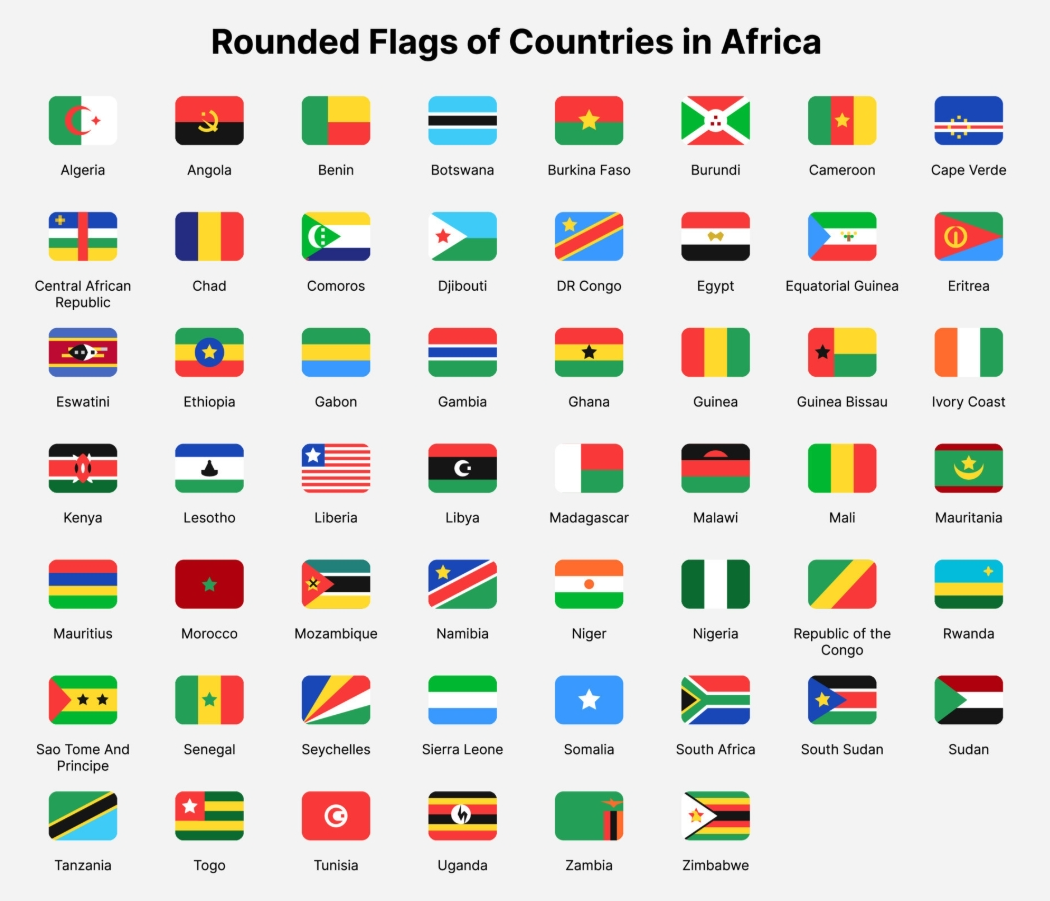
Africa holds 54 sovereign nations. Almost every one of them chose their flag colors with clear purpose — political, personal, and tied to a specific moment: independence.
The Pan-African Color Legacy
Three colors appear again and again across this continent: red, green, and yellow . That's no accident. These colors came from Ethiopia — the one African nation that held off European colonization. New independent countries needed a visual language for freedom. They grabbed those colors like a shared birthright.They're political ones.For distributors and educational suppliers building regional collections, sourcing from reliable African Country Flags wholesalers helps ensure consistency in color accuracy and symbolic detail across all 54 national flags.
Color | What It Carries |
|---|---|
Red | The blood of independence fighters, martyrs, sacrifice |
Green | Natural wealth, agriculture, hope for what's coming |
Yellow/Gold | Mineral resources, economic promise, sunlight |
Black | The African people, the continent's identity |
Blue | Peace, water — oceans, rivers, lakes |
White | Purity, honesty, the possibility of peace |
These aren't decorative choices.
Selected African Flag Meanings
🇰🇪 Kenya — Three bold horizontal stripes: black, red, and green, separated by narrow white borders. At the center sits a red-and-white Maasai shield crossed with spears. Black = the people. Red = the blood of the independence struggle. Green = the land. White = peace. The shield says: we will defend all of it.
🇿🇼 Zimbabwe — A white triangle holds the legendary Great Zimbabwe Bird. That symbol is so old it predates the nation itself. Yellow signals mineral richness. Red marks the cost of independence. White holds the promise of peace. The bird ties the living nation to its deep historical roots.
🇷🇼 Rwanda — After the 1994 genocide, Rwanda redesigned its flag from scratch. The new flag uses blue, yellow, and green stripes with a radiant sun. It broke away from the old imagery on purpose. Blue = happiness and peace. The sun = a brighter future. This stands as one of the most focused flag redesigns in modern history.
🇧🇮 Burundi — Three red stars sit across a white saltire. They stand for the country's three major ethnic groups: Hutu, Tutsi, and Twa. They also echo the national motto: Unity, Work, Progress. One symbol, two meanings — that's smart flag design.
🇸🇸 South Sudan — The world's newest country (2011) packed its entire story into five colors. Black for its people. Red for independence sacrifices. Green for natural wealth. Blue for the Nile. A gold star for hope. Every color is a chapter.
🇪🇹 Ethiopia — Green, yellow, and red with a central star and rays. The colors that started it all. Ethiopia never fell to colonialism. Its flag became the visual template for an entire continent's identity.
Each of Africa's 54 flags holds a compressed history — borders drawn, blood spilled, and futures set in color and cloth.
Asian Country Flags and Their Meanings (48 Countries)
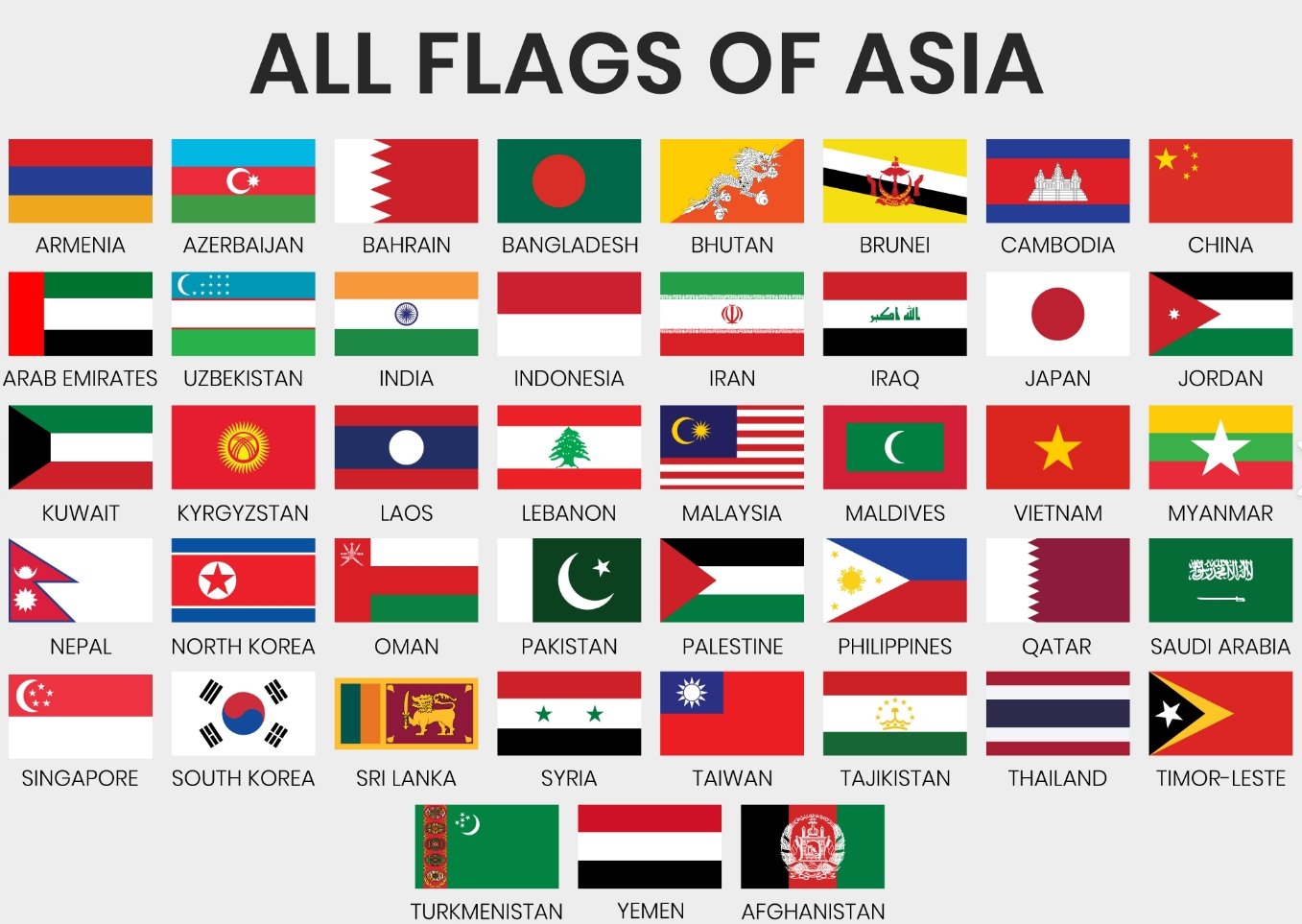
Asia is the largest continent on earth. Its 48 national flags reflect that scale — not just in geography, but in the sheer diversity of belief systems, empires, and ideas about what a nation stands for.For collectors, educators, and even Asian Country Flags suppliers, this diversity creates both opportunity and complexity when identifying and producing accurate flag designs.
Two Distinct Visual Languages
Open a world atlas to Asia, and a clear pattern appears right away.
East Asian flags — Japan, China, South Korea, Mongolia — lean toward restraint. Fewer colors. Cleaner geometry. Symbols drawn from philosophy and cosmology rather than religion or dynasty. Japan's Hinomaru is the purest example: a red circle on white. That's it. No text, no emblem, no layered symbolism fighting for space. Red = the rising sun. White = purity. Two elements, one meaning, zero compromise.
Middle Eastern and Central Asian flags go in the opposite direction. They carry more — and do so on purpose. More colors, more inscription, more religious iconography. These are flags built to make declarations.
Design Approach | Representative Flags | Signature Elements |
|---|---|---|
Minimalist (East Asia) | Japan, Mongolia, North Korea | 1–2 colors, geometric symbols |
Symbol-Dense (Middle East) | Saudi Arabia, Iran, Iraq | Shahada text, crescent & star, swords |
Selected Asian Flag Meanings
🇨🇳 China — Five yellow stars on red. The large star = the Communist Party. The four smaller stars = the four social classes united under its leadership. Red carries the weight of revolution and national strength.
🇮🇳 India — Three horizontal stripes: saffron for courage and sacrifice, white for truth and peace, green for faith and fertility. At the center sits the Ashoka Chakra — a 24-spoke navy blue wheel. It stands for dharma , the righteous path of law and progress. India adopted this design in 1947.
🇯🇵 Japan — White field, red circle. The sun goddess Amaterasu. It's the simplest flag in Asia. Most people recognize it on sight.
🇰🇷 South Korea — White background = peace and purity. The Taegeuk circle at the center balances red (yang, positive force) and blue (yin, negative force). That's cosmic duality packed into one symbol. Four black trigrams at the corners represent heaven, earth, fire, and water.
🇸🇦 Saudi Arabia — Green for Islam and prosperity. The Shahada runs across the center in white Arabic script: There is no god but Allah, Muhammad is His messenger. Below it, a white sword represents justice. This flag is never flown upside down — the inscription makes that impossible.
🇮🇱 Israel — Two blue horizontal stripes mirror the tallit , the Jewish prayer shawl. Between them, the Star of David in blue. The whole design is an act of cultural memory. Israel adopted it in 1948.
The Islamic Visual System
Look across Pakistan, Turkey, Algeria, and much of the Middle East, and two symbols keep showing up: the crescent and star . The crescent signals progress and growth. The star carries divine guidance. Green — the Prophet Muhammad's color, the color of paradise — dominates flags from Bangladesh to Sudan.
Pakistan's flag spells out this logic clearly. The green field represents the Muslim majority. The white stripe represents religious minorities. The crescent-and-star brings together both progress and light in one image.
Three Flags That Break Every Rule
🇳🇵 Nepal — The one national flag in the world that isn't rectangular. Two stacked pennants create its double-triangle shape. Crimson red comes from the national rhododendron flower. A blue border stands for peace. White symbols of the moon and sun represent the royal houses. Nothing about it follows the norm — that's the whole point.
🇧🇹 Bhutan — An orange-and-yellow diagonal field split by a white Druk , the Thunder Dragon of Bhutan. The dragon clutches jewels in its claws — spiritual wealth in one claw, material wealth in the other. Few flags on earth look anything like it.
🇱🇰 Sri Lanka — A gold lion grips a sword on a deep maroon field, standing for the Sinhalese Buddhist majority. Orange and green vertical stripes honor Tamil and Moor minorities. Gold bo leaves — from the sacred Bodhi tree — frame the border. Five distinct colors carry the full story of a multiethnic society.
Forty-eight countries. Thousands of years of history, compressed into cloth.
European Country Flags and Their Meanings (44 Countries)
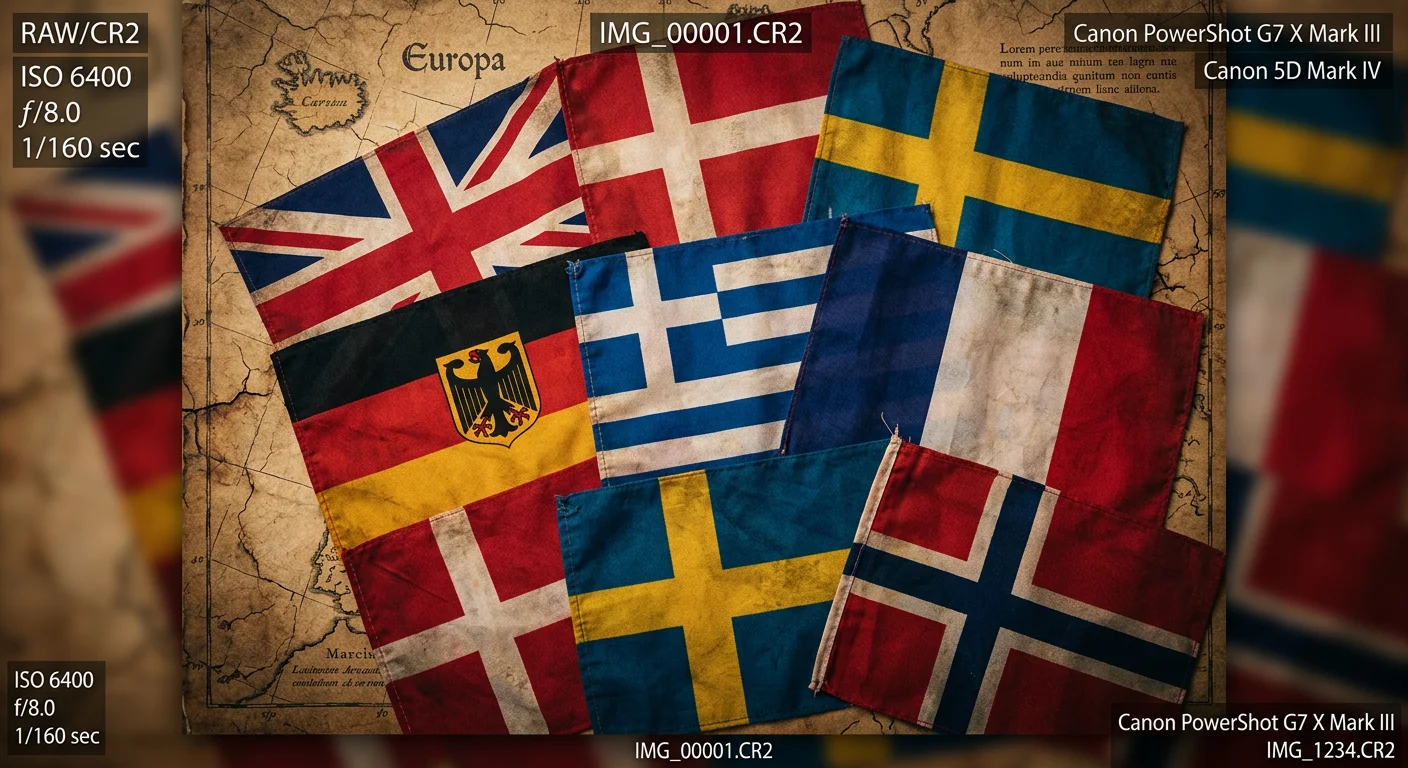
Europe never stopped fighting over identity — and its flags carry every mark of that fight.
Forty-four nations. Centuries of revolution, empire, religion, and reinvention. All packed into rectangles of colored cloth. The patterns here aren't random. They're bloodlines. Learn to read them, and European flags become one of the fastest history lessons on earth.
The Nordic Cross: Five Countries, One Origin Story
Look at Denmark, Sweden, Norway, Finland, and Iceland side by side. They all share the same off-center cross design. That's the Nordic Cross . It traces back to a single moment — a 1219 Danish battle where, according to legend, a white cross appeared in a red sky just before victory.
Denmark's Dannebrog — one of the oldest national flags still in use — became the template. Each country then adapted the colors to fit its own story:
Country | Cross Colors | Core Symbolism |
|---|---|---|
Denmark | Red field, white cross | Blood of battle, purity |
Sweden | Blue field, yellow cross | Loyalty, generosity |
Norway | Red field, white-bordered blue cross | Strength, purity, loyalty |
Finland | White field, blue cross | Snow, lakes and open skies |
Iceland | Blue field, red and white cross | Atlantic Ocean, volcanoes, ice |
Five nations. One design logic. Each variation still speaks the same old Christian language — just with a different landscape behind it.
The French Revolution's Long Shadow
In 1789, France made a bold move with its flag. Blue, white, red — arranged in vertical stripes, in that exact order. The meaning was clear: liberté (blue), égalité (white), fraternité (red). Not decoration. Doctrine.
That doctrine spread fast. Over a dozen European countries took the tricolor format and recolored it to fit their own political history. The Netherlands, Luxembourg, Russia, Serbia, Czechia, Slovakia, Slovenia — all carry that revolutionary mark.
The pan-Slavic movement ran a parallel track. It pushed red, blue, and white across Eastern Europe as a sign of Slavic unity and shared identity. France and Russia, between them, shaped most of the continent's color choices.
Selected European Flag Meanings
🇬🇧 United Kingdom — The Union Jack is a layered design. Three saints, stacked on top of each other: England's white St. George Cross on red, Scotland's blue St. Andrew saltire , Ireland's red St. Patrick saltire . The 1801 merger locked all three into one flag. Each piece stands for a nation that didn't vanish — it got folded in.
🇩🇪 Germany — Black, red, and gold in horizontal stripes. These colors rose up during the 1848 revolutionary movement. Fighters wore them as they pushed back against authoritarian rule. Black = determination. Red = the desire for liberty. Gold = generosity and possibility. Germany's flag started as a revolutionary statement. It became a national identity.
🇬🇷 Greece — Nine alternating blue and white horizontal stripes, with a white cross in the blue canton. The nine stripes aren't a random count — they match the nine syllables of "Eleftheria i Thanatos" : Freedom or Death . The cross stands for the Greek Orthodox Church. Blue and white reflect the sky and the sea.
🇧🇪 Belgium — Black, yellow, and red vertical stripes drawn straight from Belgium's medieval coat of arms: the black shield, the golden lion, the red claws and tongue. Old heraldry. Modern flag.
🇨🇾 Cyprus — Unusual in every way. A white field holds an orange map of the island above two crossed olive branches. No cross. No crescent. No blue or red. The olive branches point to peace between Greek-Cypriot and Turkish-Cypriot communities. The orange stands for copper ore — the mineral that gave the island its ancient name.
🇦🇱 Albania — A black double-headed Byzantine eagle on red. The eagle's two heads once stood for the Eastern and Western Roman empires, shown together in one image. Albania claimed the symbol through Skanderbeg , the 15th-century national hero who carried it as his battle standard. Red and black have been Albanian colors ever since.
🇱🇮 Liechtenstein — This one has the strangest backstory. At the 1936 Berlin Olympics, Liechtenstein showed up and found its blue-and-red bicolor was a match for Haiti's flag. They added a gold crown right away. That crown now stands for the unity of the prince, the state, and the people.
The Heraldic Tradition: Coats of Arms on Cloth
Spain, Portugal, Croatia, and Moldova all place a coat of arms at the center of their flags. These are full heraldic systems, moved straight onto flag fabric.
Croatia's checkerboard shield deserves a close look: 13 red and 12 white squares represent its historic kingdoms. Five smaller shields ring the outside, one for each region — Croatia, Dubrovnik, Dalmatia, Istria, and Slavonia. That's not decoration. It's a complete political map pressed into a single emblem.
Portugal's coat of arms tells a military story. Five blue shields mark the five Moorish kings defeated at the Battle of Ourique. Seven gold castles point to the fortresses taken during conquest. Navigation spheres frame it all — a nod to the Age of Discovery.
Europe's flags don't just stand for countries. They store them.
North & Central American Country Flags and Their Meanings (23 Countries)
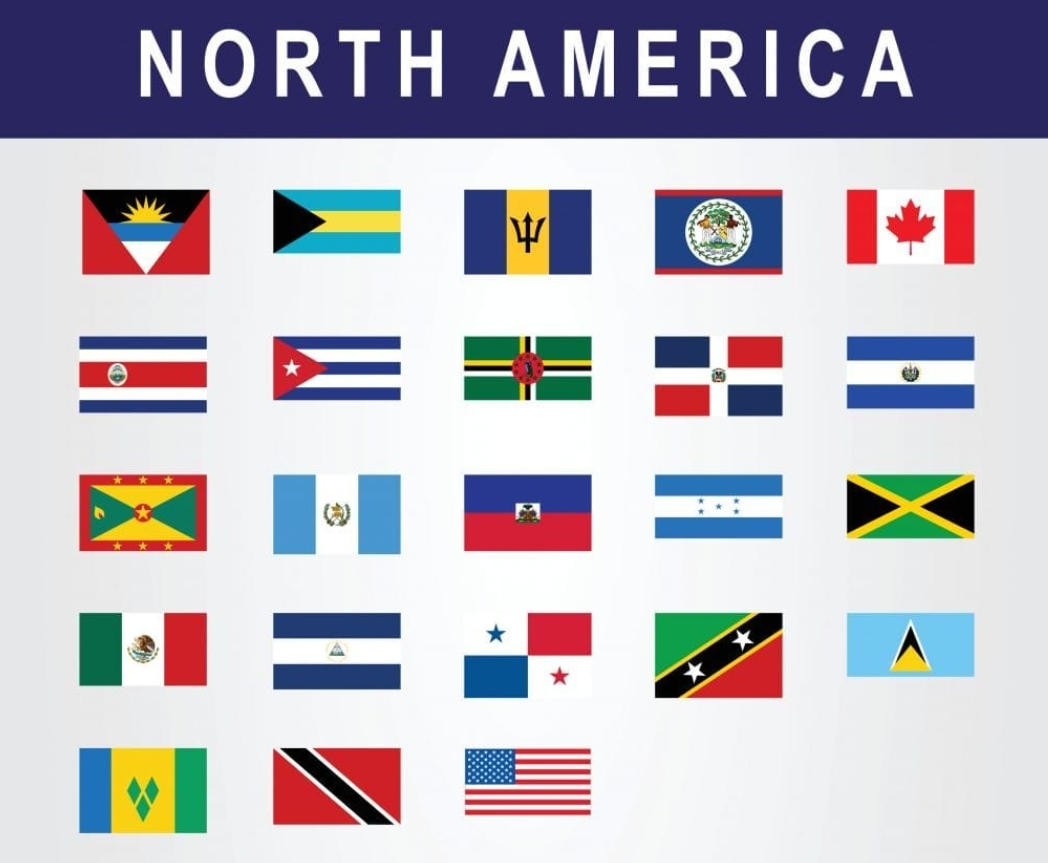
Twenty-three countries. Three mainland giants. Seven republics bound by a shared colonial past. And twelve island nations that drew their colors from the ocean and the sun above it.
A Federal Ghost Lives in Five Flags
Five Central American flags share the same basic design: three horizontal stripes, blue over white over blue. Guatemala, Honduras, El Salvador, Nicaragua, and Costa Rica all use it. That pattern traces back to 1823, when the region came together under the Federal Republic of Central America . The federation fell apart by 1838. The stripes stayed.
Each country added its own coat of arms to that shared base:
Country | Signature Element |
|---|---|
Guatemala | A Quetzal — the freedom bird — perched above a scroll dated September 15, 1821 |
Honduras | Five volcanoes, a rainbow, a Phrygian liberty cap |
Nicaragua | Five volcanoes inside a rainbow triangle — same structure as Honduras, but its own identity |
Costa Rica | Three volcanoes wrapped in a white ribbon |
Five countries still carrying the mark of a union that broke apart.
The Flags That Built Themselves on Water and Light
The Caribbean's twelve island nations had different source material — ocean, sun, tropical earth. Their flags reflect that clearly.
Eight of the twelve use blue, drawn from the sea that shapes island life. Six include sun or palm motifs. Antigua and Barbuda stacks red, black, yellow, and blue around a rising sun breaking over V-shaped sails. One image carries the whole story — the economy, the independence, the dawn of a new era. Grenada takes it a step further. A gold nutmeg sits right at the flag's center. That nutmeg is the country's top export. So the flag doubles as a statement of identity and livelihood.
The Flags That Rewrote Themselves
🇺🇸 United States — Fifty stars, thirteen stripes. Congress locked in the thirteen stripes in 1818 to honor the original colonies. Those have never changed. The stars kept growing: 48 in 1912 after Arizona and New Mexico joined, 49 in 1959 for Alaska, 50 in 1960 for Hawaii. No other national flag in the hemisphere has been updated as many times as this one.
🇲🇽 Mexico — Green, white, and red vertical stripes, with an eagle devouring a serpent on top of a cactus at the center. That image comes straight from an Aztec prophecy — the founding sign for Tenochtitlan , where Mexico City stands today. The flag doesn't just represent the country. It reclaims the civilization that came before it.
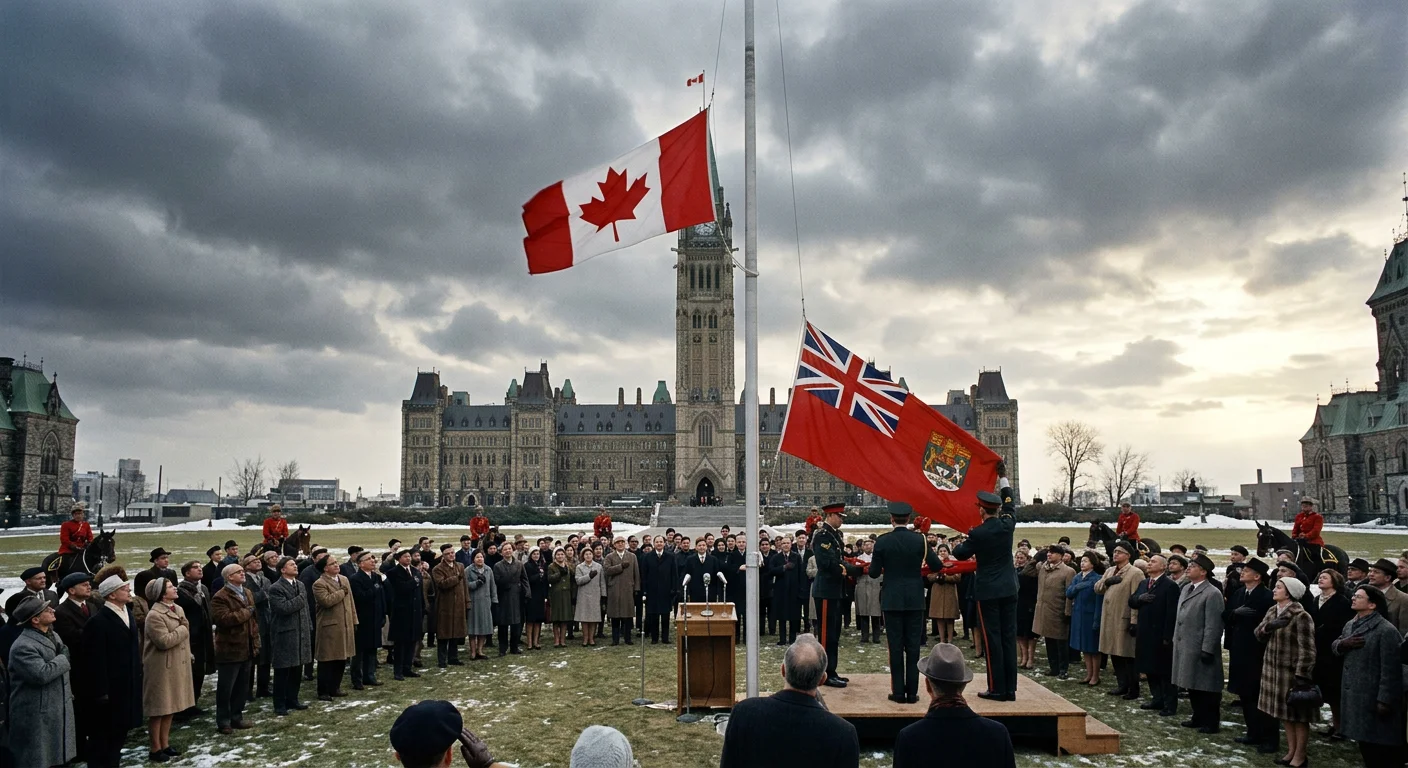
🇨🇦 Canada — Red and white on each side of a single bold maple leaf. Clean. Purposeful. The maple leaf had been a national symbol since the 19th century. Canada made it official in 1965, moving away from British colonial imagery and choosing something that belonged to the country alone.
South American Country Flags and Their Meanings (12 Countries)
Twelve countries. One continent. And running through most of them — the shadow of one man: Simón Bolívar .
The Gran Colombia Inheritance
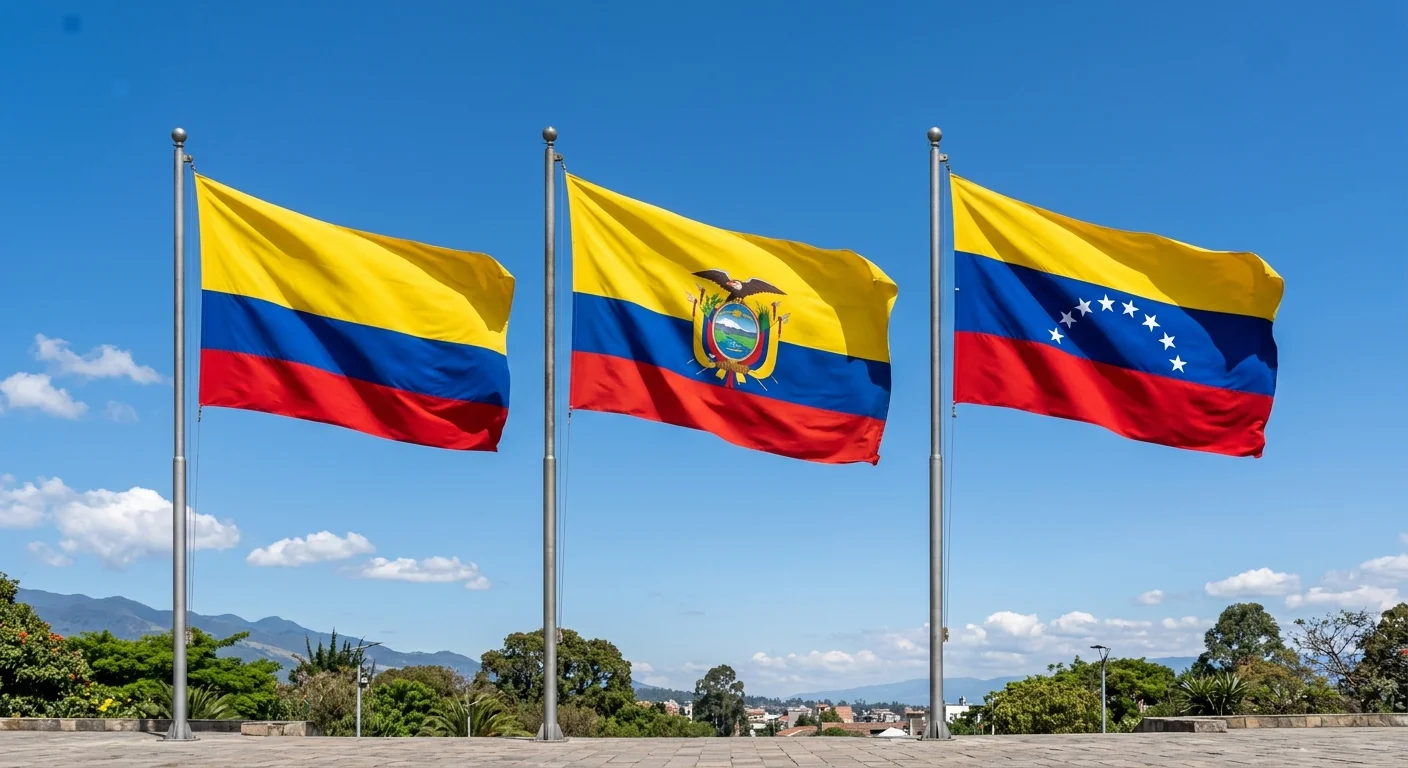
Colombia, Venezuela, and Ecuador share more than geography. They share the same flag logic. All three use yellow, blue, and red — in that exact order. That's because all three were once part of Gran Colombia , the 19th-century republic Bolívar built — and lived to see fall apart.
The colors stuck:
Color | What It Means Across All Three |
|---|---|
Yellow | Rich land, fertile soil, natural resources |
Blue | The ocean that stood between them and Spain |
Red | Blood shed during the independence wars |
Three separate nations. One shared origin story, stitched into cloth.
Selected South American Flag Meanings
🇦🇷 Argentina — Two light blue stripes wrap around a white center. At the middle sits the Sun of May — 32 rays, each one standing for a province. The design draws from Inti, the Inca sun god. It marks the 1810 May Revolution. Every part of this flag points to the same moment: the break from Spain.
🇧🇷 Brazil — A gold diamond cuts across a green field. Inside it, a blue circle shows the exact night sky above Rio on November 15, 1889 — the country's founding date. Each white star stands for a Brazilian state. The banner reads "Ordem e Progresso" — Order and Progress. This flag works as both a symbol and a timestamp.
🇵🇪 Peru — Red and white. The story goes that General San Martín saw red-and-white flamingos — Parihuanas — in a dream before battle. He read the colors as a sign. The coat of arms carries three symbols: a vicuña, a cinchona tree, and a golden cornucopia. Together, they deliver one message: this land provides.
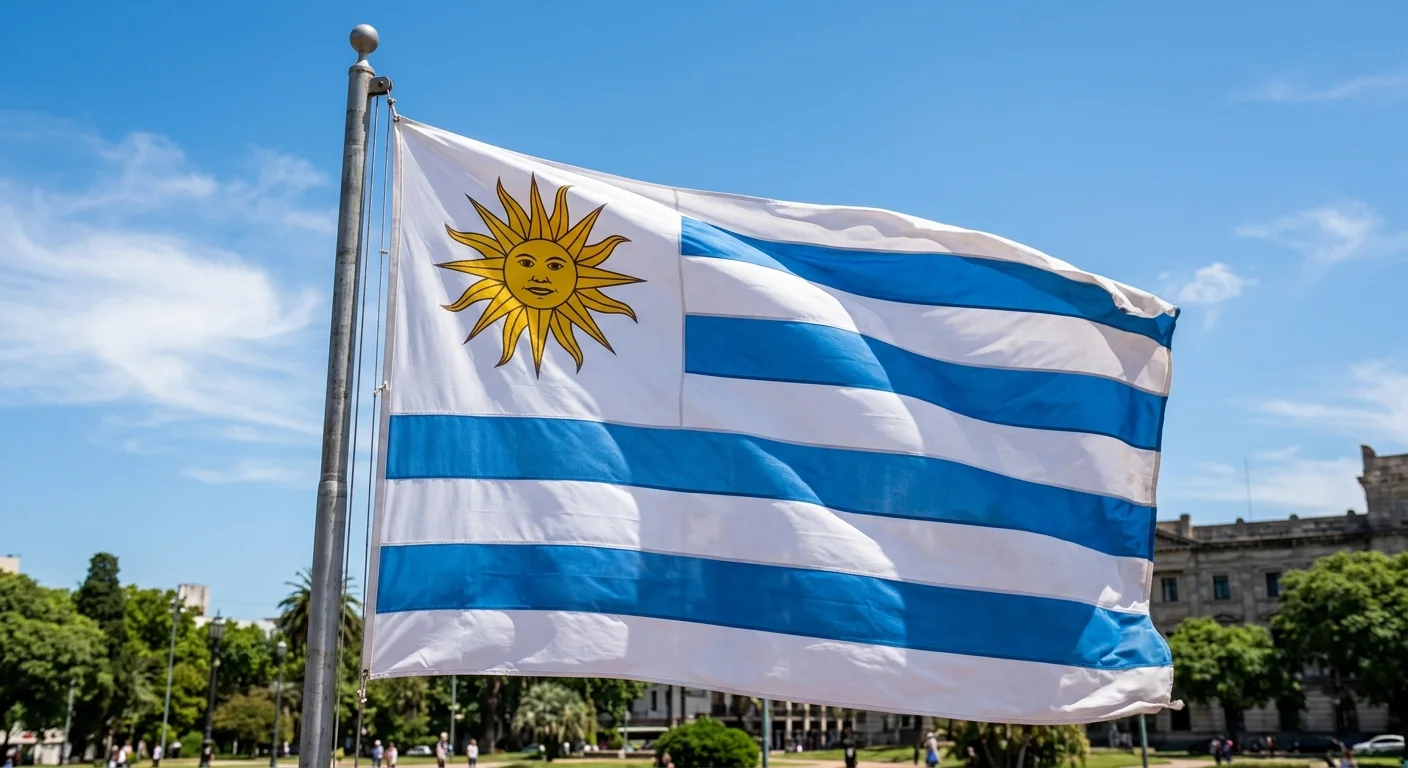
🇺🇾 Uruguay — Nine white and blue stripes alternate across the flag, one for each of the nine original departments. It's a clear nod to America's thirteen colonies. The Sun of May appears here too, carrying the same meaning: freedom, Inti, and a fresh start.
Oceania Country Flags and Their Meanings (14 Countries)
The Pacific doesn't give up its secrets — but its flags do.
Fourteen nations scattered across the world's largest ocean. Most of them tiny. Some of them sitting just above sea level. Yet each one raised a flag that says something precise about where it sits, what it believes, and who it is.
One Constellation, Four Flags
The Southern Cross — Crux — appears on more Oceanian flags than any other single symbol. Australia, New Zealand, Papua New Guinea, and Samoa all carry it. That's not coincidence. For centuries, sailors in the Southern Hemisphere used those five stars to find their way home across open water. Putting them on a flag was a declaration: we are people of the southern sea.
Each country reads the constellation a little differently:
Australia — Five white 7-pointed stars, four large and one small. The small one is dimmer in the real sky, so it gets a smaller point count on the flag. A separate Commonwealth Star sits beneath the Union Jack. It has one point for each Australian state and territory.
New Zealand — Four red stars outlined in white. Fewer stars, bolder color. No Commonwealth Star — and that absence means something.
Papua New Guinea — Five white stars against black. The smaller Epsilon star appears at a reduced size, true to its real position in the sky. Paired with a Bird of Paradise on red, it stands as one of the most striking flags in the Pacific.
Samoa — Five white five-pointed stars on blue. They mark both the island's geographic position and its historical ties to New Zealand.
The Australia–New Zealand Problem
Few flag pairs in the world create as much confusion as these two. Both carry the Union Jack. Both show the Southern Cross on a blue field. Both use red, white, and blue throughout.
New Zealand put the question to a public vote in 2015–2016 . Two alternative designs made the final round — including a Silver Fern design that drew on Māori visual identity. The votes were counted in March 2016. 56.7% chose to keep the existing flag . The argument for change was compelling. The argument for continuity won.
Island Flags That Encode Geography and Belief
Away from the Southern Cross cluster, the Pacific island flags get very specific — almost like documents in how precise they are.
🇰🇮 Kiribati — A frigate bird soars over a rising sun above blue-and-white ocean waves. The sun's 17 rays aren't decorative: 16 for the Gilbert Islands, one for Banaba. The waves represent the three island groups — Gilbert, Line, and Phoenix. Every element earns its place.
🇳🇷 Nauru — The flag was adopted on January 31, 1968, after a public design competition. A yellow stripe cuts across the blue field right where Nauru sits: one degree south of the equator . A 12-pointed white star represents the island's 12 tribes. The flag is a literal map.
🇵🇼 Palau — Light blue for the ocean and self-governance. A yellow circle — not centered, but shifted to one side — represents the full moon . That full moon was the traditional signal for fishing, harvest, and community gathering.
🇲🇭 Marshall Islands — A white stripe for hope. An orange stripe for bravery and wealth. Both rise at an angle from corner to corner. 24 rays spread out from one point: 20 short ones for the outer provinces, four long ones for the cities of Majuro, Jaluit, Wotje, and Ebeye.
🇻🇺 Vanuatu — A bold yellow Y-shape traces the map of the island chain itself. Black represents the people. Red carries the blood of sacrifice and the boar's tusk — a traditional wealth symbol. Prime Minister Walter Lini directed the addition of black and yellow borders for visual contrast. Few leaders leave that clear a mark on their own flag.
🇹🇴 Tonga — Red field, white canton, red cross. Christianity claimed 97% of the population at the time the flag took shape. The cross said so plainly, without apology.
Fourteen flags. One ocean. Each one gives a different answer to the same question every nation has to face — what are we, exactly? — pressed flat into cloth and raised toward the Pacific sky.
Flags With the Most Unique and Surprising Designs in the World
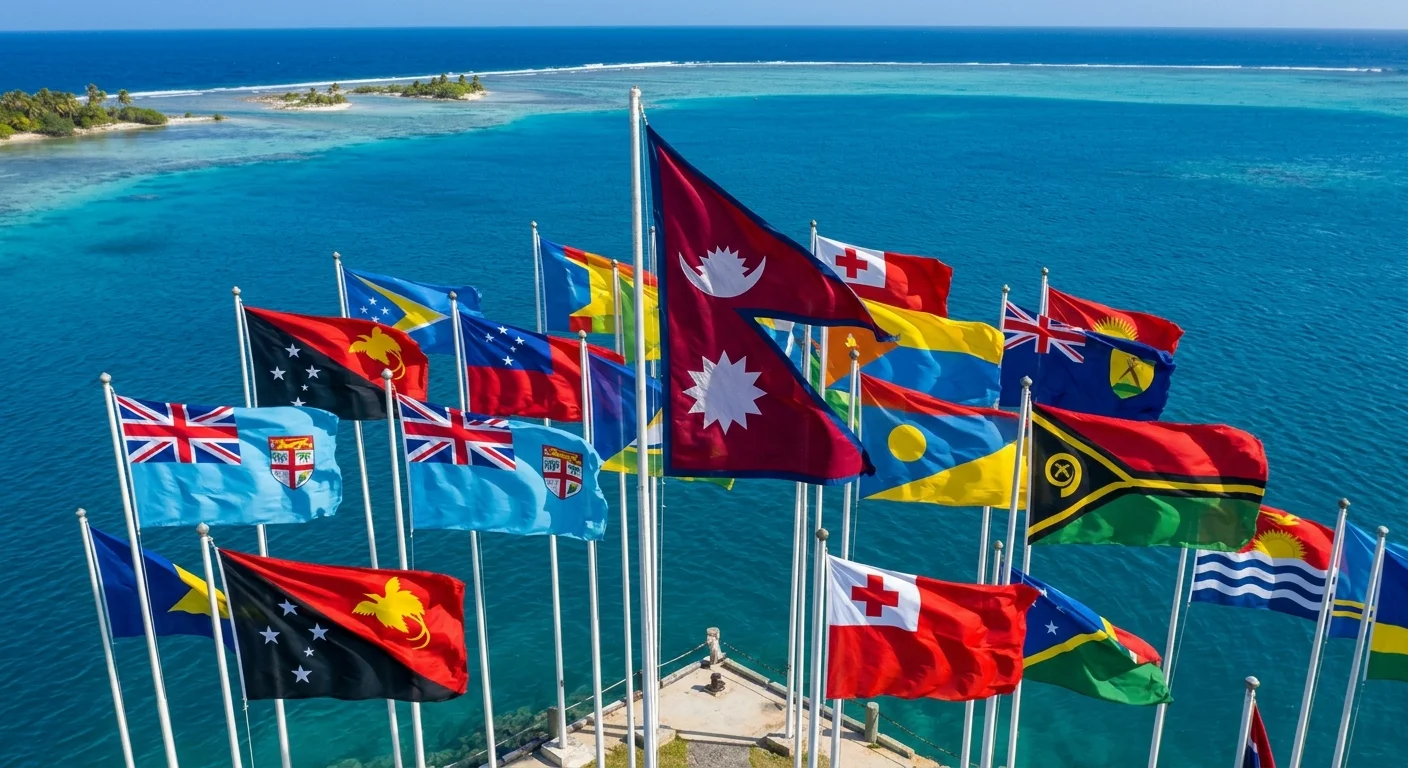
Most flags follow the rules. Nepal never got the memo.
Nepal's flag is the only national flag on earth that isn't rectangular. Two stacked pennants form a five-sided shape. That shape mirrors the Himalayan peaks, which cover 75% of the country. The design was codified in 1962, but its roots go back centuries. Crimson red represents the rhododendron. The blue border stands for peace. Nothing else like it exists.
Bhutan went its own direction. A white Thunder Dragon — the Druk — takes over its diagonal field, clutching jewels in each claw. One jewel for spiritual wealth. One for material wealth. No other nation on earth flies a dragon as its primary symbol.
Then there's Mozambique, which put an AK-47 rifle on its flag. An actual Kalashnikov, alongside a hoe and an open book. Together, they represent peasantry, education, and armed liberation — packed into one emblem. A 2005 redesign contest drew 169 entries. Every single submission got rejected. The rifle stayed.
The record-holders tell their own story:
Most colors : Belize — 16 distinct shades
Most stars : United States — 50
Most crosses : Georgia — 5
Only two-sided flag : Paraguay
Only flag with a scientific instrument : Portugal's armillary sphere
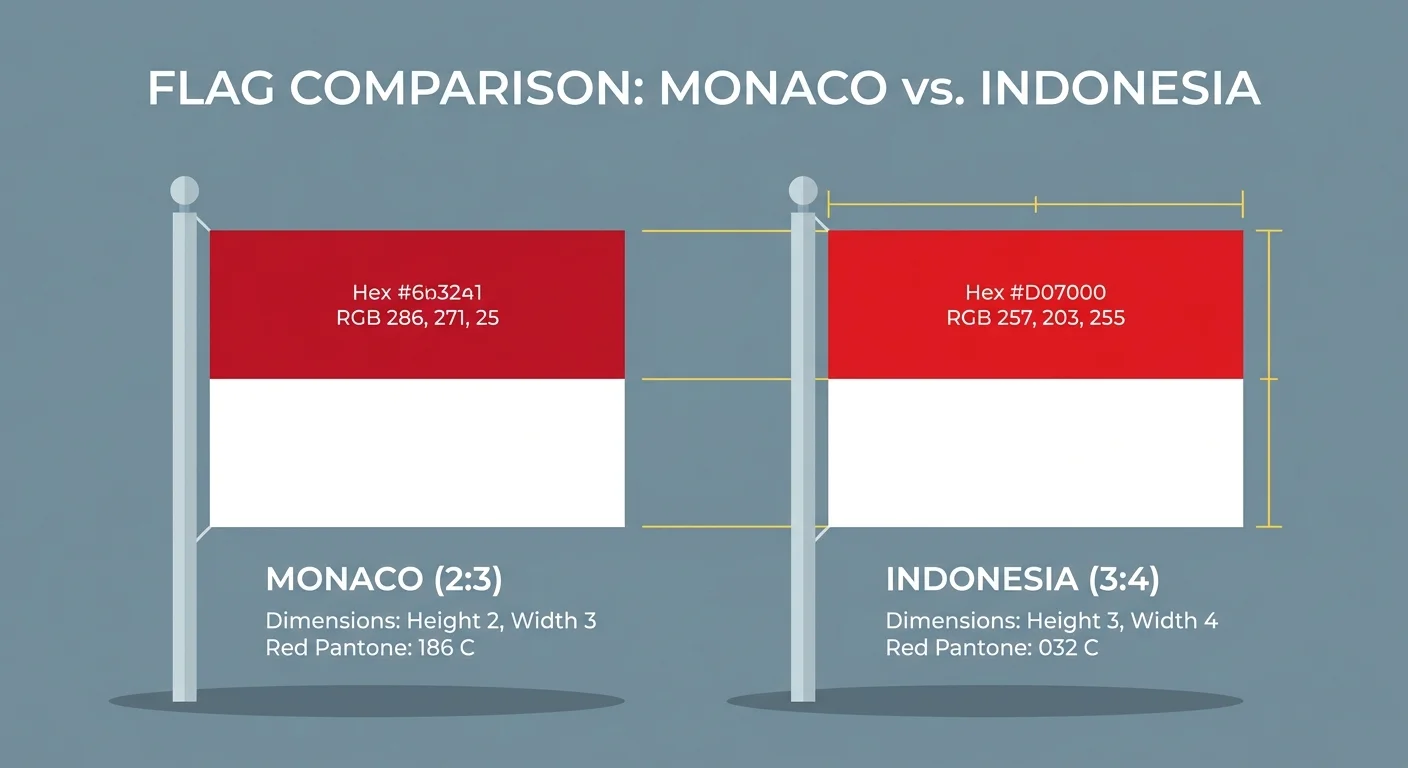
The most confusing pair? Monaco and Indonesia look almost identical — both show a horizontal red stripe over white. The dimensions are the only difference. One design, two nations, and constant mix-ups at international events.
World Flags FAQ: Most Common Questions Answered
Flags look simple. Cloth, color, pattern, symbol — but the questions people ask about them go much deeper than you'd expect.
Which country has the most colors on its flag?
South Africa holds the record at 6 colors — black, green, white, red, blue, and yellow. The flag launched in 1994. That converging Y-shape wasn't just decorative. It sent a clear message: this nation was choosing unity over division after apartheid. No other sovereign flag comes close.
Which country has a non-rectangular flag?
Just Nepal . Its double-pennant shape — two stacked right triangles — reflects the Himalayan peaks that define the land. Crimson red, a blue border, sun and moon symbols. Every edge has a purpose.
Are any flags square?
Two: Switzerland and Vatican City . Both use a 1:1 ratio. Every other sovereign nation flies a rectangle.
Has a country ever flown a single-color flag?
Libya did — solid green, nothing else, from 1977 to 2011. It stood for Gaddafi's Green Book ideology. That makes it the world's one monochrome national flag in modern history.
How many colors should a flag have?
Flag design experts agree: 2 to 3 is the sweet spot. Japan uses two. France uses three. More colors hurt visibility at a distance — and distance is exactly where flags do their most important work.
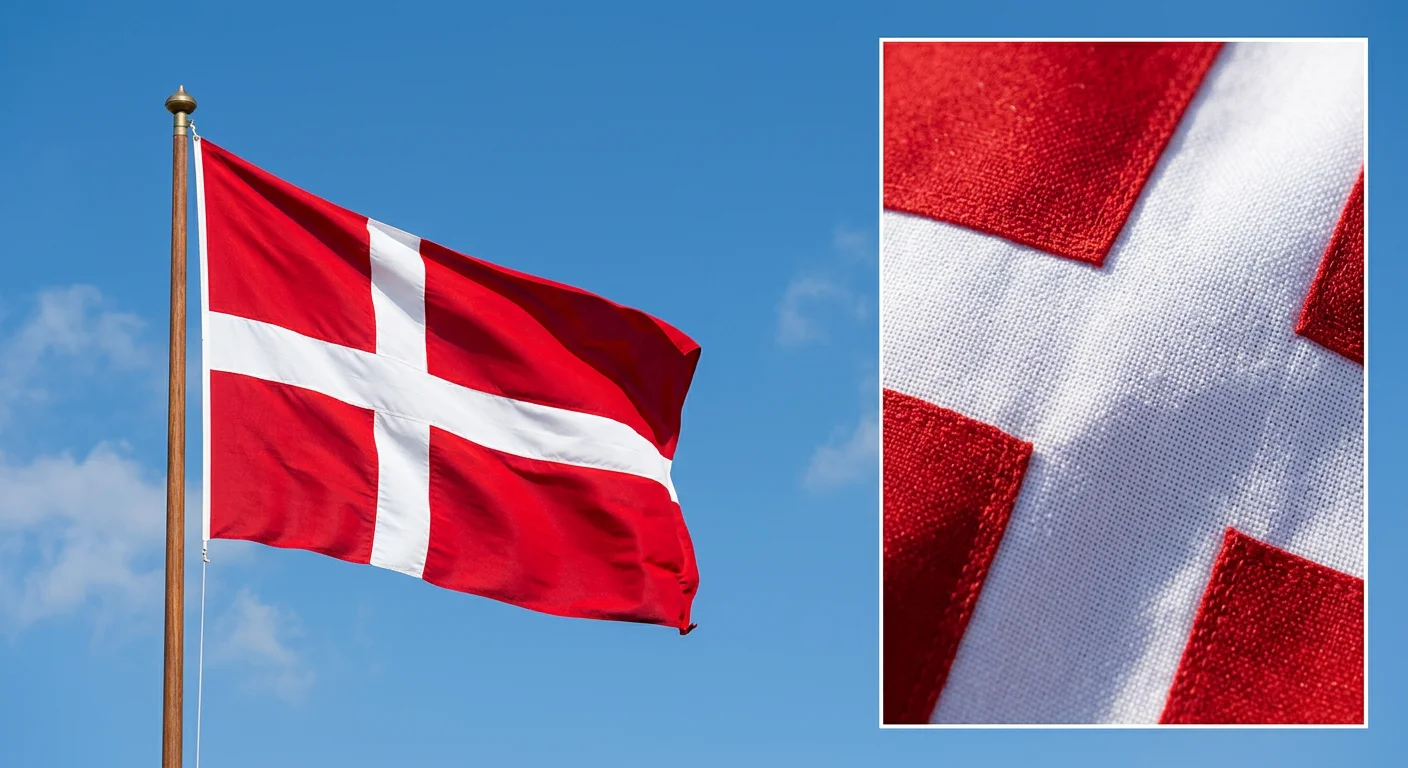
One more fact worth keeping: Denmark's Dannebrog — white cross on red — has flown with no real changes since 1219. That's around 800 years. No national flag on earth has held its design longer.
Need a Custom Country Flag? How to Order High-Quality Flags Online
Knowing what a flag means is one thing. Getting your hands on a high-quality version of it — that's where the details matter.
Outfitting a trade show booth? Representing your heritage at a cultural festival? Ordering in bulk for a sporting event? The material, print method, and reliable country flags supplier you pick will decide whether that flag lasts a weekend or two years.
Start with the right fabric. For standard outdoor flagpole display, 100D or 150D polyester hits the sweet spot. It handles wind exposure well and stays light enough to move. Coastal or high-wind locations? Go with 300D polyester or above .
Match your print method to your flag's complexity. Detailed coats of arms and gradient emblems need dye sublimation . This process presses ink into fabric at 200°C. You get colors that hold up through 100+ washes. Simple, bold national colors in bulk? Screen printing cuts costs and keeps the colors solid.
Before settling on a experienced country flags supplier, check these boxes:
50 pcs
Min. Order
7-10 Days
Lead Time
Pantone
Color Match
ISO 9001
Certified
Order custom country flags at RunCustomFlag.com →
Conclusion
Every flag carries a story — of revolution and resilience, of geography and faith. It holds the values a people chose to stitch into cloth and raise toward the sky.
From bold pan-African tricolors spread across 54 nations to the Southern Cross constellations of Oceania — you've just traveled the world without leaving your screen.
What stays with you matters. Flags aren't decoration — they're declarations.
Maybe you came here to ace a trivia night. Maybe it's a school project, or a curiosity that started somewhere around Madagascar. Or maybe you need the perfect country flag for an event and want to get every detail right. Either way, you now have the full picture.
Ready to go beyond knowing? Need the flag in your hands?
RunCustomFlag.com builds competition-grade custom flags that honor every detail — colors, emblems, proportions — with the same care those original designers put in.
The world's stories deserve to be displayed with pride. Order yours today.
Related Articles