Online Custom Flag Printing Companies
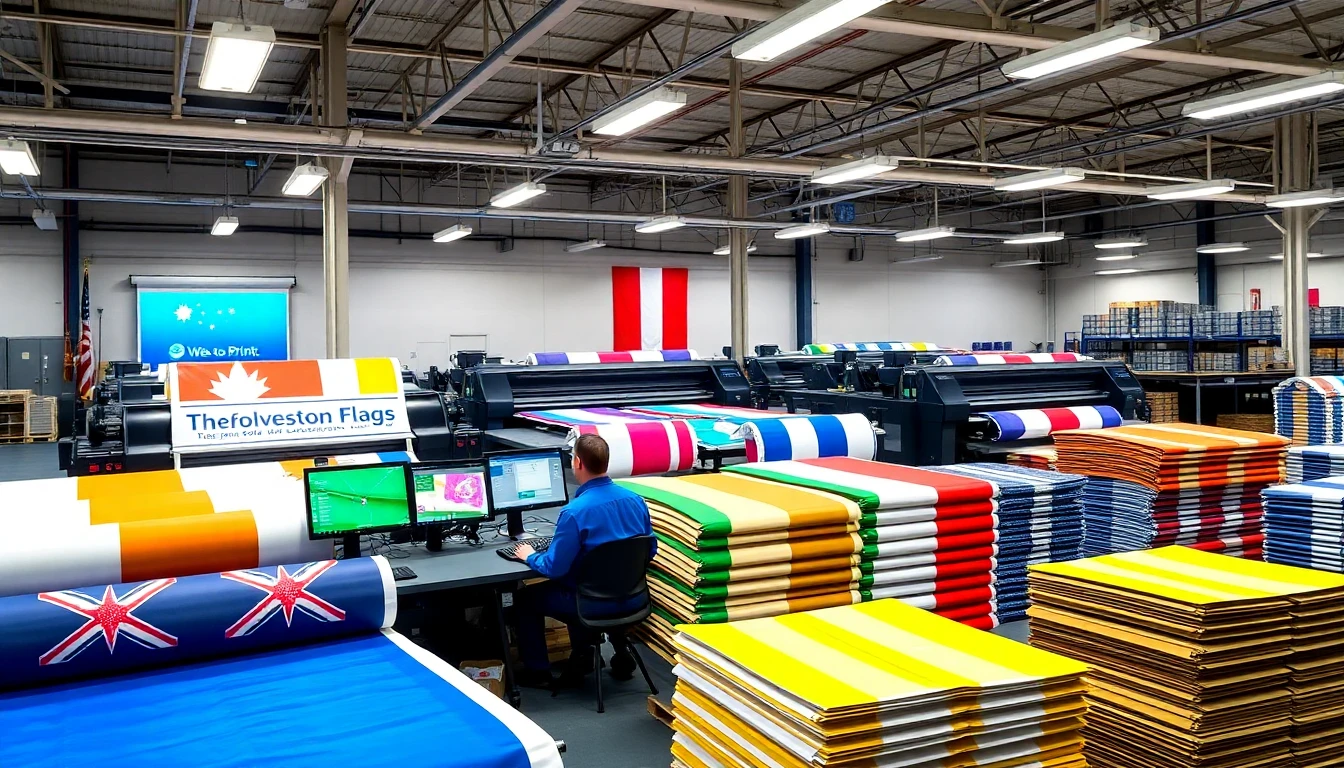
The online custom flag printing industry has grown from a small niche into a major digital market. Global online custom printing services reached USD 56 million in 2025 and will likely double to USD 108 million by 2033. That's a strong 8.2% compound annual growth rate. This growth matches what's happening across e-commerce. Businesses and individuals want personalized products fast.
The Digital Print Ecosystem
Many online platforms have built systems that make custom flag ordering easy. VistaPrint, Zazzle, UPrinting, PrintRunner, and PrintPlace lead in North America. European companies like Helloprint, Onlineprinters, Flyeralarm, and instantprint serve international customers. Next Day Flyers, PsPrint, Printmoz, and 48HourPrint focus on fast turnaround.
These platforms share key features. You get web-to-print tools to upload artwork or create designs from templates. Real-time pricing calculators show costs instantly. Automated workflows handle production. Behind the scenes, they use industrial equipment from Agfa-Gevaert, Konica Minolta, and Xerox to keep quality high and production moving.
Technology Driving the Market
On-demand digital printing has changed custom flag production. Traditional screen printing needed expensive setup for each design. Modern dye-sublimation printing on polyester flags lets you order single units at fair prices. This technology removed the old minimum order requirements. Small businesses and individual buyers can now get custom flags.
The numbers prove it. Digital printing techniques show 12.60% CAGR growth—the fastest in the custom print industry. Automation cuts setup labor by about 40%. This means lower prices and faster delivery. A business can order one custom flag on Monday and get it by Thursday. That wasn't possible ten years ago.
The On-Demand Business Model
Top online custom flag companies use the "zero-inventory on-demand model." You design flags online. Orders go straight to production. Flags ship within 24-72 hours based on what you order. This model has three big benefits:
Speed wins. Customers need quick turnaround for trade shows, grand openings, or sports events. Platforms that deliver in 2-3 days get most urgent orders.
Small orders open new markets. Churches order single worship banners. Food trucks need two branded feather flags. Families create memorial flags. Traditional wholesale flag makers couldn't make money on these small orders. Online platforms handle them well because their costs don't punish small quantities.
Custom design brings higher prices. AI design tools and unlimited options let customers create unique products. They pay more for this. A stock flag costs $15. A custom double-sided flag with dye sublimation printing sells for $45-75. The online platform keeps most of that extra money.
Market Context and Growth Drivers
The broader custom printing market reached USD 30.93 billion in 2024. It grew to USD 33.84 billion in 2025. Custom flags are a growing part of this market, especially in "soft signage" that includes banners and large format prints.
Several things drive this growth. E-commerce removes distance barriers—someone in rural Montana uses the same suppliers as someone in Manhattan. Better digital textile printing creates colors that are brighter and last longer than old methods. Social media and visual marketing boost demand for branded flags at events, stores, and outdoor promotions.
The custom t-shirt market shows a similar pattern. It grew from USD 6.84 billion in 2025 to a projected USD 11.93 billion by 2030. That's 11.8% annual growth. Custom flags follow the same path on a smaller scale. Both benefit from lower production costs, easier online ordering, and businesses seeing the value in customized visual materials.
Choosing an Online Flag Printer
You need to check several things to find good online custom flag companies. Material options matter—quality platforms offer polyester flags (bright colors, affordable, good for short-term outdoor use) and nylon custom flags (tough, strong, best for windy spots). Printing technology affects quality: dye-sublimation gives you photo-quality images on polyester. Screen printing works better for simple, bold designs on nylon.
Look at production capabilities. Can they make outdoor custom flags rated for months of sun? Do they offer business promotional flags with strong stitching and rust-proof grommets? The best platforms give you detailed specs and material guides, not just nice photos.
Specialized / Industrial Custom Flag Manufacturers
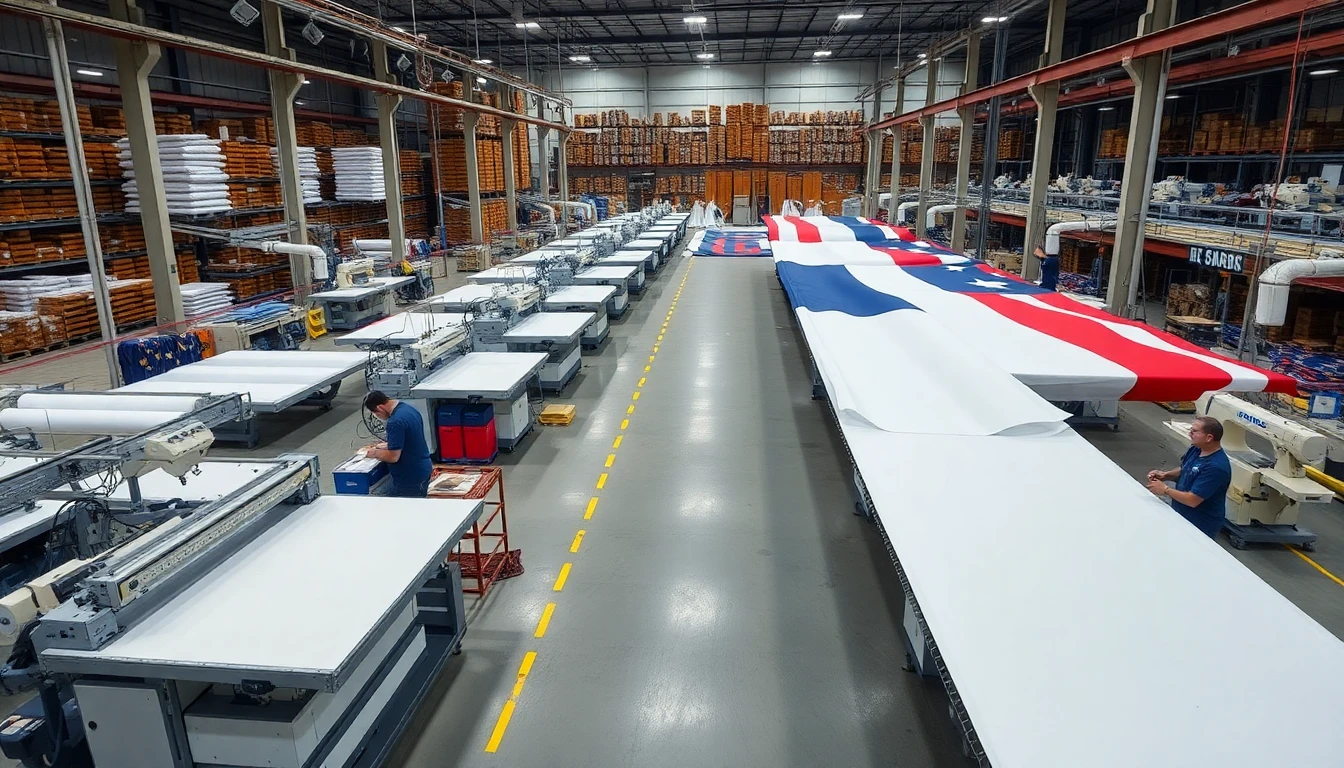
Large-scale flag production needs different equipment, facilities, and expertise than consumer online printing. Industrial flag makers work at a scale most businesses never see. Eder Flag Manufacturing produces over 5 million U.S. flags every year. That's about 14,000 flags each day. These companies serve government agencies, national retailers, sports stadiums, and corporate chains. These clients need thousands of identical corporate flags delivered on tight schedules.
The Infrastructure Behind Volume Production
Annin Flagmakers runs three manufacturing plants across New Jersey, Ohio, and Virginia. They employ over 500 people and generate $75-100 million in annual revenue. This spread-out setup isn't about convenience. It's about capacity and backup systems. A national retailer needs 50,000 American flags before Memorial Day weekend? One factory can't handle it. Multiple facilities working parallel shifts can.
Valley Forge Flag built seven manufacturing plants to cut supply-chain risk. Equipment breaks down in one location? Weather delays shipments from the East Coast? Production shifts to other facilities. This model supports campaigns needing 50,000+ units with delivery guarantees for scheduled events.
The physical scale shows everything. Industrial flag makers don't buy desktop printers or small dye-sublimation units. They install production lines with special sewing equipment. They use industrial cutting tables that handle 100-layer fabric stacks. They run climate-controlled warehouses storing millions of yards of nylon and polyester material. Sunward Flag's facility produces up to 5,000 flags each month with material inventory that's 90% nylon and polyester blends chosen for their strength properties.
Production Specifications That Matter for Business
Industrial makers test flags their own way. Sunward Flag reports an average tensile strength of 135 pounds (ASTM D5034) for their outdoor constructions. This isn't marketing talk. ASTM D5034 is a standardized grab test. It measures how much force fabric takes before tearing. A flag rated at 135 lb survives sustained 30+ mph winds. Cheaper alternatives get destroyed in days under the same conditions.
Colorfastness ratings separate industrial products from consumer flags. Premium makers design flags to keep color for about 365 days under direct sun in typical U.S. weather. They don't just print colors that look bright on day one. They use UV-resistant dyes and fabric treatments that slow color fade. A corporate headquarters flying outdoor custom flags at entrance gates needs products that still look professional after nine months of summer sun.
Speed and Scale in Custom Production
Gettysburg Flag Works built systems to produce up to 2,500 custom flags per month. Rush orders ship in under three business days. Standard delivery across all U.S. states takes 2-4 days with a 95% on-time rate. They deliver 80% of event orders in under seven days. These numbers come from smart process design. Automated cutting systems, pre-positioned inventory of common flag sizes, and shipping partnerships guarantee overnight service to major markets.
American Flagpole pushes volume higher. They make over 10,000 custom flags each month for government contracts and high-volume commercial clients. Standard lead time runs 7-15 business days. They also keep expedited production lines for time-critical government work.
Minimum order quantities follow industrial economics. Flags USA sets MOQs at 20-100 units per custom order. Setup costs for industrial equipment don't make sense below that level. Custom artwork approval and screen preparation for screen printing flags have fixed costs. Spreading those costs across 50 units instead of 5 units changes the per-flag price from too expensive to competitive.
Government and Compliance-Focused Production
Some industrial makers focus on government contracts. These demand domestic sourcing and compliance documentation. Flags USA targets government and compliance-first projects. They keep audit trails showing U.S.-sourced materials and labor. For federal contracts under Buy American requirements, this documentation is required.
Sunward Flag won contracts producing 600 custom flags for the 2026 U.S. 250th anniversary. They delivered over 1,200 flags to cities in Florida, Ohio, and Texas in 2024. Their 96% customer satisfaction score comes from meeting delivery dates and specs on government contracts. Late delivery on these contracts triggers financial penalties.
The Industrial Flag Market Context
The specialized flag manufacturing industry makes solid revenue but shows little growth. U.S. flag manufacturing revenue reached $102.0 million in 2025, up just 0.4% from 2024's $101.6 million. The five-year CAGR from 2020-2025 was negative 0.6%. Other analyst estimates put 2023 revenue at $83.8 million with a 2018-2023 CAGR of -3.1%.
This flat growth means something. Industrial flag manufacturing is a mature, stable market. Replacement cycles and government contracts drive it more than expansion. Companies compete on reliability, compliance, and production capacity. Innovation isn't the focus. You need business promotional flags for 200 retail locations? You pick suppliers based on their ability to deliver identical products to different addresses on the same day. Creative design tools or next-generation printing technology don't matter here.
Industrial makers fill a clear role. They handle volume orders with quality specs that consumer platforms can't match well. You need twelve flags for a trade show? Online printers work great. You need 12,000 flags sent across three time zones? You call Annin or Valley Forge.
Local and Brick-and-Mortar Flag Shops
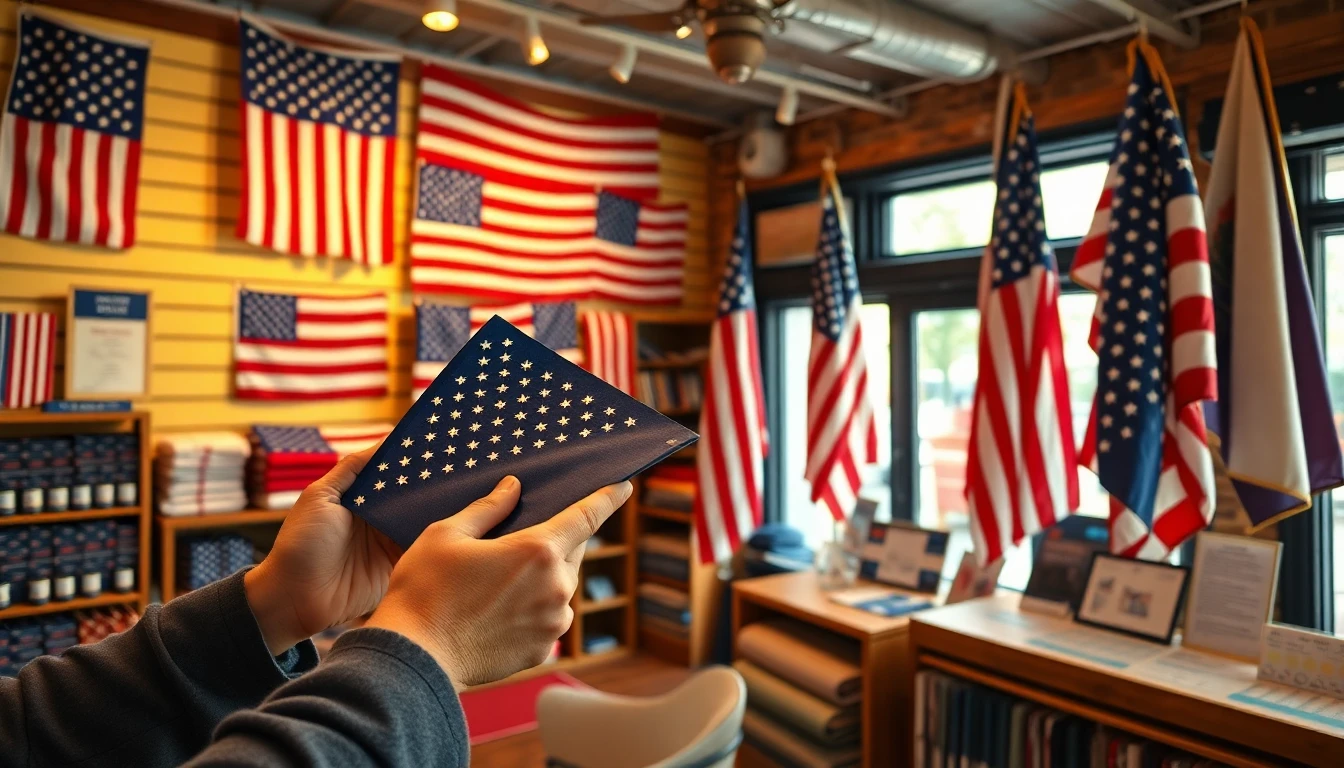
Walk into a local flag shop. You'll find something online stores can't deliver: a 3' × 5' American flag you can touch, inspect under real light, and carry home in ten minutes. Physical flag retailers hold a unique spot in the custom flag market. They offer instant product access plus hands-on expertise. This matters when you're choosing between 200-denier nylon and 3-ply polyester for a flagpole that faces constant wind.
The numbers show a retail category fighting broader trends. U.S. brick-and-mortar retail pulled $5.927 trillion in sales during 2024. Growth hit just 1.34% year-over-year. Yet physical stores still capture 81.6% of all U.S. retail dollars. By Q2 2025, that share climbed to 84.5%. Consumers haven't abandoned physical retail. They've just become pickier about which stores earn their trips.
Local flag shops feel this shift. Net retail closures hit 1,988 stores in 2024. Openings dropped 115% versus 2023. Analysts project about 15,000 store closures in 2025—double the 2024 rate. Specialty retailers face pressure from rising commercial rents, labor costs, and online competition that sells basic flags at thin margins.
What Local Flag Shops Sell
The product mix in physical flag stores differs from online catalogs. National flags dominate floor space. You'll see U.S. flags in standard residential sizes (2' × 3', 3' × 5', 4' × 6', 5' × 8'). State flags and foreign country flags for embassies and cultural groups fill the racks. Military and service flags—Army, Navy, Air Force, Marines, Coast Guard, POW/MIA—get dedicated displays.
Municipal and organizational flags create steady revenue. Police departments need ceremonial flags. Fire stations order memorial bunting. Schools buy custom banners for graduation ceremonies. Fraternal groups commission lodge flags with specific emblems. These orders need consultation. Customers verify exact Pantone colors. They check construction options. They see fabric samples before committing $200-400 to a custom order.
The real profit sits in flag pole and hardware. Residential poles run 5-20 feet. Commercial installations reach 20-80+ feet. Each pole needs brackets, halyards, snaps, cleats, ground sleeves, and often lighting systems. The flag-to-pole sizing rule guides recommendations. Flag length should equal about 1/4 to 1/3 of pole height. A 3' × 5' flag pairs with a 15-20 ft pole. A 5' × 8' flag needs a 25-30 ft pole. Local shops make margins on complete installation packages, not single flag sales.
Indoor presentation sets add another revenue stream. Fringe detail, oak or walnut floor stands, eagle finials, presentation cases—these accessories turn a $40 flag into a $300 ceremonial package.
The Instant-Availability Advantage
64% of U.S. consumers shop physical stores weekly. For flags, this creates chances online platforms can't match. A business needs replacement flags before a grand opening tomorrow morning. A veteran's relatives need a burial flag this afternoon. A homeowner's flagpole rope snapped and the flag is tangled 20 feet up. Local shops solve these problems on the spot.
The 8.72% merchandise return rate for brick-and-mortar stores works different for flags. Custom flag design and dye sublimation printing create personalized products. You can't return them once printed. Local shops show physical samples and proof prints before final production. This cuts order mistakes that plague online custom flag orders. Problems do occur. 67% of physical retailers require receipts for returns. But a local shop owner often knows regular customers and handles adjustments on trust.
Over 126 million shoppers visited physical stores during Thanksgiving weekend 2024—a record level. Seasonal flag demand follows similar patterns. Memorial Day, Independence Day, Veterans Day, and election cycles drive customers into stores. They want flags now, not in 3-5 business days.
Technical Knowledge That Matters
Official U.S. flag specifications use a 1.9:1 aspect ratio (width to height). Proper construction includes 50 embroidered stars in 9 rows. That's 5 rows of 6 stars, 4 rows of 5 stars. You get 13 stripes with each stripe at 1/13 of flag height. The reinforced header uses cotton or polyester duck fabric about 2-3 times thicker than the flag field. Grommet spacing on a 3' × 5' flag runs 2-3 feet apart at top and bottom corners.
These details separate quality outdoor custom flags from cheap imports. Local shop owners explain why 400-denier nylon costs more than 200-denier versions. The heavier fabric survives high-wind conditions that shred lighter options. They show how double-sided flags with two separate fabric panels sewn back-to-back display correct imagery from both sides. Cheaper single-layer prints bleed through.
This expertise matters for business promotional flags and screen printing flags projects. A restaurant chain ordering 50 location flags needs fabric that resists kitchen grease and outdoor weather. A car dealership wants colors that stay bright under constant sun. These talks happen face-to-face. Fabric samples and Pantone charts spread across a counter. Not through email exchanges and digital mockups.
Ready to Create Your Custom Flag?
Whether you need a single promotional flag or thousands for a nationwide campaign, we deliver premium quality with fast turnaround times. Get a free quote today!
Get Free Quote