Finding a reliable flag maker takes work. Search Google. You get thousands of results. But 90% are just middlemen reselling imported stock. Buying for a corporation, government contract, or wholesale network? You can't guess who owns the factory.
The 2025 flag industry mixes old skills with digital tech. We see a clear split. Big players control the market with heavy machinery. Meanwhile, smaller specialists focus on fast custom printing. You might need strict Pantone matching. Or maybe a 50,000-unit run for a European campaign. The "best" supplier ties directly to your needs.
We checked revenue, production power, and financial health. From historic UK workshops to big European producers, we list the manufacturers that matter.
Faber Vlaggen (Netherlands)
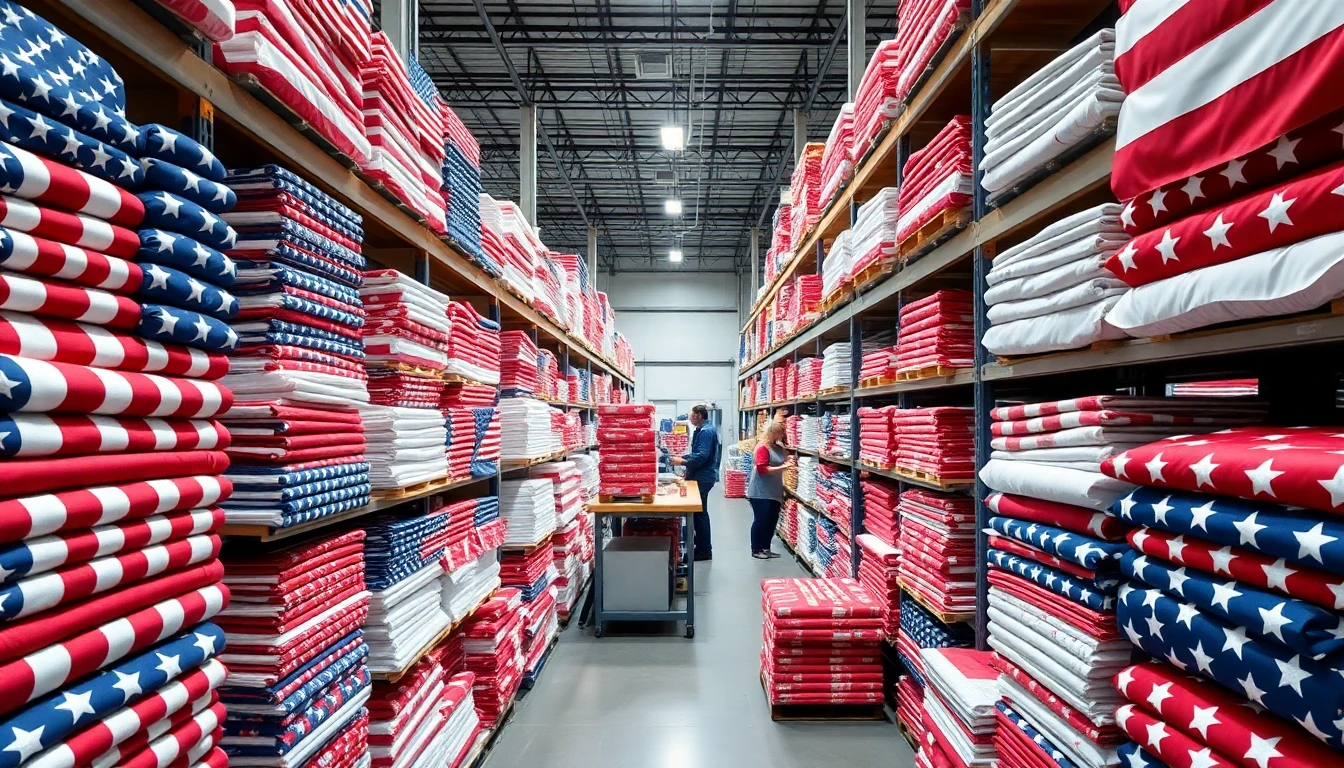
Faber Vlaggen stands as Europe's largest marketing fabrics supplier. The Dutch company operates from its headquarters in the Netherlands. It controls the FaberExposize Group—a network spanning multiple production hubs across Europe and Asia.
The group employs over 700 people. Production facilities operate in Thailand, Poland, France, Holland, and the UK. This geographic spread gives clients options. Need fast delivery to Western Europe? The Dutch and French facilities handle it. Large volume runs at competitive prices? Asian production covers that. The network balances speed and cost.
Faber Vlaggen dominates the European wholesale flag market. They supply raw materials, finished flags, and complete display systems. Smaller European manufacturers often source their base fabrics from Faber. This vertical integration creates pricing power. Competitors can't match their material costs.
Product range covers the full spectrum. National flags for government buildings. Corporate banners for trade shows. Feather flags for retail promotions. Teardrop banners for outdoor events. The company stocks standard European flag sizes and handles custom specifications. Digital printing technology supports complex designs with unlimited colors.
Quality certifications matter for European contracts. Faber Vlaggen holds ISO standards for manufacturing processes. Government buyers and large corporations require documented quality systems. The company delivers audit-ready paperwork with every major order. This administrative capability separates them from smaller competitors.
Distribution reaches across the continent. The company ships to 50+ countries from European warehouses. Lead times for stock items run 3-5 business days within the EU. Custom orders take 7-14 days depending on complexity. Express shipping options exist for urgent needs.
Northern Flags (FaberExposize Group)
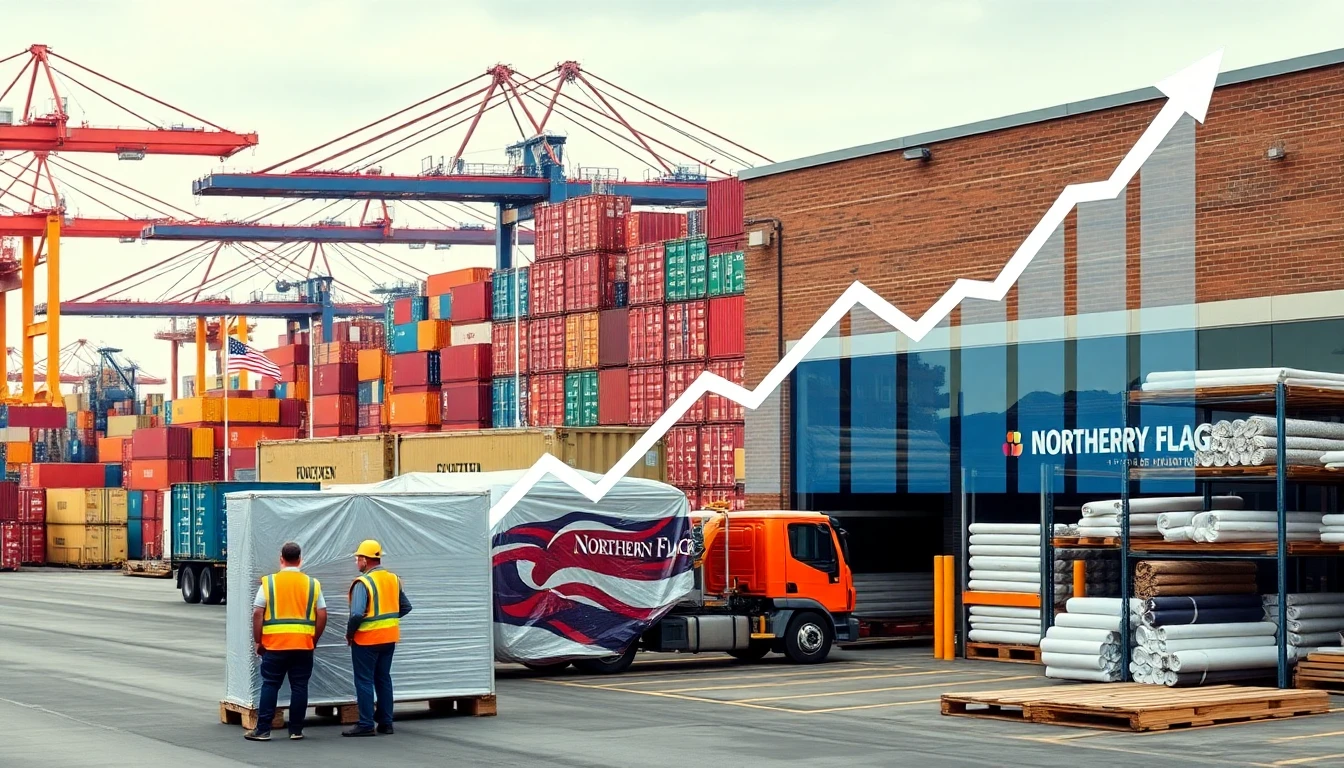
Leeds-based Northern Flags Limited hit 61% revenue growth in 2023. That stands out in a textile finishing industry that averaged just 7.4%. The company pushed turnover to £5.3 million. Most peers crawled forward. This wasn't a one-year fluke. Their three-year compound growth rate hit 42%—six times the sector norm.
FaberExposize gives them an edge. Northern Flags operates as the UK arm of Europe's largest marketing fabrics supplier. The parent group employs 700+ people across production hubs in Thailand, Poland, France, and Holland. This network gives Northern Flags access to high-capacity digital flag printing infrastructure. Standalone UK manufacturers can't match this.
Joint ownership keeps things nimble. The UK management team shares control with Faber Vlaggen. Decisions happen faster than in typical corporate structures. The company runs from Units 4 & 5 Millshaw in Leeds with a lean team of 45 employees. Each person generated £117,900 in sales during 2023. That's below the industry average of £128,100, but the gap is closing.
Cash position improved. Bank balances jumped 282% to £766,500 by year-end 2023. That's £565,700 more than the previous December. This war chest supports faster order fulfillment. It also backs larger inventory positions. B2B buyers get shorter lead times on custom banner orders and promotional flag bulk purchases.
Profit margins tell a different story. Operating margin sits at 2.9%. The sector averages 8.2%. Gross margin holds steady at 27.9%—industry standard. The gap shows Northern Flags puts money into sales infrastructure and market expansion. They're not chasing short-term profit. Total assets grew 33% to £2.84 million. Net assets climbed 29% to £568,700. The company reinvests growth into capacity.
Product range covers everything. Polyester flag production runs alongside textile finishing services. Digital flag printing handles complex corporate designs. Outdoor flags for wholesale clients ship in volume. The FaberExposize network supplies raw materials and finishing equipment. Smaller UK competitors must source these elsewhere.
Debt ratio reached 80% in 2023—a modest 0.56% increase from prior year. For a fast-growing manufacturer, this leverage level stays manageable. Total liabilities rose 34% to £2.27 million. This tracks with asset growth. The balance sheet gets classified as a small company under UK standards (under £7.5 million assets, fewer than 50 employees).
Corporate governance runs clean. The company filed its latest confirmation statement in April 2025. Accounts follow the "Total Exemption Full" format. All Companies House requirements are met. Next filing deadline falls on 30 September 2025 for the period ending 31 December 2024. The business has operated since 6 December 1985—four decades of continuous trading.
This mix of explosive growth, European supply chain access, and established UK presence makes Northern Flags attractive. You get both speed and scale for advertising flags Europe contracts and national flag production runs.
A3 – Custom Flag Maker
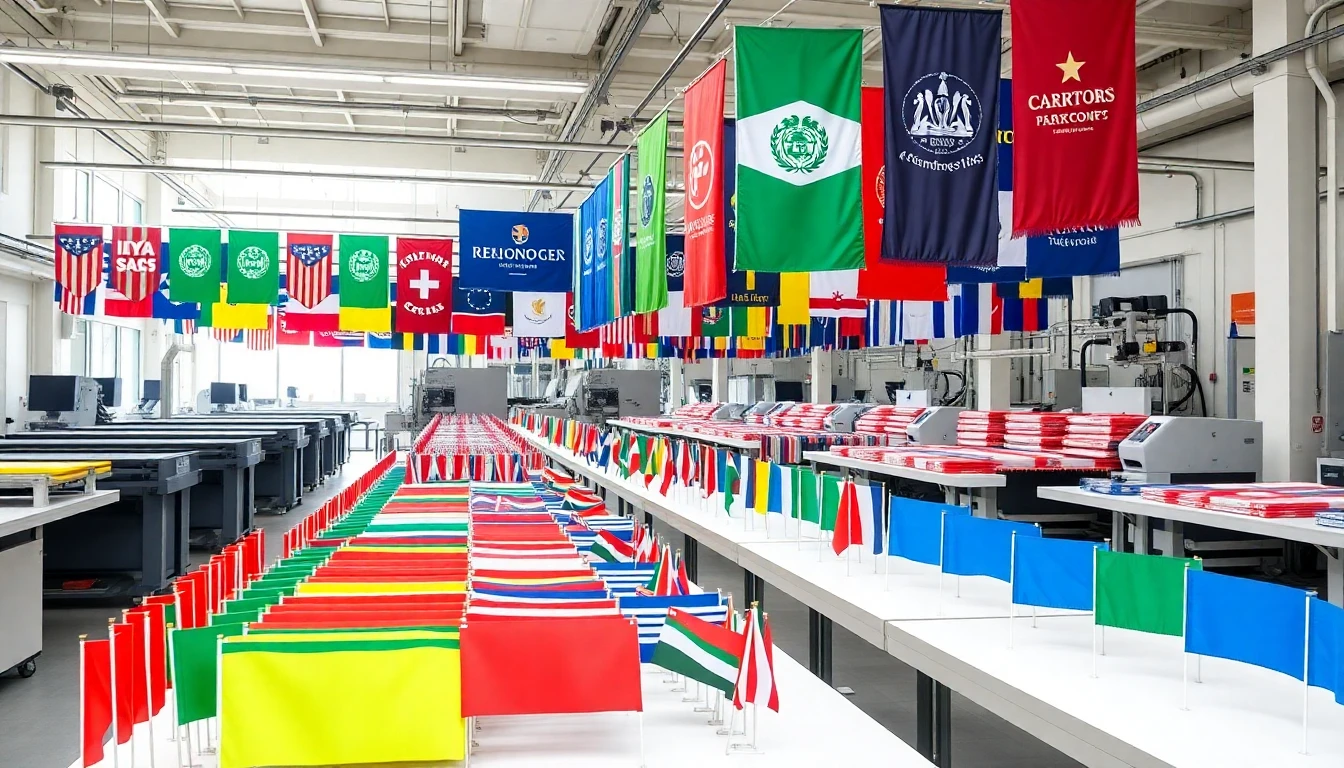
A3-sized flags fit a special spot in custom manufacturing. The dimensions—297 × 420 mm (11.7 × 16.5 in)—match popular hand flag formats. Most manufacturers use practical sizes: 20 × 30 cm, 30 × 45 cm, and 40 × 60 cm. You'll see these compact formats at promotional events, sports gatherings, and tabletop displays.
Digital printing changed everything. Five years ago, you needed minimum runs of 500+ units to justify screen setup costs. Direct-to-fabric printers removed those barriers. Manufacturers now offer wholesale pricing at just 25–50 units. Single-piece orders make money. Automated design intake connects straight to production queues.
Material choice gets critical at small sizes. A3 hand flags use 70–120 g/m² lightweight polyester or nylon. This weight range gives proper drape without bulk. Cotton blends work for premium indoor flags. Outdoor promotional flags need synthetic materials that last. The thinner fabric cuts shipping weight—a real plus for cross-border B2B orders.
Seasonal demand drives production planning. Google search data shows "country flags" hitting volume index 100 in August 2024 and 88 in May 2025. National holidays and sports tournaments create these peaks. Smart custom flag makers stock blank A3 polyester inventory months ahead. Digital printing adds last-minute logos during rush periods.
The on-demand workflow moves fast. Manufacturers accept vector files (AI, EPS, SVG) or 150–300 dpi rasters. They generate soft proofs within minutes. Automated checks catch resolution issues before fabric hits the printer. Turnaround time drops to 24–48 hours for standard A3 runs under 100 units. This beats traditional screen printing by a full week.
Flags Ireland
Ireland's tricolour has strict technical rules. First-time buyers often miss these details. The 1:2 proportions are non-negotiable. A 1-meter-high flag must measure 2 meters wide. The Department of the Taoiseach sets precise colour standards. Green uses Pantone 347 U (Hex #169B62). White stays pure #FFFFFF. Orange runs Pantone 151 U (Hex #FF883E). Article 7 of the Irish Constitution defines the national flag as "the tricolour of green, white and orange." Period. No variations allowed.
Stripe sequence matters more than most realize. The green band always sits at the hoist. That's the edge touching the flagpole. Flip this order and you've made the Ivory Coast flag by accident. Both countries use green-white-orange vertical stripes. The direction is what differs. Professional flag printing services check orientation before production starts. One misread order file can waste an entire production run.
Display protocol gets technical fast. Mount it flat against a wall? Green sits on the viewer's left. Vertical displays put green on top. At official ceremonies, the Irish flag never dips in salute except at memorial services for the dead. EU gatherings follow alphabetical order by English country names for flag placement. The EU flag goes first before the sequence begins.
Commercial manufacturers stock common outdoor sizes: 2' × 3' heavy-duty polyester flags, 3' × 5' nylon options for parade use, 4' × 6' formats for government buildings, and 5' × 8' flags for large installations. Retail pricing in the US market runs $38.70 for 3' × 5' nylon and $49.70 for 4' × 6' versions. European B2B buyers get wholesale pricing 40–60% below these numbers on orders over 100 units. Digital flag printing tech handles precise Pantone matching across polyester, nylon, and cotton blends. This matters for official contracts. Colour accuracy gets measured with spectrophotometers in these cases.
Newton Newton Flags Ltd
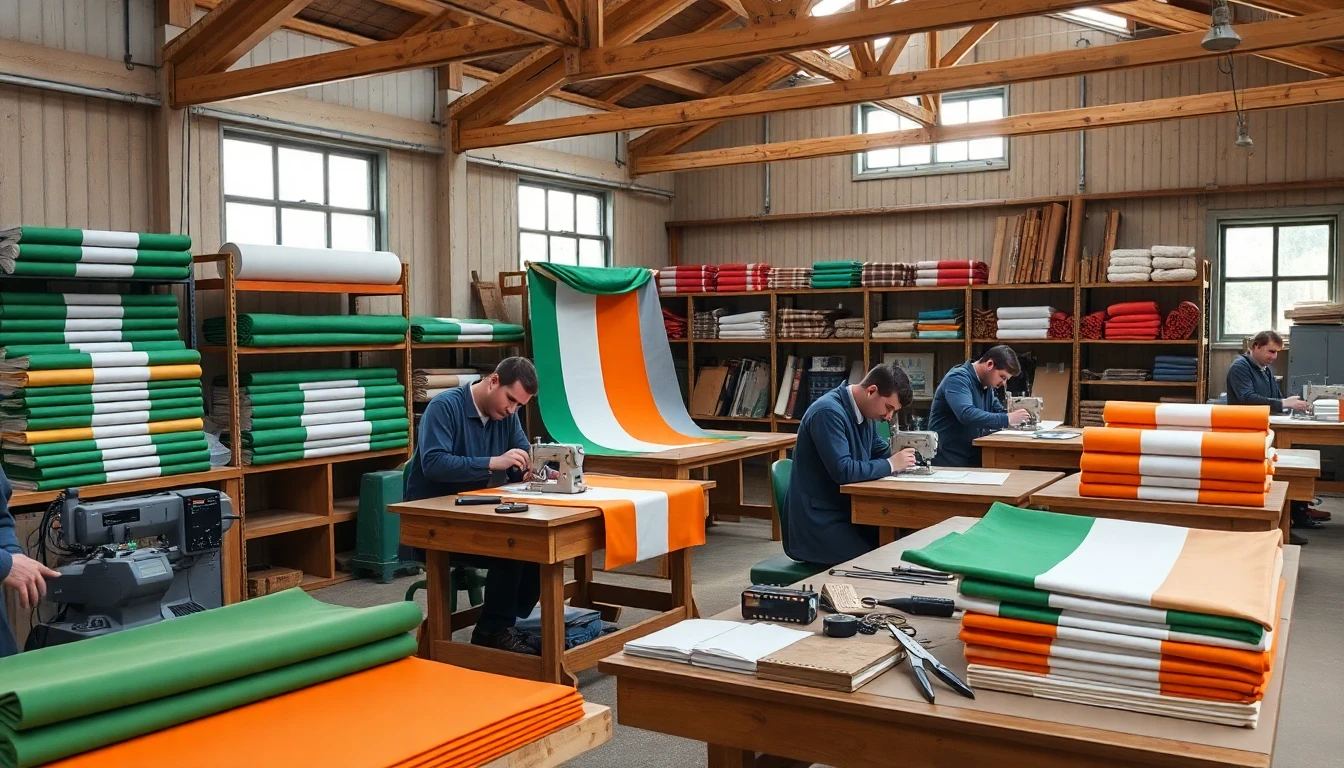
Britain's flag industry still has traditional hand-crafted manufacturers. Newton Newton Flags Ltd is proof. The company filed papers on 14 June 2011. But the family business started in 1975. They work from The Bishop Tozer's Chapel in Burgh Le Marsh, Skegness. This rural Lincolnshire spot keeps costs low.
The UK flag market has two groups. About 350–500 traders, dealers, and suppliers sell flags across the British Isles. Most import or rebrand products. But fewer than five traditional manufacturers make flags by hand in the UK. Newton Newton leads this small group. Company number 07669766 shows a private limited company under SIC code 32990 (other manufacturing not elsewhere classified).
They work with high-end clients only. The client list looks like a luxury brand catalog: Apple, Rolex, Tudor, Patek Philippe, Cartier, Jaeger LeCoultre, Breitling. Watches of Switzerland, Mappin & Webb, and Fope order custom banners here. This isn't wholesale promotional flags. It's custom work for clients who measure quality in millimeters.
Defence contracts sit alongside luxury retail. Newton Newton supplies MOD departments and all branches of HM Armed Services. The Royal British Legion orders from this workshop. So do the Royal Naval Association, Royal Signals Association, and Royal Engineers. RAFAC cadets carry flags stitched in Lincolnshire. Oil brands like BP, Shell, Total, Texaco, and Jet also order here.
The in-house design team builds from zero. Give them a rough sketch, letterhead, or logo file. They create quotes and technical drawings. Production uses hand-crafted methods. This means they can reschedule work for urgent orders. Lead times shrink fast for clients who need flags quickly.
Small team, sharp focus. The business has 5–9 people and makes about USD 1M–5M each year. Latest accounts cover the period ending 31 December 2024. Next filing deadline is 30 September 2026. The company filed its latest confirmation statement on 12 June 2025.
This isn't digital flag printing. National government offices come here. So do livery companies and Swiss watchmakers. They choose Newton Newton for work machine-made flags can't match.
United Flags
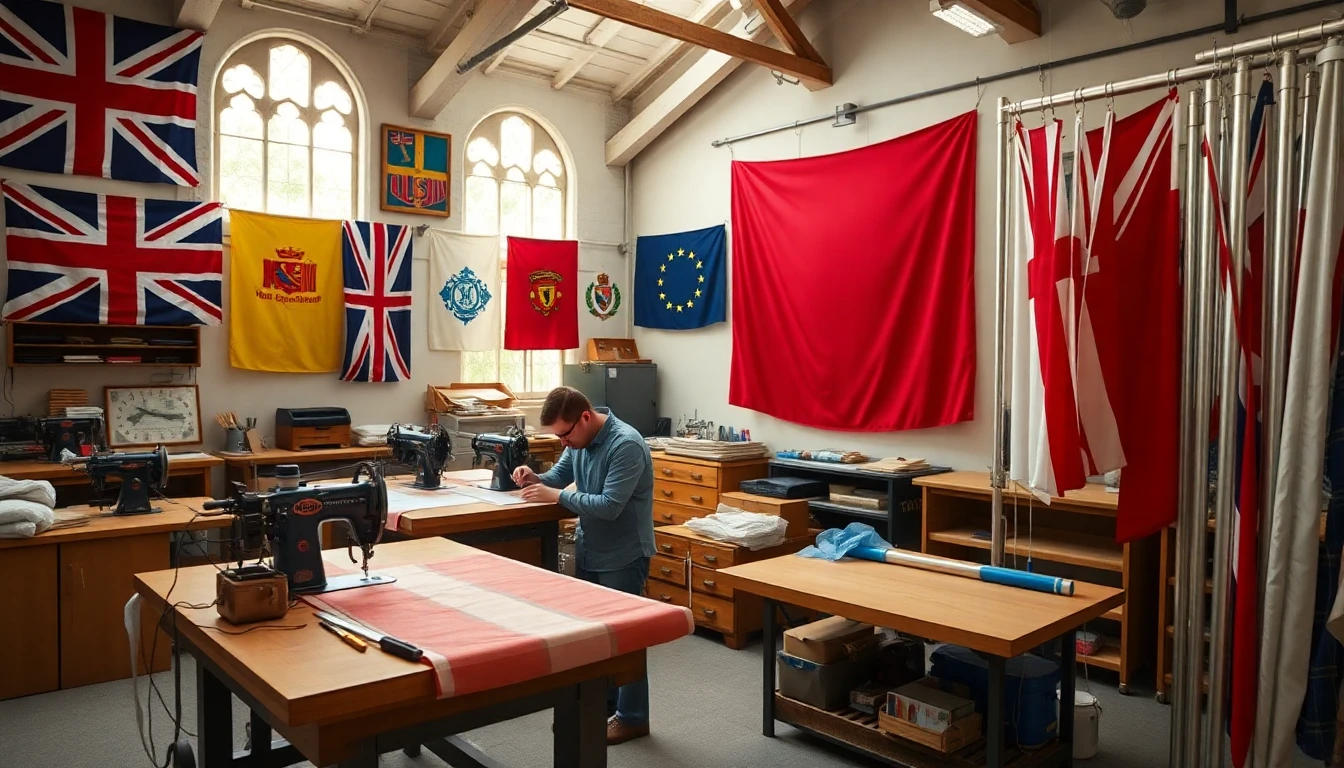
United Flags & Flagstaffs Ltd operates from Lancashire. They sell both the fabric and the pole. Most UK competitors sell one or the other. This dual focus sets them apart. Corporate buyers like the one-stop convenience. You order your national flags and installation hardware together. No need to coordinate two suppliers.
The UK flag market has distinct layers. Import resellers control the bottom tier. They rebrand Chinese stock and compete on price. Mid-tier suppliers stock standard designs. They offer basic customization. United Flags operates in the top segment. They handle custom corporate flags, specialized flagpole installations, and complex mounting systems. These need technical knowledge.
Productivity metrics matter in this business. The US flag manufacturing sector shows revenue per employee rising from 2015 through 2030. British manufacturers face similar pressure. Each team member must generate enough sales. This covers wages, materials, overheads, and margin. Companies below industry benchmarks struggle. United Flags keeps headcount lean. Service quality stays high.
Cost structure decides who survives. The 2025 US industry data breaks operating expenses into clear buckets: purchases, wages, depreciation, utilities, rent, and other costs. Purchases claim the largest share of revenue. Smart manufacturers negotiate volume discounts on polyester rolls, nylon fabric, and aluminum poles. They lock in pricing before raw material costs spike. Wage costs stay under control. Workflow automation helps. Cross-trained staff helps too.
United Flags competes in a market where import penetration exceeds 50%. Asian manufacturers ship finished flags at prices UK makers can't match. This applies to commodity items. The defense? Move upmarket. Focus on short-run custom work, rapid turnaround, and technical flagpole projects. Overseas suppliers won't touch these.
Banner World
BannerWorld keeps its cards close. The company operates in the sub-USD 5 million revenue bracket. That puts it in the small-to-mid tier of European flag and banner suppliers. No flashy press releases. No investor presentations. Just steady production and a functional web presence at bannerworld.com.
Public data tells half the story. Corporate registries confirm a SIC code listing. Revenue stays under the five-million mark. Beyond that? No published headcount figures. The founding year stays unclear. Ownership structure remains private. Family-run manufacturers do this often. They focus on operations, not brand marketing.
The revenue band shows market position. Companies below USD 5M serve one of three niches. First: regional B2B clients who value proximity over price. Second: niche products that big manufacturers skip. Third: white-label production for larger distributors. BannerWorld fits one of these slots. Check the website design and product photography. They'll show you which one.
Small size gives real advantages. Decisions happen faster. Custom banner quotes don't wait in approval queues for days. Production schedules adjust around urgent orders. Minimum order quantities drop lower than what industry giants demand. European businesses test new promotional flag designs here. This agility beats deep product catalogues.
ZoomInfo groups BannerWorld with similar-sized peers. These companies share operational patterns. They outsource functions that don't touch core production. Accounting, HR, IT support—all handled outside. The payroll stays lean. Every person hired must add to output or sales. This keeps costs competitive, even during fabric price spikes.
The digital presence deserves a close look. Does bannerworld.com show real-time inventory? Can buyers configure custom sizes and get instant pricing? Is checkout smooth? These factors split modern small manufacturers from old operations riding on client relationships. The website proves technical skill or shows gaps.
runcustomflag.com
This single facility ships 10,000+ custom flags each day. That's not theory. That's their average production output. Runcustomflag started in 2003. Back then, most manufacturers used screen printing. Now they run automated sublimation printers. These pair with laser-cutting stations. A 150-person quality control team backs it all up. Machines and hands work together. Error rates stay at 0.2% across big runs.
ISO 9001:2015 certification proves these numbers. Government agencies need documented quality systems. So do big corporations. They audit suppliers before signing contracts. RunCustomFlag keeps all the required paperwork. Each flag batch gets tracked through every production stage. Inspection reports go with shipping documents. This system matters more than marketing talk. Especially for 50,000-unit national flag orders at international summits.
The business skips retail. No walk-in shoppers. No single-flag online orders. Minimums start at 50 units for items like feather flags and beach banners. Volume buyers from 50+ countries connect straight to the factory. Event organizers plan months ahead. Campaign managers buy in bulk. Government officers issue tenders. These B2B deals keep production schedules steady.
Material choices are practical. The base fabric is 300D polyester. It's thick enough to last 12–18 months outdoors. Light enough to keep shipping cheap. Dye sublimation printing uses UV-resistant inks. Colors stay bright through summer sun. Double-stitched reinforced hems stop edge tears in wind. These aren't luxury specs. They hit the sweet spot. Durability meets wholesale pricing.
Technical accessories count too. RunCustomFlag stocks flag rope and halyard systems. Materials include military-grade nylon, UV-resistant polyester, and natural cotton. Diameters run 3 mm to 8 mm. Heavy-duty options reach 500 kg tensile strength. Buyers ordering thousands of flags need mounting hardware. One supplier covers both.
The case library shows scale. Their portfolio holds 500+ documented projects. Geography spans 50 countries. Orders range from small corporate runs to massive government campaigns. Rush orders get done. Quality control steps stay in place. Event deadlines run this industry. Late delivery destroys client relationships faster than small print flaws.
This differs from traditional US flag makers. Annin and Eder serve retail chains. They mix B2B and retail channels. They stock standard American flag sizes—3×5 ft for home poles, larger for commercial buildings. RunCustomFlag handles custom specifications at any volume. Need 200 flags with a specific Pantone match? They'll make it. Need 40,000 identical banners for a Europe-wide product launch? Same production line. Different scale.
This factory doesn't compete on heritage. It doesn't use patriotic branding. It competes on documented capacity. On consistent quality metrics. On flexible order minimums. These fit small agencies and large institutions alike.