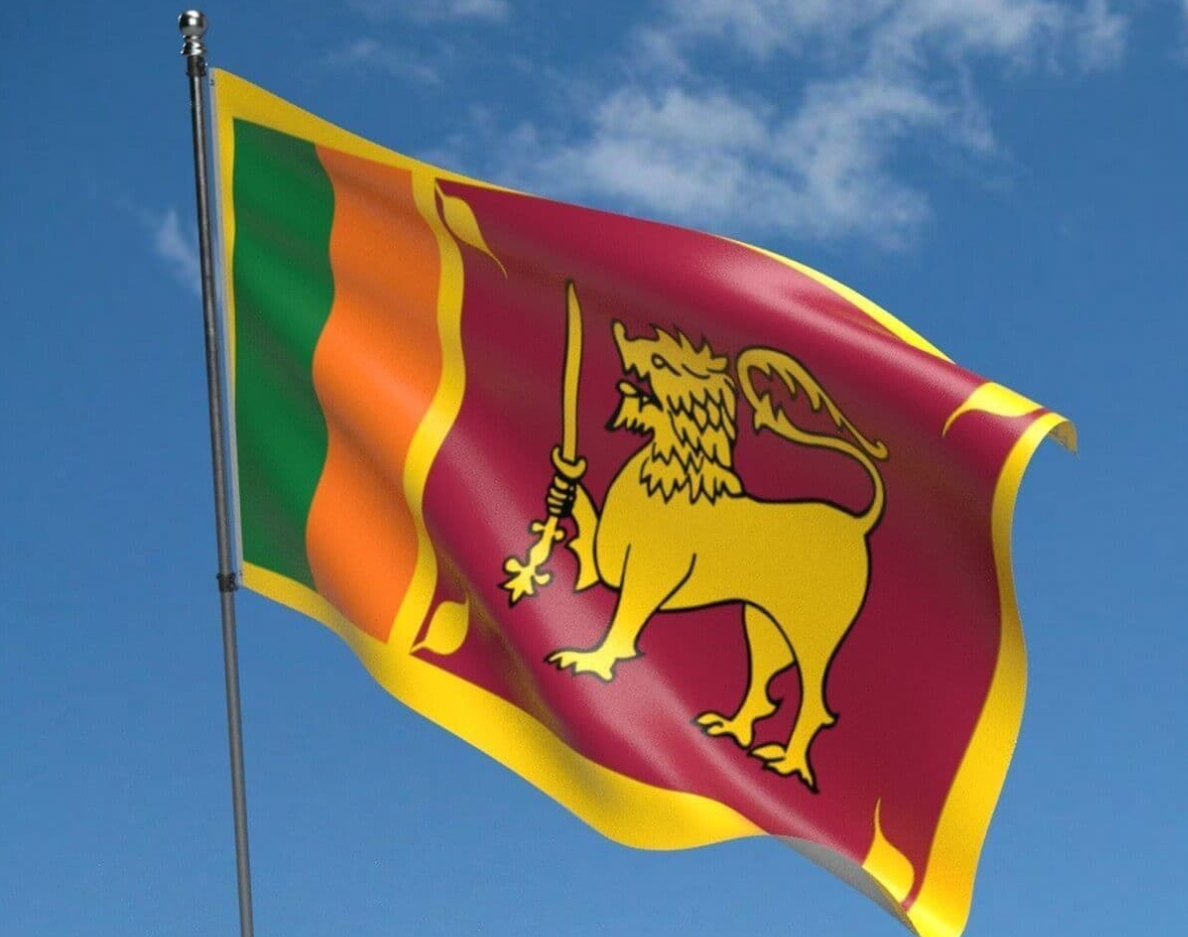
Few flags carry as much storytelling weight as Sri Lanka's. That bold maroon field. The commanding golden lion gripping a sword. Four bo leaves tucked into each corner — each element was chosen with clear intent, carrying centuries of history, ethnic identity, and Buddhist heritage. Yet most people glance at it and see just colors.
For cultural institutions, embassies, and procurement teams working with Sri Lanka’s National Flag manufacturers, understanding the precise symbolism and proportional layout is essential to ensure historical accuracy in official reproductions rather than decorative approximations.
The Lion Flag of Sri Lanka is a compressed national biography. It covers ancient Sinhala kingdoms, colonial transformation, hard-won independence, and the complex story of a multi-ethnic modern nation. Its meaning reshapes how you see the country itself. Here's everything the flag has been trying to tell you.
The Lion Symbol on Sri Lanka's Flag: What Does It Really Mean?
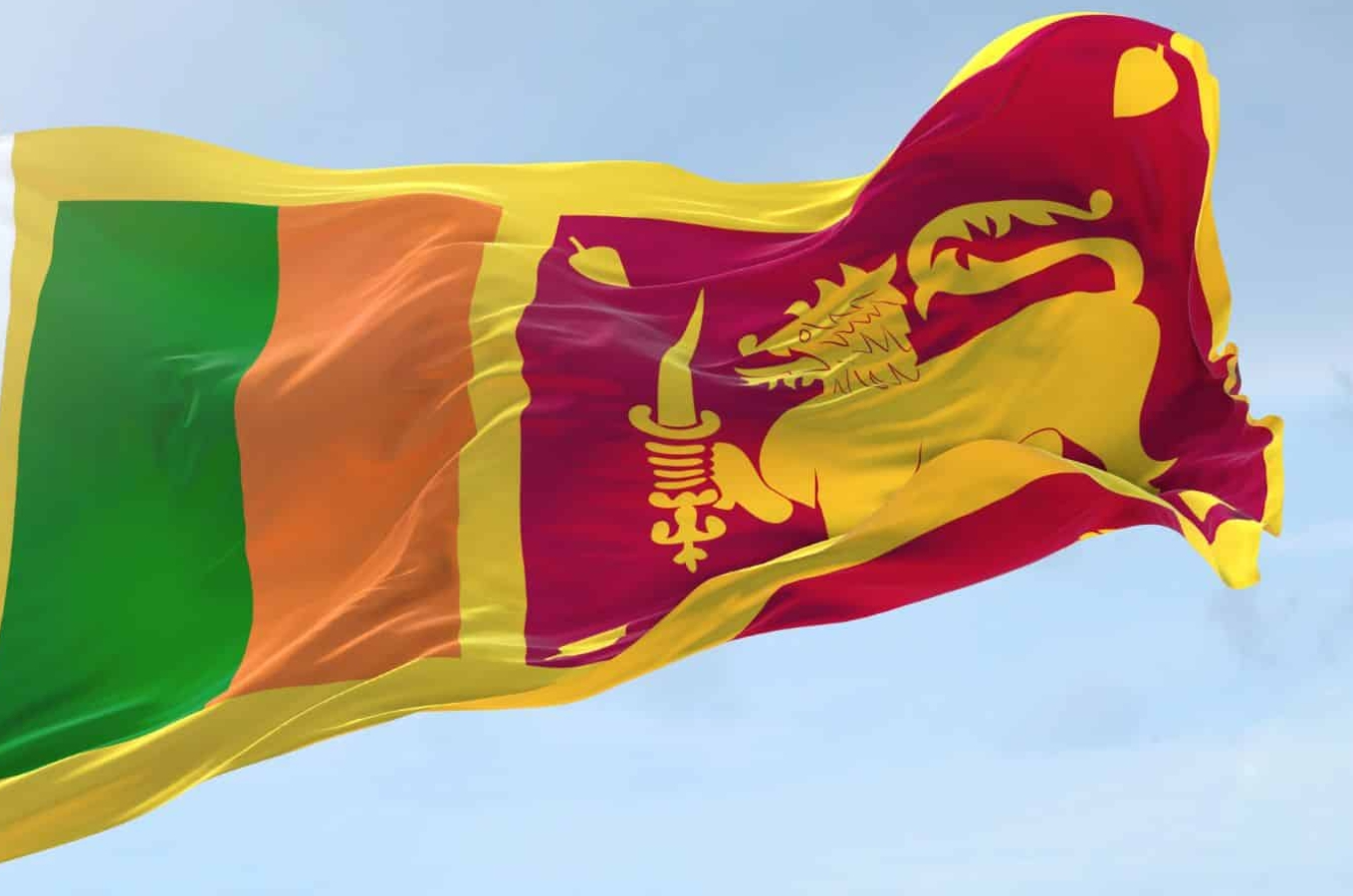
The golden lion at the center of Sri Lanka's flag isn't decoration. It's a declaration. One that goes back more than 2,500 years and carries the identity of an entire civilization.
The Sinhala lion symbol traces its roots to a founding legend. Prince Vijaya sailed from Sinhapura ("Lion City") in northern India around the 5th century BCE. He is credited as the ancestor of the Sinhalese people. The name "Sinhala" itself comes from the Sanskrit word for lion — siṃha . So that lion on the flag isn't just an image. It's a people's origin story, drawn in gold thread and pigment.
Because the lion’s anatomy, sword angle, and even tail curvature are codified in official specifications, institutions seeking custom the Lion Symbol on Sri Lanka's Flag services must work from historically verified design standards rather than simplified graphic reinterpretations.
What the Lion Represents
The lion communicates several things at once:
Lineage and ethnic identity — It stands for the Sinhalese majority, the largest ethnic group in Sri Lanka
Strength and resilience — The lion's posture is bold and forward-facing, full of energy and motion
Royal authority — Lions appeared on ancient foot-stones and royal banners long before the modern nation existed
Then there's the sword. The lion grips a kastane — a traditional Sri Lankan sword — in its raised right forepaw. This is no passive symbol. The kastane stands for bravery, sovereignty, and the nation's will to defend itself. This country didn't just survive history. It drove it.
The Complicated History Behind the Icon
Here's where the story gets more nuanced. Did Prince Vijaya carry a lion flag? Historians find no real evidence for it. Early Sri Lankan monarchs preferred sun and moon symbols. The Kalinga kings pushed the lion image into prominence — Nissankamalla (1187–1196 CE) , who came from Sinhapura himself, did much to spread it. Later, 19th-century Sinhalese elites raised it even higher.
The Kandyan Kingdom shaped the design we recognize today: a golden lion with a sword on a deep maroon background. Sri Vikrama Rajasinha , the last Kandyan king, fell to British rule in 1815. That lion flag then became a symbol of lost sovereignty. It stayed that way until D.S. Senanayake raised it again on February 4, 1948 — the day Sri Lanka reclaimed its independence.
The Lion Flag of Sri Lanka feels ancient. But its current form was built with purpose and intention.
The Four Bo Leaves: Buddhism's Hidden Message in the Flag
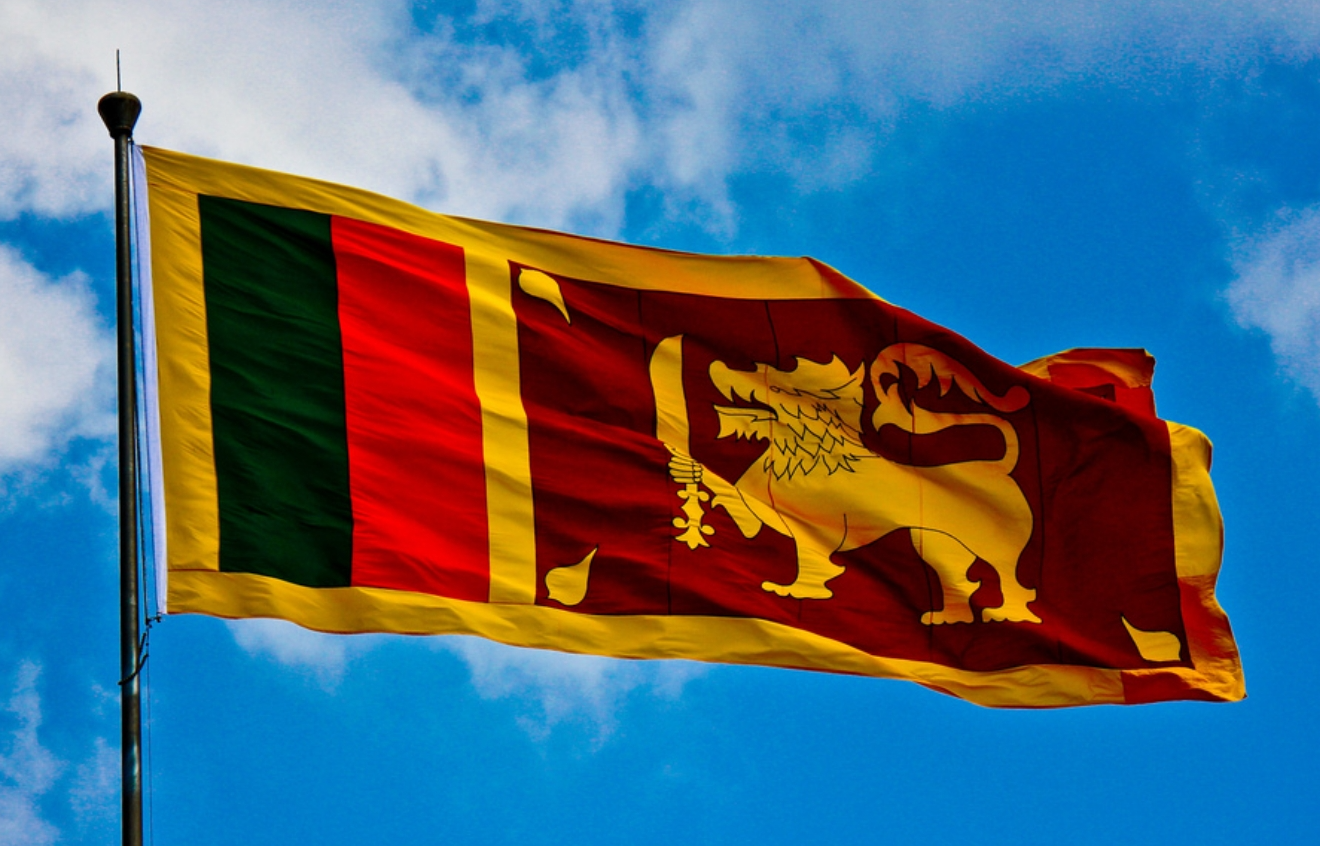
Most people notice the lion first. That makes sense. But look a little longer at Sri Lanka's flag, and something quieter catches your eye — four gold leaves, one sitting in each corner of the deep maroon field. Small. Stylized. Easy to miss.
That's what makes them worth a closer look.
These are bo leaves — taken from the sacred fig tree ( Ficus religiosa ). This is the same species under which the Buddha reached enlightenment. Sri Lanka has a deep connection to this tree. The oldest known human-planted Bo tree in the world still stands in Anuradhapura . That city has been a center of Buddhist civilization for over two millennia. Those leaves on the national flag aren't decorative. They're devotional.
What Each Leaf Stands For
The four leaves represent the Brahmavihāras — the four divine virtues at the core of Buddhist ethical teaching:
Corner | Virtue | What It Means |
|---|---|---|
Top-left | Meththa (loving-kindness) | Goodwill extended to every living being |
Top-right | Karuṇā (compassion) | Active sympathy for those who suffer |
Bottom-left | Muditā (sympathetic joy) | Genuine happiness at others' success |
Bottom-right | Upekkhā (equanimity) | A steady, impartial mind amid life's turbulence |
Together, they form a moral compass — one the nation carries on its flag.
A Change Made at a Turning Point
The bo leaves weren't part of the original 1948 design. Sri Lanka gained independence with four spearheads in the corners of the Lion Flag. Those came from the Kandyan royal tradition. In 1972 , Sri Lanka became a republic and adopted a new constitution. That's when the redesign took place. Nissanka Wijeyeratne , chairman of the National Emblem and Flag Design Committee, led the effort. The spearheads came out. The bo leaves went in. A militaristic image gave way to a spiritual one — by design.
Some hold a different view. They say the four leaves represent the Four Noble Truths , not the Brahmavihāras. Most scholars and official sources point to the four virtues, though. The difference is worth noting. The Noble Truths describe the problem of suffering. The Brahmavihāras describe how to live. The flag chose aspiration over diagnosis.
One more detail ties the leaves to the lion at the center. The eight hairs on the lion's tail are said to represent the Noble Eightfold Path — Buddhism's practical guide to ethical living. Read the flag with care, and it looks less like a political document. It reads more like a quiet statement of values.
Sri Lanka Flag Colors Meaning: Maroon, Gold, Orange & Green Explained
Color is never accidental on a national flag. Every shade is a choice — a political and cultural decision made by real people at a specific moment in history. Sri Lanka's flag makes four of those choices. Each one speaks to who belongs to this island nation.
Here's what those colors are saying.
The Maroon Field: A Majority's Identity
The deep crimson background — that rich, wine-dark maroon — represents the Sinhalese people . They make up 74–75% of Sri Lanka's population . It's the flag's dominant color by surface area, and that proportion is no accident. The maroon field reflects the Sinhalese community's central place in the island's history. Think of its ancient kingdoms, its Buddhist heritage, its long and layered civilization. Strength and resilience are the qualities tied to this color. These aren't empty words. They're how a people see themselves.
The Two Vertical Stripes: An Acknowledgment of Plurality
On the hoist side — to the left of the lion — two narrow vertical stripes stand side by side. They are equal in width and equal in height. Both are bordered in gold. That equality is the point.
Orange (Saffron) Stripe : Stands for Tamil Sri Lankans — both Sri Lankan Tamils and Indian Tamils — who make up around 11% of the population . Saffron has deep roots in Hinduism, the religion of most Tamils. It reflects a vibrant culture centered in the north and east of the island. Picture the busy markets of Jaffna, the temple festivals, the rich textile traditions. This stripe honors all of that.
Green Stripe : Stands for Sri Lankan Muslims — also called Moors — who make up 9% of the population . Green is Islam's color across the world. On Sri Lanka's flag, it also points to peace and a long history of coastal trade. That trade built Muslim communities from Colombo to Galle over many centuries.
The Gold Border: The Frame That Holds Everyone
The golden border wraps around the entire flag — the lion, the bo leaves, the stripes, and the maroon field. It stands for unity across all ethnic and religious communities . This includes smaller groups the stripes don't name: Malays, Burghers, the indigenous Vedda people, Christians, and others. For Buddhists, gold carries extra meaning — it signals enlightenment, wisdom, and spiritual purpose.
The border doesn't just decorate. It binds. It's the flag's quiet statement that everyone belongs inside the frame.
Color | Represents | Population Share |
|---|---|---|
Maroon | Sinhalese | ~74–75% |
Orange stripe | Tamils (Sri Lankan + Indian) | ~11% |
Green stripe | Muslims/Moors | ~9% |
Gold border | All communities, unity, prosperity | — |
What makes this color system striking isn't just the symbolism — it's the honesty. The flag doesn't pretend Sri Lanka is a uniform nation. It maps its diversity in plain color, for anyone willing to look.
The History of Sri Lanka's National Flag: From Ancient Kings to Independence
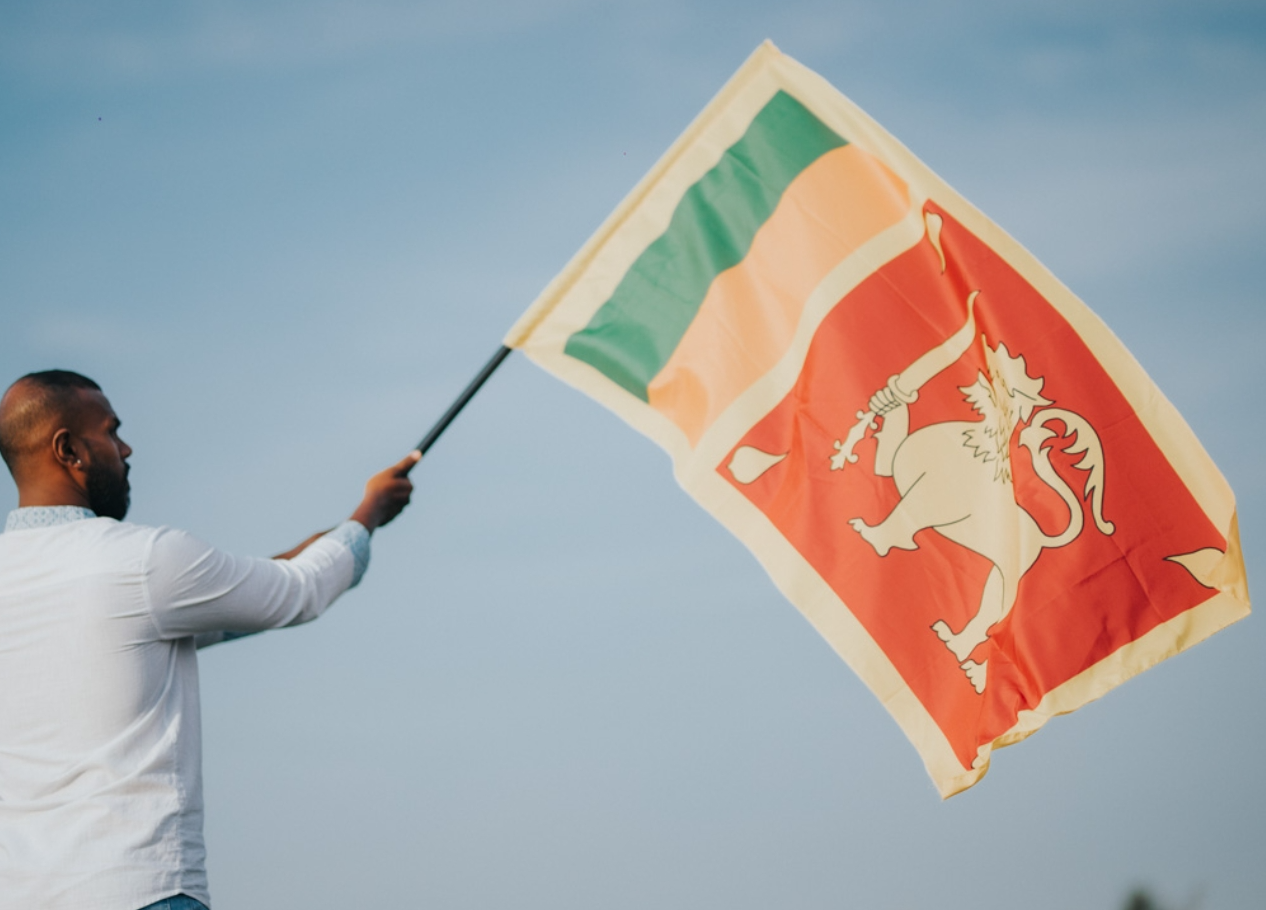
Close to 2,500 years of history are packed into that maroon rectangle. The Ceylon flag history didn't start with a committee or a constitution. It started with a king.
Tradition says King Vijaya introduced the lion standard in 486 BC . The design was simple: a golden lion carrying a sword on a red field. Sinhala kings used it as their royal banner for over two millennia. Dynasty after dynasty carried it forward. The Kandyan Kingdom shaped it into the form most people would recognize today. Then, on March 2, 1815 , it came down.
That date matters. British forces captured Kandy. They signed the Kandyan Convention and removed King Sri Vikrama Rajasinha — the last native ruler. The Union Jack went up. The Lion Flag went to Britain. For 133 years, the island flew someone else's colors.
From Colonial Symbol to Independence Icon
The Lion Flag didn't vanish during the colonial years. It survived — kept in Britain, held in memory. Sri Lankans knew which flag they wanted back. There was no debate about that.
On January 16, 1948 , MP A. Sinnalebbe moved to restore the flag of King Sri Wickrama Rajasinghe. Less than three weeks later, on February 4, 1948 , Prime Minister D.S. Senanayake hoisted it. The design at that moment had a yellow lion with a sword on a dark red background, a yellow border, and four Buddhist dagaba pinnacles in the corners. Not bo leaves — dagaba pinnacles, drawn straight from the Kandyan royal tradition.
Three Revisions, One Direction
The flag wasn't finished yet. It kept changing, and each change told the nation something about itself.
March 2, 1951 — Two vertical stripes went in near the hoist: green for Muslims, orange for Tamils . Each stripe was 1/7 of the flag's width . A flag that once spoke for Sinhala kings now stood for a wider nation.
May 22, 1972 — Sri Lanka became a republic. The dagaba pinnacles came out. Stylized bo leaves went in — a shift that swapped military imagery for Buddhist values.
September 9, 1978 — The final design was written into Section 6 of the Constitution , this time with natural bo leaves. That version is the one flying today.
Period | Key Design | Milestone |
|---|---|---|
486 BC–1815 | Lion + sword on red | Royal standard, Vijaya to Kandy |
1815–1948 | Union Jack | British colonial rule |
1948–1951 | Lion + dagaba pinnacles | Independence Day hoist |
1951–1972 | + Green & orange stripes | Ethnic communities recognized |
1972–1978 | + Stylized bo leaves | Republic founded |
1978–present | Natural bo leaves | Constitution-enshrined final form |
This timeline isn't just design history. It's a record of negotiation — between communities, between tradition and modernity, between what a nation was and what it aimed to become. The national symbols of Sri Lanka didn't arrive in a finished state. Different groups argued over them, revised them, and refined them. That's what living symbols do.
The 1951 Flag Modification: How Ethnic Stripes Were Added
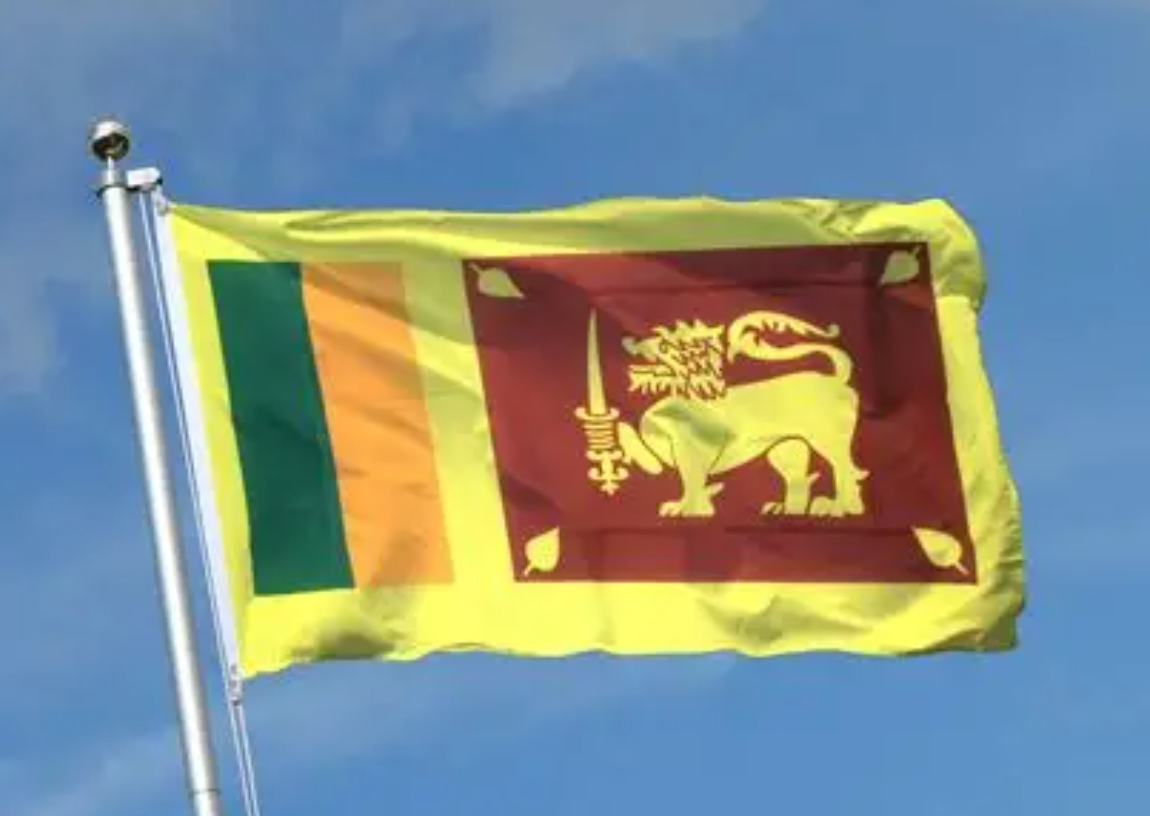
Three years after independence, Sri Lanka's government made a move that carried real weight. It looked at its own flag and admitted something was missing.
The original 1948 design spoke for one community — the Sinhalese majority. The maroon field, the lion, the sword. All of it rooted in Sinhala royal history. But Sri Lanka wasn't Sinhala alone. Tamils lived in the north and east. Muslims had traded and settled along the coasts for centuries. A flag that ignored them wasn't a national flag. It was a majority flag with a decorative border.
On March 2, 1951 , that changed. Two vertical stripes were added to the hoist side — the left edge of the flag, closest to the pole. They were narrow. Each measured 1/7 of the flag's total width . But what they stood for was far from small.
For government tenders, schools, and ceremonial distributors working with Sri Lanka’s National Flag wholesalers, those exact stripe proportions and color separations are not aesthetic choices — they are regulated specifications that must be reproduced with precision at scale.
Orange (saffron) for Tamil Sri Lankans — both Sri Lankan and Indian Tamils. It honors the Hindu traditions and cultural heritage of communities rooted in the island's north and east.
Green for Sri Lankan Muslims. It reflects Islam's universal color and marks centuries of coastal trade history that shaped Muslim communities across the island.
The two stripes stood equal in width. That equality was a clear choice. Neither community ranked above the other. Both sat inside the gold border — part of the same frame as the lion, the bo leaves, and the maroon field.
It wasn't a complete fix for the island's ethnic tensions. But it was an honest step. The nation chose to see itself as broader than one group — and pressed that recognition into the very cloth it flies.
The 1972 Republican Flag Redesign: What Changed and Why
May 22, 1972 wasn't just a date on a calendar. It was the moment Sri Lanka stopped being Ceylon.
The country adopted a new republican constitution. That changed more than just the name. Sri Lanka looked hard at its own flag and decided one symbol had to go — and another had to take its place.
Out came the dagaba pinnacles — four temple spire images sitting in each corner of the flag since 1948. They came from the Kandyan royal tradition and carried a certain grandeur. But they read as architectural. Decorative, even. A republic moving forward had no use for the imagery of a kingdom looking back.
In went the bo leaves . Four of them. One in each corner. These leaves come from the sacred fig tree — the tree under which the Buddha reached enlightenment. The swap wasn't cosmetic. It was philosophical. Sri Lanka traded a military-royal symbol for something quieter and more lasting: Buddhist spiritual values .
The new constitution also gave Buddhism the foremost place among Sri Lanka's religions — an open declaration. The flag changed to reflect that.
Then 1978 brought one more change. The stylized bo leaves gave way to natural bo leaves — truer to the actual plant, more grounded in feel. That final version went into Section 6 of the Constitution . For the first time, the flag had legal permanence.
The 1972 redesign was Sri Lanka editing its own self-portrait. Every change was made on purpose, with a clear point to make.
Sri Lanka Flag vs. Other South Asian National Flags: Key Differences
Place Sri Lanka's flag next to its South Asian neighbors. The difference stands out right away. This flag does something none of the others do.
India, Pakistan, and Bangladesh each use flat geometric fields with one central symbol. Clean. Simple. Sri Lanka's flag is a different story. It carries a golden lion gripping a sword, four bo leaves, two ethnic stripes, and a gold border that ties the whole design together. This is the most complex flag in the region — and that complexity is by design.
The differences go beyond looks:
Ethnic representation : Sri Lanka color-codes four communities by design — Sinhalese (crimson field), Tamils (orange stripe), Muslims (green stripe), and all minorities (gold border). India's Ashoka Chakra stands for universal dharma, not any one group. Pakistan's design splits into two — Muslim majority and non-Muslim minorities. Bangladesh reflects national struggle, not a multi-group identity.
Animal emblem : Sri Lanka is the only South Asian nation with a central animal figure on its flag. No other flag in the region does this.
Dual-panel structure : The gold border divides the flag into two distinct sections — a pictorial emblem panel and an ethnic stripe panel. That kind of layout exists nowhere else in South Asia.
Proportion : Sri Lanka uses a 1:2 ratio , which follows Commonwealth and British tradition. India and Pakistan use 2:3. Bangladesh uses 3:5. Nepal skips the rectangle format altogether.
The lion holds a kastane sword — a weapon tied to Sri Lankan culture and history. No other South Asian flag puts a national weapon front and center like this.
One small detail is worth noting: the orange Tamil stripe sits closest to the lion — right beside it, not pushed to the edge. Placement as a statement.
Custom Sri Lanka National Flag: How to Get an Accurate & High-Quality Reproduction
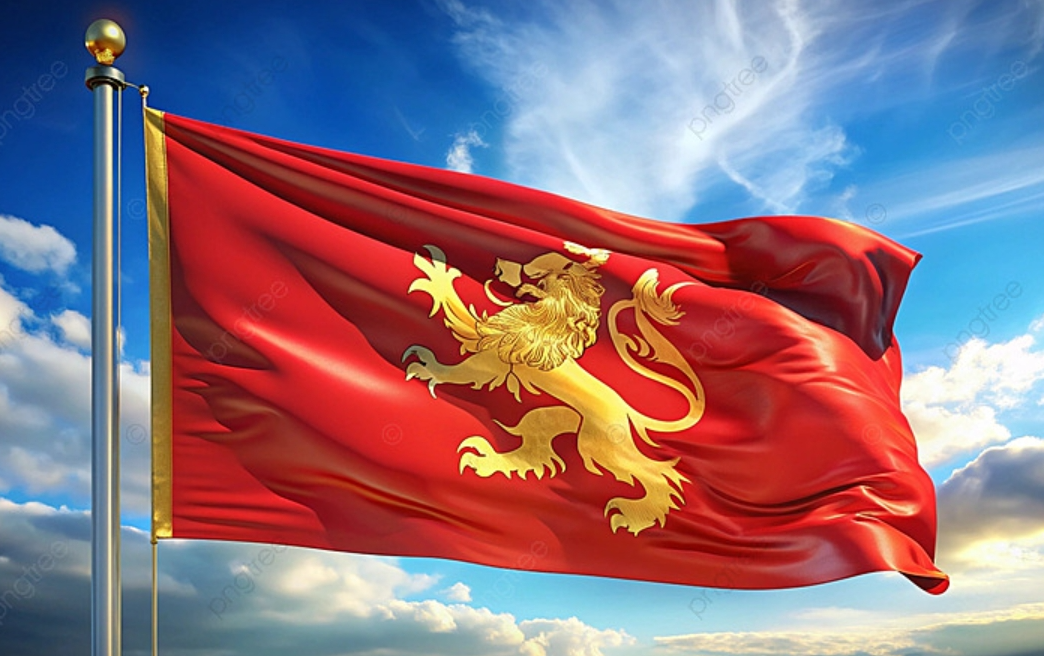
Getting the colors wrong on this flag isn't a minor detail — it's a different flag.
Sri Lanka's national flag follows a strict technical standard: SLS 1:2020. This standard sets every color to a ∆E ≤ 1.5 tolerance . That means the color difference between your reproduction and the official flag must stay under 1.5 units on the CIE Lab scale. Most print shops don't work to that level of precision by default.
Here are the exact specifications you need:
Color | Pantone | HEX | CMYK |
|---|---|---|---|
Gold/Yellow | 14-0957 TCX | #F7B718 | 0-26-90-3 |
Maroon | 19-1863 TCX | #941E32 | 0-80-66-42 |
Saffron/Orange | 16-1164 TCX | #DF7500 | 0-48-100-13 |
Green | 18-5322 TCX | #005F56 | 100-0-9-63 |
Two colors go wrong most often in production. Maroon fades toward bright red. Green shifts away from its teal base. Bring these up with your printer before production starts — don't wait until you see the proof.
For digital files, go with the 3000×1500px PNG version. It's royalty-free and stays sharp at any reproduction size.
Match your size to your use:
- Indoor display: 3×5ft or 4×6ft
- Outdoor events: 5×8ft with brass grommets and UV-resistant polyester
- Diplomatic or cultural settings: 60×90cm (Olympic NOC standard)
Want a custom Sri Lanka flag that looks exactly right? runcustomflag.com builds color-accurate reproductions to official specifications — covering diaspora events, diplomatic use, sports, and cultural celebrations.
Conclusion
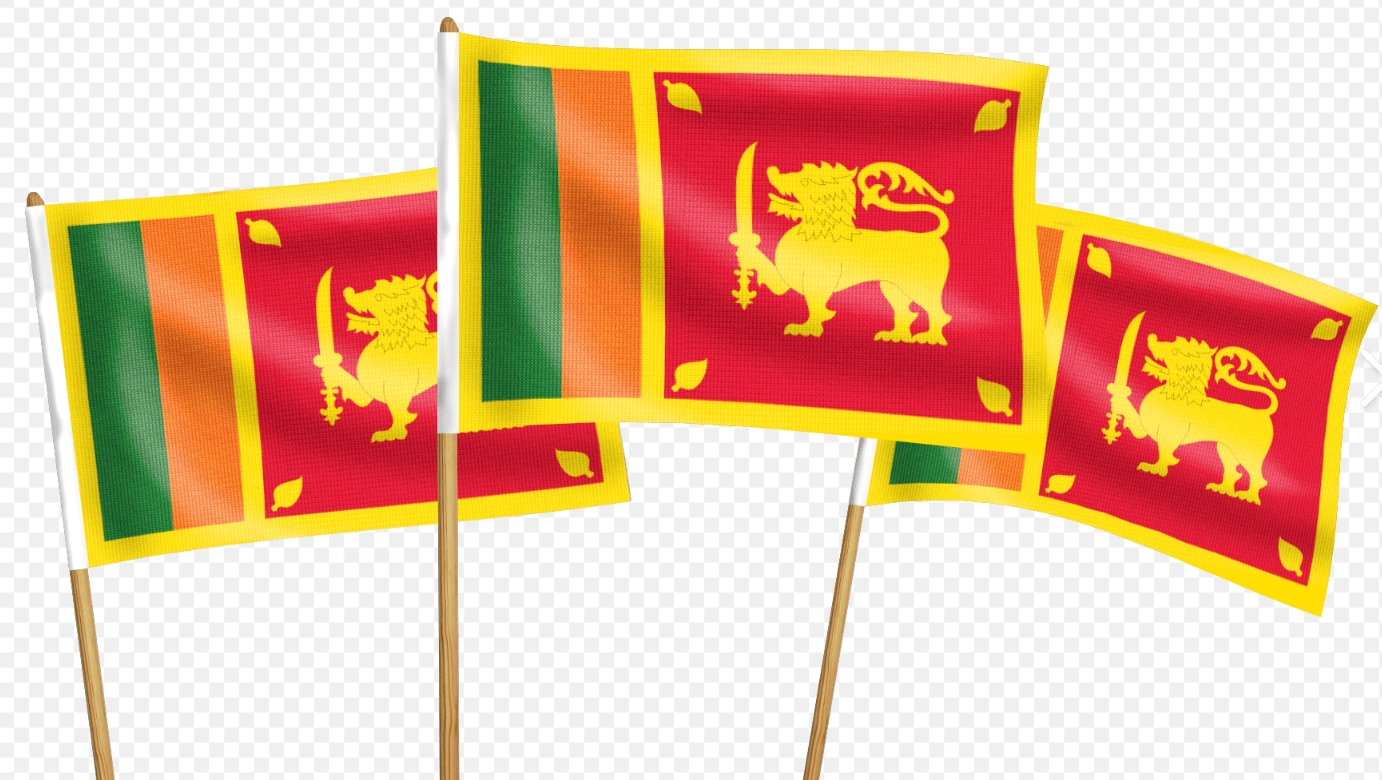
Few flags carry as much meaning as the Lion flag of Sri Lanka . Every element tells a deep story. The ancient Sinhala lion gripping its sword. The four sacred bo leaves. The deep maroon field. The orange and green stripes — raw and honest about who this nation is. Together, they span centuries, civilizations, and a hard-won path to independence.
This isn't just a piece of cloth. It's a history lesson stitched into fabric. The flag captures kingdoms that rose and fell, colonial rule that reshaped the island, and the ongoing effort to unite diverse peoples under one shared symbol.
So maybe you're a student writing a report. Maybe you're a traveler heading to Colombo. Or maybe you just fell down a curious rabbit hole about national symbols of Sri Lanka . Either way, you now see the flag with new eyes. You see through it — past the colors and into the story behind them.
Need a good custom Sri Lanka national flag that honors every detail of that story? Check out our precision-crafted reproductions at RunCustomFlag — symbols this meaningful deserve to be made right.