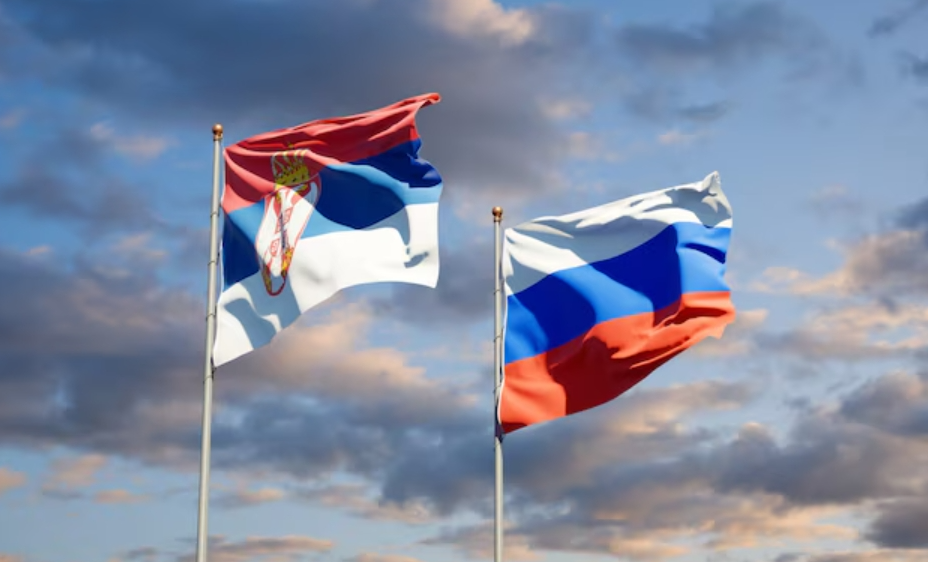
You're watching the Olympics. A Serbian athlete wins gold, and their flag rises on the left. A Russian athlete takes silver, and their flag climbs up on the right. You squint. You tilt your head. You start to wonder if someone made a mistake. Both flags show three horizontal stripes — the same red, white, and blue palette. Yet the announcer insists these are two different countries.For organizations ordering national flags in bulk, this similarity also appears in the supply chain — many buyers sourcing from a custom Russian Flag & Serbian Flag factory discover how small design differences translate into completely different national specifications.
So what's going on here? The story behind these two flags is rich and full of detail. It traces back to a 19th-century pan-European identity movement, a shared Slavic heritage spanning centuries, and a few small-but-crucial differences most people tend to miss. By the end of this, you'll never mix up the Russian and Serbian flags again.
The Striking First Impression: Two Flags, Three Colors, One Big Question
Here's a number worth sitting with: red, white, and blue appear on more than 20 national flags worldwide . That's not a coincidence — it's a pattern with deep historical roots. Some of the confusion comes from how visually similar tricolor flags look once they're produced at scale. In fact, Russian Flag manufacturers often emphasize strict color standards and stripe ratios because even small variations become noticeable when thousands of flags appear together at international events.
Somewhere inside that pattern, Russia and Serbia planted their flags so close together that even sharp-eyed sports fans can't tell them apart.
This confusion isn't rare or embarrassing. It's almost universal. At major international events, crowd shots catch people waving the wrong flag — and nobody notices until the camera zooms in. The flags are that similar.
Both display three horizontal stripes . Both use the exact same three colors. Neither flag adds some exotic shade of purple or a rogue diagonal stripe to help you out. From a distance — which is exactly how you see flags during a stadium broadcast — they look almost identical.
So why does this happen? It comes down to one phrase: Pan-Slavic colors .
In the 19th century, Slavic nations across Eastern Europe started rallying around a shared cultural identity. Part of that meant adopting a common visual language — a tricolor built from white, red, and blue. Russia was there at the start. Serbia followed. So did a dozen other nations.
The result? A whole cluster of Slavic flags that, at first glance, look like variations of the same design. Two of the most visually alike flags happen to belong to two of the most deeply connected countries on the continent.
Why Do They Look So Similar? The Pan-Slavic Colors Explained
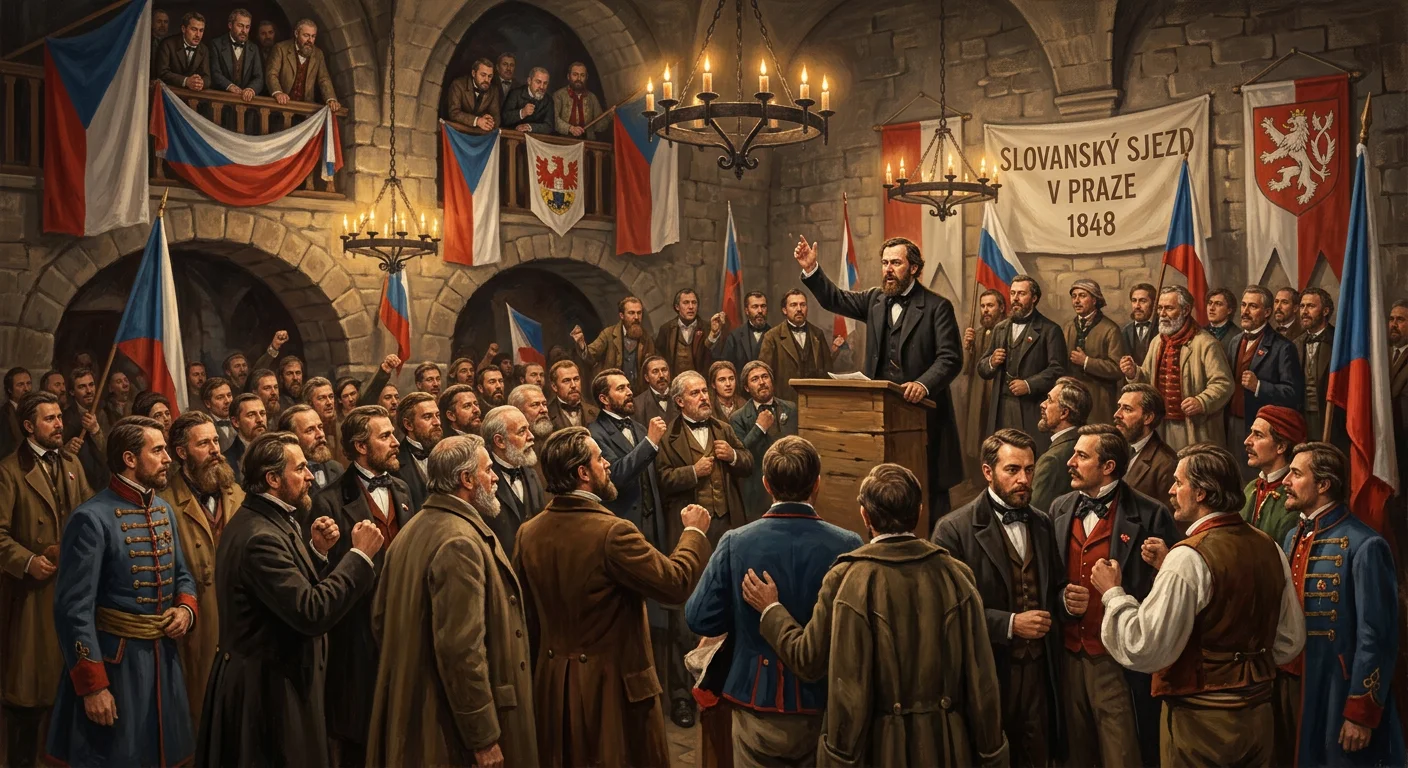
The answer starts in Prague. Summer of 1848. A room full of people who were angry, oppressed, and trying to figure out what they shared.
Here's the situation: dozens of Slavic ethnic groups were living under the thumb of the Austrian Empire. Czechs, Slovaks, Croats, Slovenes, Serbs — each group had its own culture. Each one was getting squeezed by the same imperial power. The Prague Slavic Congress of 1848 was their attempt to find solidarity. One of the things they landed on was a shared visual identity. A common set of colors that would signal: we are connected .
Those colors were white, red, and blue .Today, when historians recreate historical tricolors or cultural flags, these early designs are often reproduced through custom Russian Flag services that replicate the original stripe order and traditional color tones.
Where did they come from? Russia. Peter the Great introduced the Russian imperial tricolor in the late 17th century. The congress looked at Russia — the largest, most powerful Slavic nation on earth — and said, "those colors work." They became the template. The blueprint. The Pan-Slavic colors that spread across Eastern Europe for the next 150 years.
A Movement That Was Already Moving Before 1848
Here's the interesting wrinkle: some nations didn't wait for the congress.
Serbia locked in a red-blue-white tricolor in its 1835 constitution . At that point, Serbia was still fighting for autonomy from the Ottoman Empire. Russia backed that independence push. The shared color palette was no coincidence — it showed a real political and cultural bond. Serbia gained full independence at the 1878 Berlin Congress . By then, the visual connection between the two nations was already decades old.
The 1848 congress didn't create the Pan-Slavic color tradition. It formalized it.
That same year, Croatia adopted red-white-blue. Slovenia chose white-blue-red. Slovakia went with red-blue-white. One movement. One palette. Half a dozen variations on the same idea.
What the Colors Mean
The meaning behind these colors goes back even further. Some historians trace the roots to 9th-century Slavic culture , a heritage that also influences modern flag design principles:
Red
Blood Shed in Battle
White
Purity and Peace
Blue
Honor
8
Countries Adopted
7
Slavic Nations Skipped
3
Shared Colors
Eight countries or political entities have carried these Pan-Slavic colors at some point. That list includes Russia, Serbia, Croatia, Slovenia, Slovakia, the Czech Republic, Czechoslovakia, and Yugoslavia in its various forms. Worth noting: seven other Slavic nations — including Poland, Ukraine, and Bulgaria — never adopted them.
Russia and Serbia didn't end up with similar flags by accident. They ended up with similar flags because they were part of the same story.
Russian Flag vs Serbian Flag: Side-by-Side Comparison
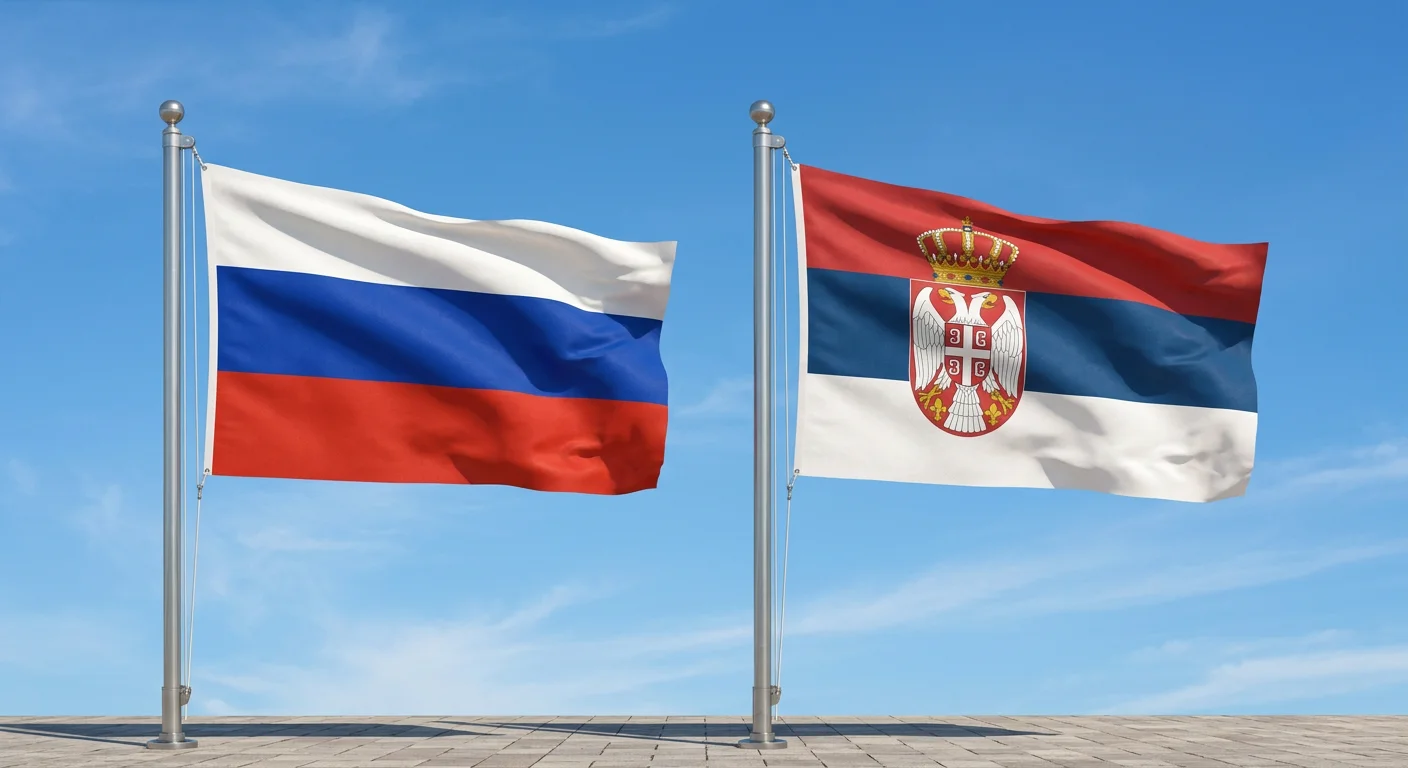
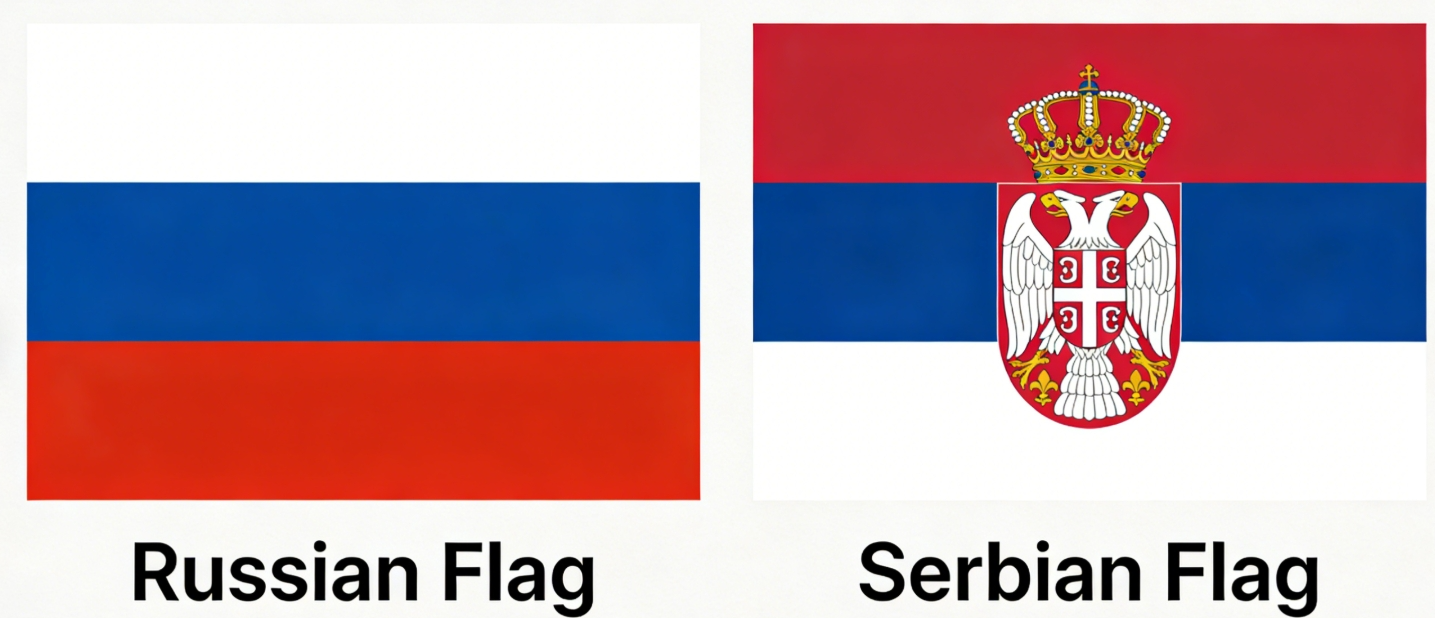
Put the two flags next to each other. Take a good look.
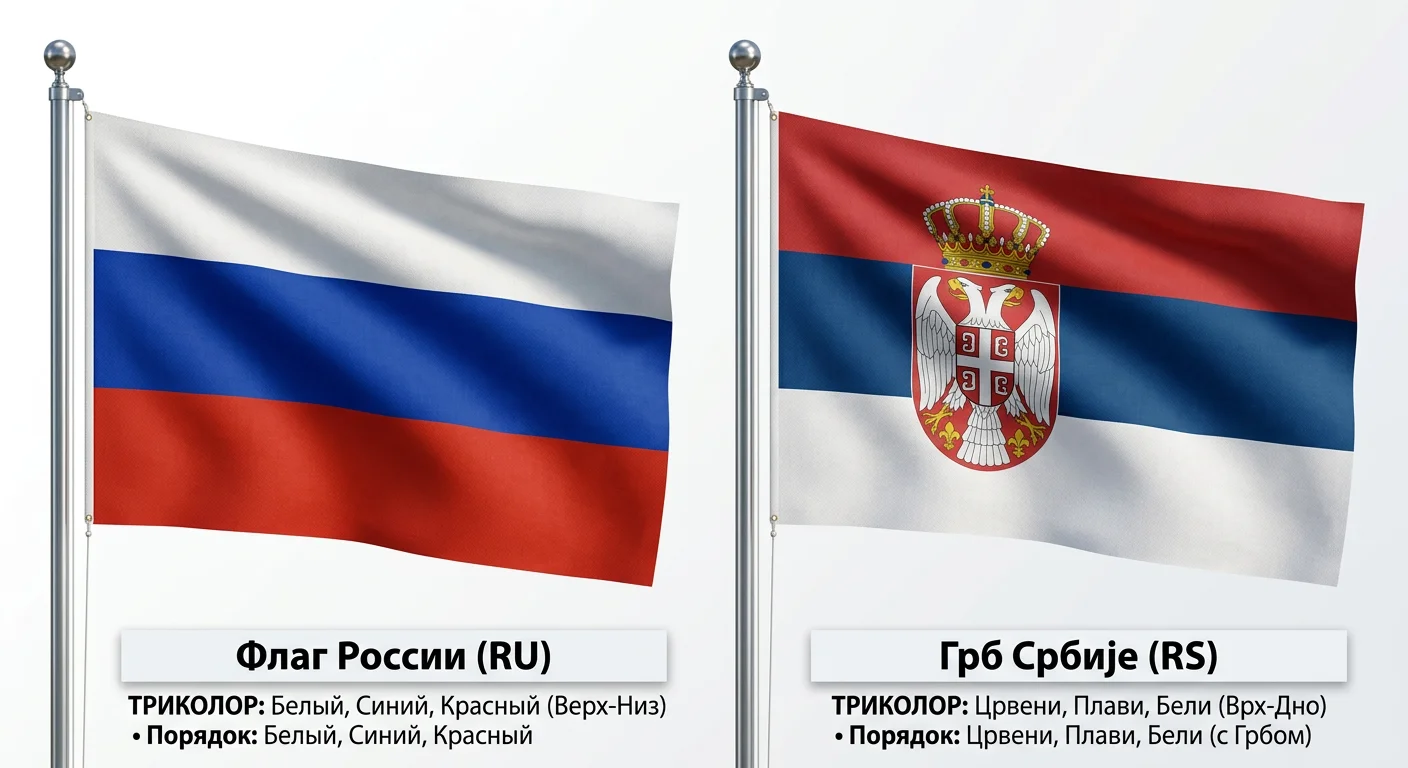
Russia: white on top, then blue, then red. Serbia: red on top, then blue, then white. That's it. That's the entire difference — if you're looking at a plain tricolor with no emblem. The stripe order is reversed. When these flags are produced for government buildings, stadiums, or public events, Serbian Flag suppliers typically manufacture two official variants — the plain tricolor and the version carrying the national coat of arms.
Same three colors, same three horizontal bands, just flipped upside down.
It sounds obvious once someone points it out. Then you see both flags on a screen and forget it all over again.
Key Memory Trick
Russia starts White. Serbia starts Red. White up, Russia. Red up, Serbia. Say it a few times. It works.
The Coat of Arms: Serbia's Secret Weapon
Here's where Serbia pulls ahead in the "please stop confusing us" competition.
The official Serbian state flag carries a coat of arms — a cross emblem placed just left of center, shifted about one-seventh toward the hoist side. It features a white cross on a red shield, with four firesteels (C-shaped symbols) in each quadrant. This is Serbia's lesser coat of arms. It has been part of the official flag since 2004 .
Russia's civil flag? Nothing. Clean stripes, no emblem, no decoration.
So in practice: a coat of arms means Serbia . Full stop. The emblem is the cheat code.
The catch is that plain tricolor versions of the Serbian flag do exist. They show up in crowds and informal settings all the time. That's where things get messy again, and you're back to checking which color sits on top.
Everything Else That's Different
| Comparison | 🇷🇺 Russia | 🇷🇸 Serbia |
|---|---|---|
| Stripe Order (Top → Bottom) | White → Blue → Red | Red → Blue → White |
| Coat of Arms | None | Yes — Serbian cross, shifted left |
| Official Ratio | 2:3 | 2:3 (national) |
| Current Design Adopted | 1991 | 2004 |
| Blue Pantone | 286 C | Olympic spec blue |
| Red Pantone | 485 C | Not formally specified |
The ratio is the same. The colors look the same. The meaning behind each color is different though — Russia's red stands for valor. Serbia's red points to blood and war. But you can't read that from across a stadium.
What you can read: which color sits on top, and whether there's a coat of arms. Those two checkboxes are all you need.
How to Tell Them Apart: Quick and Foolproof Tips
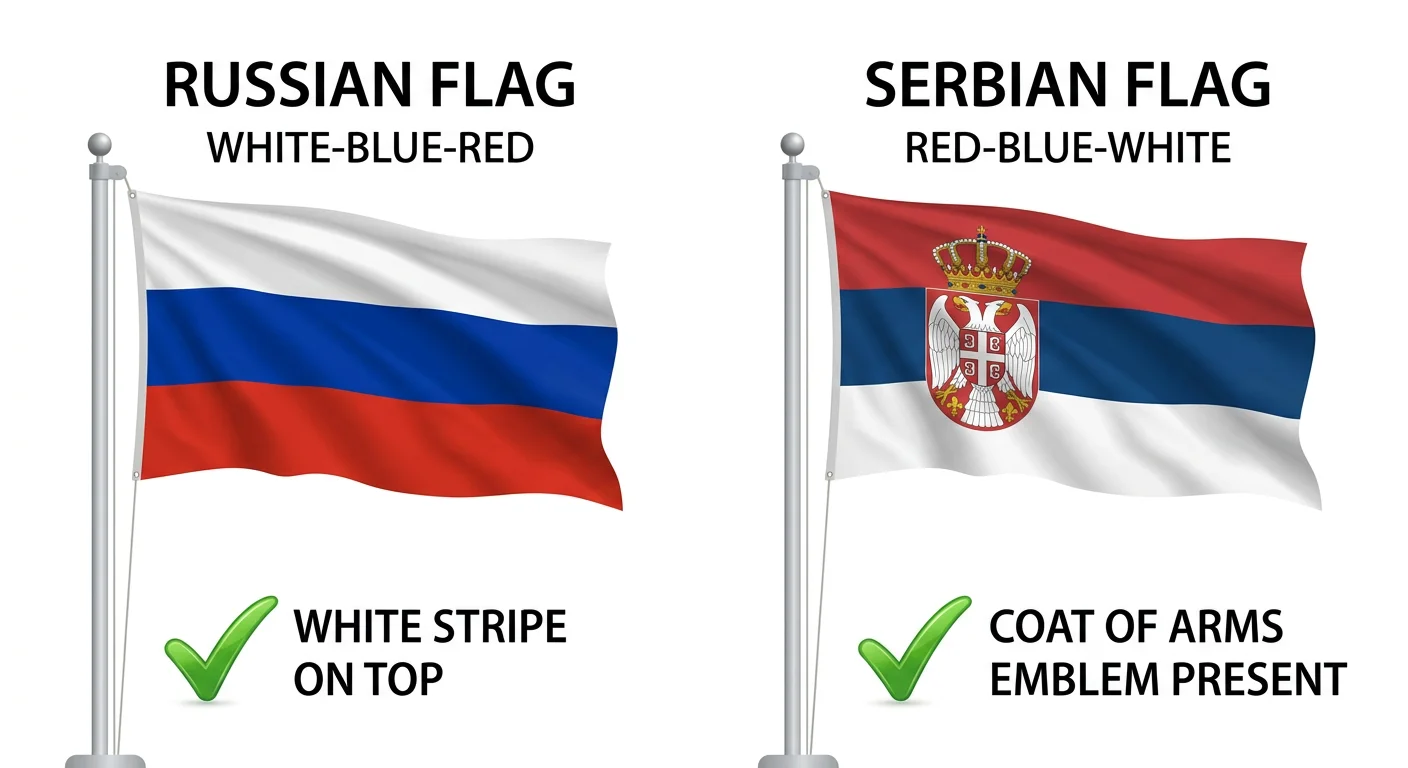
Good news: there are two things to check. Just two. Anyone who says flag identification is complicated hasn't heard this framework.
Rule #1: Look at the Top Stripe
Flip the Russian flag upside down — you get something that looks a lot like Serbia's. Same three stripes, just in reversed order.
The mental shortcut that sticks:
White on top
= 🇷🇺 Russia
Red on top
= 🇷🇸 Serbia
Say it out loud twice. "White up, Russia. Red up, Serbia." That's the whole game. Squinting at a flag on a broadcast screen with three seconds before the camera cuts? This one rule saves you every time.
Rule #2: Check for the Emblem
This one is even easier — it's a yes or no check.
Serbia's official state flag carries a coat of arms just left of center. It's a white cross on a red shield, with four C-shaped firesteels in each corner. Spot any emblem on that tricolor — the answer is Serbia. Every time. No math required.
Russia's civil flag is plain. Three stripes, nothing else.
So the decision tree looks like this:
1
Is there a coat of arms? → Serbia. Done.
2
No emblem? → Check the top stripe.
3
Top stripe is white? → Russia.
4
Top stripe is red? → Serbia without its emblem (common in crowd settings).
The Practical Cheat Sheet
| What You See | What It Is |
|---|---|
| Emblem on the flag | 🇷🇸 Serbia |
| No emblem + white top stripe | 🇷🇺 Russia |
| No emblem + red top stripe | 🇷🇸 Serbia (informal version) |
For event organizers ordering flags in large quantities, this detail also affects production — custom Serbian Flag wholesale prices are usually slightly higher for the coat-of-arms version because it requires additional printing layers or embroidery.
That's it. Two checkpoints. Four possible outcomes. You now know more about telling these flags apart than 90% of people watching international sports broadcasts.
Common Myths and Misconceptions Debunked
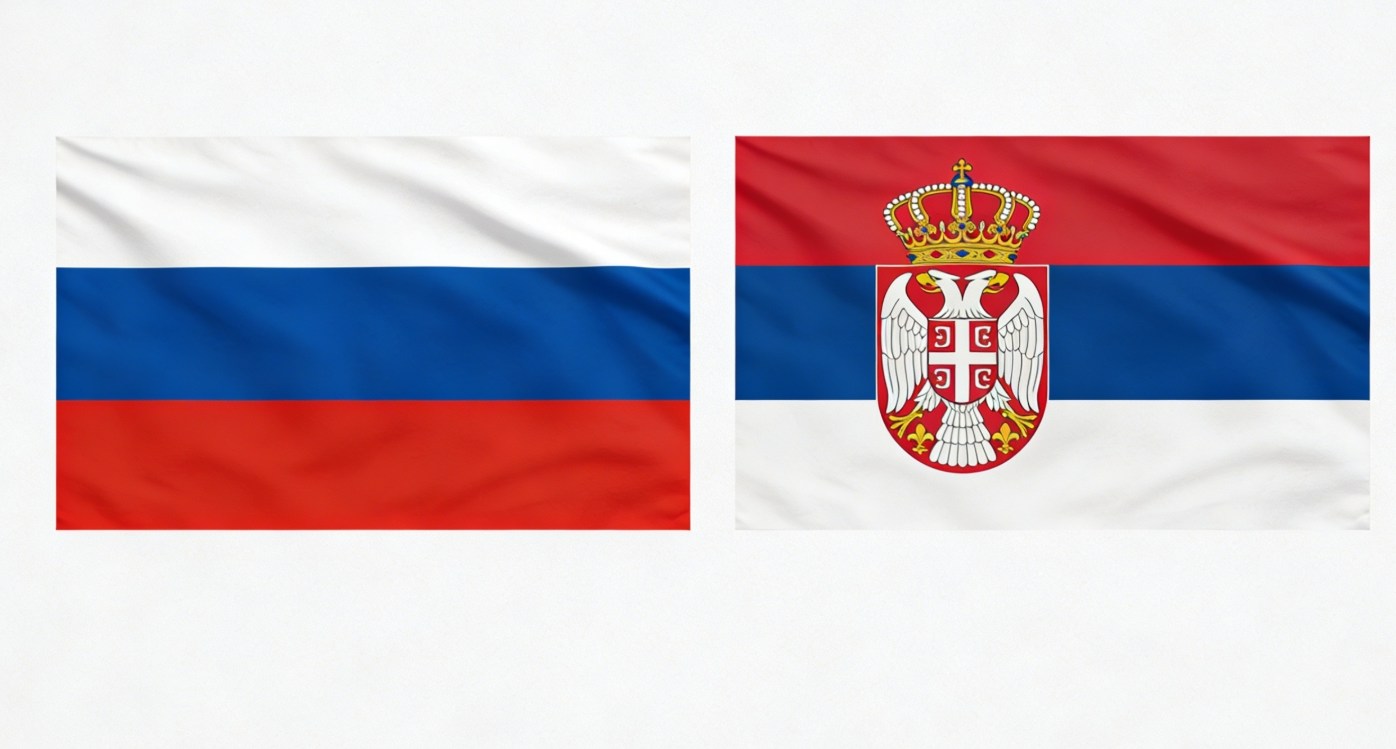
Let's be honest — most people who think they know about these two flags are carrying at least one thing that's flat-out wrong. The confusion isn't just visual. It runs deeper, into the stories people tell themselves about why the flags look the way they do.
"Serbia just copied Russia's flag"
This one is dead wrong.
Serbia didn't copy Russia. Both nations inherited the same Pan-Slavic color tradition through separate paths — a shared visual identity that grew out of a 19th-century cultural movement across Eastern Europe. Serbia's tricolor appeared in its 1835 constitution . Russia's imperial tricolor dates back to Peter the Great in the late 17th century . Serbia drew from a broader movement, not from Russia as a direct source. There's a real difference between copying a neighbor and drawing from the same historical roots.
"The flags are pretty much identical — only experts can tell them apart"
Nope. The differences are real and easy to learn in about 45 seconds.
The stripe order is reversed . Russia runs white-blue-red from top to bottom. Serbia runs red-blue-white. Serbia's official state flag also carries a coat of arms — a cross and shield emblem that sits just left of center. That emblem alone makes identification instant. You don't need to be a vexillologist. You just need to know two things.
"They share the same flag because the two countries are politically aligned"
The timeline doesn't support this. The Slavic flag history behind both designs predates modern Russian-Serbian geopolitics by well over a century. These flags didn't start as a signal of political alliance. A shared ethnic and cultural identity shaped them — Pan-Slavic colors chosen at a time when Slavic nations were fighting for survival under empires that wanted to erase them.
In fact, international distributors and Russian Flag & Serbian Flag wholesalers routinely classify the two flags separately in catalog systems because their official specifications differ in stripe order, emblem placement, and historical standards.
The visual similarity is about ancestry. Not diplomacy.
Other Slavic Flags That Share the Same Colors
Russia and Serbia are far from alone here. Four other Slavic nations picked red, white, and blue too. Line all six flags up side by side, and they look like someone ran one design through a randomizer and printed six different results.
Meet the family.
Czech Republic goes white-red-blue, top to bottom. It also has a large blue triangle on the left side. That triangle is the cheat code — spot it, and you know it's Czech. The country adopted this flag in 1993 after Czechoslovakia split.
Slovakia flips the order: blue-red-white. Also adopted in 1993, also born from the same split. The blue is much lighter than Russia's — you can see the difference right away. A double cross coat of arms sits on the front. Same three colors, totally different look.
Slovenia runs white-blue-red. That's very close to Russia's white-blue-red. Two things set it apart: the blue is lighter, and a coat of arms sits dead center. That emblem shows Mount Triglav, a wavy river, and stars. Without it, Slovenia and Russia would cause the same stadium mix-up as Russia and Serbia do.
Croatia stands out a bit. Red-white-blue, yes, but at a 1:2 ratio instead of 2:3 — differences in aspect ratio matter when it comes to choosing the right material for outdoor flags — so the flag is narrower than the rest. The famous checkered šahovnica shield (a red-and-white checkerboard) makes it easy to identify. No confusion once you see that shield.
Here's the full picture:
| Flag | Color Order (Top → Bottom) | Key Differentiator | Ratio |
|---|---|---|---|
| 🇷🇺 Russia | White → Blue → Red | Plain tricolor | 2:3 |
| 🇷🇸 Serbia | Red → Blue → White | Eagle coat of arms | 2:3 |
| 🇨🇿 Czech Republic | White → Red → Blue | Blue triangle on hoist | 2:3 |
| 🇸🇰 Slovakia | Blue → Red → White | Double cross emblem, light blue | 2:3 |
| 🇸🇮 Slovenia | White → Blue → Red | Triglav emblem, light blue | 2:3 |
| 🇭🇷 Croatia | Red → White → Blue | Checkered šahovnica, narrow ratio | 1:2 |
See the pattern? Every flag on this list carries a coat of arms — except Russia . Russia's plain tricolor is the odd one out. That's a bit ironic. The nation whose flag launched the whole Pan-Slavic color tradition is the one that never added anything to it.
One more pattern worth spotting: no two flags share the same stripe order. Six nations, six different sequences. The 1848 Prague Congress handed everyone the same three colors and left the rest up to them.
FAQ: Russian Flag vs Serbian Flag
These are the questions people type into Google at 11pm after an argument at a bar. Good questions, all of them.
Are the Russian and Serbian flags the same?
No — but it's an easy mistake to make. Russia runs white-blue-red from top to bottom, no emblem. Serbia's official state flag runs red-blue-white, plus a coat of arms sitting near the left edge. Same three colors, reversed order. One has a shield. The other doesn't.
Which flag came first?
Russia, by a wide margin. Peter the Great introduced the Russian tricolor around 1696. Serbia's version showed up in 1835. That's about 140 years of head start.
Why do so many Slavic countries use red, white, and blue?
Pan-Slavic solidarity — agreed on in the 1830s–1840s. Slavic nations facing imperial pressure chose a shared color palette as a cultural statement. Russia set the template. Other nations adapted it — same three colors, different stripe order.
What do Serbia's colors mean?
No official definition exists, but the traditional read goes like this: red for blood shed in war, blue for freedom, white for peace. Serbia's official Pantone specs: Red 1797C, Blue 541C.
How do I tell them apart in three seconds?
Two checks, in this order:
- Emblem present? → Serbia's state flag. Done.
- No emblem? → Look at the top stripe. White means Russia. Red means Serbia.
That's the whole system.
Pro Tip: For bulk orders of national flags over 100 pieces,
contact our team for special wholesale pricing and guaranteed color accuracy.
Framework Strategic Notes
This article works as a dual-purpose asset. It satisfies genuine curiosity and builds commercial trust for runcustomflag.com at the same time.
The strategic logic is simple:
Lead with the confusion
It's universal and emotionally sticky
Teach the history
Pan-Slavic colors, 1848 Prague Congress, Peter the Great
Deliver the cheat codes
Stripe order + coat of arms = instant identification
Let the expertise speak
No hard sell required
Flag knowledge articles draw shares, backlinks, and returning readers on their own. That's the whole game here.
Conclusion
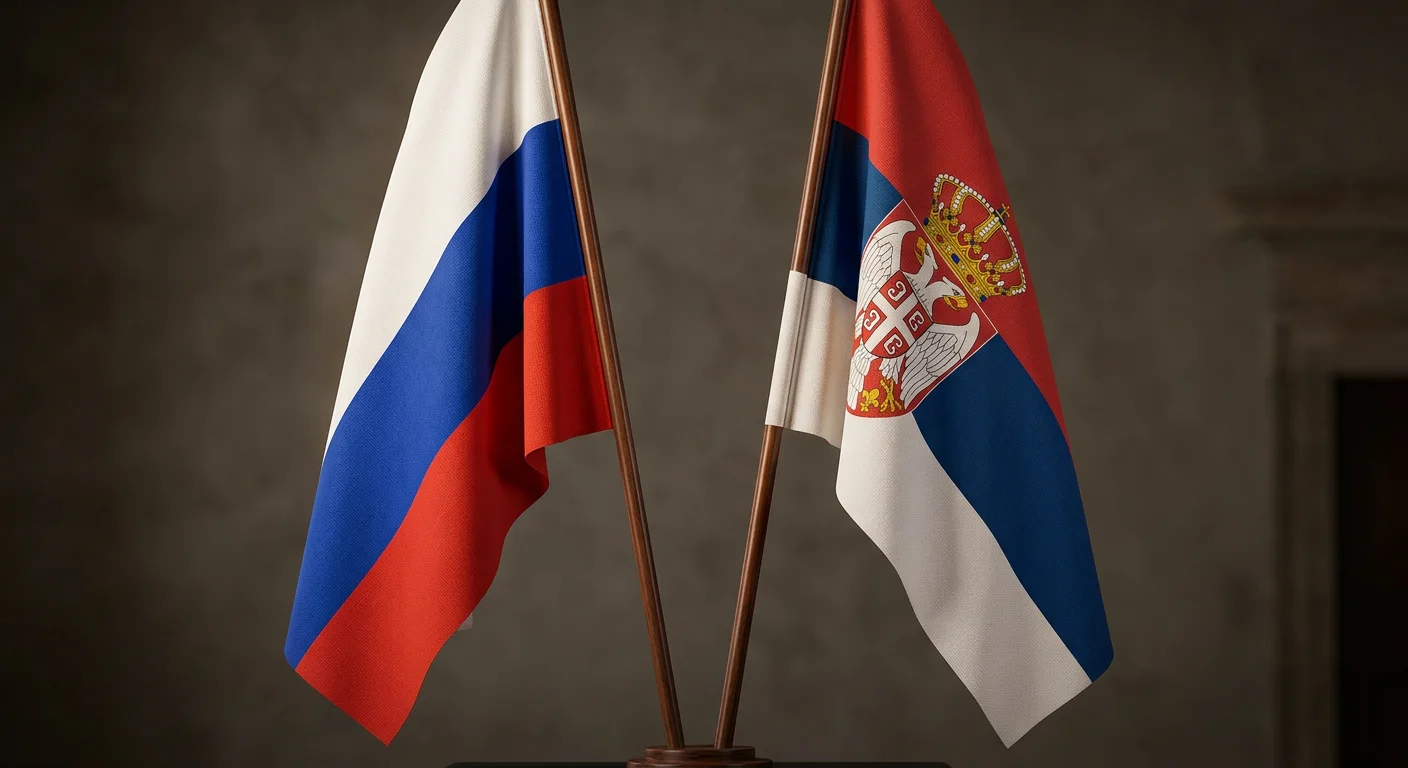
Here's the short version: two flags walked into history. Both grabbed the same three colors from the same Pan-Slavic movement. Then they went their separate ways — one added a royal coat of arms, one stayed plain. That's the whole story.
But zoom out, and it's kind of remarkable. Nineteenth-century Slavic intellectuals built a color system meant to unite an entire civilization. And 200 years later, people are still Googling "wait, are these the same flag?" at 2am. That idea stuck .
So next time you spot a red, white, and blue tricolor and feel that flicker of confusion — that's not a mistake. You're catching centuries of shared history packed into three horizontal stripes.
And if that history has you thinking about flying one of these flags — for an event, a team, or just because flags are cool — RunCustomFlag.com can bring any design to life, stripe by stripe.
Video Guide
Related Articles