Every Philippine flag tells a story — but what is it made of? Behind the bold blue and red fields, the radiant sun, and the three stars lies a precise manufacturing process governed by strict national law. The rules are clear, and the details matter.
You might be a student researching national symbols. You could be a school administrator ordering classroom flags. Or you're a procurement officer ensuring full compliance with RA 8491. No matter your role, knowing how the Philippine flag is made is more important than most people think.
The fabric chosen, the printing method used, the exact shade of blue — the law regulates every detail. Cut corners, and it shows.
This guide covers the full picture:
Official design specifications
Approved materials
The step-by-step flag production process
These are what separate a flag made the right way from one that just looks close enough.
1:2
Official Ratio
4
Official Colors
8
Sun Rays
98%
Color Accuracy
What the Philippine Flag Looks Like: Official Design Specifications
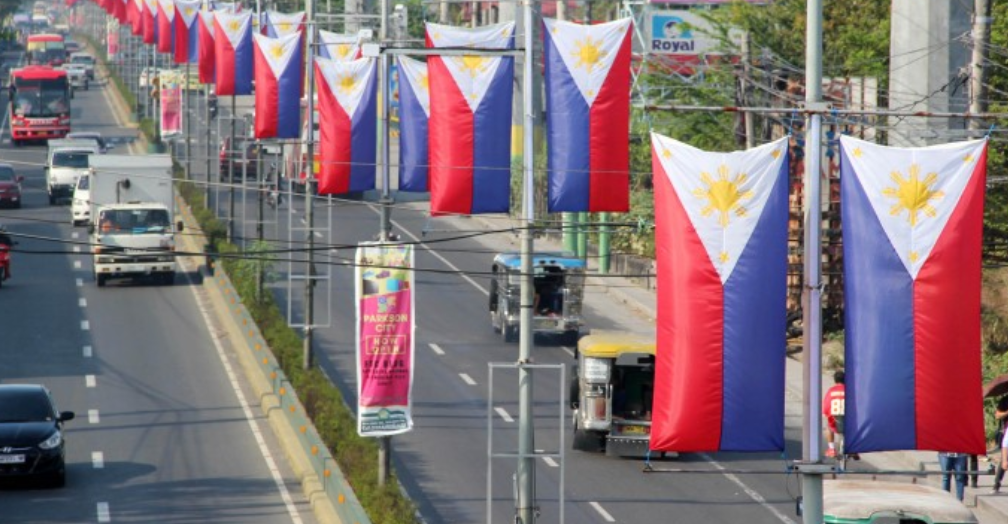
The Philippine flag is not just designed — it is calculated . Every measurement, every angle, every shade of color follows a framework so precise that deviation isn't a matter of taste. It's a matter of law.
The foundation goes back to Executive Order No. 23 , signed on March 25, 1936, by President Manuel L. Quezon. The goal was clear: eliminate inconsistency. The order required strict compliance with flag specifications across all civil and military branches of government. A flag that looks "close enough" isn't close enough at all.
Here's what the official design requires:
Shape and Proportion
- Aspect ratio of 1:2 — the length is always twice the width
- An equilateral white triangle at the hoist, with each side equal to the flag's full width
Color — Down to the Cable Number
Element | Pantone | RGB |
|---|---|---|
Royal Blue | 286C | 0–56–168 |
Crimson Red | 193C | 206–17–38 |
Golden Yellow | 122C | 252–209–22 |
These aren't rough hues. They are fixed, specified values — no guessing, no approximation.
The Sun and Its Eight Rays
The golden sun sits centered in the white triangle. Its diameter measures one-fifth of the flag's full width. Eight rays extend outward. Each ray represents one of the provinces that rose during the 1896 Revolution. Each ray also contains one major beam flanked by two minor beams. Precise mathematical ratios govern every part of this structure.
The Three Stars
One star represents each island group: Luzon, Visayas, and Mindanao. Each star has a single point aimed toward the nearest corner of the triangle. They aren't placed at random — each one points with purpose, like an arrow marking direction.
This level of detail exists for a reason. You can spot an incorrect flag the moment you know what the real one looks like. The specs make that possible.
Philippine Flag Materials: What Fabrics Are Used and Why It Matters
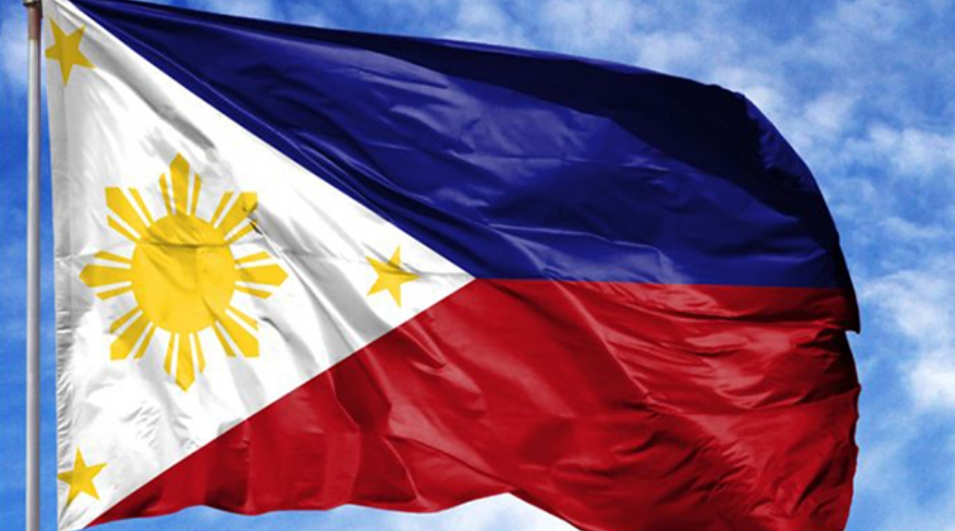
Fabric is the first decision — and it shapes every decision after.
Pick the wrong material, and the flag fades by summer. Pick the right one, and it flies through monsoon season without losing a thread of color. This is a national symbol. That difference matters.
Philippine flags are made from three materials. Each one serves a distinct purpose.
Nylon: The Outdoor Standard
200-denier nylon is the go-to fabric for flags that live outside. It's lightweight, fast-drying, and built with UV protection that fights color fade over time. Ink soaks deep into the weave during printing. You get vivid, lasting color even after long exposure to sun and rain.
Nylon covers the full range of standard outdoor sizes, from 2'×3' up to 5'×8'. Flag going on a flagpole? Nylon is almost always the right call.
Polyester: The Versatile Middle Ground
Knitted trilobal polyester at 135gsm sits between nylon and cotton. It holds color well and stands up in both indoor and outdoor environments. Organizations that need one flag to work across multiple settings will find polyester a solid fit — no trade-offs required.
Cotton: For Ceremony Only
Cotton is softer, slower to dry, and less durable than either synthetic option. Indoors, though, it prints with rich, sharp color. For ceremonial use, it carries a weight and feel that synthetics don't quite match. The DFA sources cotton flags at around ₱950 per piece in the standard 3×6 ft size, finished with decorative fringes.
A Quick Comparison
Material | Best For | Durability | Price Range |
|---|---|---|---|
Nylon (200 denier) | Outdoor / flagpole | ★★★ | Mid–High |
Polyester (135gsm) | Indoor + outdoor | ★★★ | Mid |
Cotton (with fringes) | Ceremonial / indoor | ★★ | ~₱950 |
All three materials support the official Pantone values — Blue 286C, Red 193C, and Gold 122C — as required by RA 8491.
One more detail worth checking: quality flags include a 9 oz. white poly sateen canvas header along the hoist edge, reinforced with brass grommets (two per flag up to 6'×10'). It's a small addition. But it stops tearing at the mounting point — the exact spot where cheap flags fail first.
The 4 Official Colors of the Philippine Flag: Exact Specifications
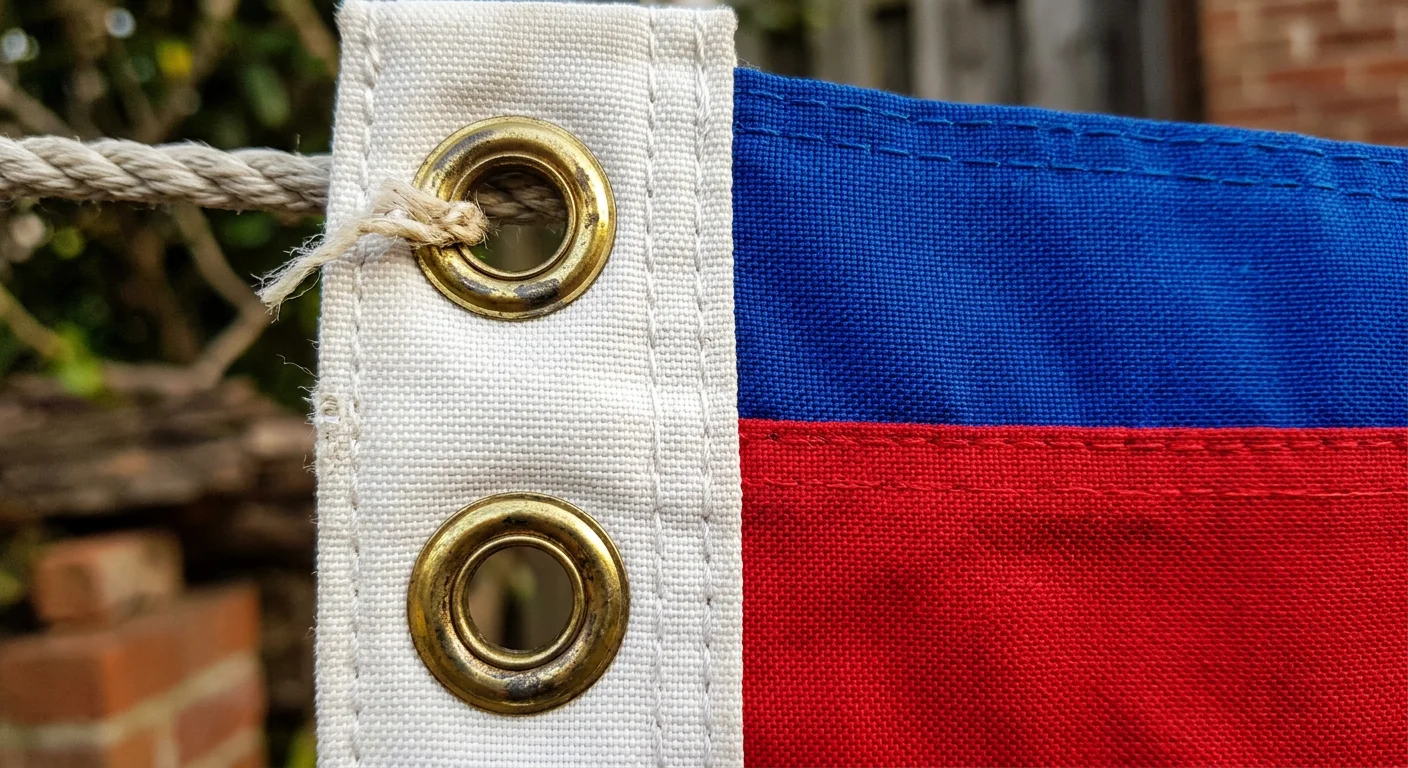
Four colors. That's all it takes — and getting even one of them wrong disqualifies a flag from government use.
Under RA 8491 and the NHI Heraldry Standards, each color has an official Cable Number. These numbers are not suggestions. They are the legal definition of the Philippine flag's colors.
Color | Cable No. | Pantone | HEX |
|---|---|---|---|
Royal Blue | 80173 | 286C | #0038A8 |
Scarlet Red | 80108 | 193C | #CE1126 |
Golden Yellow | 80068 | 122C | #FCD116 |
Pure White | 80001 | — | #FFFFFF |
The consequences are real. In FY2022 procurement reviews, flags that failed the Cable No. specifications for blue, red, or yellow were rejected on the spot. NHI enforcement is strict: a hue shift above 10% voids certification. Over the years, 5–15% of procurement bids have been disqualified because of CMYK drift alone.
Why does printing method matter so much here?
Digital printing reaches 95–98% color accuracy on calibrated screens — solid, but not perfect.
Fabric dyeing holds 85–92% accuracy. After 1,000 hours of UV exposure, blue can shift by +5ΔE and red by +8ΔE.
CMYK printing carries a 5–12% deviation risk against the Pantone standard.
Certified Philippine Flag manufacturers use spectrophotometers to close this gap. They hit tolerances below 1ΔE. Amateur production, by contrast, lands at 10–20% error — the exact range that triggers NHI rejection.
The flag's colors are not just visual. You can measure them. You can verify them.
How the Philippine Flag Is Made: Step-by-Step Manufacturing Process
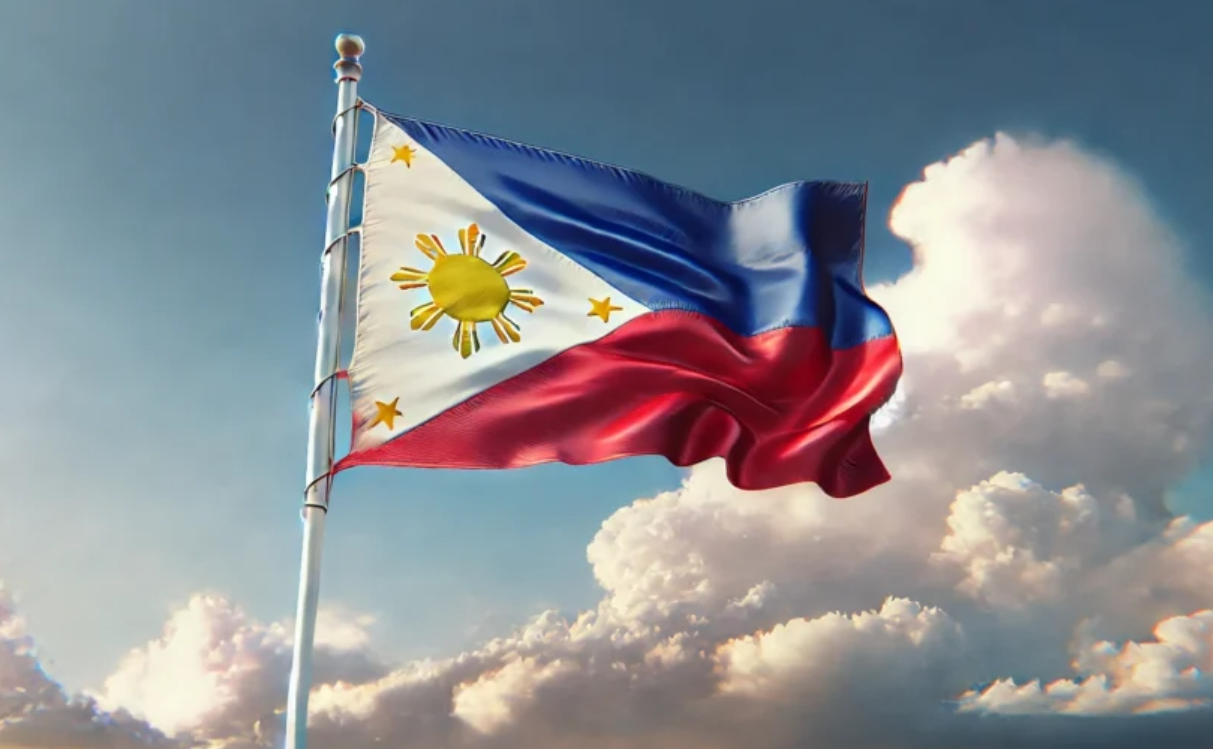
Fabric gets cut. Thread gets pulled. A symbol gets built — one precise stitch and seam at a time.
Making the Philippine flag isn't a craft project. It's a manufacturing sequence. Every step either meets the standard or it doesn't. Here's how a compliant flag goes from raw material to finished product.
Step 1: Pattern Layout and Fabric Cutting
Everything starts with a 1:2 ratio — width to length, always. No exceptions.
The blue and red horizontal panels get cut to exact proportions. The equilateral white triangle at the hoist has each side equal to the flag's full width. Templates follow the specifications set by Executive Order No. 23 (1936) . Nothing gets estimated by eye.
Cut precision matters here. A triangle even a fraction off will throw the sun and star placement into error. You can't fix that downstream.
Step 2: Assembly and Seaming
Panels join along the horizontal seams — blue on top in peacetime, red on top in wartime. The triangle attaches at the hoist edge. Double-fold hems (0.5–1cm) run along all free edges to stop fraying.
Production targets 8–12 stitches per inch for structural strength. Those seams need to hold through wind, rain, and repeated mounting cycles — not just look good fresh off the table.
Step 3: Applying the Sun and Stars
This is where the manufacturing method splits.
Embroidery uses gold-yellow polyester thread at 0.3–0.5mm diameter. Each of the eight rays gets built with one major beam and two minor beams on each side — satin stitch for the rays, French knots for the sun's center. The three five-pointed stars each measure around 2cm in diameter. It's slow work. It's also the most durable finish you can get.
Dye sublimation and screen printing handle the same details through digital output. Ray edges need to stay within 0.5mm of spec, using vector files at 300 DPI minimum. The sun diameter is fixed at one-fifth of the flag's total width — no adjustments.
Method | Best For | Relative Cost |
|---|---|---|
Silk Screen Printing | Large runs, outdoor flags | Low |
Dye Sublimation | Custom/small runs, indoor | Medium |
Embroidery | Ceremonial, premium flags | High |
Step 4: Canvas Header, Grommets, and Final Reinforcement
The hoist edge gets a 5–10cm canvas strip , double-stitched at 10 stitches per inch. Brass grommets come next — four to six of them, spaced 20cm apart, crimped with a 2-ton press.
This part gets overlooked often. It shouldn't. Grommet failure alone can cut a flag's outdoor lifespan by 50% . The corners also get extra reinforcement to stop tears from spreading — that's where undertreated flags start breaking down first.
UV-resistant nylon thread throughout adds one more layer of protection. Under normal conditions, it pushes outdoor durability to 5–10 years .
Each step feeds into the next. Poor cutting throws off embroidery placement. Skipping grommet reinforcement means the flag won't last a full season on a pole. A well-made Philippine flag isn't the result of one good call — it's the result of all of them, done in the right order.
Philippine Flag Manufacturing Standards Under RA 8491
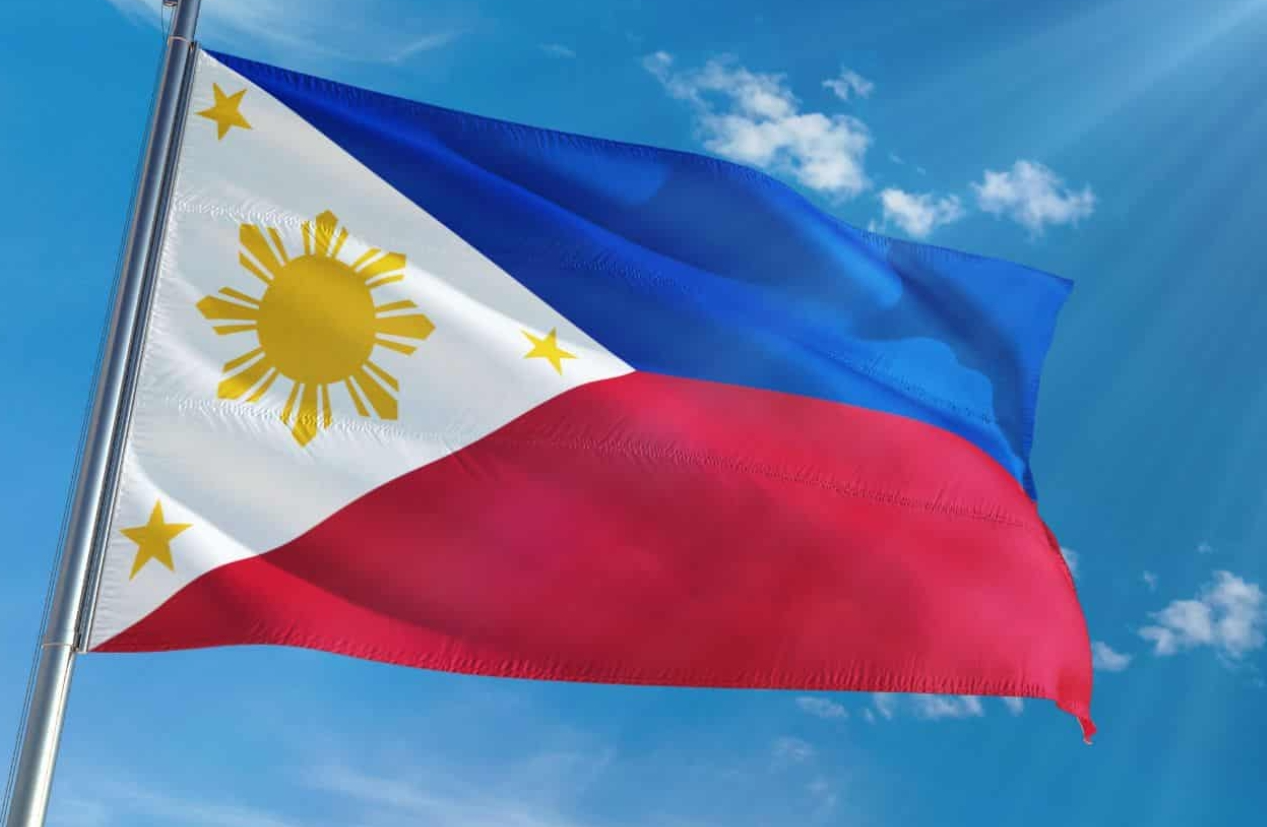
Republic Act 8491 — the Flag and Heraldic Code of the Philippines — leaves no room for guesswork. Sections 27 through 29 spell out what a legal flag looks like, what it's made from, and who decides if it qualifies.
The proportions are fixed: width to length at a 1:2 ratio . Each side of the white triangle must equal the flag's full width. Colors must match the official Cable Numbers — Blue 80173, White 80001, Red 80108, Golden Yellow 80068 — not close approximations. The design even uses heraldic terms. "Paleways of two pieces, azure and gules" describes the blue and red fields. "Chief argent" refers to the white triangle. The center features an "ovoid argent sun with eight minor rays."
Who Enforces This
The National Historical Institute (NHI) Heraldry and Display Section checks every flag sample submitted for government use. Here's what most people don't expect: the requisitioning office — not the supplier — must submit the sample. The NHI stamps approval or disapproval on the canvas reinforcement. No stamp means no delivery.
Material quality falls under a separate body. DOST-ITDI or PTRI certifies fabric quality across all four colors plus the canvas header. Manufacturers submit samples each year. Lab results go straight to NHI. Two layers of checks must both pass before a flag reaches any government building.
What Manufacturers Must Do
Any Philippine Flag manufacturer supplying government entities needs annual NHI accreditation. Each year, you renew it with updated PTRI/ITDI test reports, a current business license, and a full company profile. Accreditation does not carry over from the previous year. The clock resets every twelve months.
For procurement officers, the compliance checklist breaks down like this:
Confirm the supplier holds current NHI accreditation
Submit a flag sample to NHI through the requisitioning office
Obtain PTRI/ITDI material certification for fabrics and canvas
Verify proportions (1:2:1) and Cable Number color matches
Include a Certificate of Approval (COA) with delivery for inspection
Skipping any step carries real consequences. Non-compliant flags can lead to fines between PHP 5,000 and PHP 20,000 , or imprisonment from six months to one year. That's not a minor footnote — it's the kind of detail that shapes a procurement decision.
20K
Max Fine (PHP)
15%
Bids Rejected
10%
Max Hue Shift
Quality Control: How to Identify a Properly Made Philippine Flag
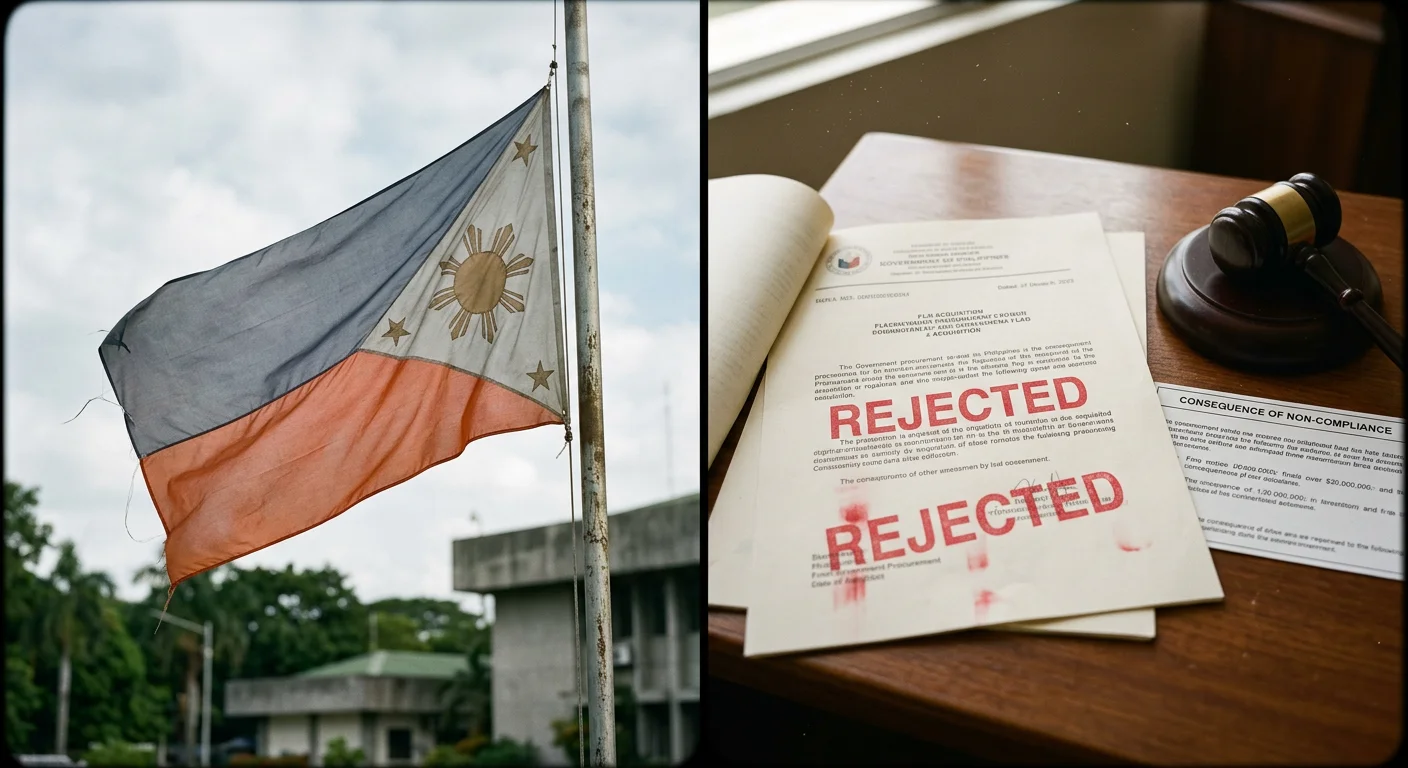
A poorly made flag doesn't announce itself. It just hangs there, slightly off — and most people never notice until someone who knows points it out.
Here's what to look for.
Start with the proportions. The length must be twice the width. No eyeballing — this is a measurable fact. The official government standard sets the length at 1,828.8mm (6 feet) ±3mm and the width at 914.4mm . The equilateral white triangle at the hoist should have each side equal to the full width of the flag. A pinched or stretched triangle means something was cut wrong.
Then check the sun. Its diameter should equal one-fifth of the flag's width. Eight rays extend outward at equal 22.5° intervals. Two run along the horizontal axis. Two run along the vertical. The rest fill in the gaps between them, equally spaced. Each ray carries one major beam with two minor beams on either side. Major rays are double the thickness of minor ones. These are not decorative choices — they are hard specifications.
The stars have rules too. Each five-pointed star has a circumscribing circle that measures 5/9 of the sun's diameter. Each star sits D/2 from its nearest corner. One point of the star aims directly toward that corner's vertex.
Check the colors against Cable Numbers — Blue 80173, Red 80108, Gold 80068, White 80001. A visible color shift points to non-compliant dye or a printing setup that wasn't calibrated correctly.
Flags that pass all four checks are the ones built to last.
Pro Tip: For bulk Philippine flag orders over 100 pieces, contact our team for special government and institutional pricing with full NHI compliance documentation.
Philippine Flag Sizes: Standard Dimensions for Different Use Cases
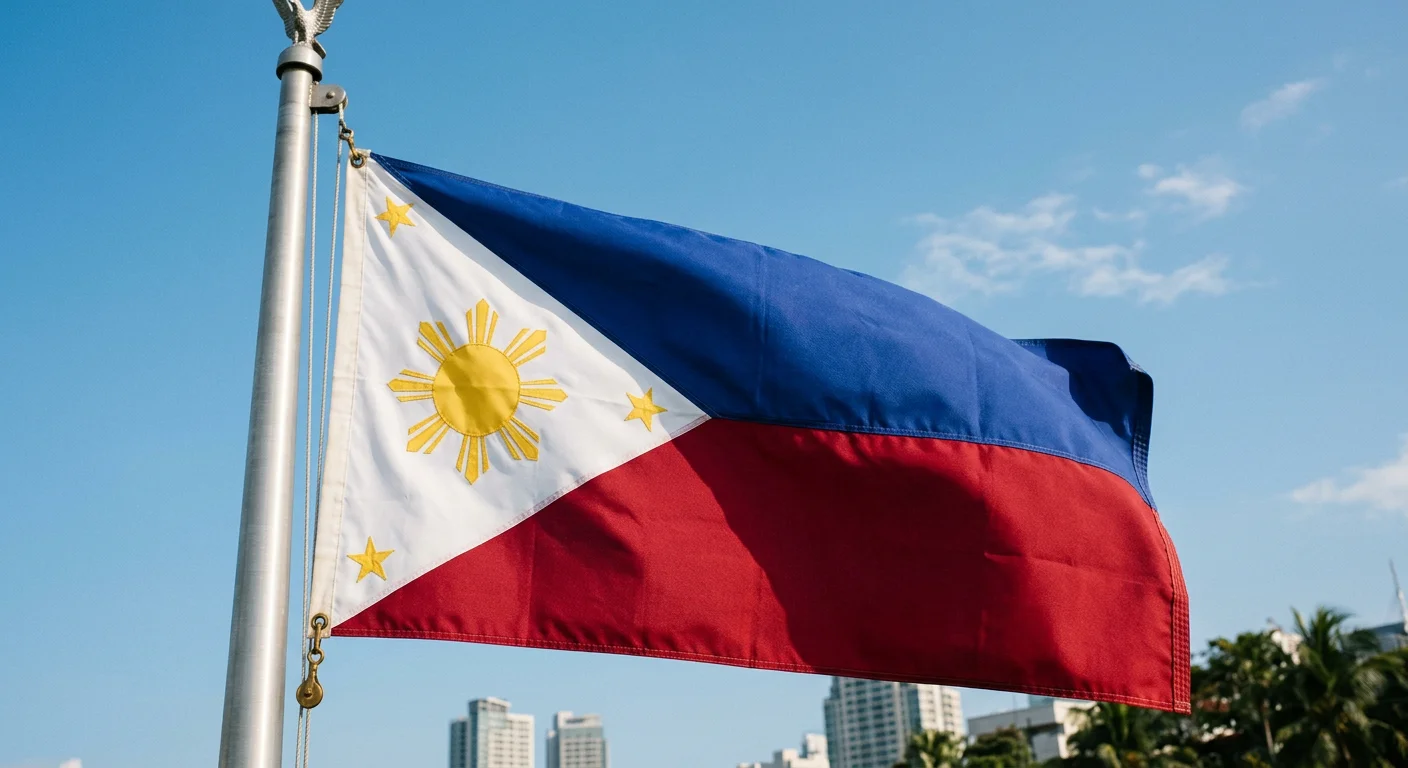
Size isn't a preference — it's a specification.
Every legitimate Philippine flag follows a strict 1:2 aspect ratio . The length is twice the width. That ratio isn't optional. It applies to a 2×3 ft desk flag and a 6×10 ft banner flying above a government building. Scale changes. The proportion never does.
Here's how standard sizes break down by setting:
Size | Dimensions | Best For |
|---|---|---|
Small indoor | 2×3 ft or smaller | Desk displays, ceremonies |
Medium outdoor | 3×5 ft, 4×6 ft | Schools, vehicles, events |
Large outdoor | 5×8 ft, 6×10 ft | Government buildings, plazas |
Ceremonial | Any (silk preferred) | Formal indoor rites, fringed display |
The 3×5 ft flag is the most popular choice. It travels well, fits standard poles, and works indoors and out. For vehicles, 2×3 ft is the practical pick. For prominent outdoor display, go with 5×8 ft or 6×10 ft.
Custom Philippine Flag dimensions work fine for events or corporate exhibits — a 6×12 ft banner, for instance. The only rule: the 1:2 ratio must hold. That single rule keeps every flag, at every scale, clearly correct.
Custom Philippine Flags: What to Look for When Ordering from a Manufacturer
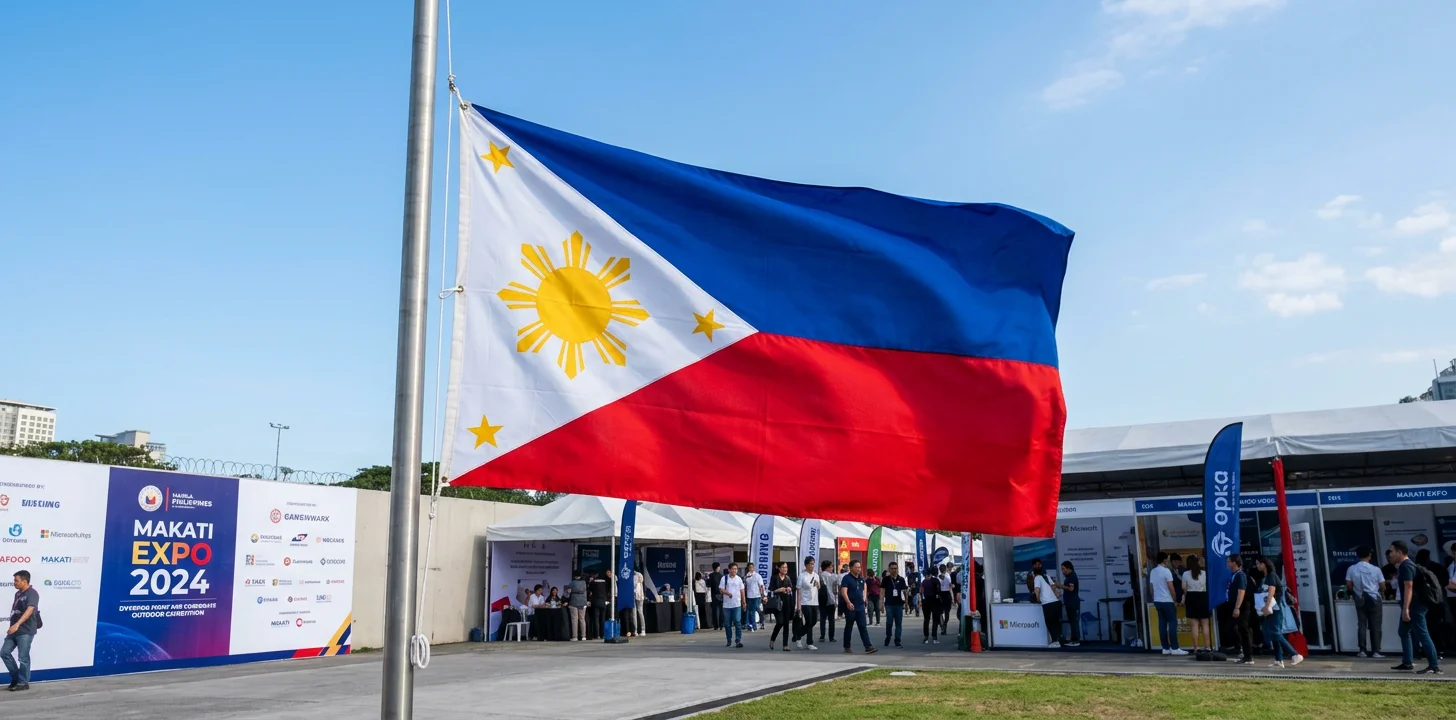
Ordering a custom Philippine flag sounds simple — until the wrong one shows up at your door.
Most Philippine Flag manufacturers will tell you their flags are compliant. Few will hand you the paperwork to back that up. Knowing what to ask is what separates a flag that passes NHI inspection from one that gets turned away.
Here's what matters before you place an order:
Documentation first. Ask for separate NIST laboratory reports for each color — blue, red, yellow, and white. Each color needs its own report. One combined report won't cut it. Lab fees are the supplier's cost to cover, not yours.
Proportions on paper. Get them to confirm the 1:2 ratio in writing. This should include the sun diameter (1/5 of flag width) and the star circumscribing circle (5/9 D). They hesitate? That tells you everything.
Sample before production. No exceptions. The Philippine Heraldry Committee stamps approval on the canvas reinforcement itself. Your supplier should know this step is coming. A good Philippine Flag supplier won't be caught off guard by it.
For silk flags , confirm knotted yellow silk fringe on three edges, cut to D/5 width. It's a small detail. But it's the difference between a ceremonial flag and something that just looks the part.
One last question worth asking: what does their quality control process look like — stitch by stitch?
Conclusion
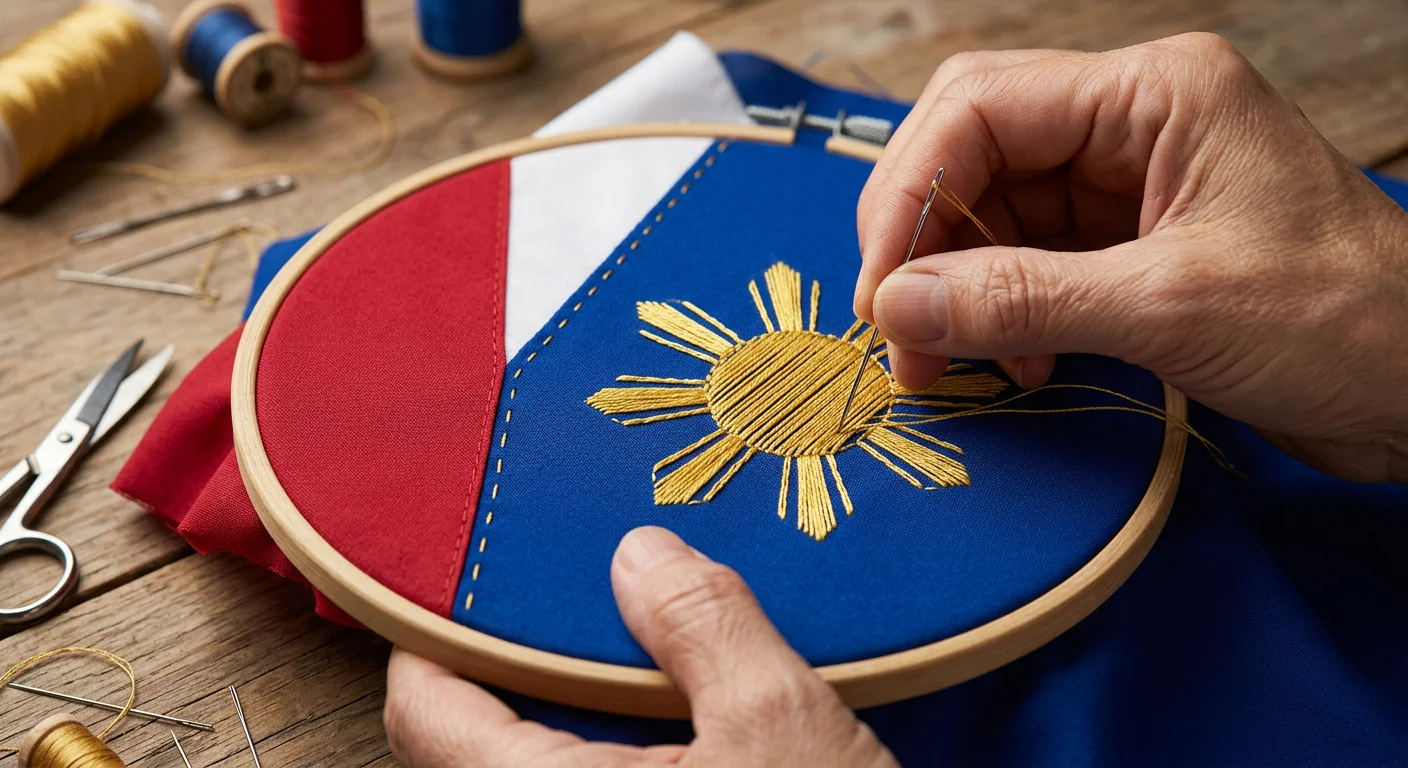
Every stitch, every shade of blue and red, every precise ratio of width to length — the Philippine flag isn't just assembled. It's honored into existence.
A student tracing the flag's symbolism back to Kawit sees it one way. A school administrator sourcing compliant flags under RA 8491 sees it another. A procurement officer who needs to get it right has a different lens entirely. But learning how the Philippine flag is made changes how all of them see it. The fabric choice matters. The printing method matters. The color accuracy matters. These aren't bureaucratic details — they're acts of respect.
Those details carry just as much weight at the ordering stage as they do on paper.
At RunCustomFlag , We ensure that every Philippine flag we customize and manufacture meets official specifications — correct dimensions, verified colors, and durable materials ready for real-world use. Need custom Philippine flags that honor both the standard and the story behind it? Request your free quote today .
Some things are worth doing right. This is one of them.