40 feet tall × 80 feet wide (Flag Dimensions)
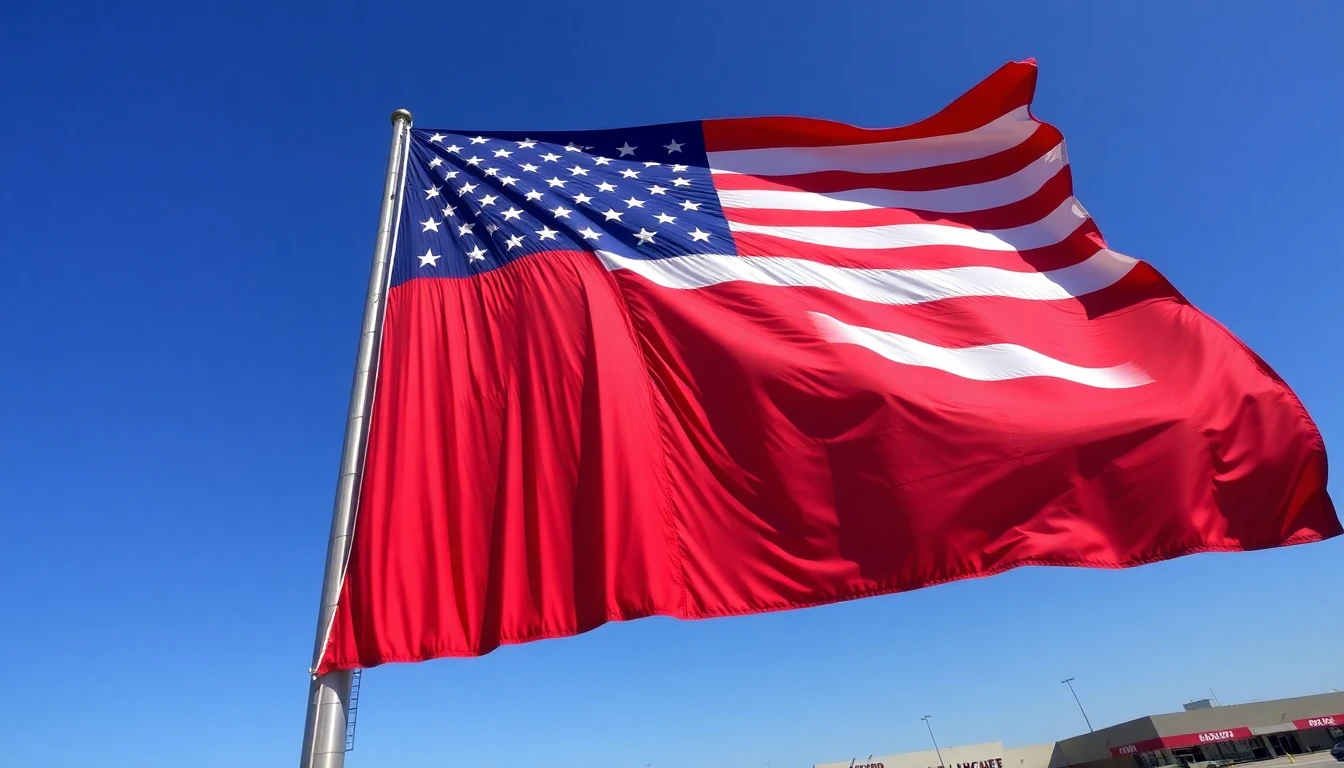
The Gander Outdoors flag measures 40 feet tall by 80 feet wide. That creates 3,200 square feet of star-spangled fabric. These flags dominate the skyline. Mounted on 130-foot poles, they tower over everything around them. They stand as commercial monuments to American symbolism—and rule-breaking.
Think of an NBA basketball court (4,700 square feet). The Gander flag covers about two-thirds of that space. But it flutters upright instead of lying flat. Drivers passing by crane their necks to see it. Some admire it. Others just stare in confusion. One online comparison called it "Ant-Man in big mode"—too big to miss, existing where normal rules don't apply.
Multi-Location Rollout Strategy
Gander Outdoors didn't use this flag design just once. They put identical 40×80-foot installations at multiple stores across the Eastern United States. Patriotic branding became their corporate signature. The Hamburg, Pennsylvania location unveiled theirs at a ceremony with first responders. The flag became a community tribute, not just advertising. Similar flags went up in Johnstown, York, and Statesville, North Carolina. The Statesville location sparked a major legal fight.
The Statesville Collision Course
Statesville's city code capped flags at 8×12 feet. That size works for storefronts. For Gander's vision? Totally inadequate. The retailer applied for an exception in 2015. The city said no. They cited lack of hardship. By 2018-2019, officials faced growing pressure. They tried a compromise by raising the limit to 25×40 feet. Gander's response? They installed the 40×80-foot flag anyway. It exceeded the new limit by 3.2 times in width and double in height.
City fines piled up past $11,000. Marcus Lemonis, Camping World's outspoken CEO who acquired Gander Outdoors, refused to take it down. His stance was clear: the flag represented free speech, not a code violation. Supporters flooded city offices with up to 50 emails daily. Phone lines jammed so badly that emergency service calls couldn't get through. Zoning enforcement turned into national culture war drama.
Engineering Demands at This Scale
Supporting 3,200 square feet of fabric at 130-foot elevation takes special engineering. Search results don't give us all the details. The pole structure has to handle high-wind stress. Specific wind ratings aren't disclosed. The flag must be visible from Interstate 78 (per Hamburg location requirements). That sets minimum size standards for highway-speed visibility. Weight spread across such large fabric, plus the force on the pole during wind gusts, points to custom anchoring and materials. Standard flagpole specs won't cut it.
What Remains Unknown
Coverage of the controversy has been extensive. But technical specs stay vague. The exact fabric material—polyester versus nylon—isn't mentioned anywhere. Flag weight, maintenance cycles, replacement schedules, and fabrication costs are missing from public records. Lighting specs for nighttime visibility are also undocumented. Such large installations likely need lighting. These gaps leave the real work of maintaining a flag this size to guesswork. The symbolic size gets measured and debated constantly.
130 feet tall (Flagpole Height)
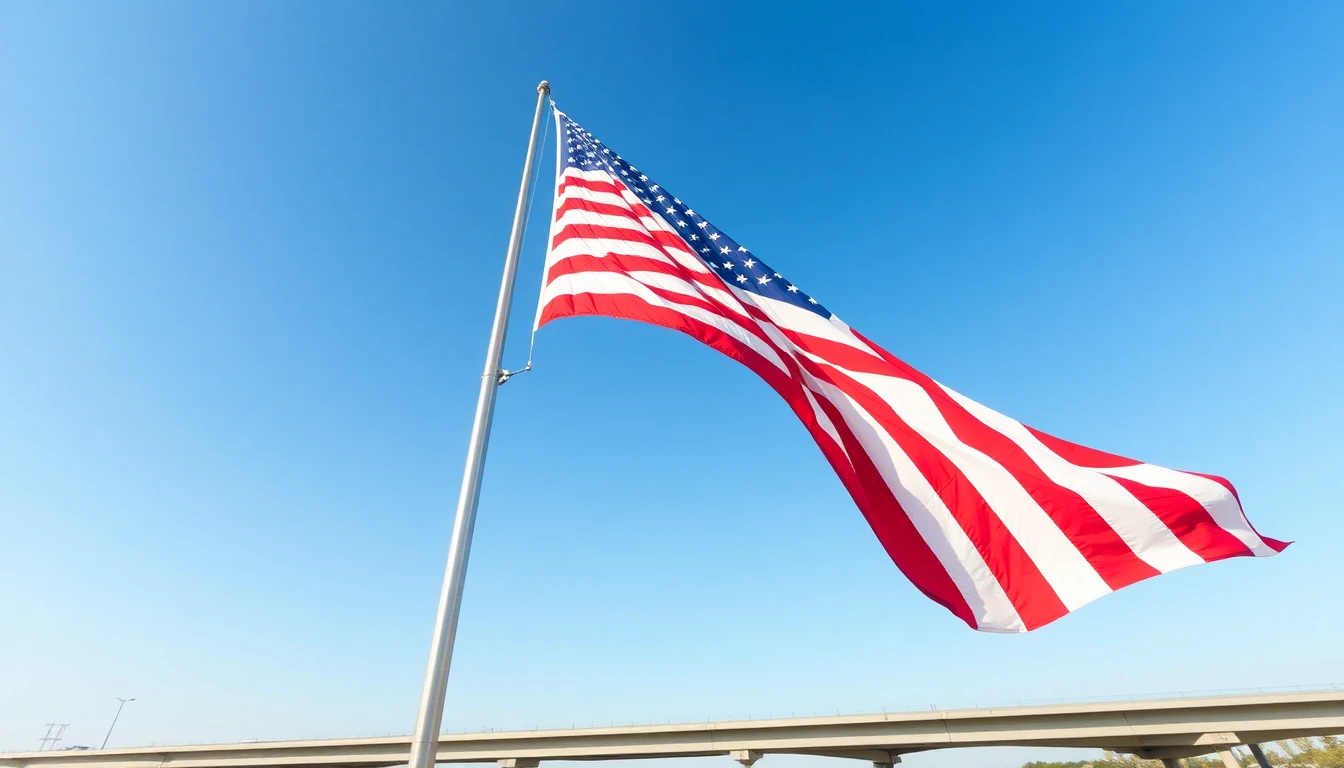
The pole shoots up 130 feet into the air. That's not a suggestion. It's a planned statement. At the Tonawanda location, this steel tower stands 3.25 times taller than the flag's 40-foot height and 1.6 times the flag's 80-foot width. Engineers call this a "tall, narrow proportional design." Marketing teams call it unmissable. The specific ratio creates maximum highway visibility. Drivers on interstate corridors see it from miles away. That's the whole point.
Why 130 Feet Matters
This isn't residential flagpole territory. Standard commercial installations max out around 40-60 feet. The Gander Outdoors pole more than doubles that range. It pushes into industrial-scale setup. The height sits below the 200-foot FAA registration threshold for isolated structures. But it towers over local zoning rules. Statesville's original limit was 8×12 feet total. Even after compromise, the city raised it to just 25×40 feet. A 130-foot pole supporting a 40×80-foot flag makes those numbers look tiny.
Engineering Reality Check
Mounting 3,200 square feet of fabric at this height needs serious foundation work. Wind loads at 130 feet exceed ground-level numbers by a lot. The base requires deep concrete footings built for local soil conditions. Guy-wire systems or monopole construction are required. You need professional-grade equipment—aerial lifts, climbing gear, special training—for basic upkeep. Changing a flag at ground level takes minutes. At 130 feet? It's a scheduled operation with safety steps.
The Pattern Across Locations
Gander didn't build one 130-foot pole and call it unique. The company used this height standard across locations. Tonawanda, York, Statesville—all used similar pole heights supporting identical 40×80-foot flags. Marcus Lemonis built brand consistency. The 100-150 foot pole range became the sweet spot. Tall enough for interstate visibility. Short enough to avoid FAA issues. The company appears to have used pre-built pole systems that fit the massive flag size. This wasn't a test. It was a planned corporate rollout wrapped in patriotism.
3 feet wide (Stripe Width)

Each stripe runs 3 feet wide across the flag's full 80-foot horizontal span. That's not an estimate. It's a design requirement. The American flag code doesn't specify exact stripe width for custom flags. But the ratio stays constant. The thirteen stripes represent the original colonies. On Gander's oversized installation, those stripes stack to 39 feet vertical. The math checks out: 13 stripes × 3 feet each = 39 feet. Add the blue canton field at the top. You get the flag's total 40-foot height.
The Precision Behind Patriotic Sizing
Three feet sounds random. But look at the manufacturing challenge. Industrial flag makers can't just scale up residential designs. Fabric panels get sewn together in precise sections. Each 3-foot stripe represents a single continuous piece of material. This stretches across the 80-foot width. Seams between stripes must hold under severe wind stress. A rip in one stripe doesn't damage the others. Construction follows proper reinforced stitching standards. The width also affects visual clarity. From highway distance, stripes thinner than 3 feet would blur together. Thicker stripes would reduce the total count. This breaks the design standard.
Why This Detail Matters for Code Compliance
Statesville's zoning battles focused on overall flag dimensions. But stripe width played a role in the settlement. The city revised ordinances to 25×40 feet in 2018. They assumed Gander would comply. The installed flag doubled that limit. Precise measurements mattered during legal talks. Gander's attorneys presented fabrication specs. These showed the 3-foot stripe standard as necessary for a flag this big. You can't make a recognizable 40×80-foot American flag with narrow stripes. The proportions don't work. That technical argument helped, combined with free speech claims. The city moved toward the October 2019 settlement. The final ordinance allowed what Gander installed: a 40×80-foot flag with scaled 3-foot stripes flying on a 130-foot pole.
Interstate 77, Statesville, North Carolina Location
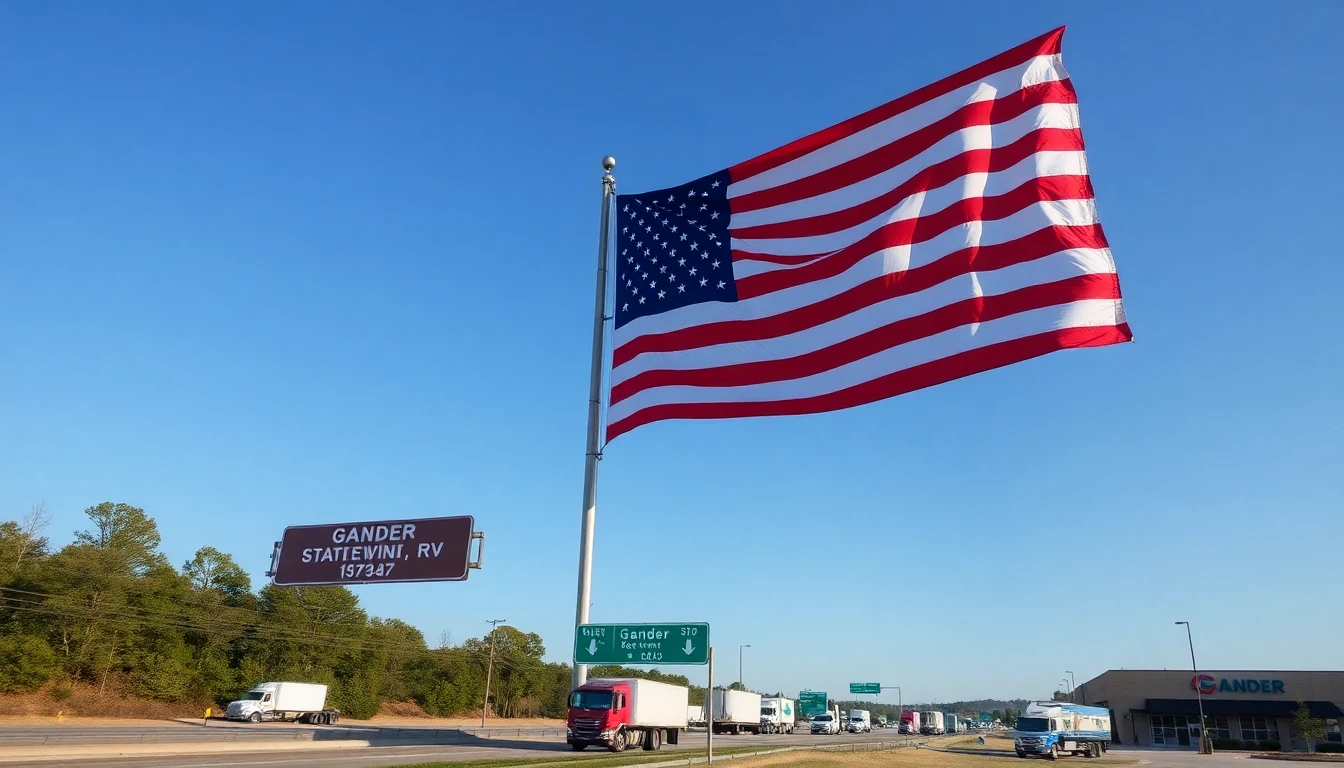
Statesville sits along Interstate 77 in North Carolina. The town has 27,000 people. Gander RV dealership picked this spot on purpose. The highway runs steady traffic between Virginia and South Carolina. Commercial trucks and tourists pass through here all day. A massive flag flies here. Thousands of drivers see it every day. The 130-foot flagpole rises above trees, buildings, and power lines. From the highway, it owns the skyline. You can't miss it.
The dealership put up the flag in July 2018. City officials saw it right away. The size broke local rules by huge margins. Statesville's updated 2018 law allowed flags up to 25 feet by 40 feet. Gander flew a 40-foot by 80-foot flag instead. That's 3.2 times wider and double the height of what's legal. The violation wasn't subtle. This was open defiance visible from miles away.
The Legal Battle Timeline
The city filed its lawsuit in October 2018. Just three months after the flag went up. Officials wanted the flag fixed or removed. They asked for $50 per day in fines starting in October. Marcus Lemonis didn't budge. His stance stayed the same: the flag meant free speech, not a code break. He told the public he'd pay any fines rather than take it down. The city's case looked solid on paper. The flag broke the size rules. But politics made things messy.
By May 2019, the formal dispute arrived. Statesville's small city staff hit a crisis. Emails poured in at 50 per day during busy times. The phone system crashed. Residents couldn't call about sewer backups and water main breaks. Basic services went unreported. The switchboard jammed with calls about a flag. Most emails and calls came from outside North Carolina. National media turned a local zoning issue into a culture war.
The Settlement That Changed Everything
October 2019 brought an end to it. The city settled. Gander paid $16,000 total for fines and court fees. That's about $49 per day over eleven months. Almost what the city wanted at first. But the real win wasn't money. Statesville changed its zoning law just for the district with the RV dealership. The new code allowed flags measuring 40 feet by 80 feet. The illegal flag became legal after the fact.
Why Statesville's Original Limits Existed
The 2018 law that set flag sizes to 25×40 feet had a purpose. City officials made it to stop oversized Confederate flag displays. North Carolina's history with Confederate symbols caused ongoing fights. Statesville tried to balance free speech with what the community wanted. They thought 25×40 feet was fair. Nobody expected a national retailer would put up something far bigger and challenge them. The American flag versus Confederate flag debate made things harder for city lawyers.
The Interstate 77 Advantage
Highway placement changed everything. Drivers going 65-70 mph need big visuals to see details. A 25×40-foot flag looks like basic highway signs. The 40×80-foot flag looks like a landmark. Marketing experts call this "forced brand awareness." You don't choose to see it. It makes you see it. The spot along I-77's commercial corridor gives the flag two jobs: patriotic symbol and dealership ad. Every driver links Gander with American values. That's worth far more than $16,000 in fines.
NBA Basketball Court Size Comparison
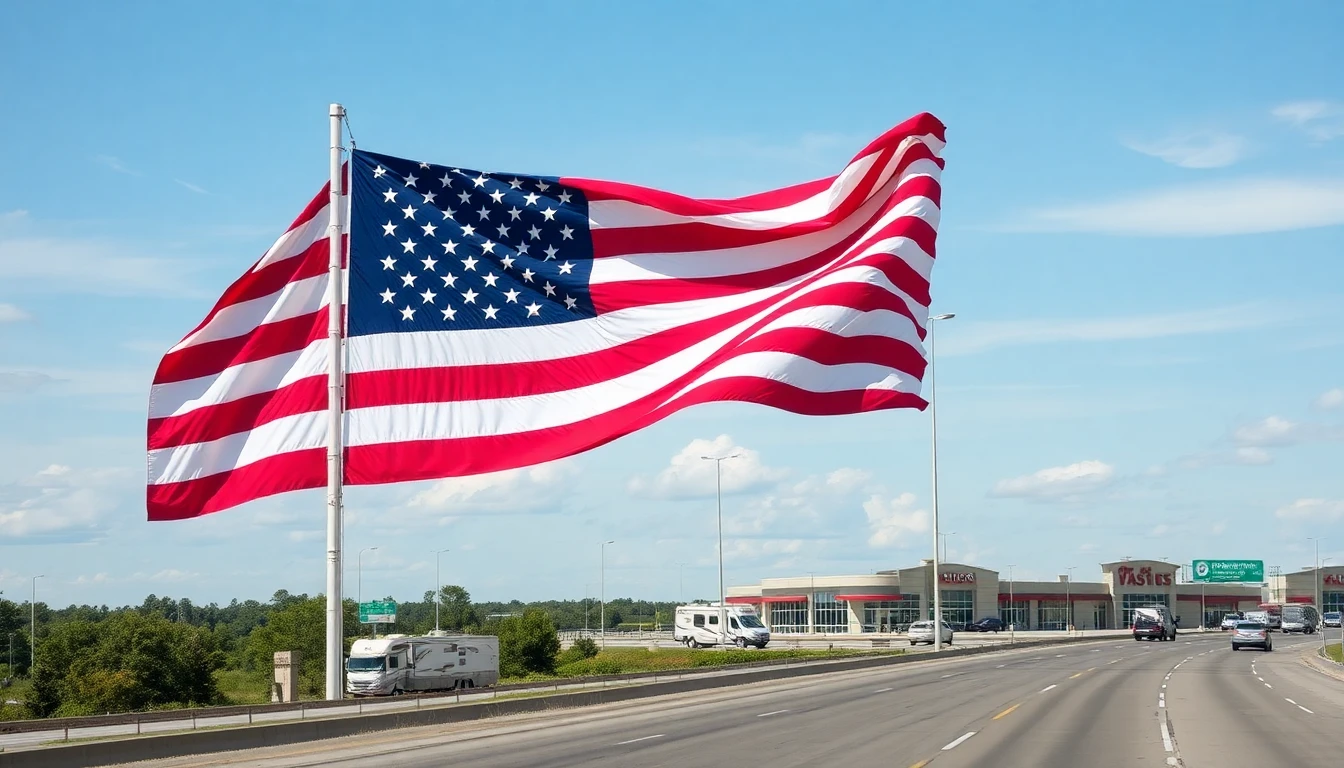
Picture an NBA basketball court standing on its end against the sky. That's the Gander Outdoors flag from the highway. The numbers tell the story: 3,200 square feet of American flag fabric versus 4,700 square feet of hardwood court. The flag captures 68% of that court's total area. Here's the key difference—basketball courts lie flat. This flag stands upright on a pole taller than most water towers.
The Vertical Advantage
An NBA court measures 94 feet long by 50 feet wide. Gander's flag runs 40 feet tall by 80 feet wide. Flip that court on its side. The flag would cover most of it from baseline to free-throw line. The vertical setup changes the visual impact completely. Drivers don't see a flat surface measured in square footage. They see a wall of stars and stripes rising 130 feet into the air. The psychological effect beats the math. A billboard showing a basketball court wouldn't create this reaction. The flag does it by breaking normal size rules.
Why This Comparison Works for Marketing
Camping World's promotional materials called the flag "almost the size of a basketball court." That's smart framing. Most Americans know what an NBA court looks like. LeBron James playing on one. March Madness buzzer-beaters. The visual reference clicks fast. Technical accuracy matters less than emotional connection. Nobody measures basketball courts in everyday life. But everyone recognizes the scale. The comparison turns abstract dimensions—40×80 feet—into something concrete and familiar.
The Fabrication Reality
Making a flag this size in Texas requires industrial equipment. Standard home flags measure 3×5 feet or 4×6 feet. Gander's version scales up by factors of 13-20 times in each dimension. You can't just use thicker thread and bigger fabric sheets. Each 3-foot stripe must stretch the full 80-foot width without sagging or tearing. Wind stress at 130-foot elevation beats anything a normal flag faces. The basketball court comparison helps buyers and city officials understand the engineering challenge. This isn't lawn decoration scaled up. It's building-grade textile work dressed as patriotism.