If you're an importer staring at a spreadsheet of flag suppliers and wondering which ones are real factories, which are middlemen, and whether it even makes sense to import directly — you're at the exact stage where most sourcing decisions go wrong. The flag supply chain looks simple from the outside: find a factory, place an order, wait for delivery. In practice, the distance between finding a supplier and building a reliable flag supply chain involves tariff calculations that change quarterly, quality standards that vary wildly between producers, and payment structures that can either protect you or leave you exposed.
This guide walks through the complete flag sourcing process from choosing your sourcing model through managing supplier relationships — built around the decisions that actually determine whether your import operation makes or loses money.
Where Flags Actually Come From: Mapping the Global Supply Chain
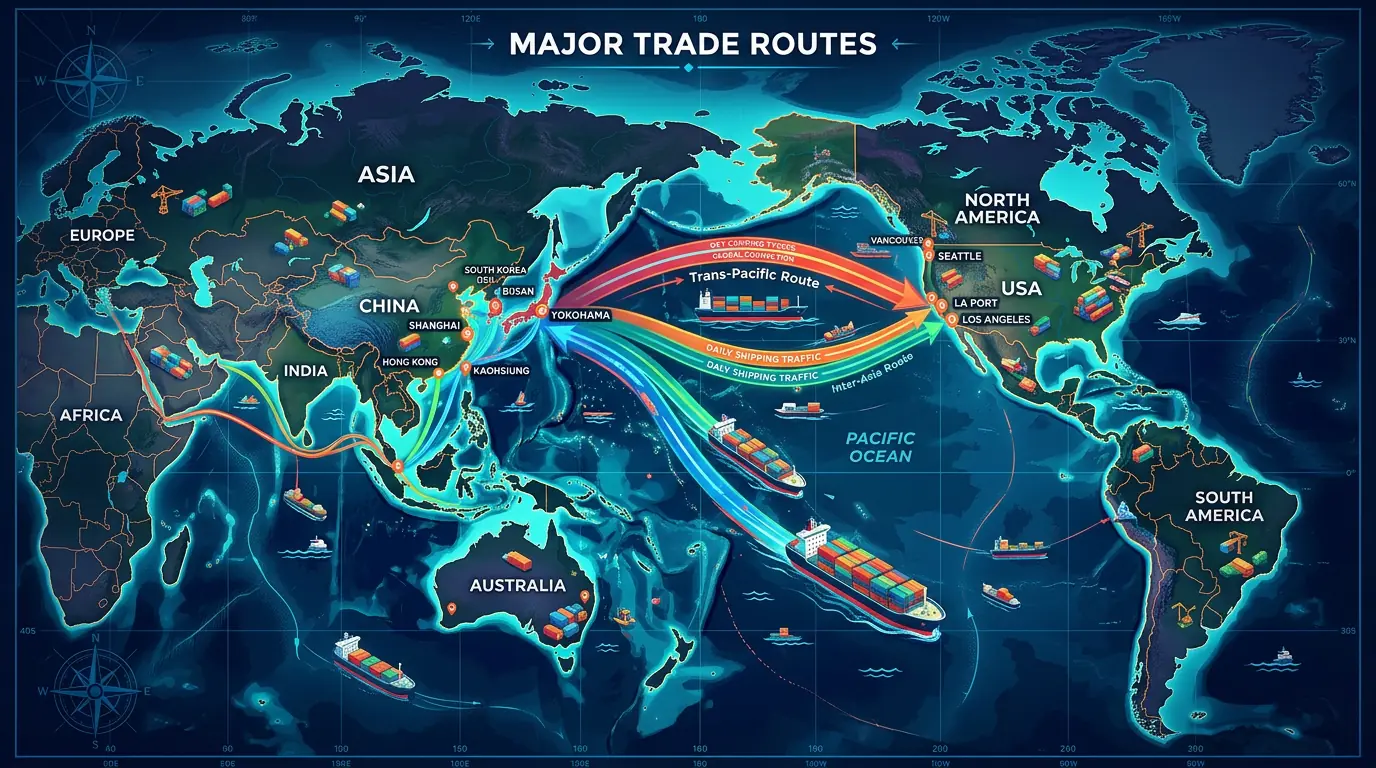
Most importers start their flag sourcing journey on Alibaba and assume they're buying from a factory. They're usually not. The flag supply chain has layers, and understanding them before you place your first order saves you from overpaying a middleman by 30-40%.
Key Insight
Understanding the difference between factories, trading companies, and middlemen can save you 30-40% on per-unit costs. Not all Alibaba "manufacturers" actually manufacture.
China dominates global flag production, with two regions worth knowing: Zhejiang's Shaoxing textile hub and Guangdong's Guangzhou cluster. Shaoxing is where the fabric mills sit — polyester and nylon roll off production lines at scale, and nearby flag factories benefit from short material supply chains. Guangdong has more factories listed on sourcing platforms, but a significant portion are trading companies repackaging Zhejiang-made product. The distinction matters because trading companies add margin without adding quality control.
On the US side, a few domestic manufacturers still operate at scale. Annin Flagmakers has been around since 1847 and runs multiple US plants, making them a realistic option if you need American-made product for government contracts or "Made in USA" marketing. Valley Forge and Eder Flag fill similar roles but at smaller volumes. Domestic pricing runs significantly higher — roughly three to five times the per-unit cost of Chinese imports — so the decision to source domestically usually isn't about cost savings. It's about compliance requirements or lead time pressure.
One thing that catches new importers off guard: the printing method affects your supply chain options more than the fabric does. Dye sublimation handles full-color custom work and dominates the market for promotional and custom flags. Screen printing still wins on cost for simple designs at high volume. If you're sourcing custom flags, sublimation capability is a non-negotiable filter for your supplier list.
Defining Your Sourcing Model: Direct Import vs. Domestic Wholesale vs. Hybrid
This is the decision that shapes everything else — your margins, your cash flow timing, your risk exposure, and how much operational overhead you're signing up for.
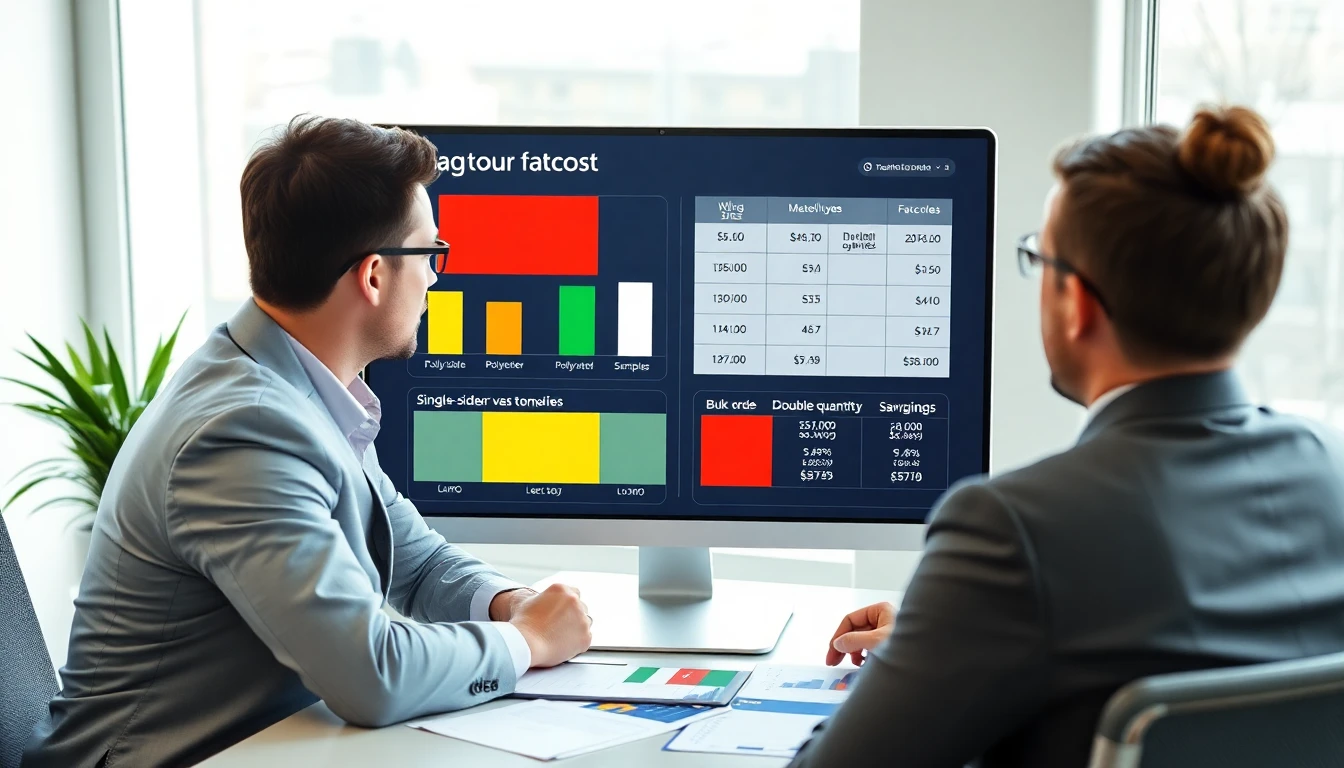
Direct importing from Chinese factories gets you per-unit costs between roughly $0.50 and $2.00 for standard flags, but that number is misleading in isolation. By the time you add ocean freight, customs duties, inspection costs, and the working capital locked up for 45-60 days, your landed cost can double. At volumes under 500 units, direct importing rarely makes financial sense once you factor in the minimum order requirements and the fixed costs spread across a small batch.
US wholesale distributors charge $3-8 per flag with no meaningful MOQ and ship in days. The margin compression is real, but so is the operational simplicity. If you're testing a new product line or serving a market where delivery speed matters more than per-unit cost, wholesale is the rational choice — not the lazy one.
$0.50-2
Direct Import / Unit
$3-8
US Wholesale / Unit
1,000+
MOQ Break Point
The hybrid model is where experienced importers usually land. Stock your bread-and-butter items — standard American flags, common sizes, popular designs — through domestic wholesalers for fast fulfillment. Run your custom orders and high-volume commodity flags through Chinese factories where the per-unit savings justify the complexity.
Here's what most sourcing guides won't tell you: the hybrid model only works if you track landed costs accurately enough to know which products actually benefit from direct import. A flag that costs $1.20 FOB China might land at $3.50 after tariffs and freight, making it barely cheaper than your domestic wholesale price of $4.00. Without per-SKU landed cost tracking, you'll convince yourself you're saving money while your actual margins tell a different story.
The meaningful break point for direct import is usually around 1,000 units of a single SKU. Below that, the setup costs and logistics overhead eat most of your margin advantage.
Finding and Vetting Flag Suppliers: Platforms, Audits, and Red Flags

Alibaba lists thousands of flag suppliers, and roughly half of them aren't worth your time. The platform's verification system sounds reassuring until you realize that Gold Supplier status is a paid membership — not an independent quality check. A scammer with a credit card can carry that badge. Verified Supplier (the blue badge) involves actual third-party inspection by firms like SGS or Intertek, which makes it a better starting filter, but it's still not a substitute for your own diligence.
The fastest way to narrow your supplier list is to look for what's missing rather than what's present. Suppliers who refuse sample orders, can't produce a live video tour of their production floor, or quote prices more than 30% below market average are telling you something important. That unusually low quote usually means recycled materials, substandard printing, or a middleman who'll source from whoever is cheapest when your order lands.
Cross-referencing is underrated. Look up the same company on Made-in-China and Global Sources. If the company name, address, or product range doesn't match across platforms, walk away. Industry data suggests that around 15% of listed suppliers have addresses that don't correspond to actual manufacturing facilities.
Third-party audits before your first bulk order cost somewhere around $300-1,000 depending on scope. That feels expensive until you realize the average loss from a failed first order runs three to five times higher. The audit isn't a cost — it's insurance with a predictable return.
$300-1K
Audit Cost
3-5x
Avg. Failed Order Loss
~15%
Fake Supplier Addresses
One vetting step most importers skip: asking for references from existing buyers in your market segment. A factory that makes excellent ceremony flags might be completely wrong for outdoor promotional banners. The production requirements are different enough that track record in your specific product category matters more than general factory capability.
Navigating Customs, Tariffs, and Import Documentation
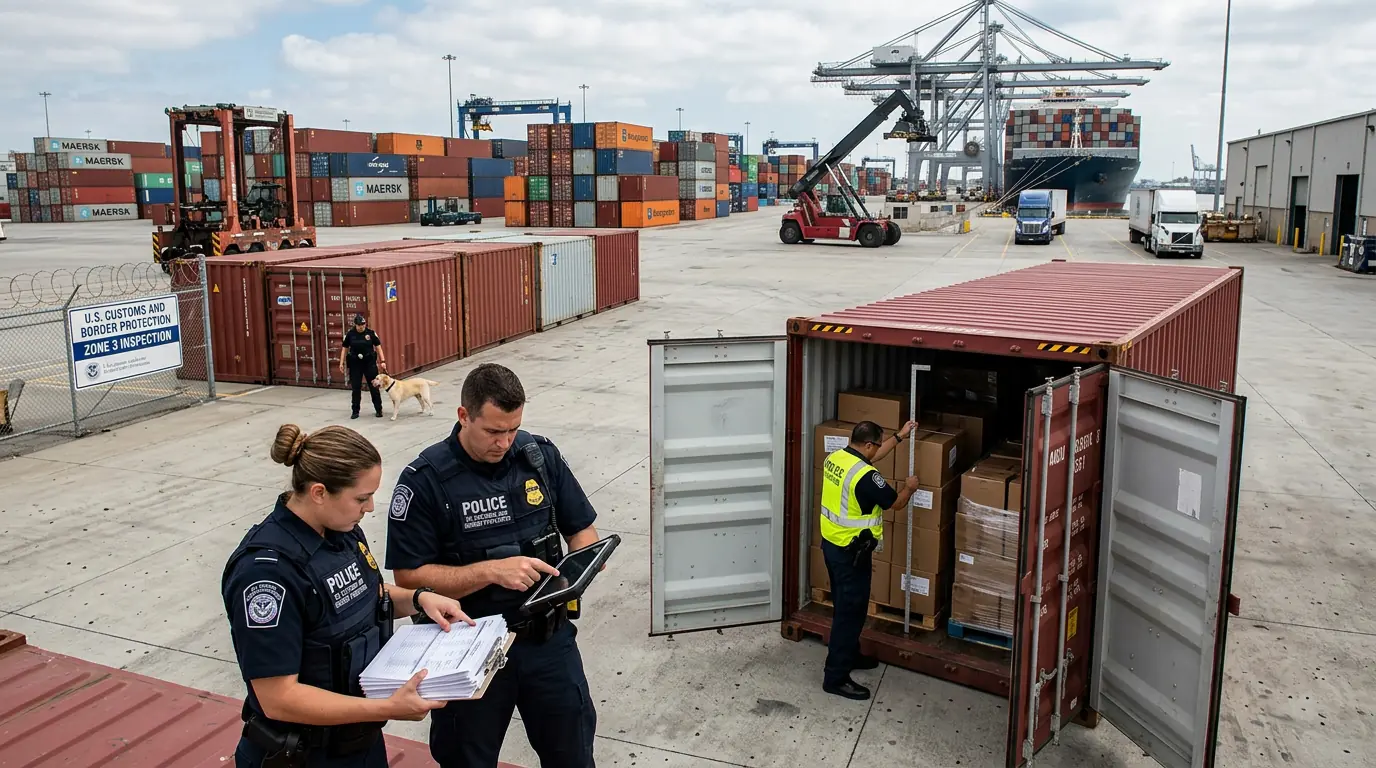
Tariffs on Chinese textile imports have become the single biggest variable in flag sourcing economics. What used to be a manageable 4-5% duty rate has escalated dramatically — tariffs on Chinese textiles have seen increases of several hundred percent in recent years, with effective rates that can push total landed costs well past what many importers budgeted for.
The HS code for textile flags is 6307.90, classified as "other made-up textile articles." Getting this classification right matters because misclassification can trigger penalties that dwarf any duty savings. If you're importing flags with rigid components (like telescoping pole flags), the classification might shift, and so does your duty rate.
HS Code Reference
6307.90 — "Other made-up textile articles" covers most textile flags. ISF filing deadline: 24 hours before vessel loading. Late filing penalty starts at $5,000. Customs broker cost: $150-250 per shipment.
For documentation, you need four basics on every shipment: commercial invoice, packing list, bill of lading, and certificate of origin. The ISF (Importer Security Filing) must be submitted 24 hours before the vessel loads at the foreign port — miss this window and you're looking at fines that start around $5,000. A licensed customs broker handles this for $150-250 per shipment, and unless you're shipping weekly, hiring one is cheaper than learning the system through expensive mistakes.
The tariff situation has pushed some importers toward alternative sourcing countries — Vietnam, Bangladesh, India — but be careful with this move. Transshipped goods (Chinese products routed through a third country) face even steeper penalties if caught, and customs enforcement on this has tightened considerably. If you're genuinely diversifying your supply chain, it needs to be real manufacturing in the new country, not relabeling.
Country-of-origin marking is mandatory on every imported flag. This sounds simple, but it trips up importers who order custom flags for resale — if the origin label is missing or incorrect, CBP can hold your entire shipment at the port.
Quality Control: Material Testing, Print Standards, and Inspection Protocols
The gap between a sample flag and a bulk production run is where most quality problems live. Your supplier's sample will almost always look good because they know it's being evaluated. The real test is whether the 2,000th unit off the line matches the 1st one.
Material testing has industry standards worth referencing when you write your purchase spec. AATCC 16 measures UV resistance — outdoor flags should hit at least Class 4 on a scale of 1-5 to avoid embarrassing color fade within weeks. Tear strength testing (ASTM D2261) matters for any flag that will face wind stress, which is essentially all outdoor flags. These aren't academic standards; they're your leverage when a supplier tries to substitute cheaper fabric mid-production.
Print quality is where the subjective arguments start. For dye sublimation, you want to specify bleed-through percentage — around 85% front-to-back penetration gives you a convincing double-sided appearance without the cost of true double-sided construction. Color matching should reference Pantone values in your spec sheet, not just a digital file. Screens and printers render color differently, and "it looked right on the monitor" is not a production standard.
Pre-shipment inspection is the last checkpoint before your money is locked into product on a container ship. The industry standard uses AQL (Acceptable Quality Level) sampling: AQL 2.5 for major defects like print misalignment or wrong colors, AQL 4.0 for minor issues like slight stitching irregularities. If your supplier pushes back on allowing third-party inspection, that tells you more about their quality confidence than any certification on their Alibaba profile.
One thing worth insisting on that many importers treat as optional: pre-production sample approval before bulk runs begin. It adds a week or two to your timeline but eliminates the most expensive category of quality failures — the ones where the entire batch is wrong.
Pro Tip: For bulk flag orders over 100 pieces with custom designs, contact our sourcing team for pre-production samples and competitive factory-direct pricing.
Logistics: Shipping Modes, Lead Times, and Cost Optimization
Shipping mode selection comes down to a simple trade-off between time and money, but the math changes depending on your order size.
Full container load (FCL) ocean freight from China to the US West Coast runs roughly $2,000-4,000 for a 20-foot container and takes 25-35 days. This makes sense when you have enough volume to fill or nearly fill a container — shipping a half-empty box means paying for air. Less-than-container-load (LCL) works for smaller shipments but adds consolidation time and per-cubic-meter costs that can erode your savings on smaller orders.
Air freight at $4-8 per kilogram gets product to you in under a week. For flags specifically, the weight-to-value ratio usually makes air freight impractical for bulk orders. Where it does make sense: rush orders for events with fixed dates, sample shipments, or replenishment of your highest-margin custom products where stockout cost exceeds shipping cost. Express carriers like DHL or FedEx work for anything under 50 kilograms, particularly samples during the vetting phase.
Ocean FCL
$2,000-4,000 per 20ft container
25-35 days transit
Best for high-volume orders
25-35 days transit
Best for high-volume orders
Air Freight
$4-8 per kg
Under 1 week transit
Best for rush/sample orders
Under 1 week transit
Best for rush/sample orders
Express (DHL/FedEx)
Under 50 kg
3-5 days transit
Best for samples & small parcels
3-5 days transit
Best for samples & small parcels
The Incoterms you negotiate affect more than just price. FOB (Free On Board) means you arrange freight from the port of origin — more work, but more visibility and control over costs. CIF (Cost, Insurance, Freight) means the seller handles shipping to your destination port, which simplifies the process but hides the freight cost inside the unit price. For first-time importers, CIF reduces the number of moving parts. Once you're shipping regularly, switching to FOB typically saves 10-15% on freight because you can negotiate rates across multiple shipments.
Switching from CIF to FOB typically saves 10-15% on freight once you're shipping regularly — because you control the rate negotiations across multiple shipments.
Consolidating shipments is the most overlooked cost lever. If you're working with two or three Chinese suppliers, coordinating production schedules so their output ships in a single container cuts your per-unit freight cost significantly compared to multiple small shipments.
Building Long-Term Supplier Relationships: Payment Terms, Contracts, and Growth
Payment terms tell you exactly where you stand in a supplier relationship. New buyers start at 30% deposit with the 70% balance due before shipment — that's standard, and pushing too hard on this before you've established trust usually backfires. The supplier has heard every story about "big future orders" from buyers who placed one sample order and disappeared.
After three or four successful orders, the negotiation space opens up. Shifting to a 20/40/40 split — deposit, post-production, post-delivery — gives you meaningful leverage because you're holding payment until you've verified quality. Established relationships with consistent volume can eventually reach terms like full payment 30-60 days after shipment, but this typically requires either a formal purchase agreement or enough volume that losing your business would hurt.
NEW
30/70 Split
30% deposit, 70% before shipment — standard for new buyers
3-4
20/40/40 Split
After 3-4 successful orders — deposit, post-production, post-delivery
12M+
Net 30-60 Days
Full payment after shipment — requires formal agreement + consistent volume
Annual volume commitments are your strongest negotiating tool if you can honor them. A 12-month purchase agreement at predictable quantities can lock in pricing 5-10% below spot rates. The catch: if your forecasting is off and you can't meet the volume commitment, you've damaged the relationship and potentially face contractual penalties.
For intellectual property protection — which matters if you're sourcing custom-designed flags for brands or organizations — register your designs with China's intellectual property office (CNIPA) before sharing artwork files with suppliers. An NDA clause in your purchase contract provides legal recourse but enforcement in Chinese courts is expensive and uncertain. The practical protection is limiting how much leverage any single supplier has: don't share your full product line with one factory, and maintain at least one backup supplier who can produce your core designs.
Start with two or three suppliers for your first six months. Track quality, communication responsiveness, and on-time delivery rates. Then consolidate to a primary supplier plus one backup. Spreading orders too thin means none of your suppliers see you as a priority customer, which matters most when production schedules get tight during peak season.
What Your Next Move Should Be
The biggest mistake in flag sourcing isn't choosing the wrong supplier — it's skipping the homework that makes supplier selection meaningful. Before you request a single quote, get clear on your sourcing model. If your annual flag volume is under 5,000 units across all SKUs, a hybrid model with domestic wholesale as your backbone and selective direct imports for high-volume items is almost certainly the right starting point. Above 10,000 units of consistent SKUs, direct import economics start working decisively in your favor.
If you're just starting out, here's the sequence that saves the most time and money: lock your product specs first, then source three to five verified suppliers on Alibaba using the vetting criteria above. Order samples from your top two or three before committing to any bulk order. Run a landed cost calculation that includes current tariff rates — not last year's rates — before comparing to domestic wholesale alternatives. And budget for a third-party pre-shipment inspection on your first order, even if the supplier's samples looked perfect.
If you've already been importing and your margins feel thinner than they should, audit your landed costs per SKU. The answer is usually hiding there — in tariff miscalculations, freight inefficiencies, or a sourcing model that doesn't match your current volume.