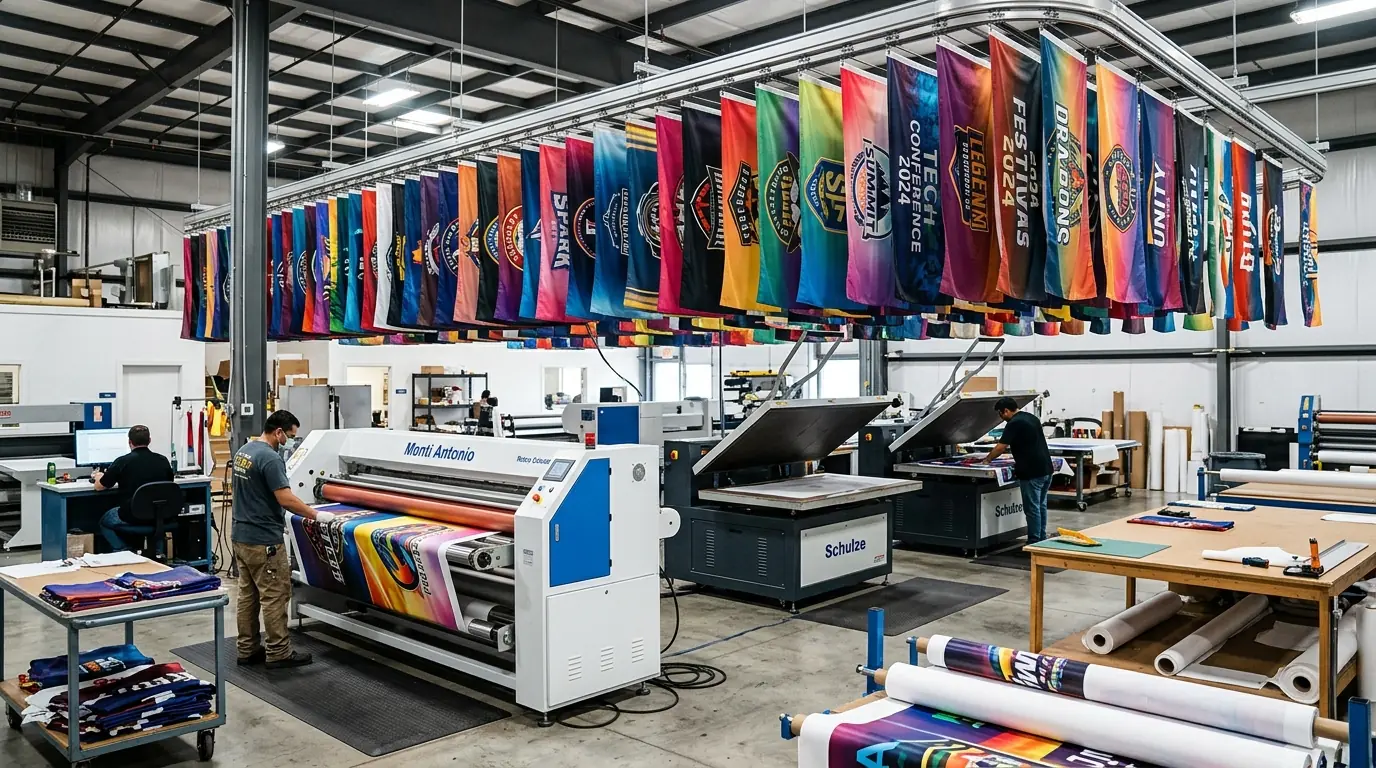
Most people shopping for flags start by Googling "best flag material" and end up more confused than when they started. Polyester or nylon? Screen printing or dye sublimation? The answers depend on where your flag will fly, how long you need it to last, and what kind of design you want on it. This guide sorts through the noise. It covers the three materials that dominate custom flag production, the printing methods that work with each one, and the decision shortcuts that save you from replacing flags every few months. If you want to understand flag materials and printing before placing an order, start here.
The Three Flag Materials That Cover 99% of the Market
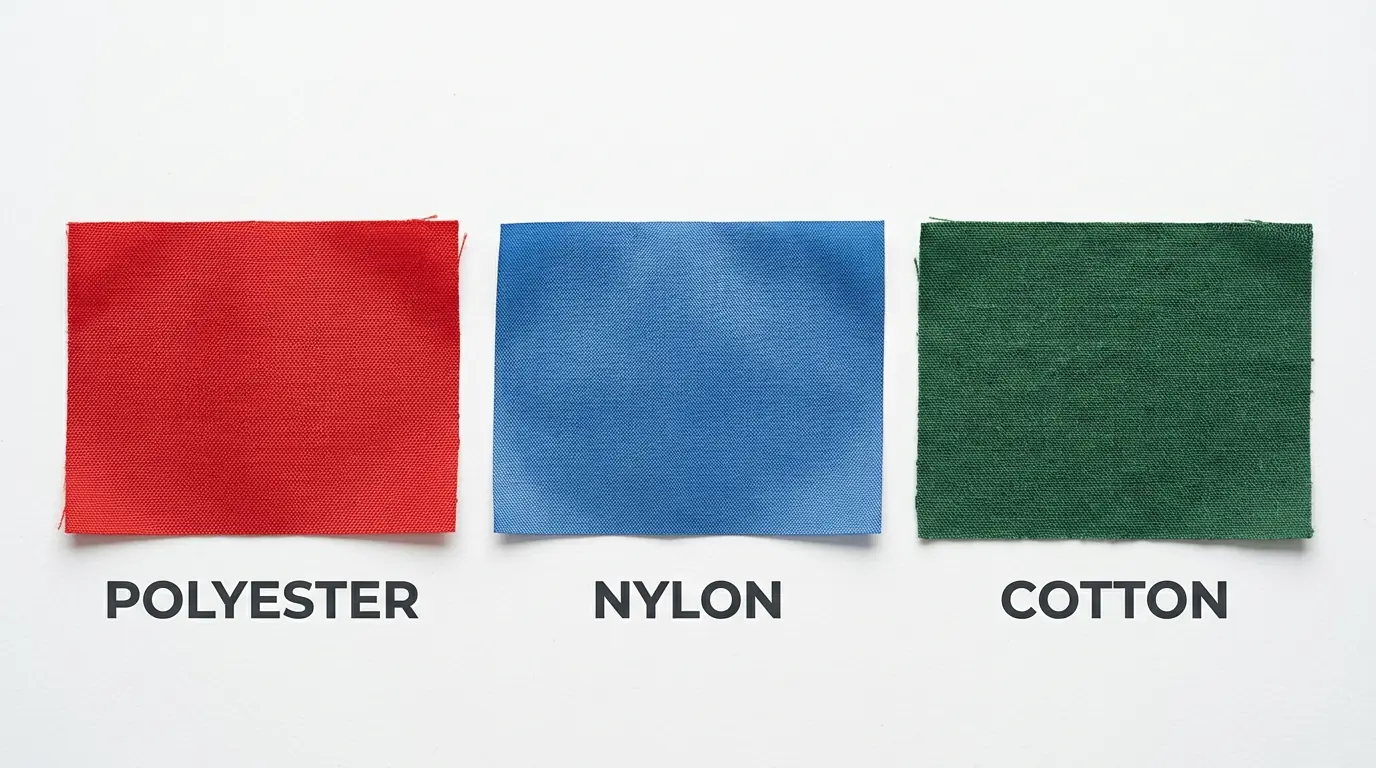
Flag material selection comes down to three options: polyester, nylon, and cotton. Everything else is niche. Polyester handles abuse. Nylon flies in the lightest breeze. Cotton looks best hanging still in a ceremony hall. That sorting rule covers most decisions, but the details matter more than the labels.
Polyester dominates commercial and government procurement. It is the heaviest of the three, built with 2-ply spun construction that resists tearing in sustained winds above 25 mph. A 3x5 ft US flag in 2-ply polyester runs around $56 — roughly 30% more than nylon. But polyester lasts two to three times longer outdoors, so the cost per display month is actually lower.
Nylon outsells polyester about 2:1 for everyday use. It is lighter, cheaper, and flies when polyester would hang limp. The glossy fiber surface produces brighter, more saturated colors than polyester. For a homeowner with a front-yard flagpole in a moderate climate, nylon is the right call almost every time.
Cotton is the outlier. It absorbs moisture instead of repelling it, which makes it a poor outdoor choice. But for indoor presentation — military casket draping, courtroom display, historical reenactments — nothing matches the drape and color depth of heavyweight cotton bunting. The material has a specific job, and it does that job better than any synthetic can. You can explore our flag materials and printing capabilities to see how each fabric performs across different production methods.
2–3×
Polyester Outdoor Life
vs nylon in the same conditions
2:1
Nylon Market Share
outsells polyester for everyday use
Years
Cotton Indoor Lifespan
when kept away from weather & UV
Polyester: The Heavy-Duty Workhorse for Outdoor and Commercial Use

If your flag will fly 24/7 on a tall pole in a windy parking lot, polyester is not optional — it is the specification. Government contracts, military installations, and large commercial properties all default to polyester because no other material survives the same abuse cycle.
The performance gap shows up in the specs. Standard 117gsm knitted polyester handles most outdoor use. But for high-wind sites, 2-ply spun woven polyester at 5.0 oz per square yard is the commercial grade — matte finish, maximum tensile strength, open weave to reduce wind load. That open weave detail matters more than most buyers realize. A tightly woven flag acts like a sail and tears itself apart. The open weave lets wind pass through, so the flag lasts months longer under the same conditions.
UV resistance is where polyester really separates from nylon. In high-UV environments — desert installations, coastal West Coast sites — polyester holds color for multi-year cycles while nylon starts fading within months.
The tradeoff is weight. Polyester needs more wind to fly well, and the matte surface looks slightly less vivid than nylon's glossy finish. For flags under 3x5 ft in moderate climates, polyester is overkill. But above that size threshold, or in any environment where the flag stays up year-round, polyester's upfront cost premium pays for itself in replacement cycles. Pair it with commercial-grade flag poles for large installations to get the full performance benefit.
Dye sublimation printing is the standard printing method for polyester. Heat-transferred inks bond permanently with the fiber, producing full-color photorealistic output that won't crack, peel, or wash out.
Nylon: The Lightweight All-Rounder for Residential Display
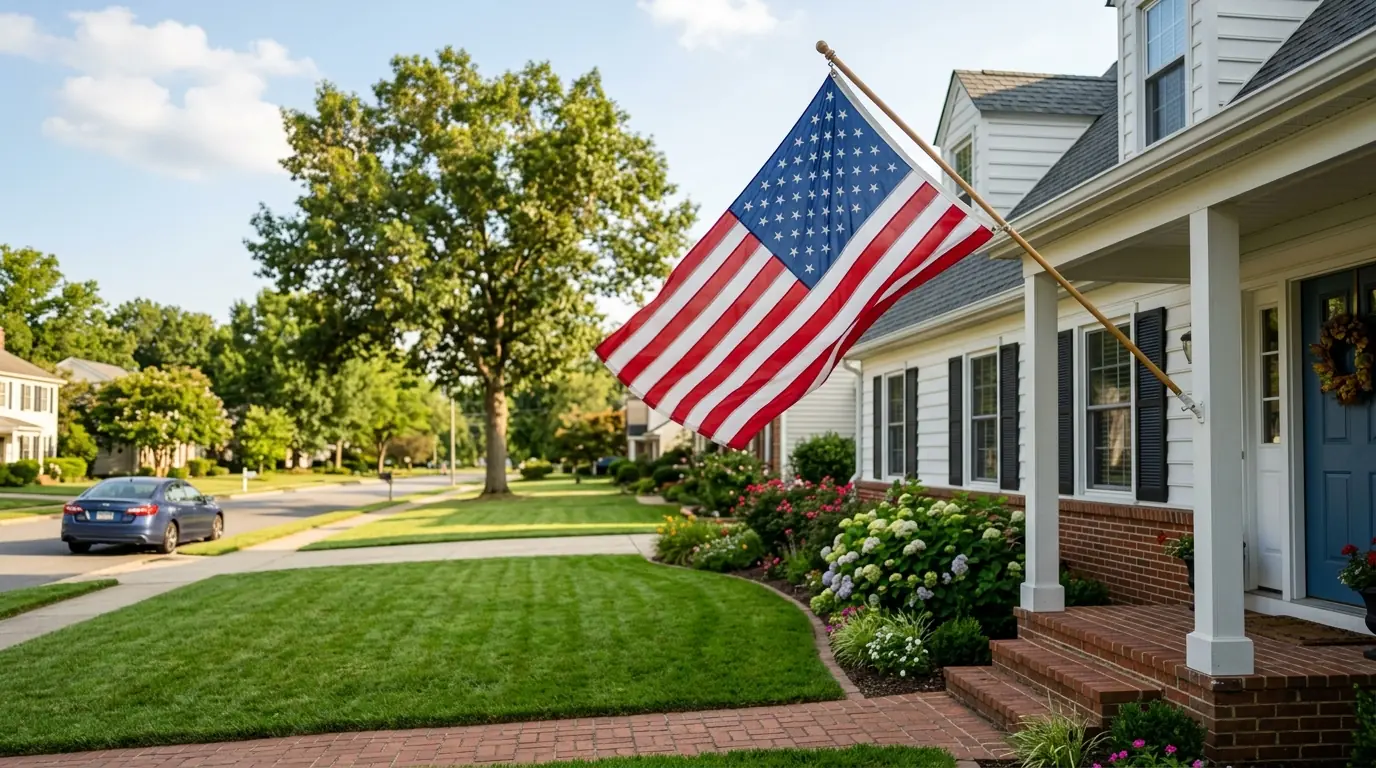
Nylon gets the job done for most residential flag buyers, and it does it at a lower price point than polyester. Standard 200 denier nylon weighs about 4 to 5 oz per square yard — light enough to catch the slightest breeze, which is the whole point if your flag hangs on a front porch or a short residential pole.
Color vibrancy is nylon's strongest visual advantage. The glossy fiber surface produces brighter, more saturated tones than polyester's matte finish. For flags where appearance matters more than raw durability, nylon looks better from the street.
The lifespan question is where nylon loses ground. In full outdoor exposure, expect three to six months before noticeable fading and fraying. Polyester in the same spot might last six to twelve months. That gap widens fast in high-wind or high-UV conditions. If you live somewhere with mild weather and bring the flag in during storms, nylon lasts significantly longer than those benchmarks suggest.
One hard constraint catches buyers off guard: nylon cannot be dye-sublimated. The fiber chemistry is incompatible with the heat-transfer process. Screen printing works on nylon, but if your design involves gradients, photographs, or complex color blends, you are limited to polyester. This is not a quality preference — it is a material science limitation that no printer can work around. For outdoor-rated nylon options with durable finishing, check our weather-resistant outdoor flag factory lineup.
Cotton: The Traditional Choice for Indoor and Ceremonial Use
Cotton flags fill a role that synthetics cannot touch. The weight, the drape, the color depth — all of it reads differently in person than polyester or nylon. For a flag displayed on a stand behind a podium, or draped over a casket at a military funeral, cotton is the specified material for a reason.
Government-spec cotton flags follow DDD-F-416F: 2-ply mercerized cotton bunting, heavy canvas duck heading, solid brass grommets, lock-stitched seams, embroidered stars, sewn stripes. That level of construction detail signals why cotton occupies the ceremonial tier. If you need flags for official government or diplomatic use, our team operates as a wholesale national flag manufacturer with Pantone color matching to specification.
Outdoor use is where cotton falls apart — sometimes literally. It absorbs water, promotes mildew, and fades under UV exposure. Outdoor lifespan sits around two to three months in full weather exposure, which is roughly half what nylon delivers. If someone tells you cotton works fine outside, they either live in a desert or replace flags constantly.
The price is not significantly different from nylon — a 3x5 ft cotton US flag runs about $49 compared to $43 for nylon. But the replacement frequency outdoors makes cotton the most expensive per-month option by a wide margin. Keep cotton indoors, and it lasts for years. Put it outside, and you are buying a new one every season.
Flag Printing Methods: How Your Design Gets Onto the Fabric
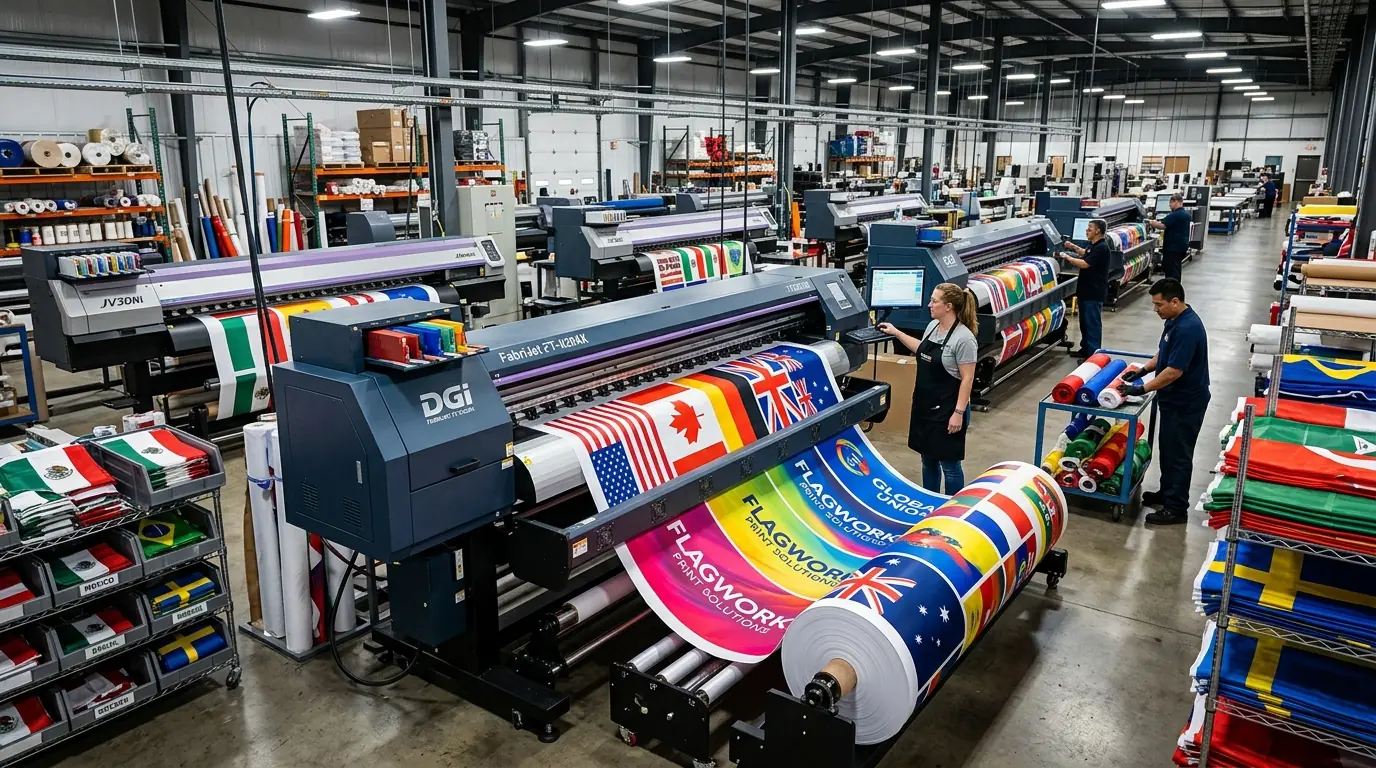
Four printing methods cover virtually all flag production. The choice depends on your material, your order quantity, and how complex your design is.
Dye sublimation is the go-to for polyester flags with photorealistic or full-color designs. The inks are heat-transferred into the fiber, producing permanent color with 80-90% show-through to the reverse side. It works great for small orders under 50 units with no plate or screen setup costs. Hard rule: sublimation only works on polyester. Do not order a nylon flag expecting sublimation printing — your supplier will either refuse or produce a flag that looks washed out.
Screen printing is the volume play. It works on any fabric — polyester, nylon, cotton — and hits its cost sweet spot above 50 to 100 units. The limitation is design complexity. Screen printing handles solid colors and bold graphics well, but struggles with gradients and photographic detail. Each color requires a separate screen, so a 6-color design costs significantly more per unit than a 2-color one. Our custom feather flag printing service uses screen printing for high-volume solid-color runs at competitive per-unit pricing.
Digital direct-to-fabric printing bridges the gap between sublimation and screen. It handles full-color designs on both polyester and nylon, with good results for small to medium runs. Double-sided flags using blockout construction — two fabric layers with an opaque barrier — require this method or sublimation.
Sewn applique is the durability champion. Hand-sewn construction on 200D polyester outlasts any printed flag in high-wind conditions. The trade-off is design limitation — applique works for bold, simple patterns only. Think state flags and military insignias, not photo prints. For large permanent installations on tall poles, custom flag manufacturing process using applique construction is worth the premium.
Matching Material to Use Case: A Decision Framework
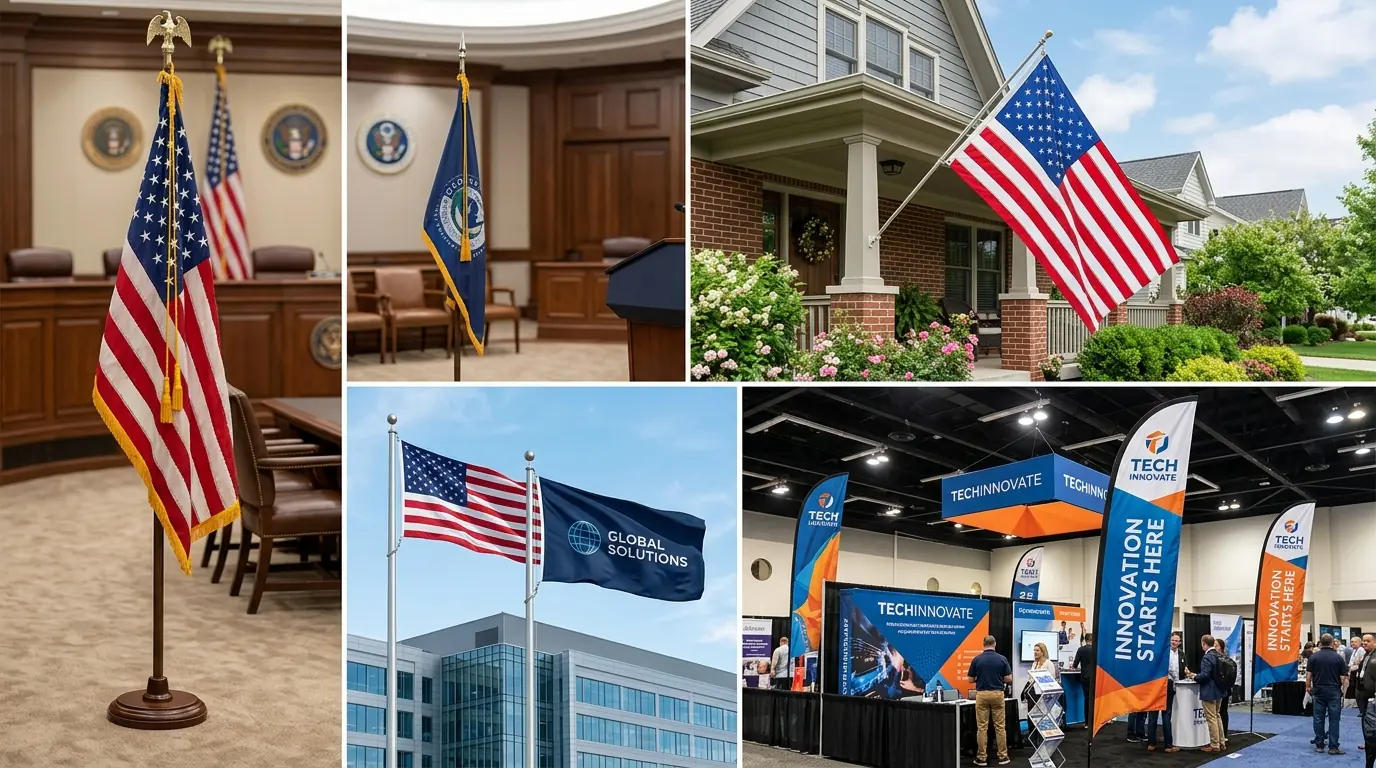
Skip the comparison charts for a moment. The fastest way to pick the right flag material is to answer one question: where will this flag spend most of its life?
Outdoor residential — moderate wind, seasonal display. Nylon. It flies in the lightest air movement, resists mildew, and costs less per flag than polyester. Sizes 3x5 or 4x6 ft cover most home flagpoles. If your area gets occasional storms, bring the flag in. That simple habit extends nylon's lifespan from months to a year or more.
Outdoor commercial — 24/7, high wind, large format. Polyester, no question. Once the flag is 5x8 ft or larger, or stays up around the clock, nylon cannot keep pace. Two-ply polyester with open weave construction is the standard for commercial advertising flag applications. Budget for replacement every 6 to 12 months depending on exposure. Secure mounting also matters — brass flag grommets for outdoor durability are the standard hardware choice for long-term commercial installations.
Indoor and ceremonial. Cotton is the traditional choice and still the best for formal presentation. If budget is tight, nylon works acceptably for indoor display at lower cost. Either material lasts years when protected from weather and UV.
Trade shows and events. Printed polyester for sublimation compatibility and durability. These flags see handling, transport, and setup abuse that nylon's lighter construction does not tolerate as well. For sports event flag displays, polyester's weight also helps the flag hold its shape on a display stand.
The decision tree simplifies further if you already know your printing method. Sublimation locks you into polyester. Screen printing opens all three materials. Applique favors polyester for outdoor and cotton for ceremonial.
What Most First-Time Buyers Get Wrong About Flag Materials
Three mistakes explain most premature flag replacements.
Buying on sticker price instead of cost per month. A $43 nylon flag that lasts four months costs $10.75 per month. A $56 polyester flag that lasts ten months costs $5.60 per month. The "cheaper" flag is almost twice as expensive to own. This math gets worse with larger flags, where replacement involves not just the flag but often rigging labor.
$43
Nylon flag — 3×5 ft
~4-month outdoor life
$10.75/mo
Higher true cost
$56
Polyester flag — 3×5 ft
~10-month outdoor life
$5.60/mo
Smarter investment
Treating "polyester" or "nylon" as a single category. Nylon ranges from 70 denier government spec (thin, lightweight) to 200 denier residential grade. Polyester spans from standard 3.2 oz knit to 5.0 oz 2-ply spun woven Tough-Tex. A budget polyester flag from an unknown supplier and a Tough-Tex flag are technically the same material in the same way a paper napkin and a cotton towel are both "fabric." Ask for denier, weight per square yard, and construction method before comparing prices.
Ordering a design before confirming print compatibility. This one wastes money and time. Full-color photorealistic designs require dye sublimation, which requires polyester. Buyers who choose nylon for its lower price and then want a sublimation-quality print end up reordering on polyester — paying twice for one flag. Double-sided flags with blockout construction also demand polyester. Confirm the material-to-printing compatibility before approving any artwork. If you are working with a professional custom flag manufacturer, they will catch this during quoting. If you are ordering through a generic print shop, you might not find out until the flag arrives.
Conclusion
Flag material and printing decisions come down to a short list of practical trade-offs. Polyester wins on durability and is the only real option for commercial outdoor flags or any design that needs sublimation printing. Nylon wins on flyability and cost for residential display where extreme weather is not a constant factor. Cotton holds its ground for indoor and ceremonial use where nothing else matches its look and feel.
The printing method follows the material choice, not the other way around. Lock in where the flag will fly and how long it needs to last, then the material picks itself, and the printing options narrow from four to one or two.
If you are placing your first order: start with the use case, confirm the print method matches the material, and compare prices by cost per display month rather than unit price. That sequence prevents the most common — and most expensive — first-timer mistakes. For bulk orders or custom designs, request a free custom flag quote to get material recommendations specific to your project.