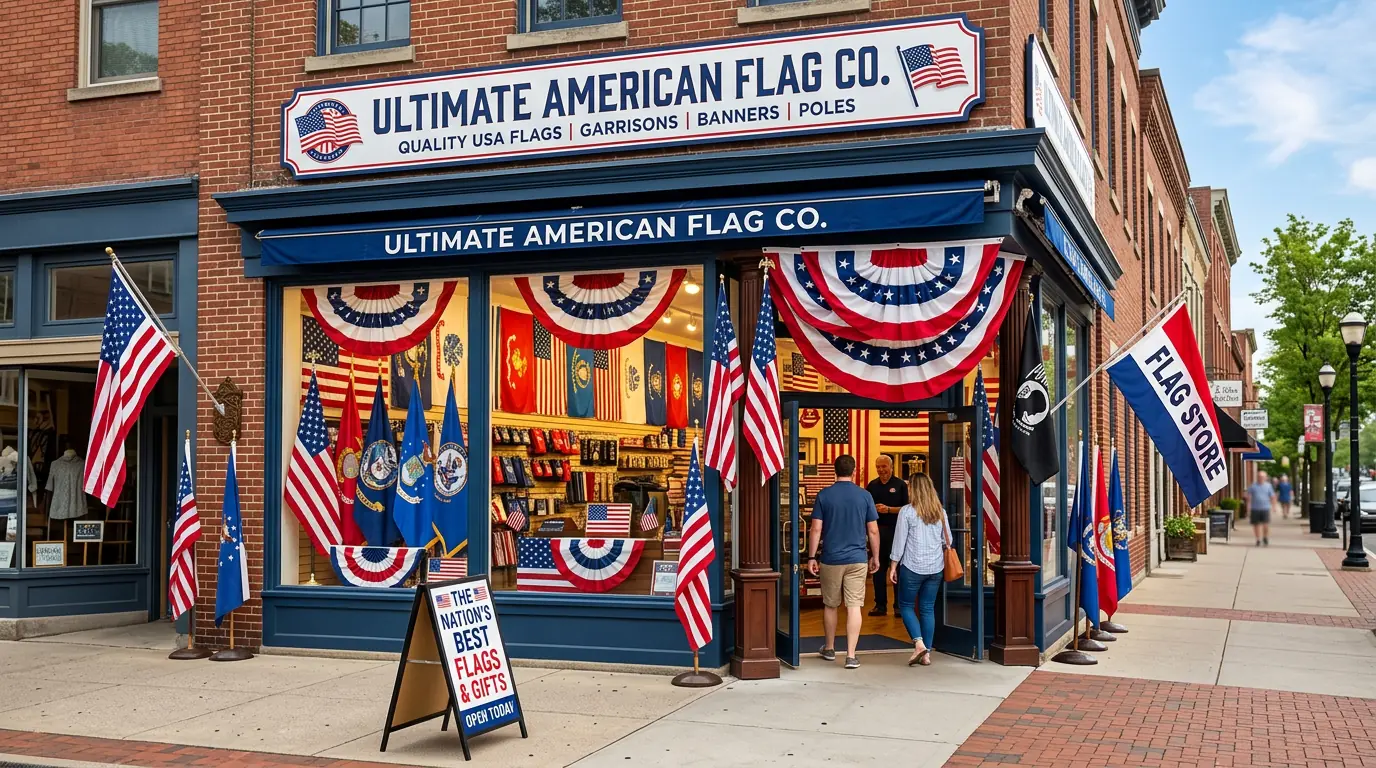
You found a supplier that can print your design on a flag. Great. But six weeks later, the grommets are pulling out, the colors look washed after a month outdoors, and you're realizing the company you hired never actually made the flag — they printed it and sent it to someone else for finishing. This is the most common and most expensive misunderstanding in sourcing custom flags from manufacturers: confusing a flag printer with a flag manufacturers in the USA. The distinction determines durability, lead time, customization options, and ultimately whether you're paying the right price for what you actually need.
What's the Actual Difference Between a Flag Manufacturer and a Flag Printer
A flag printer owns printing equipment. That's it. They take your artwork, print it onto polyester fabric, and ship it — often as a flat piece of printed material. Sewing, hemming, grommet insertion, pole sleeves? Those steps either get outsourced or skipped entirely. Companies like Flags2Go operate this way. When displaying flags outdoors, proper finishing matters. They produce sharp, full-color prints quickly, but the finishing work happens somewhere else, if it happens at all.
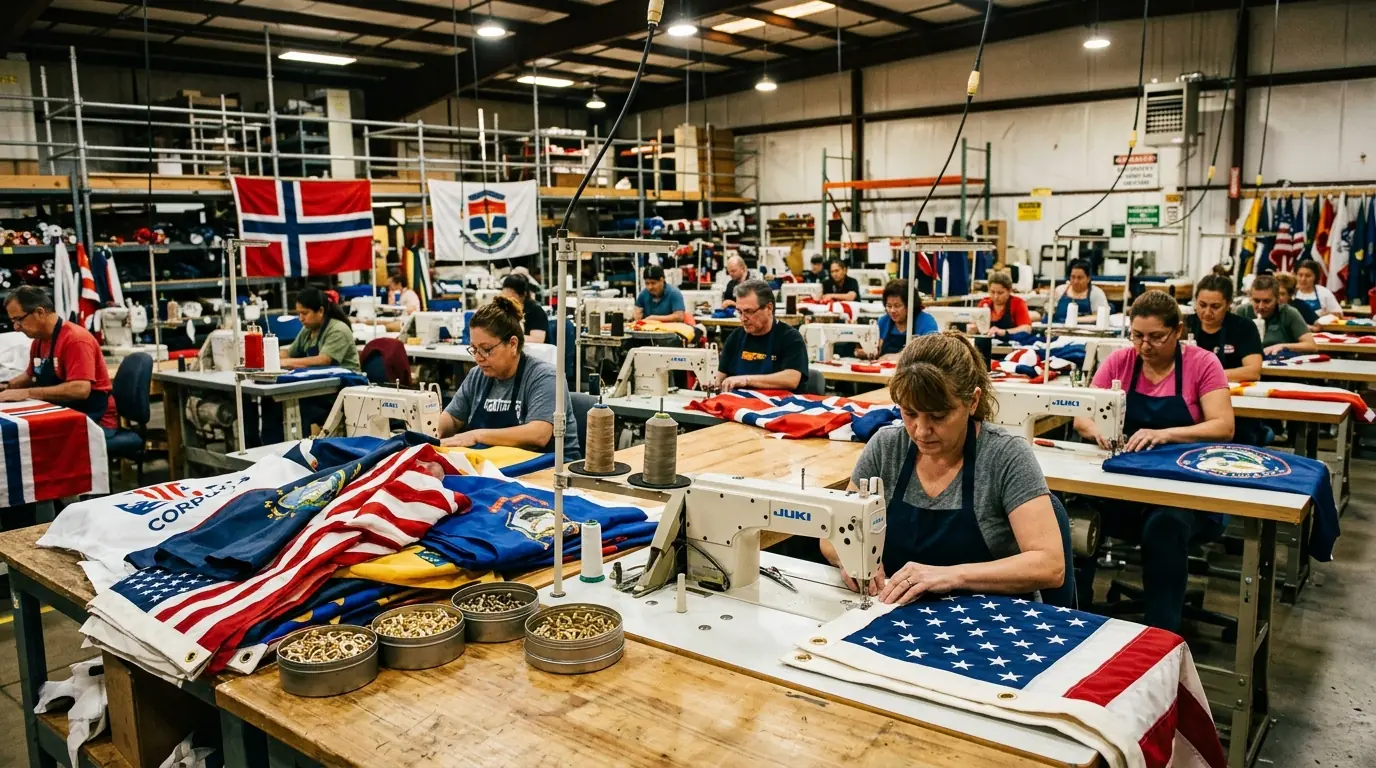
A flag manufacturer controls the entire production chain. Fabric sourcing, printing, cutting, sewing, finishing — all under one roof. Gettysburg Flag Works is a classic example. When you order from a manufacturer, one team handles every step from raw material to boxed product. That vertical integration is why the FMAA (Flag Manufacturers Association of America) certification exists — it specifically verifies that a company does full domestic manufacturing, not just printing.
The mistake most first-time buyers make is assuming that "printing" includes finishing. It usually doesn't. A printed flag without proper hemming and reinforced attachment points is really just decorated fabric. If your use case involves anything beyond hanging a banner indoors for a weekend, that distinction matters enormously.
One way to tell them apart quickly: ask about flag grommets options and hem types. A printer will typically offer one standard option or none. A manufacturer will ask you which grommet spacing you need, what wind load you're expecting, and whether you want a canvas header or a pole pocket.
Production Capabilities: What Each Type Can Actually Deliver
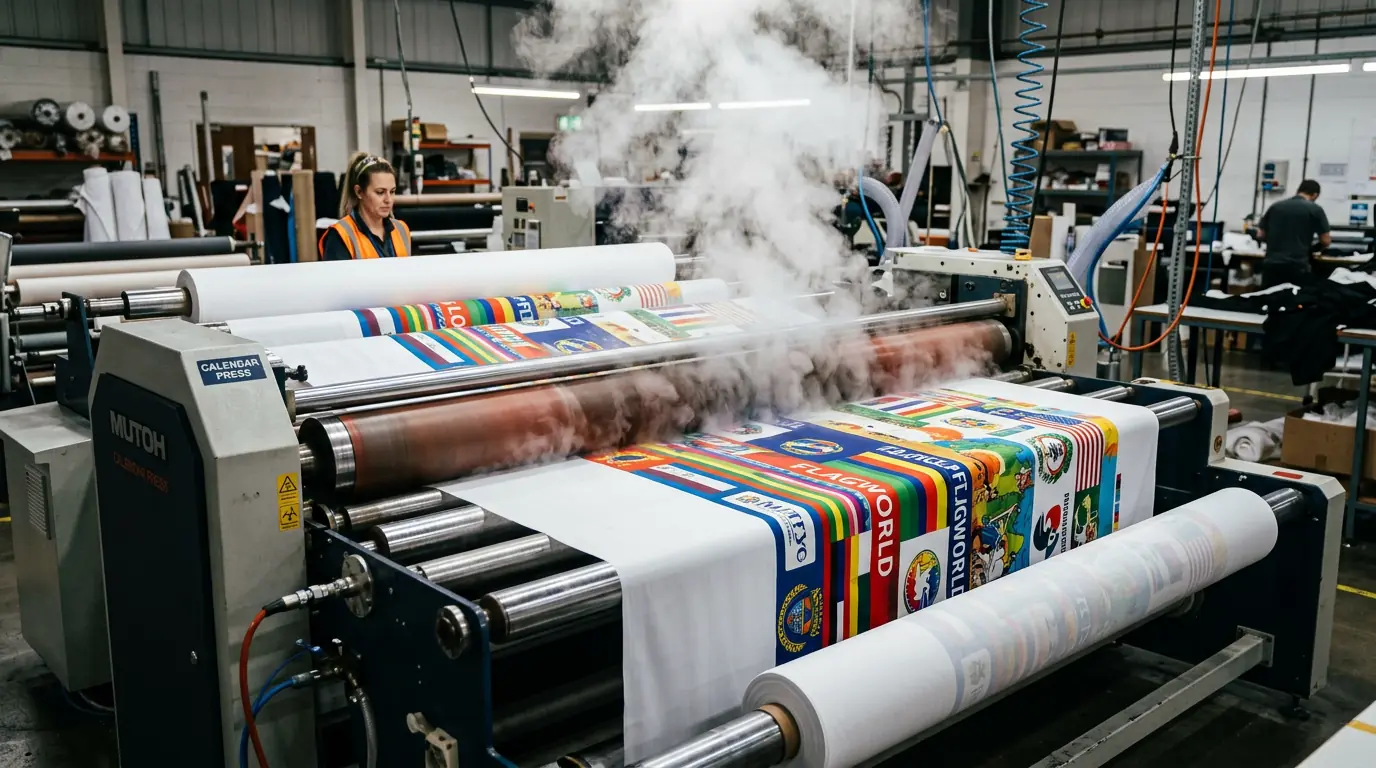
This is where the gap gets practical. Printing methods are essentially the same on both sides — dye-sublimation, digital direct, and silk screening are industry standard. With dye-sub and digital, printing one color costs the same as printing eight thousand colors, which is why full-color custom designs have become so accessible. Silk screening still offers the best reverse-side coverage — close to 100% bleed-through — but it requires per-color setup fees and usually a minimum order around ten units.
Where manufacturers pull ahead is everything that happens after the ink dries. A manufacturer can insert brass grommets on custom spacing, sew reinforced flag pole sleeves, double-fold hems for wind resistance, and cut non-standard sizes. A printer delivers a printed panel. The finishing either doesn't happen, or you're coordinating it yourself with a separate vendor — adding cost, lead time, and quality risk every time a handoff occurs.
For standard 3x5 indoor banners and large format prints with simple pole pockets, a printer handles the job fine. But the moment you need something structurally specific — a 15-foot vertical banner with wind slits, a double-sided flag with a block-out liner, government-spec finishing — you're in manufacturer territory whether you planned for it or not.
The part that surprises buyers: custom finishing often costs less through a manufacturer than outsourcing it separately after getting a printer's output. Manufacturers have the sewing stations running anyway. A printer adding finishing is marking up someone else's work.
Durability and Quality: Printed vs. Sewn Construction
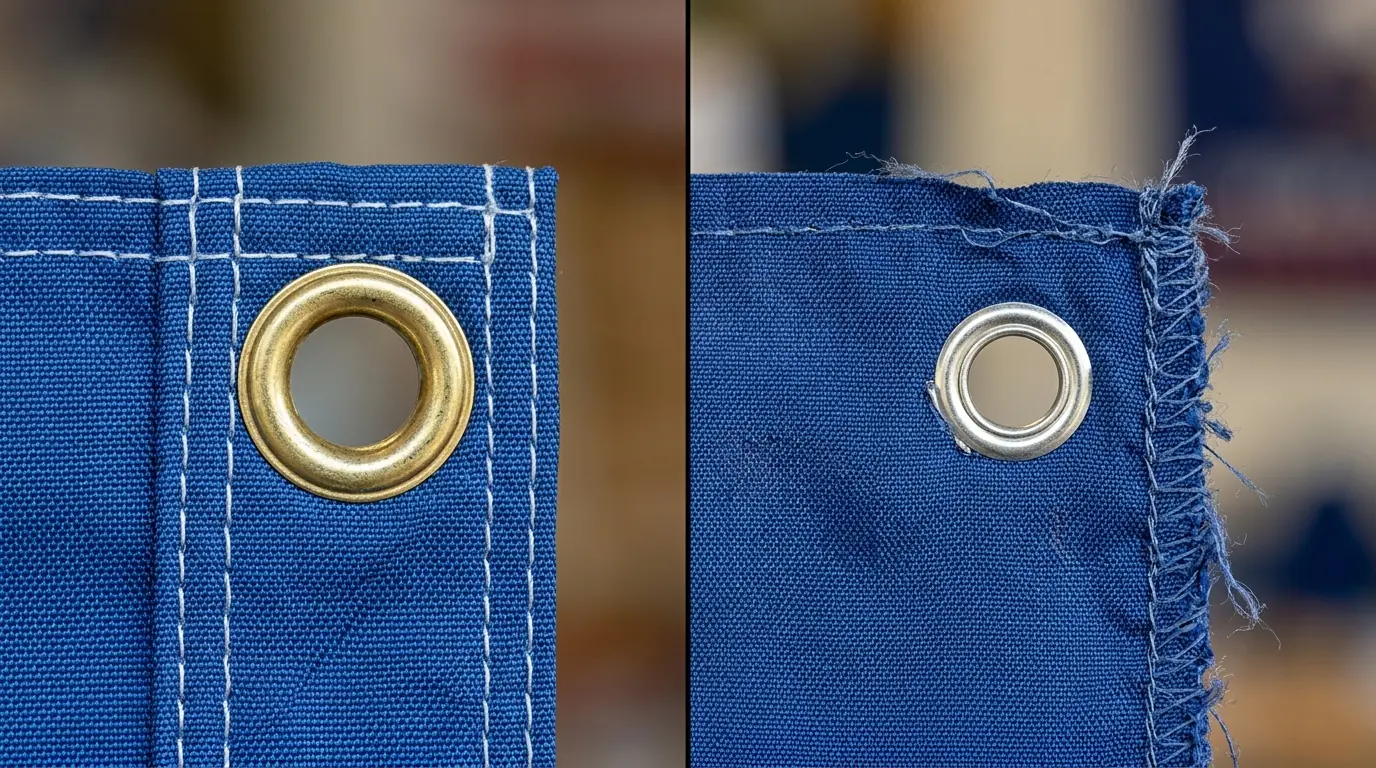
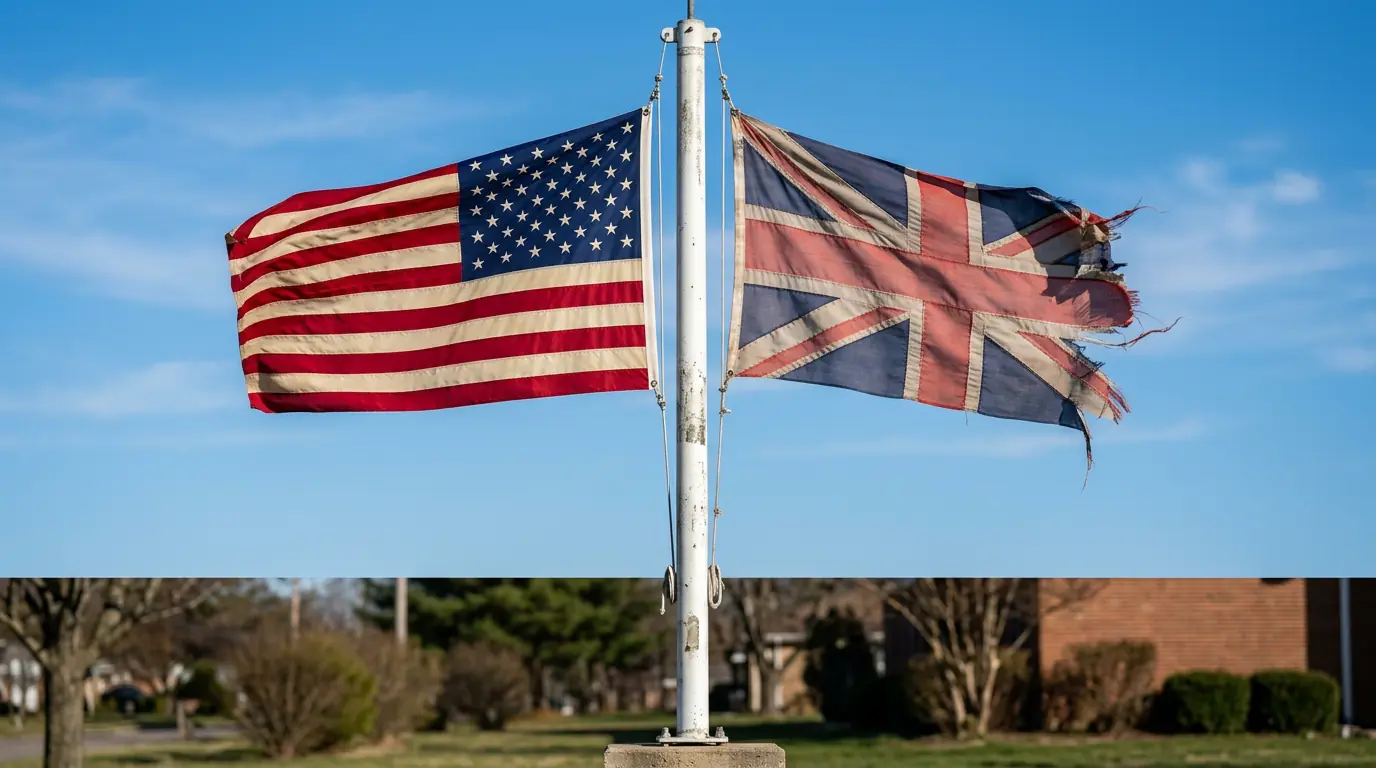
Outdoor lifespan is the sharpest dividing line, and it's not close. A digitally printed flag on standard 115gsm knitted polyester will last roughly three to six months in outdoor conditions before noticeable fading and fraying start. A sewn flag built with 155gsm woven polyester — the kind approved for government and military use — holds up for twelve months or longer in the same environment.
The fabric weight alone explains most of this gap. Thinner knitted polyester catches wind differently. It flutters faster, puts more stress on edges, and frays sooner. Heavier woven fabric moves more slowly in wind, distributes stress more evenly, and resists edge damage far better.
UV performance follows a similar split. Surface-applied inks from digital printing sit on top of the fibers and degrade under direct sunlight faster than fiber-dyed colors used in dye-sublimation or traditional sewn flag construction. The difference becomes obvious around the three-month mark outdoors — printed flags start looking sun-bleached while dyed fabric maintains its saturation.
If your flags live indoors or get replaced seasonally, printed construction is perfectly adequate. Overpaying for sewn military-grade flags to hang inside a trade show booth is wasted money. But for permanent outdoor installations — government buildings, car dealerships, custom corporate flags campuses — buying printed flags means budgeting for replacement every quarter instead of every year. The per-unit savings disappear fast when you're buying four times as many.
MOQ, Pricing, and Cost Structure
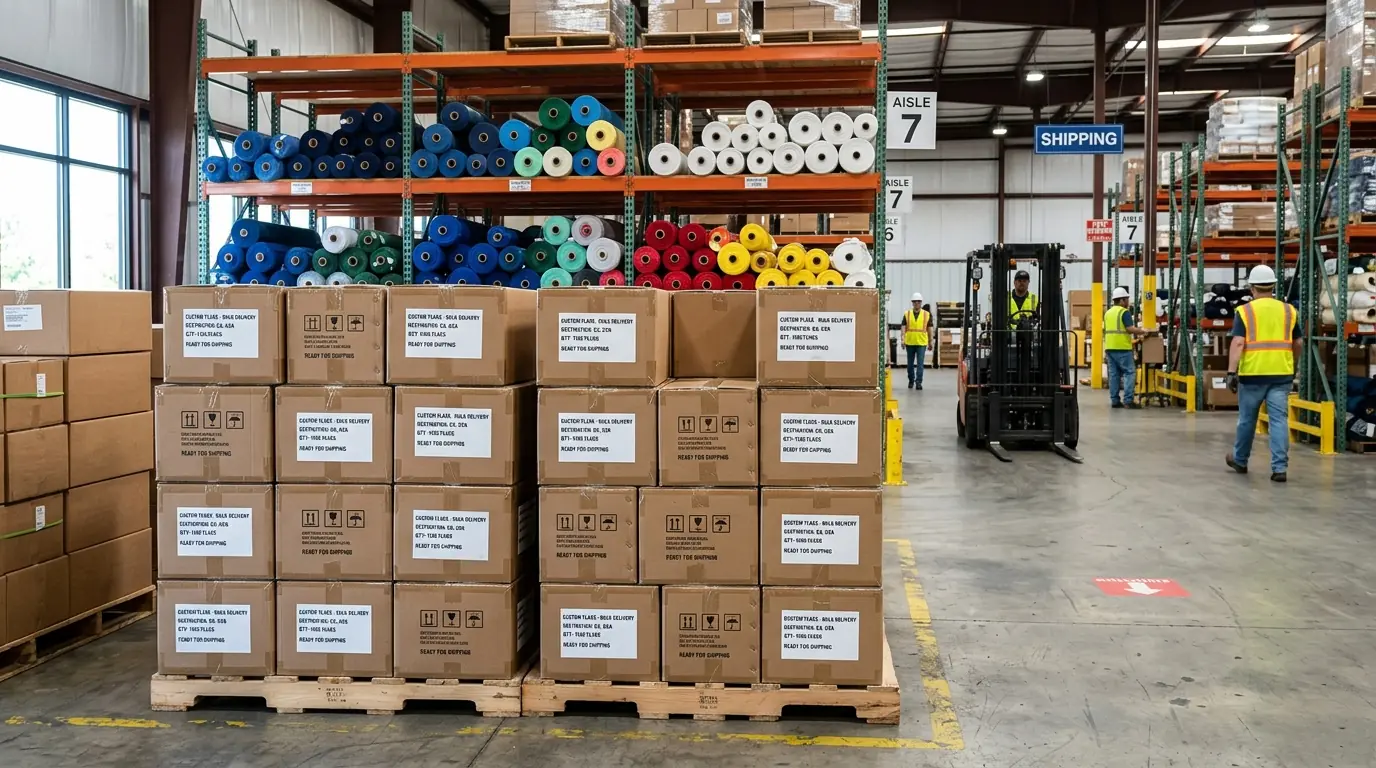
Printers win on accessibility. Most digital flag printers have zero minimum order quantity. Order one custom 3x5 flag and you'll pay somewhere between $50 and $300 depending on complexity and speed. Single units from a manufacturer are rare and expensive.
But the cost curves cross around 100-200 units, and by 500 units the gap is dramatic. Manufacturers operating their own cut-and-sew lines can push per-unit costs well below what printers charge at scale. A flag that costs $250 as a one-off from a printer might run $60-80 per unit in a batch of 500 from a manufacturer.
Screen printing adds a wrinkle. Setup fees run $45-80 per color, which makes it uneconomical for small runs but increasingly attractive at volume — especially when you need that near-perfect reverse-side coverage.
The pricing trap that catches mid-size buyers: ordering 200-400 flags from a printer because the per-unit quote looks reasonable, without realizing that crossing the 500-unit threshold with a manufacturer would drop the total cost by 30-40%. Printers operate on high margins — often 70-80% — because their value is speed and flexibility, not volume efficiency.
One other cost factor that rarely appears in quotes: manufacturers sometimes run 5-15% overproduction to cover quality control rejects. That overproduction often ships to you as extras at no charge. Printers bill exactly what you ordered.
Turnaround Time and Lead Time Reality
Speed is the printer's strongest argument, and it's a legitimate one. Standard turnaround from a digital printer runs two to seven business days. Rush orders can ship in 24-48 hours. If you need flags for an event next week, a printer is your only realistic option.
Manufacturers operate on a different timeline — two to four weeks is standard, stretching to five during peak seasons or backlogs. The sewing and finishing stages add time that pure printing doesn't require. Rush production exists but is limited and expensive.
Overseas manufacturing extends the timeline further. Total lead time from an offshore manufacturer, including shipping, typically runs four to eight weeks. That's fine if you're planning ahead, but it eliminates any flexibility for last-minute needs.
The decision rule is straightforward: if your deadline is less than two weeks away and you need fewer than 50 flags, a printer is the practical choice regardless of other factors. If you're planning six or more weeks ahead, you have the luxury of choosing based on quality, cost, and finishing requirements rather than pure speed.
Pro Tip: For bulk orders over 100 pieces,
contact our team for manufacturer-direct pricing that's 30-40% lower than printer quotes.
When to Use a Flag Manufacturer vs. a Flag Printer
Stop thinking of this as a quality judgment and start thinking of it as a fit question. Neither option is universally better — they serve different buying situations.
A flag printer is the right call for short runs under 50 units, full-color artwork, tight turnarounds under two weeks, and flags destined for indoor use or short-term outdoor display. Sports and event flags banners, promotional event flags, seasonal decorations — printers handle all of these efficiently and affordably.
Manufacturers earn their longer lead times and higher minimums when you're ordering 100+ units, need permanent outdoor performance lasting twelve months or more, require specific finishing like reinforced grommets or pole pockets, or must meet government or military specifications. If you're buying flags as a recurring operational expense — car dealerships cycling inventory flags, municipalities maintaining public displays — the manufacturer relationship pays for itself within two or three order cycles.
The mistake that costs the most money isn't choosing wrong once. It's choosing a printer for ongoing outdoor use and not tracking the replacement cost. Replacing printed flags every three months at $150 each means spending $600 per flag position per year. A manufactured flag at $80 per unit replaced annually costs $80. The first option is easier to start. The second option is cheaper to maintain.
Conclusion
The flag manufacturer vs flag printer decision comes down to three variables: quantity, timeline, and how long the flag needs to survive.
If you're ordering fewer than 50 flags, need them within two weeks, and they'll be used indoors or for a short-term event — go with a printer. The speed and low minimums justify the higher per-unit cost.
If you're ordering 100 or more, have at least four weeks of lead time, and the flags will live outdoors — a manufacturer is almost certainly the better investment. The per-unit cost drops significantly, the construction lasts three to four times longer, and you get finishing options that printers simply don't offer.
The worst position is the middle ground: ordering 50-100 flags for outdoor use from a printer because the timeline felt tight. If that's where you are, get quotes from both sides before committing. The lead time gap might be smaller than you assume, and the total cost difference over a year will almost certainly surprise you.
Video Guide: Methods Used to Print Flags
Related Articles