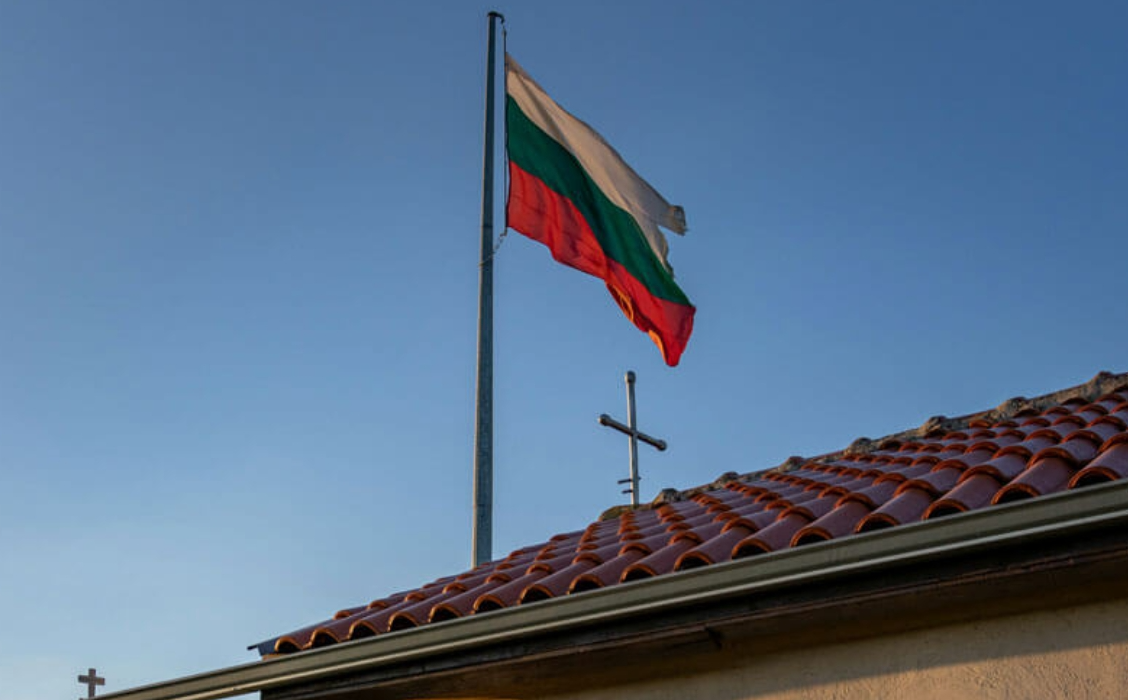
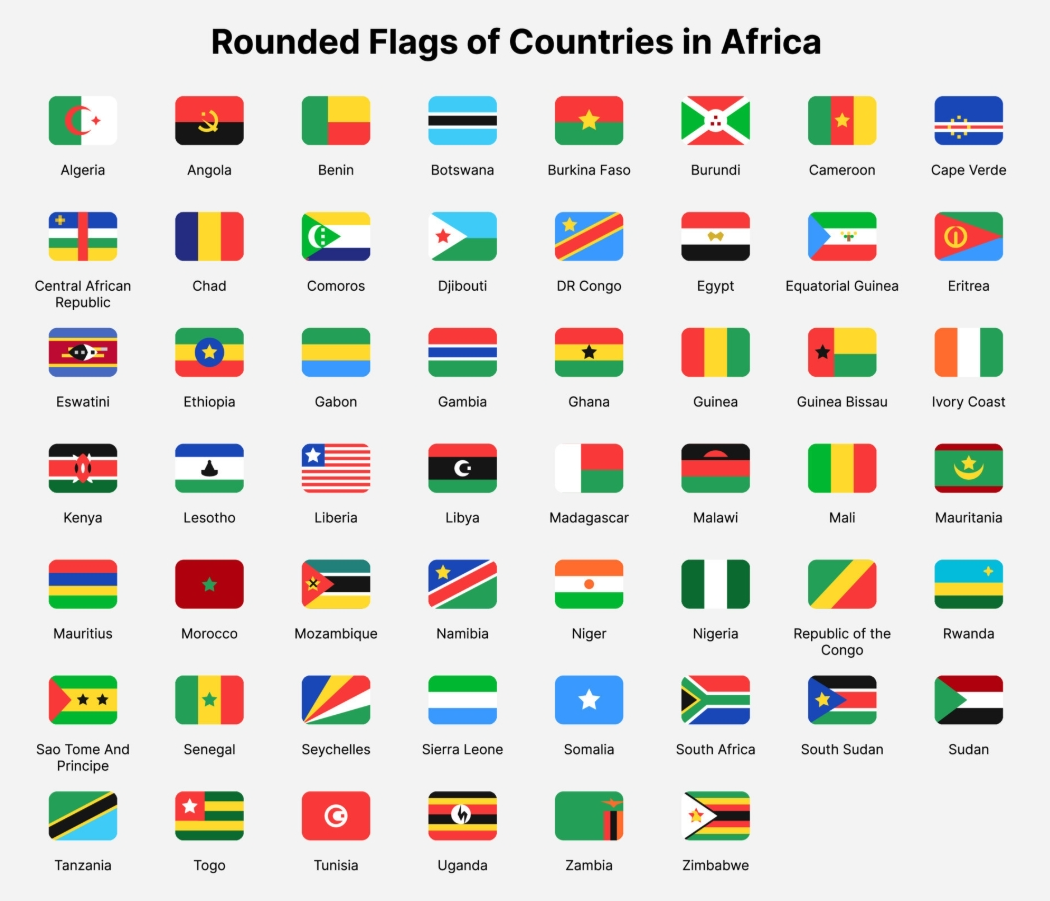
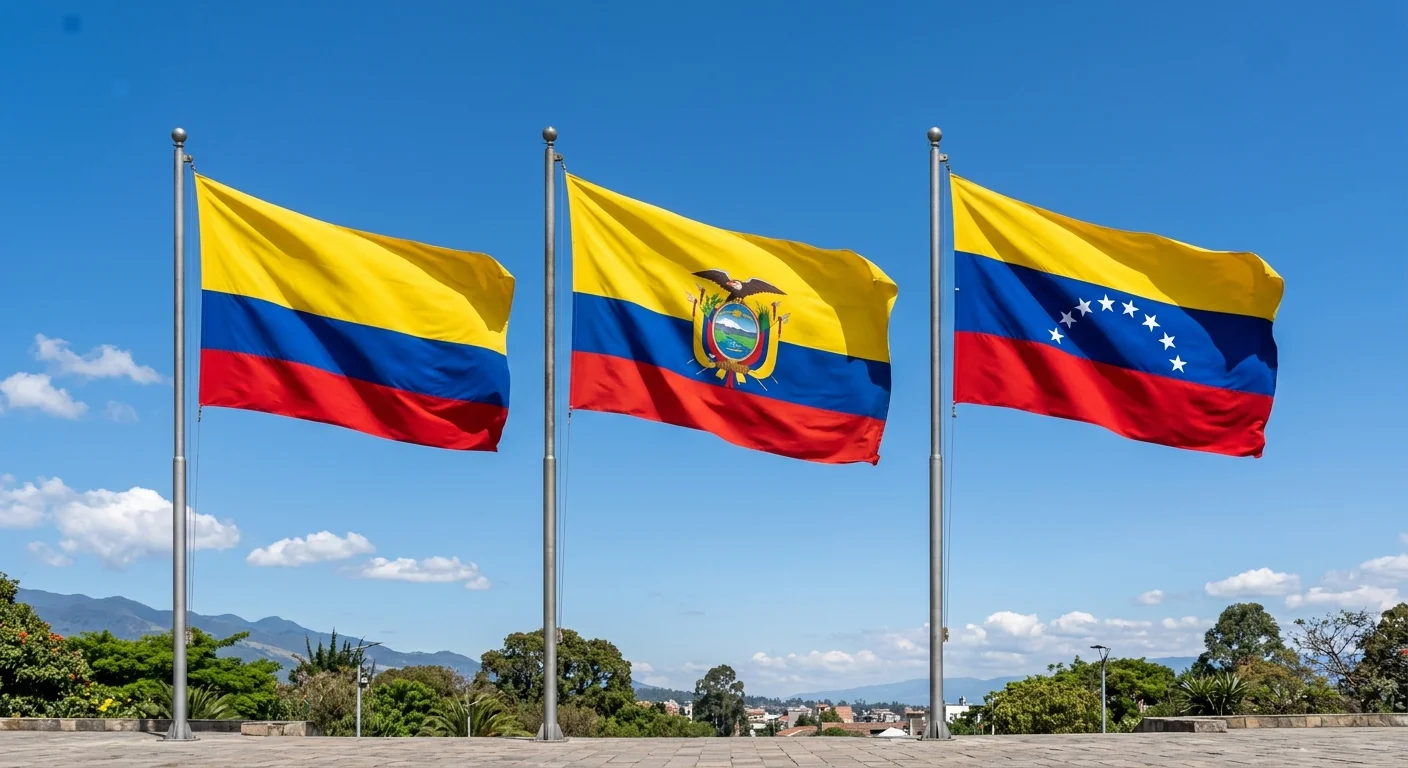
You're choosing colors for a custom flag — or maybe you're staring at a flag and wondering why those specific colors were picked. Either way, the answers aren't as straightforward as you'd expect. Red means courage on one flag and communist revolution on another. Green represents Islam in Saudi Arabia and Catholic identity in Ireland. The same color, different continent, completely different message.
This guide breaks down what flag colors mean across 192 countries, why certain colors dominate, and how to use that knowledge when designing your own flag.
The Global Color Census — Which Colors Appear on the Most Flags and Why
Red shows up on 148 out of 192 national flags. That's 77% of countries. White follows at 73%, and blue sits at 53%. If you've ever wondered why so many flags look alike from a distance, those three colors explain most of it.
77%
Red (148 Flags)
73%
White (140 Flags)
53%
Blue (102 Flags)
Frequency alone doesn't tell the full story, though. Red doesn't just appear often — it dominates the flags it's on, averaging 30% area coverage. China's flag is 97.6% red. Morocco and Turkey aren't far behind. White, despite appearing on 140 flags, averages just 19% coverage. It plays a supporting role more than a leading one.
The real surprise is green. In 1917, green appeared on about 16% of national flags. By 1999, that jumped to 42%. The driver was decolonization. As African nations gained independence through the 1960s, many chose green to represent their land and natural wealth. Islamic nations pushed the trend further — green holds deep religious meaning in Islam.
1917
16%
of flags featured green
1999
42%
of flags featured green
Gold and yellow show up on 89 flags but seldom take center stage, averaging 8.6% area coverage. Black appears on 59 flags. Orange? Just 9 flags total. And purple sits on exactly two national flags — Nicaragua and Spain — covering less than 0.1% of either. Purple dye once came from sea snails and cost a fortune. By the time cheaper options existed, flag traditions had already been set.
89
Gold/Yellow
59
Black
9
Orange
2
Purple
The most popular combination is red, white, and blue at 30 flags. Red and white alone account for 16 more. Pan-African red, gold, and green covers 10+ flags across the continent.
Red on Flags — Revolution, Sacrifice, and the Blood of the Nation
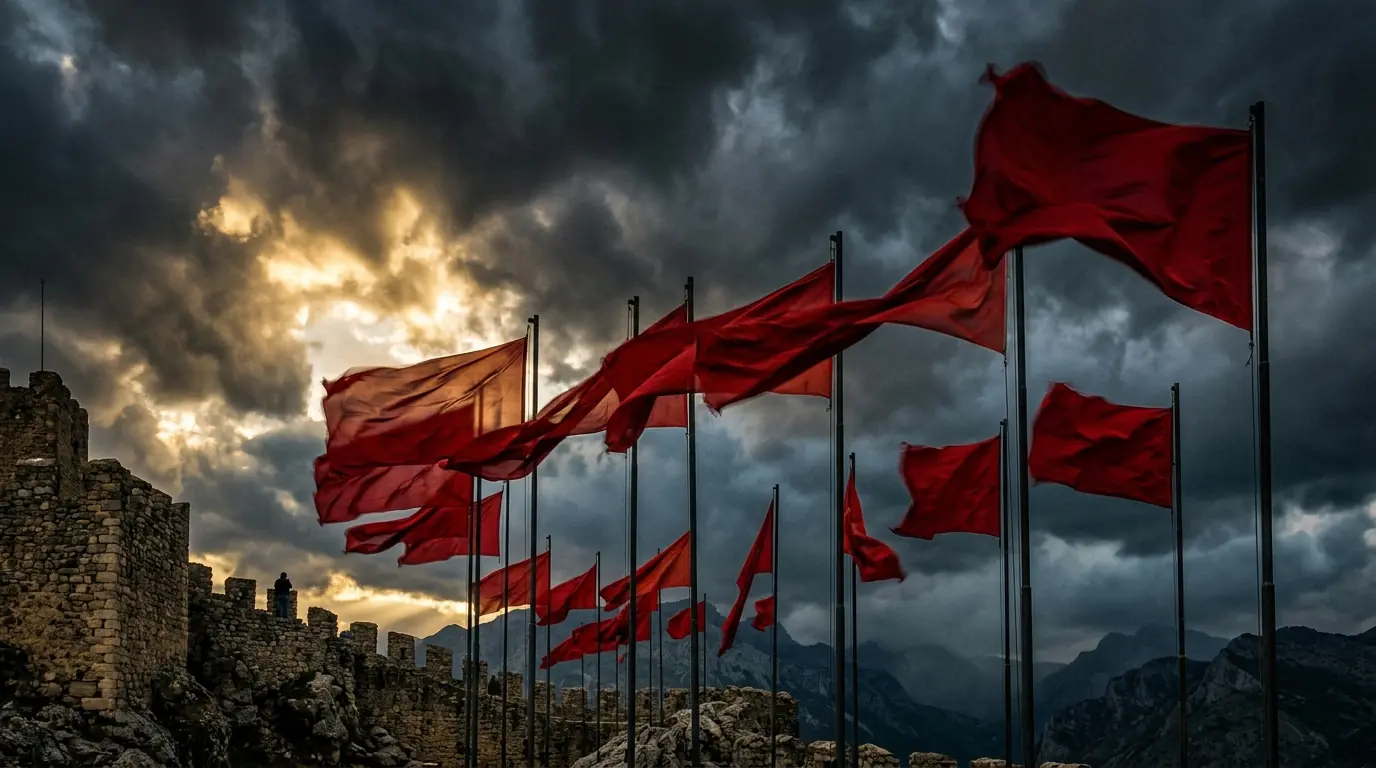
Red's dominance on flags isn't an accident. It traces back centuries, and the reasons shift depending on who's flying it.
Norse Vikings used red shields as war signals between 750 and 1200 AD. Norman armies flew red streamers called Baucans — a direct message meaning "no quarter given." Red meant violence, and everyone understood it.
The turning point came during the French Revolution. Jacobins adopted red as the color of martyrdom in the 1790s. Then in 1831, Welsh workers at the Merthyr Rising dipped a white flag into calf's blood and marched with it — the first recorded red flag as a workers' protest symbol. From there, red and revolution became inseparable. The Soviet Union, China, Vietnam, Cuba — each built national identity around it.
But the same red carries different weight in different places.
United States
Hardiness, valor, and courage
China
Communist revolution and workers' struggle
Japan
Sun goddess Amaterasu — mythological origin
Japan's red disc — the Hinomaru — has nothing to do with revolution. It symbolizes the sun goddess Amaterasu, a mythological origin that predates modern politics by centuries.
Pan-African nations took red in yet another direction. For Ethiopia, Ghana, and Cameroon, red represents blood shed fighting colonialism. Turkey uses red to honor Ottoman and Turkish warriors who fell in battle.
So if someone asks "what does red mean on a flag?" — the honest answer is it depends on which flag. The color is universal. The meaning behind it is local. That distinction matters when you're choosing colors for a custom flag and want the symbolism to land with the right audience.
Blue on Flags — From Royal Authority to Democratic Freedom
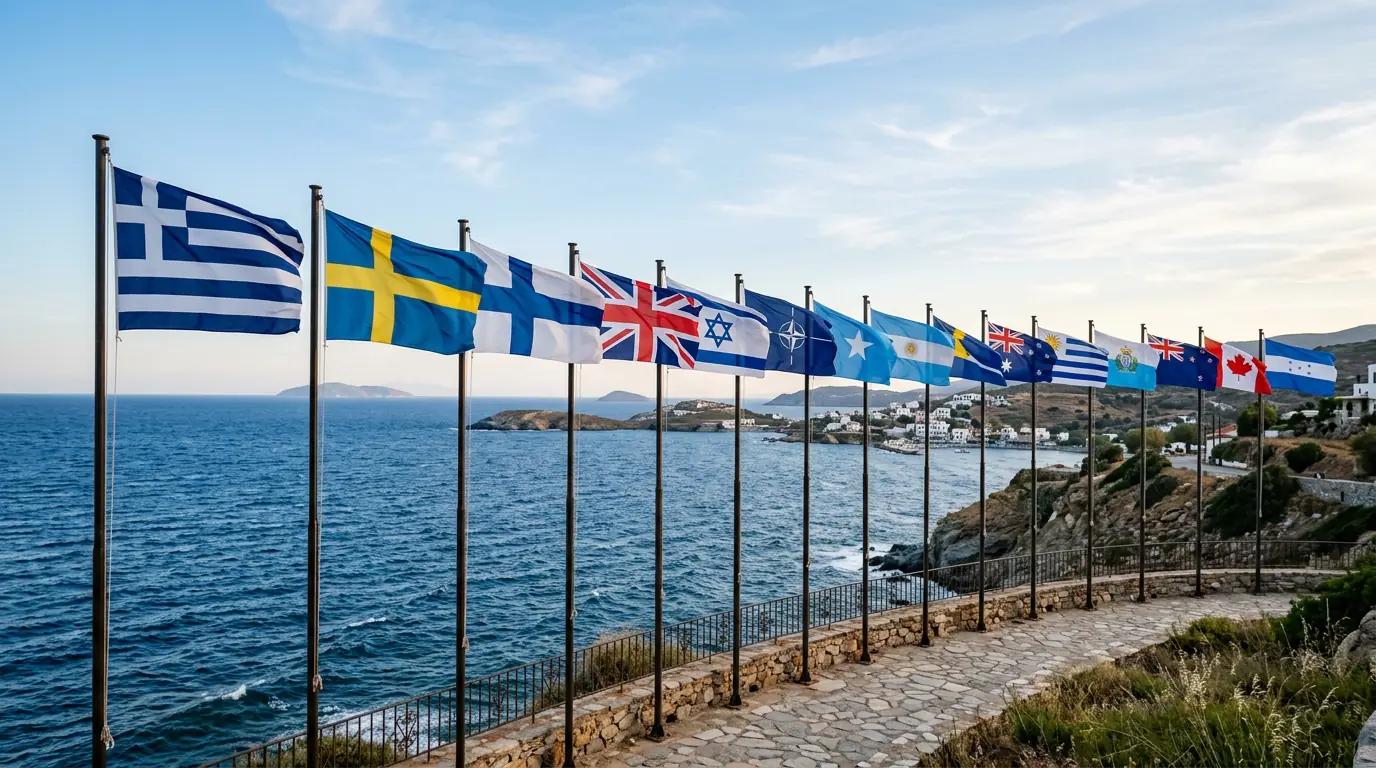
Blue earned its place on 102 national flags — 53% of countries — but unlike red, it almost never represents conflict. Most blue flags point toward sky, sea, or ideals like justice and freedom.
The United States set its blue meaning early. Charles Thomson defined it in 1782 as vigilance, perseverance, and justice. Argentina went a different route: their light blue represents clear skies and the La Plata River. Greece uses blue stripes for the sea and sky, with nine stripes encoding the syllables of "eleftheria" — the Greek word for freedom.
The shade of blue matters more than people realize. Argentina and Somalia use light sky blue. Australia, France, and the EU use dark navy. These aren't interchangeable. Light blue evokes openness and calm. Navy blue carries more weight and authority — it ties back to British naval heritage in places like Australia and New Zealand.
The EU flag shows how deliberate color choices can be. The blue background represents sky and European unity. The 12 gold stars mean completeness and solidarity — people assume the count matches EU member states, but it doesn't. It's been 12 since adoption. Brazil did something even more specific: their blue globe shows the night sky over Rio de Janeiro on November 15, 1889, the exact date their republic was founded.
If you're picking blue for a custom flag, the shade communicates as much as the color itself. Light blue reads as peaceful and open. Dark blue reads as established and serious. Both work. They just say different things.
Green on Flags — Islam, Fertility, and Post-Colonial Identity
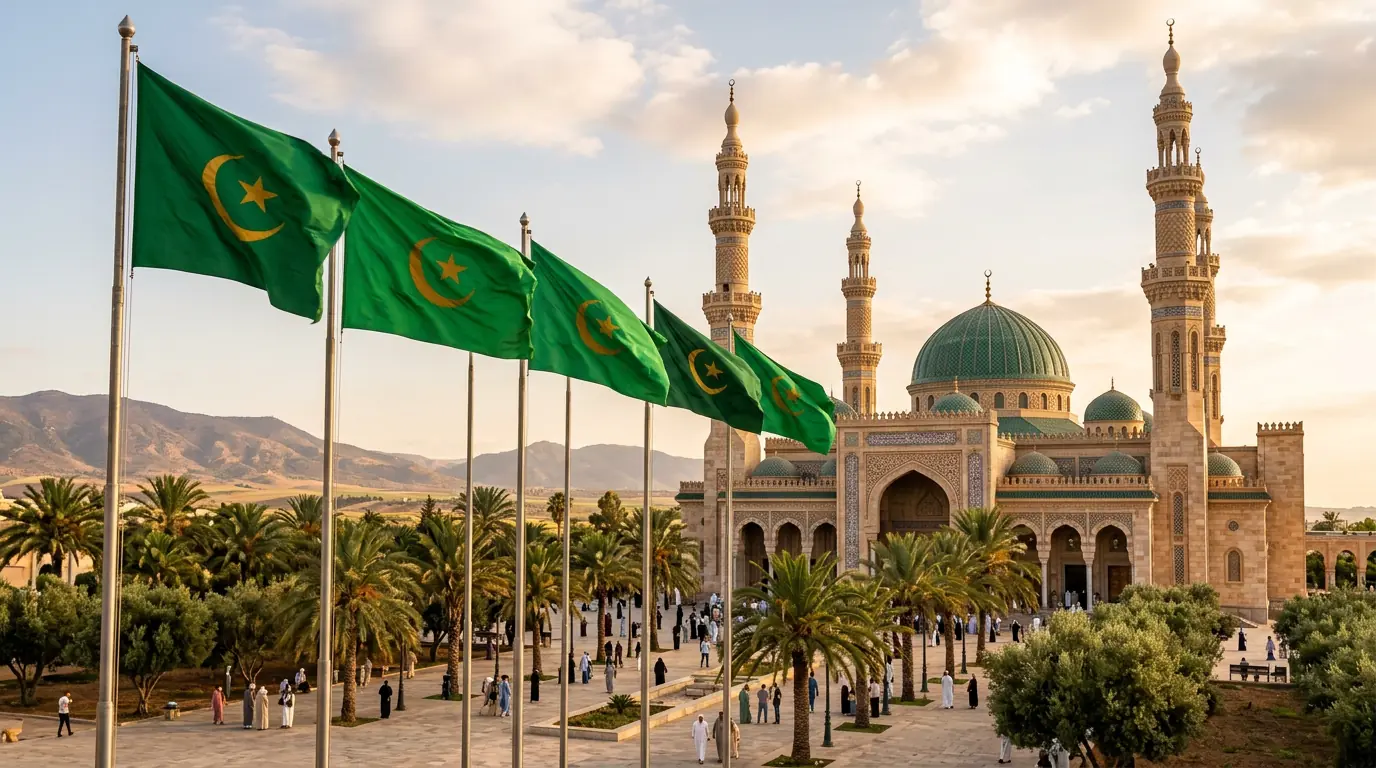
Green carries more religious weight than any other flag color. Prophet Muhammad wore a green cloak and turban. The Quran describes paradise with green garments. The Fatimid Caliphate adopted green flags back in 909 AD. That connection between green and Islam runs deep, and it shows on the map.
Saudi Arabia's flag is green with white Arabic script. Pakistan uses green for its Muslim majority. Libya under Gaddafi flew a solid green flag from 1977 to 2011 — the only single-color national flag in modern history. That tells you how strong the association is.
But green on flags isn't always about religion. Marcus Garvey defined green in Pan-African terms as representing "the rich land and abundant natural wealth of Africa." Italy uses green for agriculture. Ireland ties it to the Catholic community. Mexico chose green for independence. Brazil references the Amazon forests. India connects green to prosperity and fertility.
The practical takeaway: green's meaning depends on geography more than any other flag color. In the Middle East and North Africa, most people read Islamic symbolism into it. In sub-Saharan Africa, it signals land and resources. In Europe and the Americas, it leans toward nature, growth, or a specific national story.
This matters for custom flag design. If your organization operates across cultures, green can be tricky. A sustainability nonprofit might love green for its nature connotation — but that same green could read as a religious statement in certain markets. Know your audience before you commit.
White, Black, and Gold — The Supporting Cast That Carries Big Meaning
White appears on 140 flags — second only to red — but it seldom gets top billing. It fills backgrounds, divides stripes, and frames other colors. That supporting role makes sense because white's meaning is about absence: peace, purity, surrender. The United States ties white to purity and innocence. Japan uses it for honesty and simplicity. The white flag of truce works in every culture on earth.
Black tells a different story. It shows up on 59 flags and carries heavier symbolism. Kenya's black stripe represents the people themselves. South Africa's black speaks to the journey from apartheid. Germany's black comes from the Lützow Free Corps uniforms and represents determination. Papua New Guinea gives black more space than any other country at 49.6% of their flag.
Gold and yellow appear on 89 flags with meanings that range from wealth to monarchy to sunshine. Thailand's gold represents the king. Brunei uses gold for the Sultan — at 54.6% coverage, the highest gold ratio of any national flag. Spain connects gold to generosity. Brazil ties it to gold mines. Ghana uses it for mineral wealth.
Then there's orange, the rarest of the common colors at just 9 flags. Ireland uses orange for the Protestant community, making its tricolor a statement of unity between Catholic green and Protestant orange. India's saffron connects to Hinduism and courage. Bhutan gives orange the most space at 43.5%, linking it to Buddhist tradition.
For custom flag design, these "secondary" colors do heavy lifting. Black paired with bold colors signals strength or heritage. Gold suggests prestige. Orange stands out because so few flags use it — which is either an advantage or a risk depending on what you want your flag to communicate.
Pro Tip: For bulk custom flag orders over 100 pieces with Pantone color matching,
contact our team for special wholesale pricing.
Regional Color Patterns — Pan-African, Pan-Arab, Pan-Slavic, and Nordic Traditions
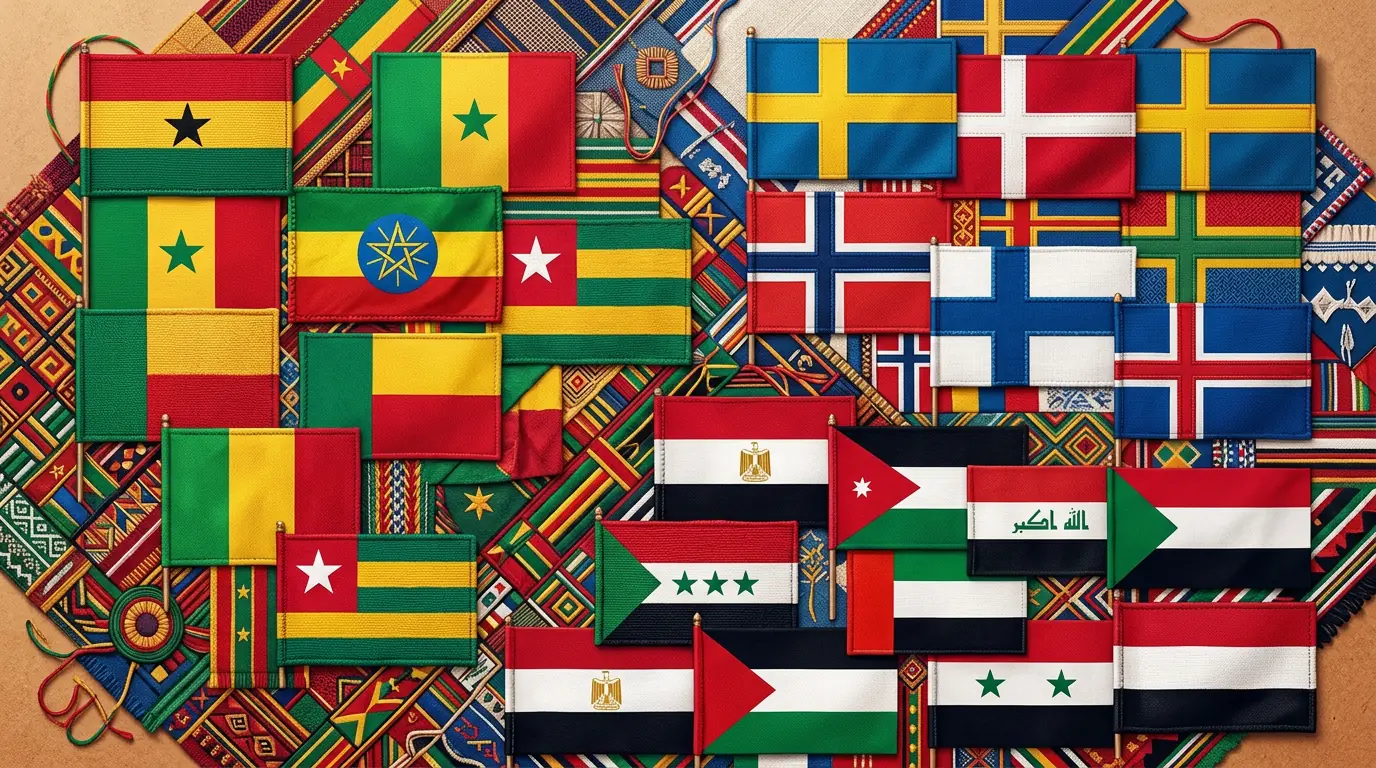
Individual flag colors carry meaning, but the combinations tell you even more. Four major regional traditions dominate world flags, and each one grew from a specific historical moment.
Pan-African colors — green, yellow, and red — trace back to Ethiopia's flag and the Battle of Adwa in 1896. Ethiopian forces defeated an Italian invasion, and Ethiopia became a symbol of African independence before most of the continent had won theirs. When Ghana gained independence in 1957, it adopted those same colors. Over 20 African nations followed. A second Pan-African palette comes from Marcus Garvey's UNIA movement in 1920: red, black, and green. Kenya, Malawi, and several Caribbean nations use this version. The two traditions overlap but aren't identical — Garvey's drops yellow and adds black to center the African diaspora.
Pan-Arab colors come from the 1916 Arab Revolt flag. Black for the Abbasid Caliphate, white for the Umayyad, green for the Fatimid, red for the Hashemite dynasty. Egypt, Iraq, Jordan, Syria, the UAE, and Palestine all use these. The combination signals shared Arab identity and resistance to Ottoman rule.
Pan-Slavic colors — red, white, and blue — started with the Russian flag. Serbia, Czech Republic, Slovakia, Slovenia, and Croatia use the same trio, each in different arrangements. The shared palette reflects cultural and linguistic ties across Slavic nations.
The Nordic Cross is the oldest tradition. Denmark's Dannebrog dates to 1219 and is the oldest national flag design still in use. The offset cross represents Christianity. Denmark, Sweden, Norway, Finland, and Iceland all use it with different colors, but the cross layout ties them together.
For anyone designing a flag with regional ties, these patterns are worth studying. Color combinations create group identity — sometimes stronger than what any single color means on its own.
From Color Research to Custom Flag Design — Choosing Colors That Communicate
All the flag color symbolism research in the world won't help if your flag is hard to read from 50 feet away. That's where practical design rules take over.
Ted Kaye, through the North American Vexillological Association, laid out five rules for good flag design. Two deal with color: stick to two or three colors, and make them meaningful. The rest — keep it simple, skip lettering, be distinctive — reinforce the same point. Restraint beats complexity on a flag.
Contrast is the single most important technical factor. Red on white works. Blue on yellow works. Red on dark green? Almost invisible at distance. A quick test: convert your design to grayscale. If elements blur together, your contrast is too low. High-contrast pairs like black and white or blue and gold read well on flagpoles, screens, and in print.
Color psychology plays a role, but don't overthink it. Red grabs attention. Blue builds trust. Green suggests growth. Yellow brings energy. These associations hold across most Western markets, but they break down cross-culturally. Red means luck in China. White signals mourning in parts of Asia, not purity. Green is sacred in Islamic cultures — using it casually on a corporate flag could offend.
Custom Flag Color Checklist
- Limit yourself to two or three colors
- Research the cultural context for your audience
- Test the design at a distance — print it small or pin it across a room
- Run the grayscale test
- Pick high contrast over visual complexity
The best flag colors aren't the prettiest. They're the ones your audience reads correctly at a glance.
Making Your Color Choice Count
Flag colors are never arbitrary. Every shade on every national flag traces back to a specific story — revolution, religion, geography, or colonial history. Three things stand out after looking at all 192 countries: red and white dominate because they carry the broadest range of meanings, regional color traditions (Pan-African, Pan-Arab, Nordic) matter as much as individual colors, and the shade you choose communicates as much as the color itself.
If you're designing a custom flag, start with your audience. Research what your chosen colors mean in their cultural context. Test for contrast and readability at distance. And keep it to two or three colors — the most iconic flags in history all follow that rule.
Next Steps
Pick your two or three candidate colors. Run them through the cultural check for your target market. Print a small test flag and view it from across the room. If it reads clean and the symbolism fits, you've got your palette.
Related Articles