Your outdoor flag flies in rain, bakes in summer sun, and whips in coastal winds — sometimes all in the same week. So when fading, fraying, or drooping shows up after just a few months, the cause is almost always the same: the wrong material.
Picking the right outdoor flag fabric isn't complicated. You just need to know what to look for. Nylon? Polyester? Knitted or woven? Each material behaves differently. Some hold up well in harsh sun. Others handle heavy wind better. And some fall apart faster than you'd expect — costing you money and credibility.For businesses, event organizers, or brands investing in long-term visibility, working with reliable custom outdoor flag services also ensures the right material is matched to specific environments from the start — avoiding costly replacements later.
This guide compares the most popular weather resistant flag materials side by side. By the end, you'll know which one fits your flagpole, your climate, and your budget.
Best Material for Outdoor Flags
Three materials dominate the outdoor flag market: nylon , polyester , and Poly-Max . Each has its own character. Pick the wrong one, and you'll feel it fast — like wearing flip-flops in a snowstorm. Possible, yes. Worth it? No.
3-6
Months — Nylon
12-24
Months — Polyester
24+
Months — Poly-Max
Here's how they stack up.
Nylon: The Lightweight Performer
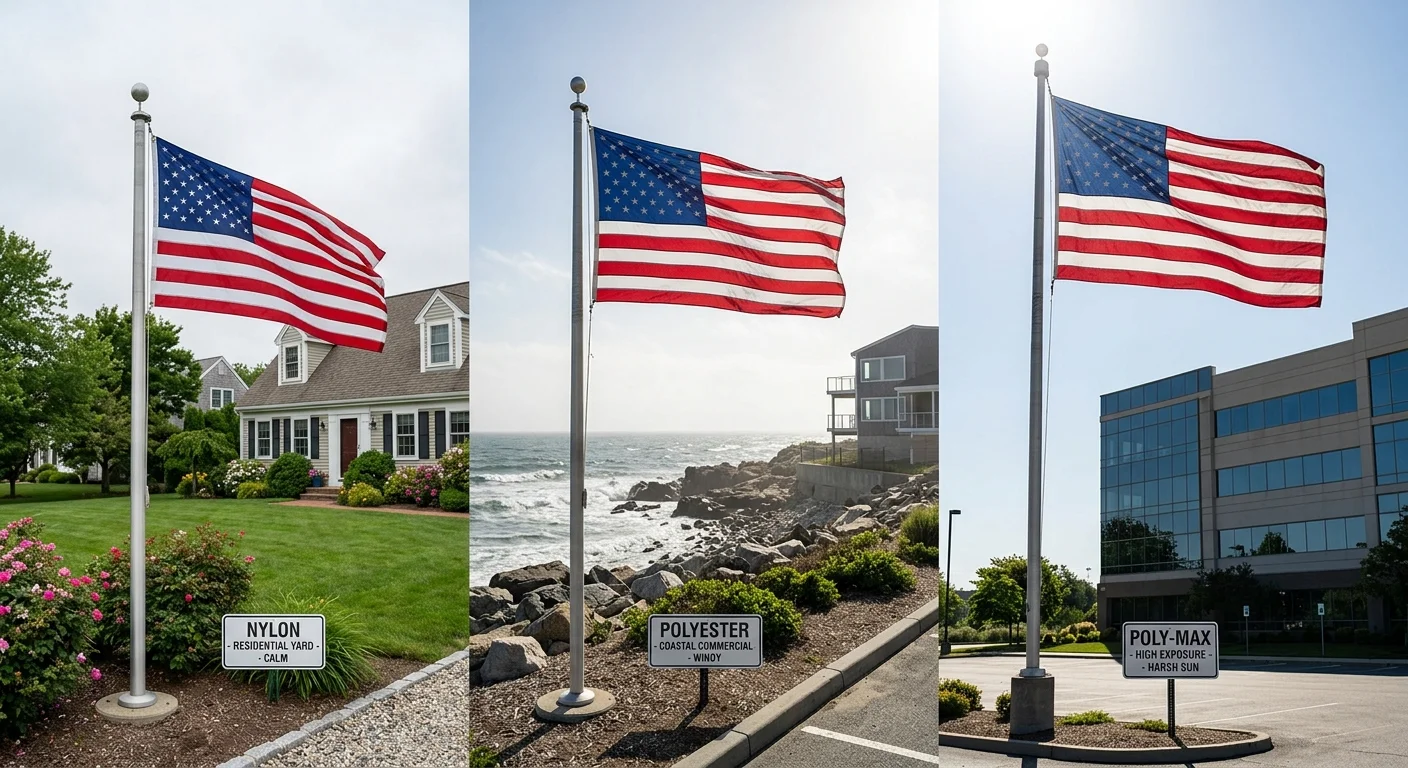
Nylon is the easy, low-maintenance option. It's light enough to catch a gentle breeze. It dries fast after rain and resists mildew well. For a residential flagpole or a wall-mounted display in a mild climate, it gets the job done.
Push it harder, though, and the cracks show. Sustained wind, relentless sun, coastal salt air — nylon struggles with all of these. Colors fade faster under UV exposure. The fabric frays under stress. In strong winds, it gets loud and snappy, which sounds fun until you hear it at 2 a.m.For buyers working with experienced outdoor flag wholesalers, nylon is often positioned as an entry-level option — cost-effective, but best suited for lighter-duty environments.
Best for: Homes, moderate climates, occasional display.
Polyester: The Workhorse
Polyester — especially 2-ply sewn construction — is what most flag professionals choose first. It's heavier, so it needs stronger wind to fly full and flat. That extra weight pays off, though. You get superior tear resistance, strong UV color retention, and a lifespan that outlasts nylon in tough conditions.
For commercial use, 24/7 outdoor display, or high-wind environments, polyester isn't just a solid choice — it's the smart one.Many businesses source these from a custom outdoor flag factory, where fabric weight, stitching method, and reinforcement can be tailored to specific climate demands.
Best for: Commercial properties, coastal areas, year-round harsh weather.
Poly-Max: The Heavy-Duty Specialist
Poly-Max is polyester's tougher sibling. It's built for tall poles, open exposed areas, and punishing conditions. Of the three options, it offers the best UV resistance and the longest color life. It costs more upfront — but a flag that survives everything earns that price over time.
Best for: 24/7 commercial display, extreme weather, high flagpoles.
Side-by-Side Comparison
Attribute | Nylon | Polyester (2-ply) | Poly-Max |
|---|---|---|---|
Weight | Light | Heavy | Heavy-duty |
Durability | Moderate | High | Superior |
Wind Resistance | Low–Moderate | High | Highest |
UV/Color Retention | Fades faster | Excellent | Best |
Water Handling | Excellent (quick-dry) | Good | Water-shedding |
Lifespan | Shorter | Long | Longest |
Cost | Lower | Higher | Premium |
Best Use | Residential/mild | Commercial/harsh | Extreme/24-7 |
The short version: Wind and harsh weather in your area? Go with polyester . You're in a calm, sheltered spot and want something vibrant and light? Nylon does the job well. Flying a flag on a tall commercial pole in brutal conditions? Poly-Max is worth every extra dollar.
Material Comparison Table
Numbers don't lie. Pick a flag for real-world weather, and the data tells you everything you need to know.
The table below covers what matters most: how each material holds up against the elements, how long it lasts, and what it costs you over time. Not just the sticker price. The real cost — because a cheaper flag that fails in four months is never the cheaper option.
Attribute | Nylon | Polyester (2-ply) | Poly-Max |
|---|---|---|---|
Fabric Weight | Light | Medium-Heavy | Heavy-Duty |
Tensile Strength | Moderate | High | Superior |
UV Resistance | Low | High | Highest |
Fade Resistance | Fades within months | Holds color long-term | Best-in-class retention |
Wind Load Handling | Low–Moderate | High | Extreme |
Moisture Recovery | Fast-drying | Moderate | Water-shedding |
Typical Lifespan | 3–6 months (harsh) | 12–24 months | 24+ months |
Relative Cost | $ | $$ | $$$ |
Print Quality | Vibrant, lighter saturation | Rich, sharp | Rich, sharp |
Ideal Environment | Sheltered / residential | Commercial / coastal | Tall poles / severe exposure |
A few things worth pointing out:
The lifespan gap is real. Coastal salt air, intense sun, sustained winds — nylon breaks down in under six months in those conditions. Poly-Max holds strong for two years or more.
UV resistance is nylon's weak point. It looks sharp on day one. By month four, the color is already fading fast.
Polyester (2-ply) hits the sweet spot for most commercial buyers. You get strong performance without paying the Poly-Max premium.
Your best column depends on where your flag lives. A sheltered garden pole forgives a lot. An exposed rooftop flagpole does not.
Pros and Cons by Material
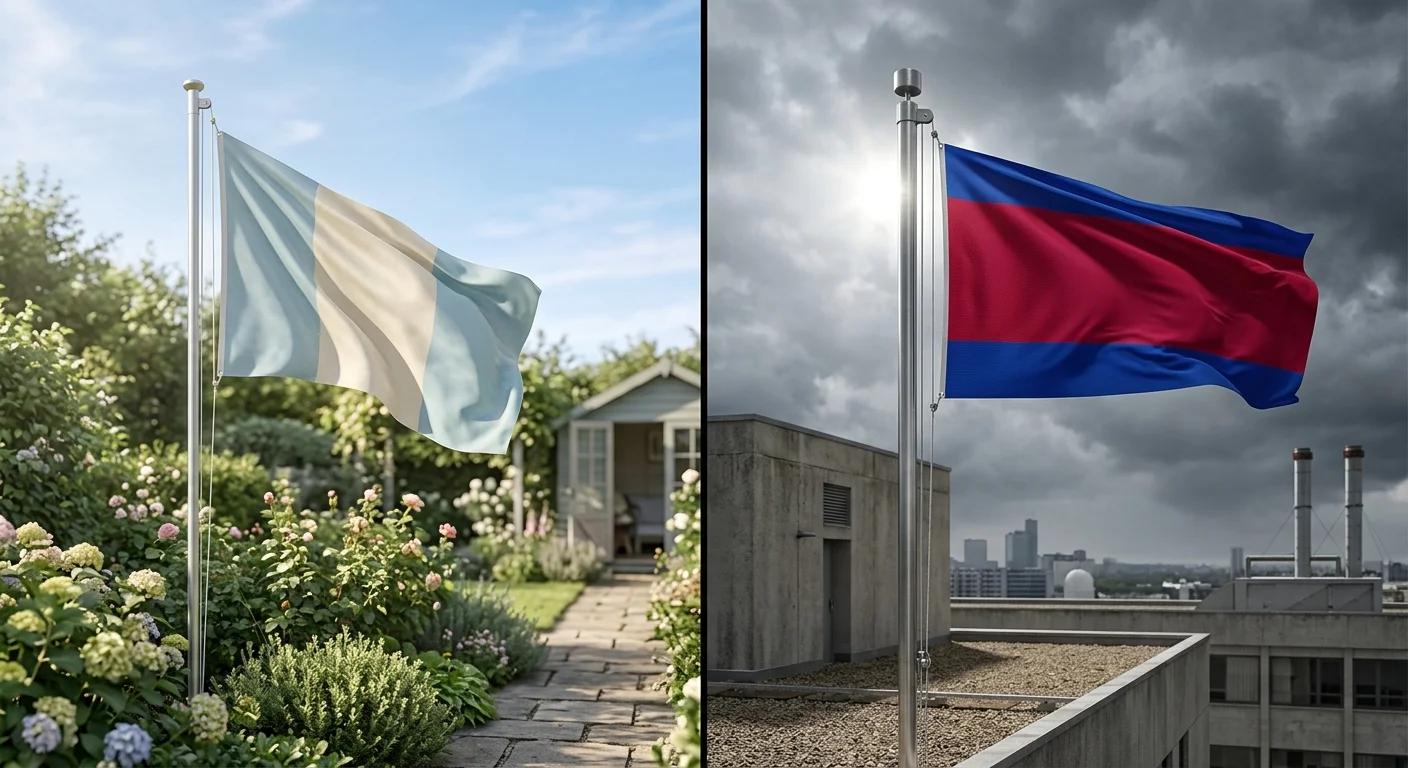
Every flag material has a personality. Get to know it before you commit.
Nylon is charming and easy-going. Polyester is reliable and tough. Poly-Max is the one you call when everything else has given up. None of them is perfect. All of them have trade-offs. The trick is matching the trade-offs you can live with to the conditions your flag faces.
Here's the honest breakdown.
Nylon: Bright, Breezy — and Fragile Under Pressure
Nylon's biggest strength is also its biggest limitation: it's light. That lightness lets it catch the faintest breeze. On a calm day, it looks alive — while polyester hangs limp and flat. It dries fast. It resists mildew. Colors print vivid and sharp, almost luminous.
But the moment conditions get serious, nylon starts to struggle.
Pros
- Flies in low wind — ideal for calm, sheltered locations
- Fast-drying after rain; resists mildew on its own
- Excellent print vibrancy; colors pop on day one
- Lower upfront cost — the most affordable entry point
Cons
- UV resistance is poor — colors start fading within months in direct sun
- Frays and tears faster under sustained wind load
- Salt air breaks the fabric down faster than most buyers expect
- Short lifespan in harsh environments: often under six months before visible deterioration
The honest truth about nylon: It looks great in a showroom and even better on a mild, sunny afternoon. Put it in strong sun, salt air, or constant wind on a regular basis, and nylon will let you down — faster than the price tag suggests it should.
Polyester (2-Ply): The One Most Professionals Choose
There's a reason commercial flag buyers keep coming back to 2-ply polyester. It doesn't have nylon's effortless charm. It needs more wind to fly full and flat. But you get something nylon can't deliver: staying power.
Pros
- Superior tear resistance — holds up under high wind loads without fraying
- Excellent UV and fade resistant flag performance; color stays sharp for 12-24 months even in harsh conditions
- Holds strong in coastal environments where salt air breaks nylon down fast
- Rich, sharp print quality — dye saturation is deep and consistent
- Best overall value for flag material durability over time
Cons
- Heavier fabric needs stronger wind to fly well — can look flat in very calm conditions
- Higher cost than nylon upfront (though lower cost per month of use)
- Slower to dry than nylon after heavy rain
The honest truth about polyester: This is the workhorse. No flashy features. It just works — month after month, in conditions that would have finished nylon off long ago. For most commercial buyers, 2-ply polyester is where the decision should stop.
Poly-Max: Built for Conditions Where Failure Isn't Acceptable
Poly-Max is purpose-built for situations where everything else is a gamble. Tall commercial poles. Rooftop installations. Coastal properties hit by salt wind and intense sun. Flags flying 24 hours a day, 365 days a year. In those environments, Poly-Max isn't overkill — it's the clear logical choice.
Pros
- Best-in-class UV resistant flag fabric — color retention outlasts every other option
- Handles extreme wind loads without fraying, tearing, or deforming
- Sheds water fast; doesn't hold moisture after rain
- Longest lifespan on the market: 24+ months even in severe exposure
- Protects your brand investment — no sun-bleached, faded flags flying in front of your business
Cons
- Premium price point — the highest upfront cost of the three
- Heavier build needs a solid flagpole and stronger wind to fly at full extension
- More than necessary for low-exposure, sheltered, or short-term display situations
The honest truth about Poly-Max: The sticker price stings a little. Run the numbers over 24 months though — replacement costs, labor, and the damage a faded flag does to your brand — and the premium pays for itself with room to spare.
Quick-Reference: Pros and Cons at a Glance
Material | Biggest Strength | Biggest Weakness | Right For |
|---|---|---|---|
Nylon | Flies in light wind; vibrant prints | Fades fast; poor durability in harsh conditions | Residential, sheltered, temporary |
Polyester (2-ply) | Durability + UV performance balance | Needs stronger wind; slower drying | Commercial, coastal, year-round |
Poly-Max | Maximum lifespan + weather resistance | Highest cost; heavy for calm locations | Extreme exposure, 24/7 display |
No material wins in every situation. For most people reading this — business owners, event planners, property managers who need a flag that still looks professional six months from now — polyester is the answer . Flying in punishing conditions? Don't compromise. Go Poly-Max.
Recommendations by Use Case
A flag that thrives outside a beachfront hotel will struggle on a suburban front porch — and the reverse is true too. Material choice depends on your specific situation. So here's a straightforward breakdown of what works, based on where your flag lives and what it needs to handle.
Residential Flagpoles in Mild Climates
Your front yard flag doesn't take the same beating as a commercial rooftop installation. Wind is moderate. Sun exposure is manageable. The flag comes down during storms.
Nylon is your match. It catches gentle breezes with ease, dries fast after spring rain, and prints colors that look rich and vivid against a blue sky. You'll need to replace it at some point — nylon isn't built to last forever — but for a home setting without harsh exposure, the lower cost makes solid sense.
Best pick: Nylon
Commercial Properties and Retail Locations
A flag flying outside your business makes a brand statement. It runs 365 days a year, through summer heat, winter wind, and everything in between. Customers notice a sun-bleached, sagging flag — and it leaves the wrong impression.
2-ply polyester is the professional standard here. The heavier polyester flag fabric handles real wind without fraying at the edges. Its UV resistant flag fabric construction keeps colors sharp and credible through 12 to 24 months of non-stop exposure. The higher upfront cost pays for itself fast — you're not replacing it nearly as often.
Best pick: Polyester (2-ply)
Coastal and High-Wind Environments
Salt air is merciless. It breaks down nylon faster than almost any other environmental factor — often within four months. You're within a few miles of the ocean, or in an area with strong sustained winds. Standard materials won't hold up, and you won't get fair value from them.
Poly-Max was built for this. Its weather resistant flag material construction sheds moisture, fights off salt air corrosion, and holds color integrity in conditions that would destroy lighter outdoor banner fabric within a single season.
Best pick: Poly-Max
Events, Trade Shows, and Temporary Displays
Short-term use changes the math. Your flag is flying for a weekend event or a two-week promotion. Long-term flag material durability matters less here. What counts is print vibrancy and easy handling.
Nylon delivers here. It's lightweight, easy to transport, and produces brilliant colors straight off the printer. It won't last years — but it doesn't need to.
Best pick: Nylon
24/7 High-Pole Commercial Display
Tall poles create extreme mechanical stress. Flags on high poles whip in wind patterns that ground-level installations never face. Choosing the right flag display system is equally important. The flag fabric weight needs to be solid enough to take that constant motion without fraying at the edges or splitting along seams.
Poly-Max is the clear choice for this. Nothing else on the market comes close to matching its tensile strength, fade resistant flag performance, and raw lifespan under punishing, non-stop exposure.
Best pick: Poly-Max
Quick Decision Reference
Your Situation | Recommended Material |
|---|---|
Residential / mild climate | Nylon |
Commercial property / year-round | Polyester (2-ply) |
Coastal / salt air / high wind | Poly-Max |
Events / temporary displays | Nylon |
Tall poles / 24/7 severe exposure | Poly-Max |
Match the material to the job. Get that decision right from the start. You'll cut replacement costs, protect your brand, and your flag will still look sharp six months from now — not faded and worn from the wrong call.
Pro Tip: For bulk orders over 100 pieces, contact our team for special pricing on premium polyester and Poly-Max flags.
Key Facts and Considerations
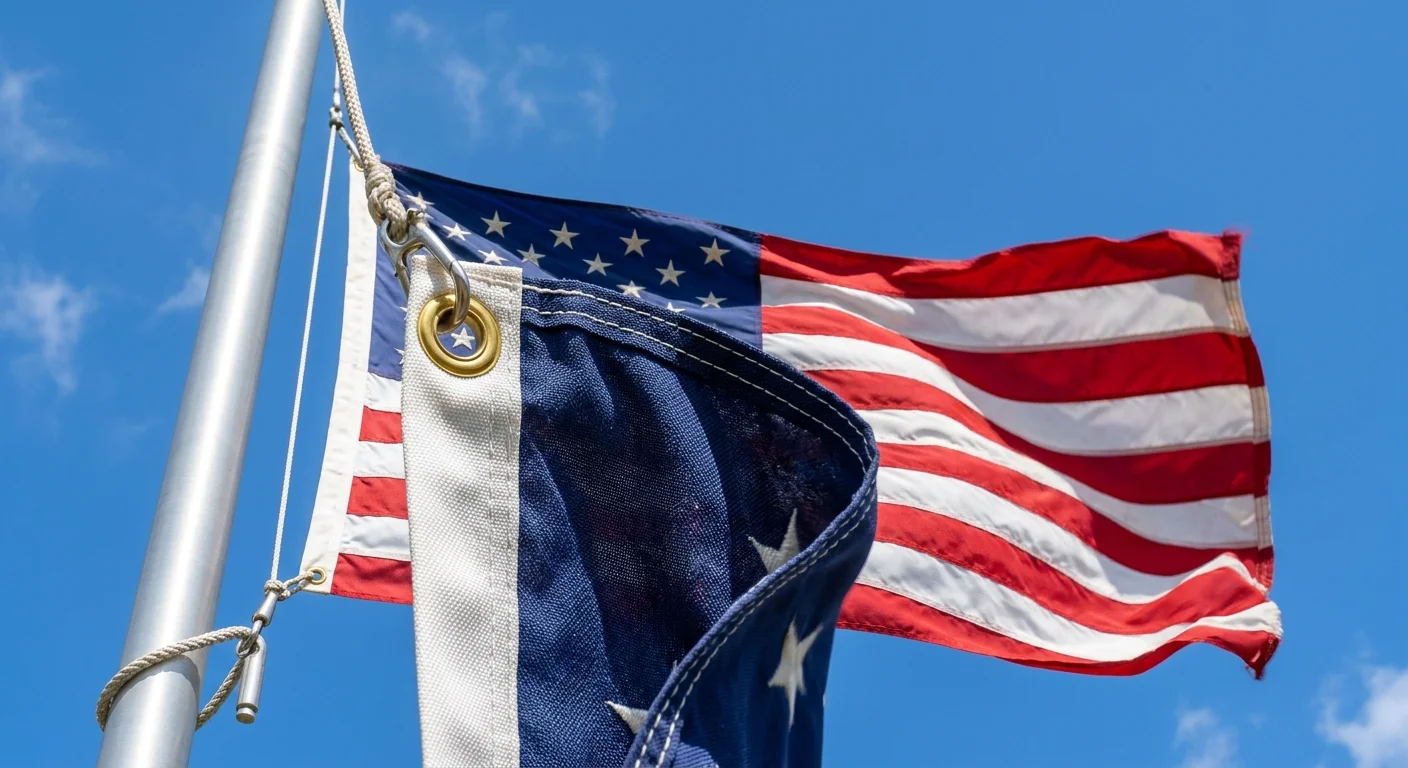
Before you hand your budget to a outdoor flag supplier, there are a few things worth knowing — the kind that don't show up in product descriptions but will show up on your flagpole.
Fabric weight determines flight behavior. A heavier flag needs stronger wind to unfurl. A lighter one catches gentle breezes but trades that sensitivity for durability. Weight isn't just a number on a spec sheet. It's the one factor that shapes how your flag looks and performs day after day.
Denier ratings tell you the density of the weave. You'll see terms like 100D, 150D, or 200D on polyester flags. Higher denier = tighter weave = greater resistance to tearing and fraying. A reliable outdoor flags supplier who can't tell you their fabric's denier — that's your first red flag.
Construction method matters as much as material. Knitted polyester breathes and moves well, which makes it popular for printed promotional flags. Woven polyester holds its shape better under mechanical stress. That's why it's the standard for long-term outdoor display. Same base material. Very different results.
Color degradation builds up and can't be reversed. UV exposure doesn't fade a flag slowly — it breaks down the dye molecules at a chemical level. Once color starts going, it doesn't level off. It speeds up. That's why UV resistant flag fabric isn't a premium add-on. For anything flying outdoors beyond 90 days, it's the baseline requirement.
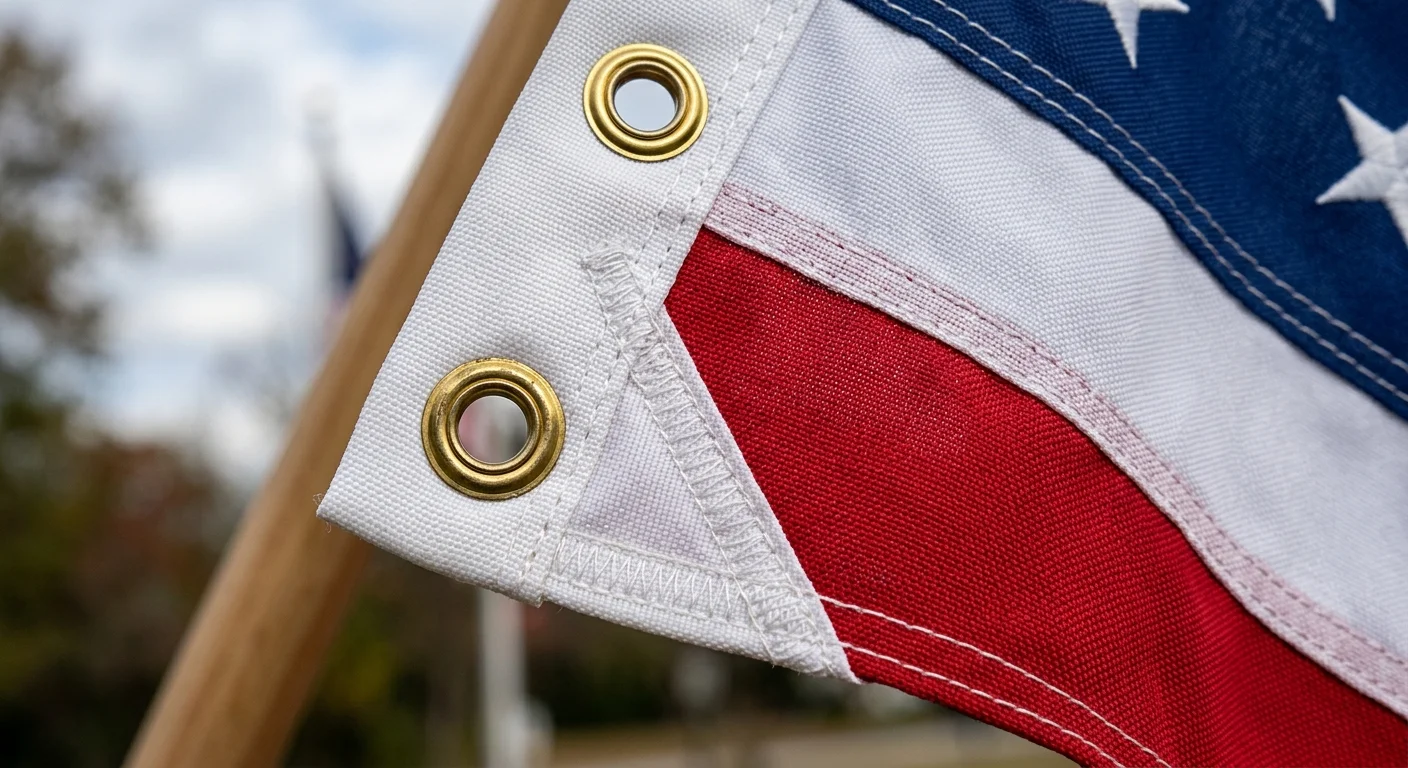
Seam quality and finishing determine where flags fail first. The edges and corner grommets take the hardest hits. Even the best polyester flag fabric fails too soon if the hemming is weak or the grommets are low-grade.
Construction Checklist
- Look for double-stitched fly ends — that's where fraying starts.
- Brass grommets outlast aluminum in coastal environments.
- Reinforced corner patches add real lifespan, especially on tall poles.
Material gets most of the attention. But construction is where a flag's lifespan is decided.
FAQ
Good questions deserve straight answers. Here are the ones that come up most often.
What is the best material for an outdoor flag?
It depends on your environment. For most commercial properties and year-round outdoor use, 2-ply polyester is the go-to choice. It balances UV resistance, durability, and cost better than anything else out there. Conditions extreme? Go Poly-Max.
How long does an outdoor flag last?
Nylon lasts around 3–6 months in harsh conditions. Polyester holds up for 12–24 months. Poly-Max pushes past 24 months even in severe, non-stop exposure.
Is nylon or polyester better for outdoor flags?
Polyester wins on durability and UV resistance. Nylon has its place too. It performs well in light wind and costs less upfront. So it works best for sheltered, residential settings or short-term events.
What does "denier" mean on a flag?
Denier measures how tightly the fabric is woven. Higher denier — 150D or 200D — means a tighter, more tear-resistant weave. That weave strength has a real impact on how long your flag holds up under wind stress.
Which flag material is most fade resistant?
Poly-Max leads on fade resistance. 2-ply polyester comes in second. Nylon fades the fastest under direct UV — often within four months outdoors.
Can I use a nylon flag near the ocean?
No — not if you want it to last. Salt air breaks nylon down fast. It's one of the harshest environmental factors for flag materials. For coastal use, Poly-Max is the material worth buying.
Conclusion
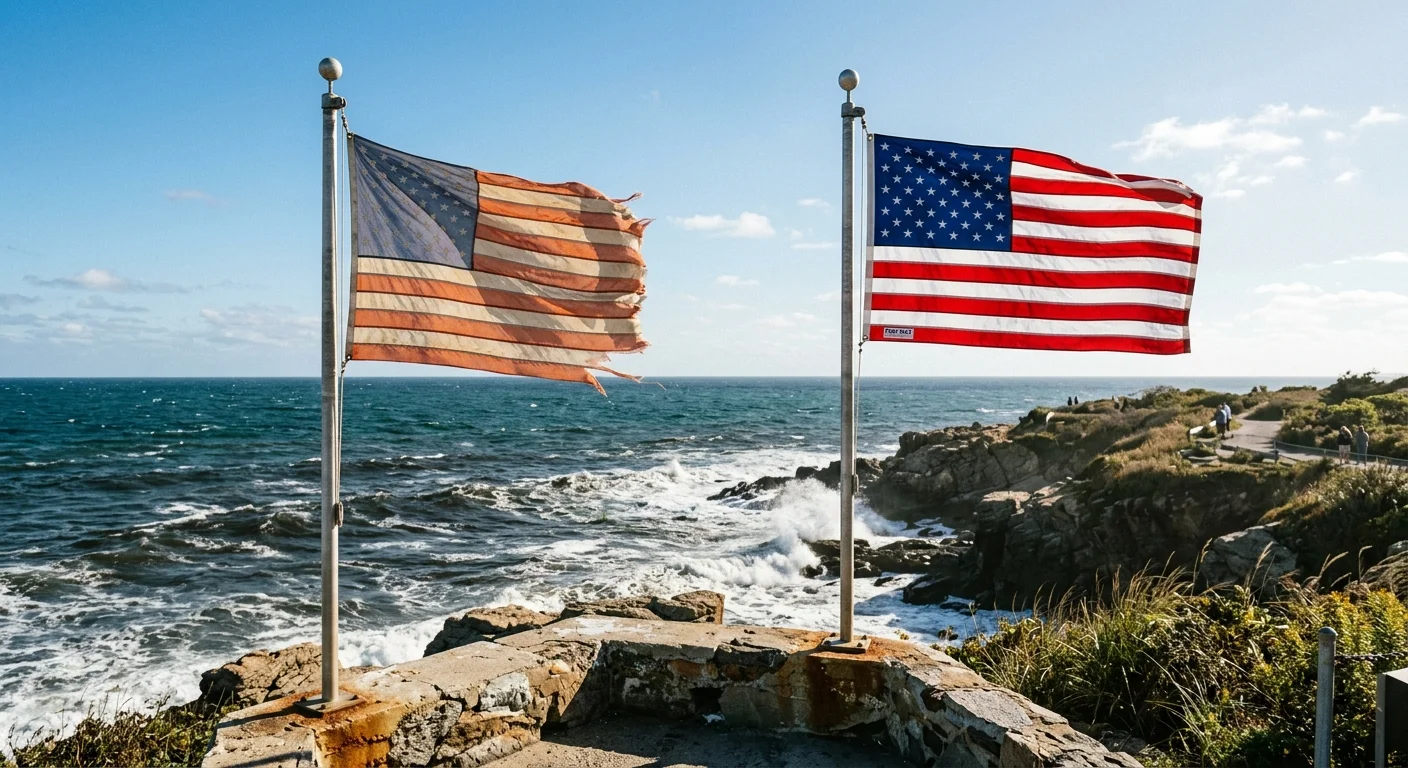
Picking the right outdoor flag material isn't complicated. You just need to know what conditions your flag will face.
For most everyday outdoor use, polyester flag fabric gives you the best balance of durability, UV resistance, and cost. Coastal winds or high-wind spots? Nylon is lighter and more responsive — it moves better in the breeze. For sharp print quality and colors that stay bold over time, knitted polyester is the top choice.
Here's what really matters: a flag is only as good as the fabric it's made from. The wrong material doesn't just fade. It weakens your brand message and makes your event look less professional.
So don't leave that to chance.
At RunCustomFlag , we match you with the right weather-resistant flag material for your environment, timeline, and goals. Our custom printing flags holds up long-term — so your message stays strong.
Get your free custom flag quote today — because your flag deserves to last.
Video Guide
Related Articles