You're standing in front of your computer, credit card half out, staring at a flag order form that lists eight different sizes. The flagpole is already installed. You just need the flag. But the dropdown menu doesn't say "for a 20-foot pole" — it says 3x5, 4x6, 5x8, and you have no idea which one won't look ridiculous.
Most people guess. And most people guess wrong, usually too small. A tiny flag on a tall pole looks like someone forgot to finish the job. Too large, and you're putting stress on the pole that the manufacturer never intended. Both mistakes cost money — either in replacement flags, or in the pole repair you didn't plan for.
The sizing decision is simpler than it looks, though. One ratio covers almost every residential and commercial situation, and the exceptions are predictable once you know what drives them.
The Quarter-Length Rule Does Most of the Work
The Golden Rule
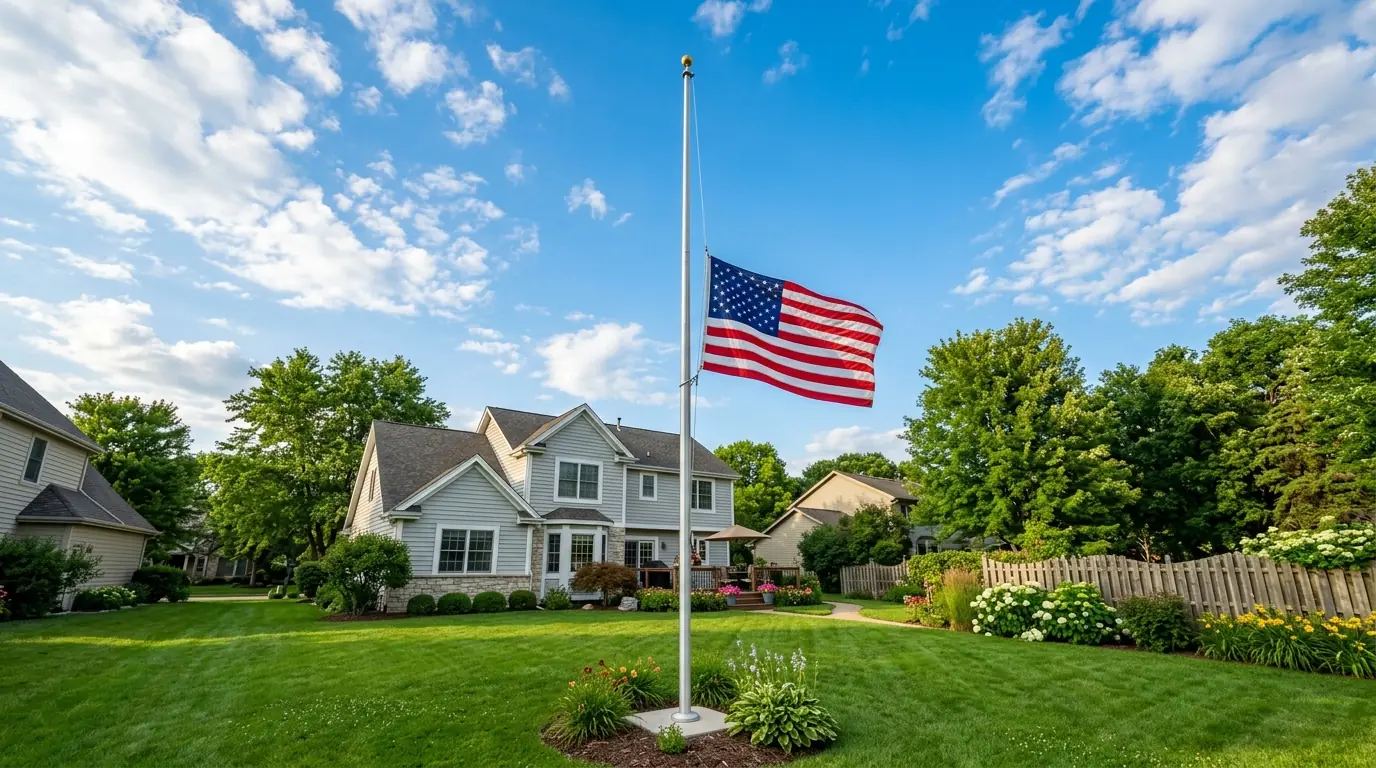
Flag length should equal roughly one-quarter of your pole's total height. That's the whole thing. A 20-foot pole gets a flag about 5 feet long — which means a 3x5. A 25-foot pole works best with a 4x6 or a 5x8. Forty feet? You're looking at a 6x10 or 8x12.
Why one-quarter and not one-third or one-fifth? Because at one-quarter, the flag fills enough visual space to look intentional without pulling on the pole like a sail. Go larger than one-third of the pole height, and wind load starts becoming a structural concern rather than a cosmetic one. Drop below one-fifth, and the flag looks like an afterthought — it flaps awkwardly without fully extending, and from the street, people can barely tell what's on it.
The ratio holds from 15-foot residential poles all the way up to 60-foot commercial installations. Where it breaks down is in high-wind areas. If your property sits on a hilltop or an open stretch of coast, drop to one-fifth. The flag will look slightly undersized on calm days, but it won't destroy itself — or the pole — the first time a storm rolls through.
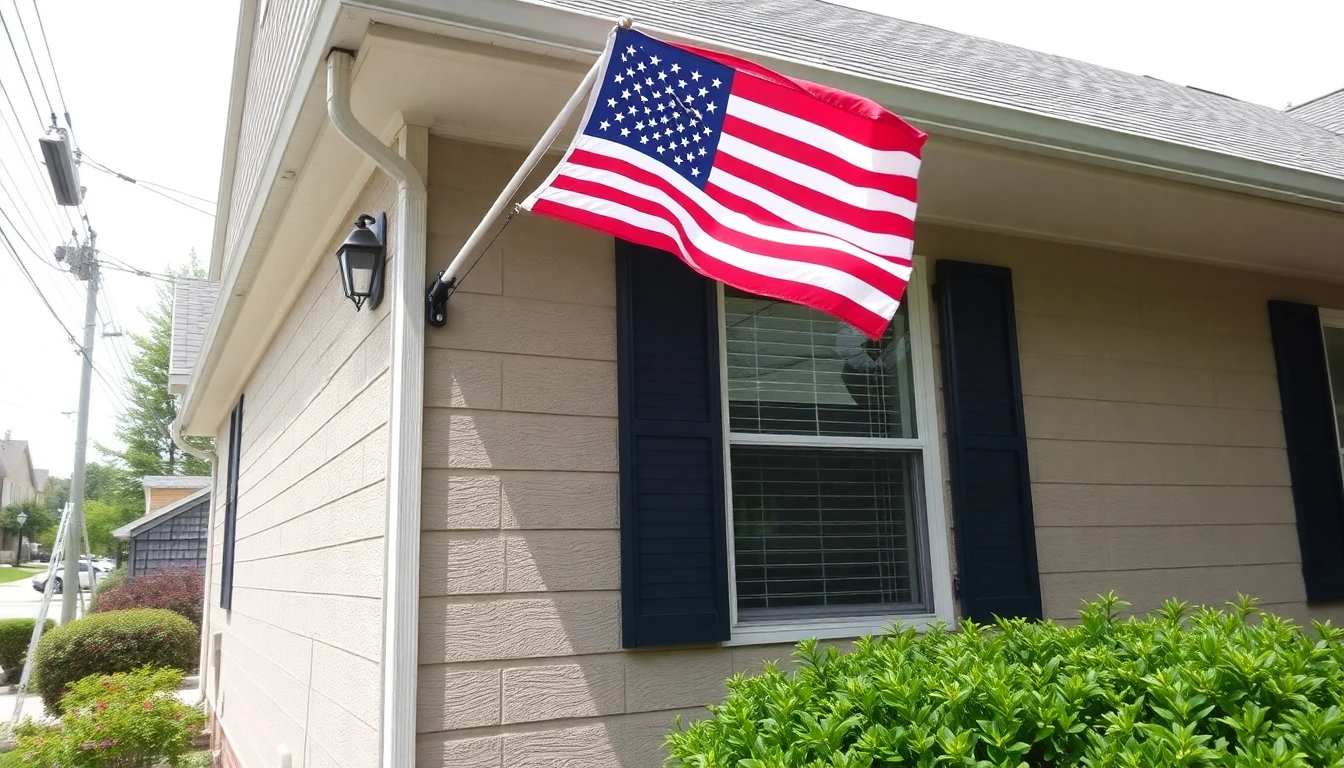
Wall-mounted poles are the other exception. A 5 or 6-foot bracket on the side of your house doesn't have the same flex as an in-ground pole, and it's close to the structure. A 3x5 is the safe maximum for a 6-foot house mount. Go bigger and the flag will contact the wall, the gutter, or the shrubbery below it on every gust.
Matching Table: Look Up Your Pole, Get Your Size
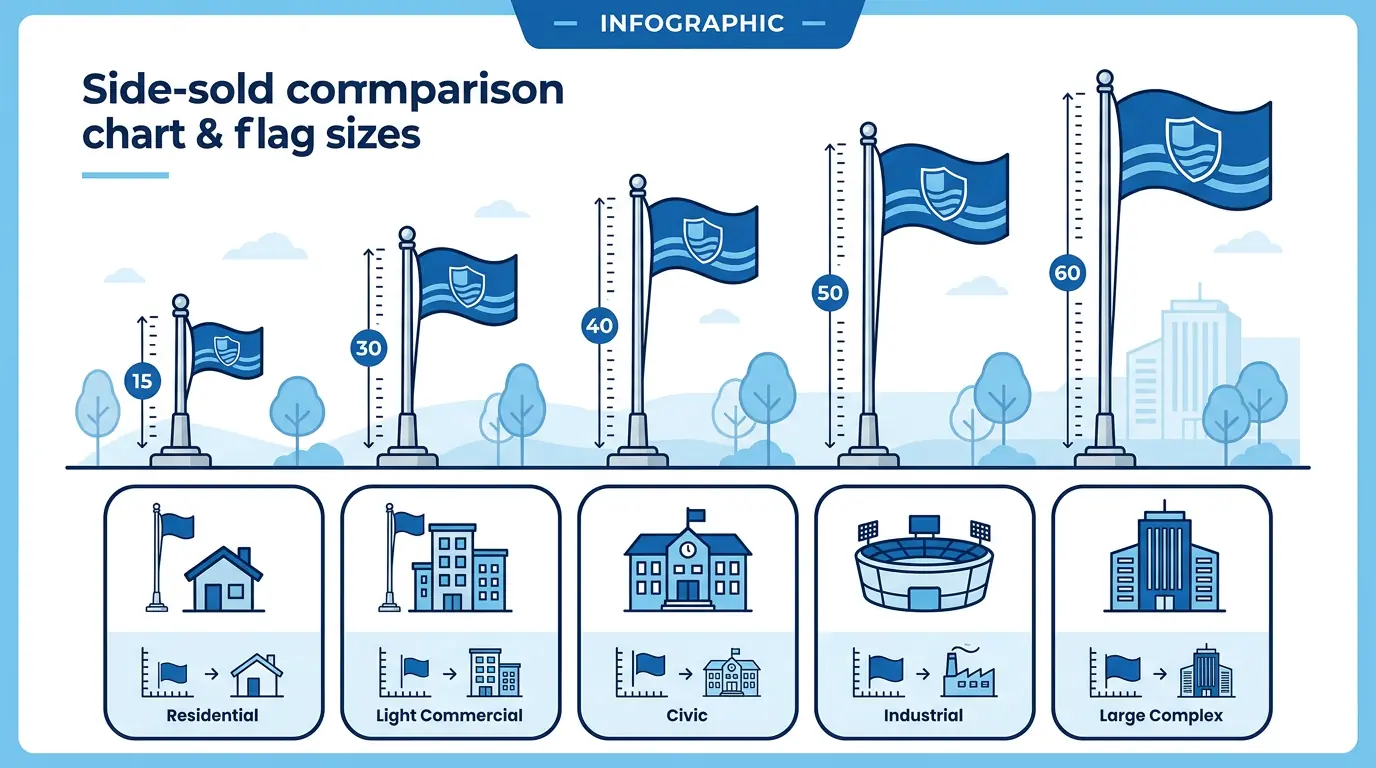
The table below covers everything from a porch bracket to a stadium pole. But before you scan it, understand what the ranges mean. Where two sizes are listed, the smaller one is the safe choice for windy or exposed locations, and the larger one works in sheltered spots or when you want maximum visual impact. If your pole height falls between two rows, round up to the next listed height.
| Pole Height | Recommended Flag Size | Best For |
|---|---|---|
| 5-6 ft (house mount) | 2.5x4 or 3x5 ft | Porch brackets, residential wall mounts |
| 15 ft | 3x5 ft | Short residential in-ground poles |
| 20 ft | 3x5 or 4x6 ft | Standard residential — the most common setup |
| 25 ft | 4x6 or 5x8 ft | Tall residential, light commercial |
| 30 ft | 5x8 or 6x10 ft | Light commercial, HOA communities |
| 40 ft | 6x10 or 8x12 ft | Mid-size commercial, dealerships |
| 50 ft | 8x12 or 10x15 ft | Large commercial, institutional |
| 60 ft | 10x15 or 12x18 ft | Government buildings, campuses |
| 80-100 ft | 15x25 or 20x30 ft | Major installations, stadiums |
The column that matters most here isn't the flag size — it's the "best for" context. A 20-foot pole at a beach house and a 20-foot pole in a suburban cul-de-sac are technically the same height, but the beach house needs the smaller flag in that range. Wind exposure changes the answer more than pole height does once you're in the right ballpark.
What Actually Goes Wrong with the Wrong Size

Too Small
An undersized flag is mostly an aesthetic problem. It flutters instead of flying, and from any real distance it reads as a rag on a stick. The wear pattern is uneven too — a flag that's too small for its pole whips back and forth without enough mass to stabilize, and the fly end shreds faster than it should.
Too Large
An oversized flag is a different category of problem. That one can damage your pole. The wind load on a flag increases with its area, and the forces aren't trivial. Put an 8x12 flag on a 20-foot residential aluminum pole and catch a 40 mph gust — the drag at the top of the pole can reach several hundred pounds of equivalent force. Residential poles aren't engineered for that. The pole bends, the halyard jams, the flag tears along the grommets, and in the worst case the pole itself fails at the base.
The tricky part is that an oversized flag looks great on calm days. It fills the frame, it's visible from down the block, and the homeowner feels like they got their money's worth. The problem only shows up during the first serious wind event. By then the flag is usually shredded and the pole may need replacement — turning a $40 flag purchase into a $400 repair.
$40
Right Size Flag
$400+
Wrong Size Repair
Indoor Flags, Parade Setups, and Wall Mounts

Indoor flags follow the same quarter-length rule, just at smaller scales. The standard ceremonial setup — the one you see in courtrooms and conference rooms — is a 4x6 flag on a 9-foot staff. For a typical 7 to 8-foot office staff, 3x5 works. These are pretty standardized, so there's less room to get creative (or go wrong).
Parade flags are sized to the staff, not to a pole in the ground. A 12-foot parade staff usually carries a 5x8 flag because the bearer needs to control it in open air while walking. Lighter nylon works better here than polyester since the carrier is dealing with the weight for an extended period.
Wall-mounted flags have the tightest constraints of any installation type. The bracket length limits the flag size, and the proximity to the building creates clearance issues that don't exist with freestanding poles. A 6-foot outrigger bracket paired with a 3x5 flag is the default residential setup, and there's almost no reason to deviate from it. The flag should clear the wall surface, the gutters, and any landscaping below it by at least a foot. If it doesn't, downsize — a crisp 2.5x4 that flies clean beats a 3x5 that scrapes the siding every time the wind shifts.
Flying Multiple Flags: The Size Hierarchy You Can't Ignore

U.S. Flag Code Requirement
If you're flying a U.S. flag with a state, military, or organizational flag below it on the same pole, the secondary flag must be smaller. Not "can be" smaller — must be. The U.S. Flag Code is specific about this: the American flag occupies the peak position and has to be the largest flag on that halyard.
The practical sizing drops by one standard increment. A 3x5 U.S. flag on a 20-foot pole pairs with a 2x3 secondary flag below it. A 5x8 on a 30-foot pole pairs with a 4x6 underneath. The gap between them matters — if the flags are too close in size, they tangle in wind, and if the lower flag is too small relative to the upper, it looks unbalanced.
Separate poles for different flags are a different situation entirely. International flags displayed together must be the same size and the same height — no exceptions. You can't fly a 3x5 U.S. flag next to a 2x3 Canadian flag; both nations get equal treatment on equal poles. Company or promotional flags should never share a halyard with the U.S. flag regardless of size. Use a separate pole.
💡 Pro Tip: For bulk flag orders over 100 pieces,
contact us for special volume pricing and size recommendations.
Commercial Poles Above 30 Feet: Where Engineering Takes Over
Once you're past 30 feet, flag sizing stops being a visual preference and starts being a structural engineering question. The ANSI/NAAMM FP 1001-07 standard governs metal flagpole design in the U.S., and it accounts for wind loads from flags using lab-tested drag coefficients. Building codes in most jurisdictions require compliance for poles over 15 feet, which means your municipality probably has a say in what size flag you can fly.
Commercial Ratio Adjustment
The commercial ratio shifts slightly from the residential quarter-length rule. Most commercial installations use a 1:5 to 1:6 ratio between flag fly and pole height, specifically because the wind speeds at 40 or 50 feet above ground are meaningfully higher than at 20 feet. A 50-foot pole in an open parking lot typically carries a 10x15 — not the 12x18 that the quarter-length rule would suggest.
Fabric choice matters more at these heights too. Below 40 feet, nylon is fine — it's lighter, it billows well, and it's cheaper to replace. Above 40 feet, polyester is the better call. It's heavier, which means slightly less flutter, but it handles sustained high winds without shredding the way nylon does. The durability difference is roughly two to three times in high-wind conditions, which means fewer trips up the pole with a replacement.
Make the Call
If you've got a residential pole — anything from 15 to 25 feet — a 3x5 or 4x6 flag covers almost every situation. Start with the quarter-length rule, adjust down if you're in a windy area, and don't let anyone talk you into going bigger "for visibility." The visibility gain isn't worth the wear and structural risk.
If you're ordering for a commercial pole over 30 feet, check with the pole manufacturer for the rated flag size before you buy. The spec sheet will tell you the maximum flag area for the wind zone your property sits in. Ignore that number at your own expense.
For wall mounts and house brackets, a 3x5 on a 6-foot bracket is the answer roughly 90% of the time. If clearance is tight, go 2.5x4 — nobody ever regretted a clean-flying flag that's one size down.
Next step: measure your pole (or check the purchase paperwork), find the height in the table above, and order the size that matches your wind exposure. The whole process takes about 30 seconds once you know the pole height. That's it.
Related Articles