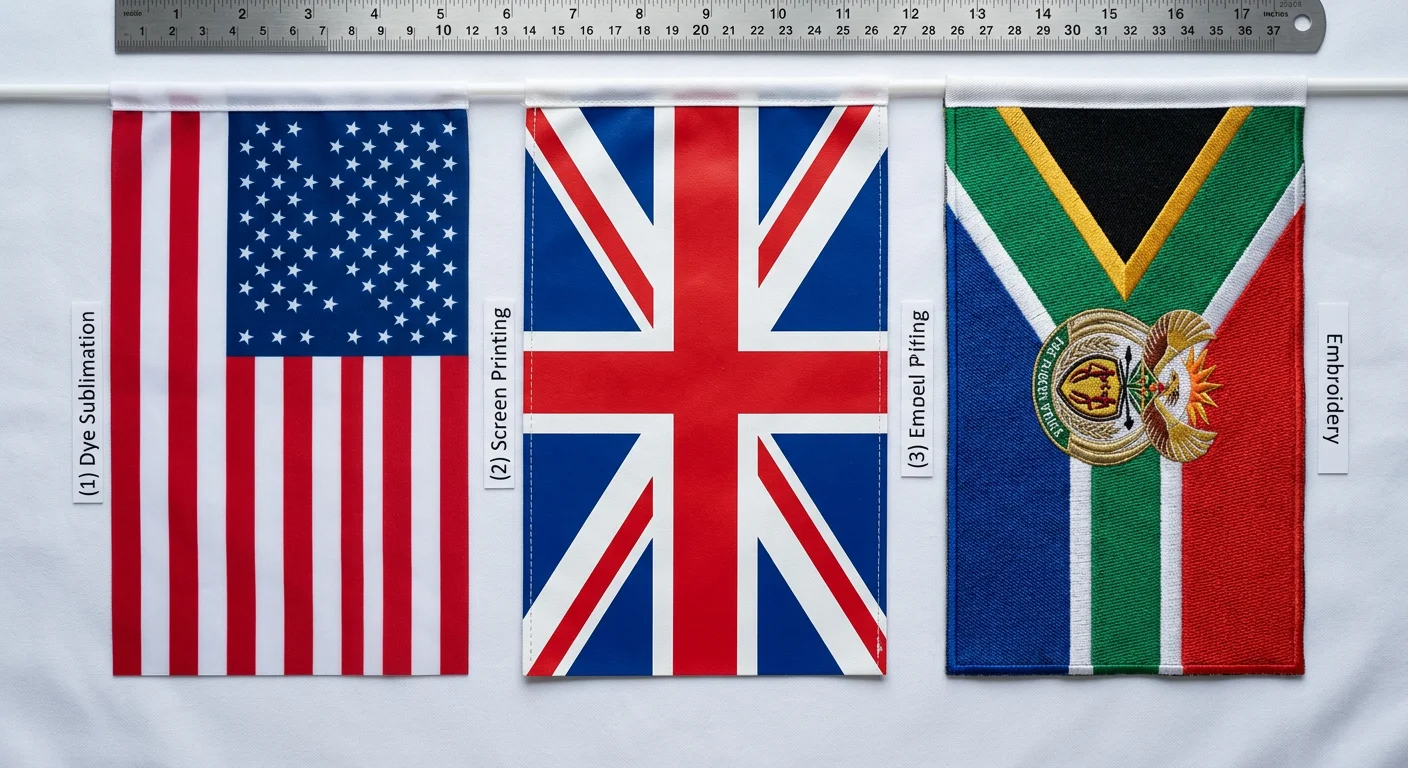
You've priced out a custom flag order, and the sublimation quote is sitting in front of you — probably two to three times what you expected for a single piece. The question isn't really about the technology. It's about whether paying more for sublimation gives you something the cheaper screen-printed alternative won't.
The answer depends on three things: how complex your design is, how many flags you need, and where they'll end up. For some orders, sublimation is the clear winner. For others, it's an expensive way to get a result you could achieve for a fraction of the cost. This breakdown covers the real numbers so you can make that call without guessing.
What You're Actually Paying For: Sublimation Flag Costs by the Numbers
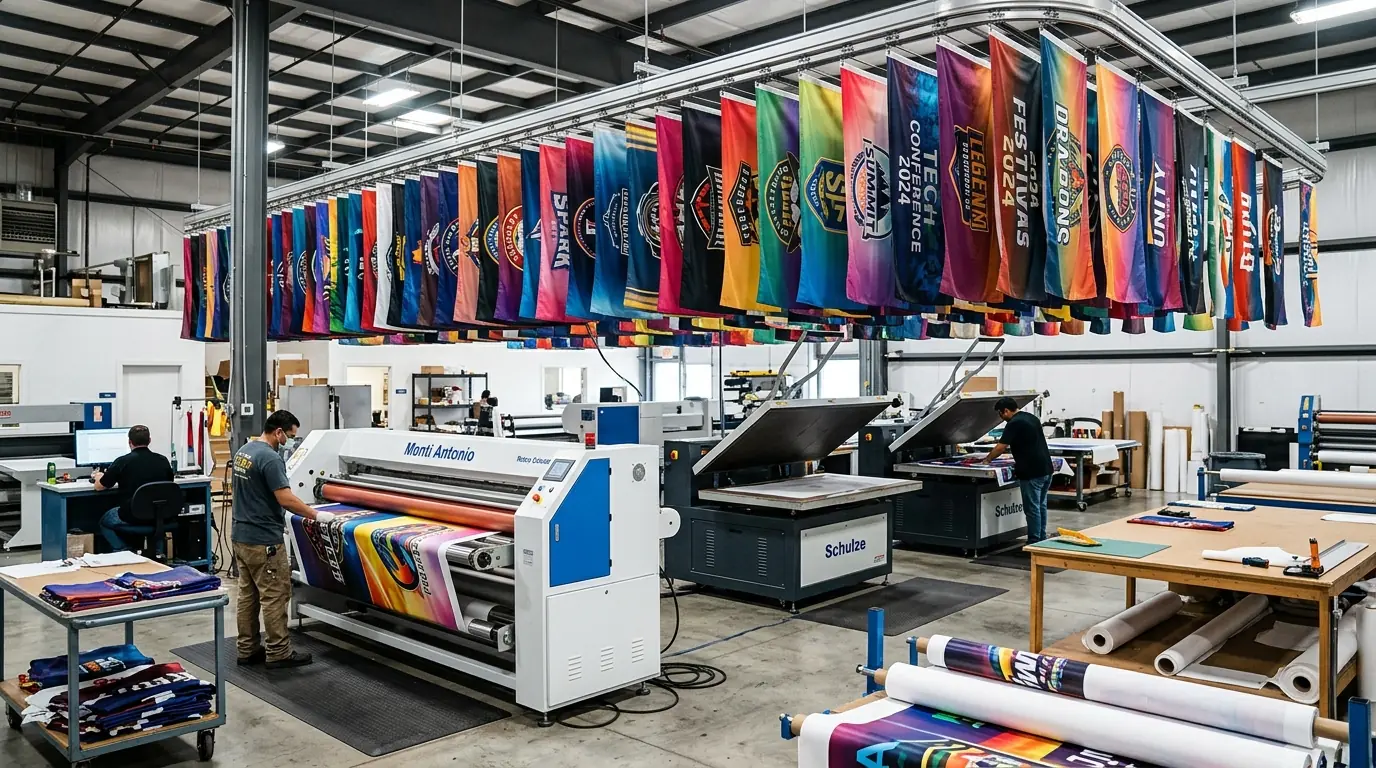
Most buyers land on sublimation after getting a quote for a full-color flag and realizing screen printing charges per color. The sticker shock on a single sublimated flag — around $130 to $160 for a 3x5 ft piece — makes sense once you see where the money goes.
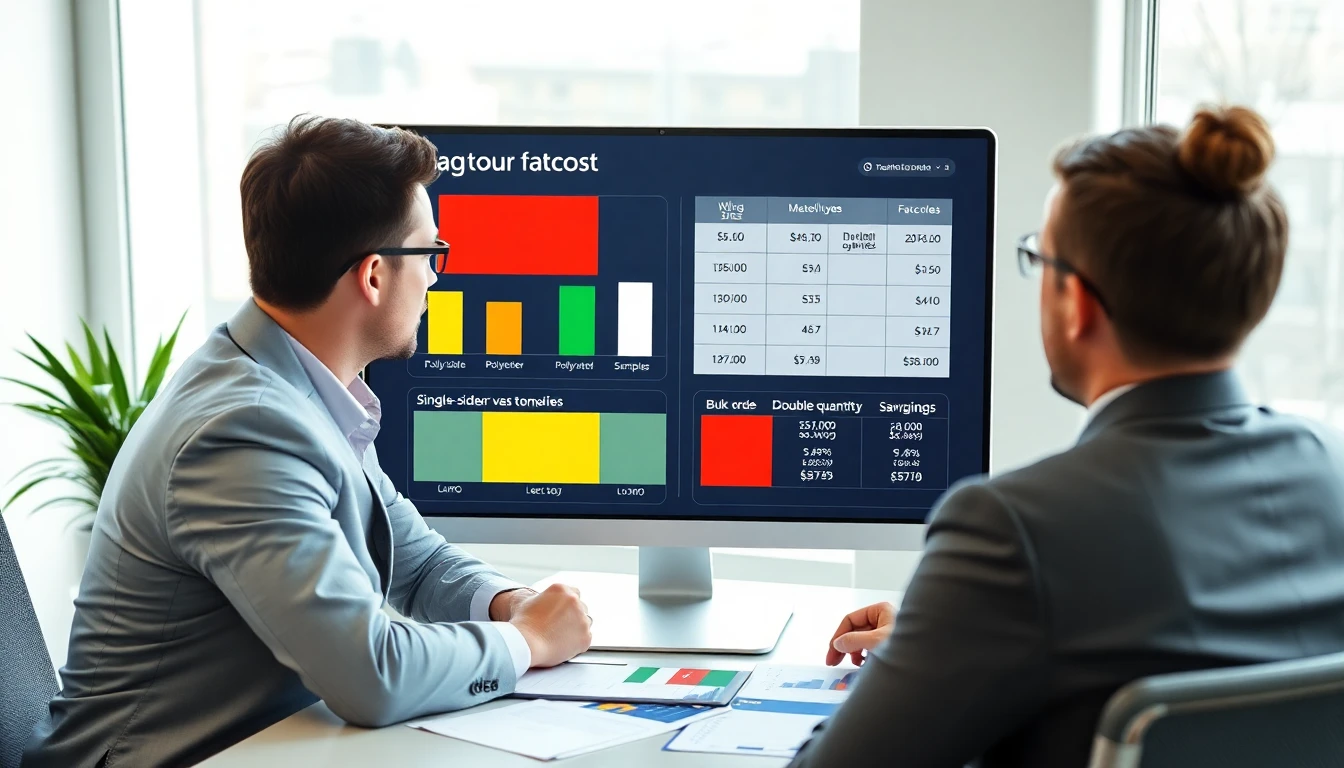
For outsourced orders, the per-unit math shifts fast with quantity. A 3x5 ft flag at one or two units runs about $157. Order six and the price drops to roughly $112. At 25 units you're closer to $69 each, and by 50 units it settles around $53. The curve flattens after that — volume savings are real but front-loaded.
$157
1-2 Units
$112
6 Units
$69
25 Units
$53
50 Units
If you're producing in-house, the cost picture looks different. Ink runs $0.50 to $1.25 per print on a desktop setup. Add transfer paper at about $0.30, a polyester blank at $10 to $20, and labor at roughly $1.50 per flag, and your total lands between $12 and $22 before any markup. But that ignores the upfront equipment — a heat press runs $100 to $2,000, a sublimation printer $300 to $5,000. Those numbers only make sense if you're running enough volume to amortize them.
The part that catches first-time buyers off guard: setup fees. Orders under 25 units usually carry a $49 to $99 setup fee. At 25 or more, most vendors waive it. So ordering 20 flags versus 25 can cost you almost the same total — something worth checking before you finalize quantities.
Full-Color Designs Without Per-Color Upcharges — That's the Real Selling Point
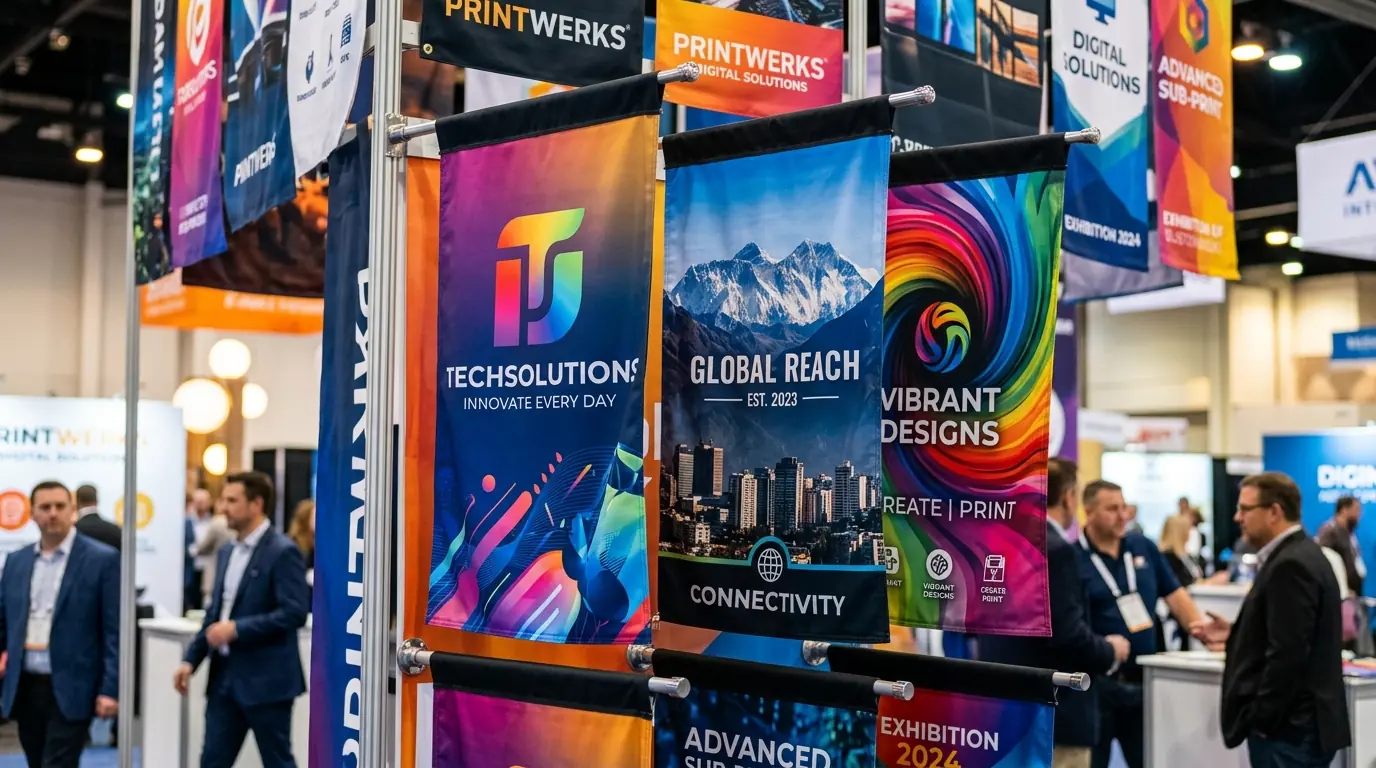
Sublimation uses CMYK dye that bonds directly into polyester fibers. Whether your design has two colors or two hundred, the price stays flat. Screen printing doesn't work that way — each additional color means another screen at $25 to $50 plus ink setup, and a four-color logo can add $100 to $200 to your setup costs alone.
For trade show flags with gradient logos, photography elements, or anything beyond simple solids, sublimation is often the only practical option at low quantities. The colors don't crack, peel, or sit on the surface. They're embedded in the fabric, which gives you scratch-resistant, full-bleed coverage that holds up well indoors.
The print quality itself is hard to match with other methods at comparable price points. PANTONE matching is available, and the full CMYK spectrum means photographic-quality reproduction. Standard finishing — grommets, pole sleeves, header tape — is typically included.
I think the biggest misunderstanding buyers have is treating sublimation as a premium option. It is premium for single-unit orders, yes. But the color flexibility means you're not paying extra for complexity. A one-color flag and a hundred-color flag cost the same to print. That math flips the value proposition for anyone with a design that goes beyond basic text and a solid background.
The Durability Trade-Off That Changes the Calculation
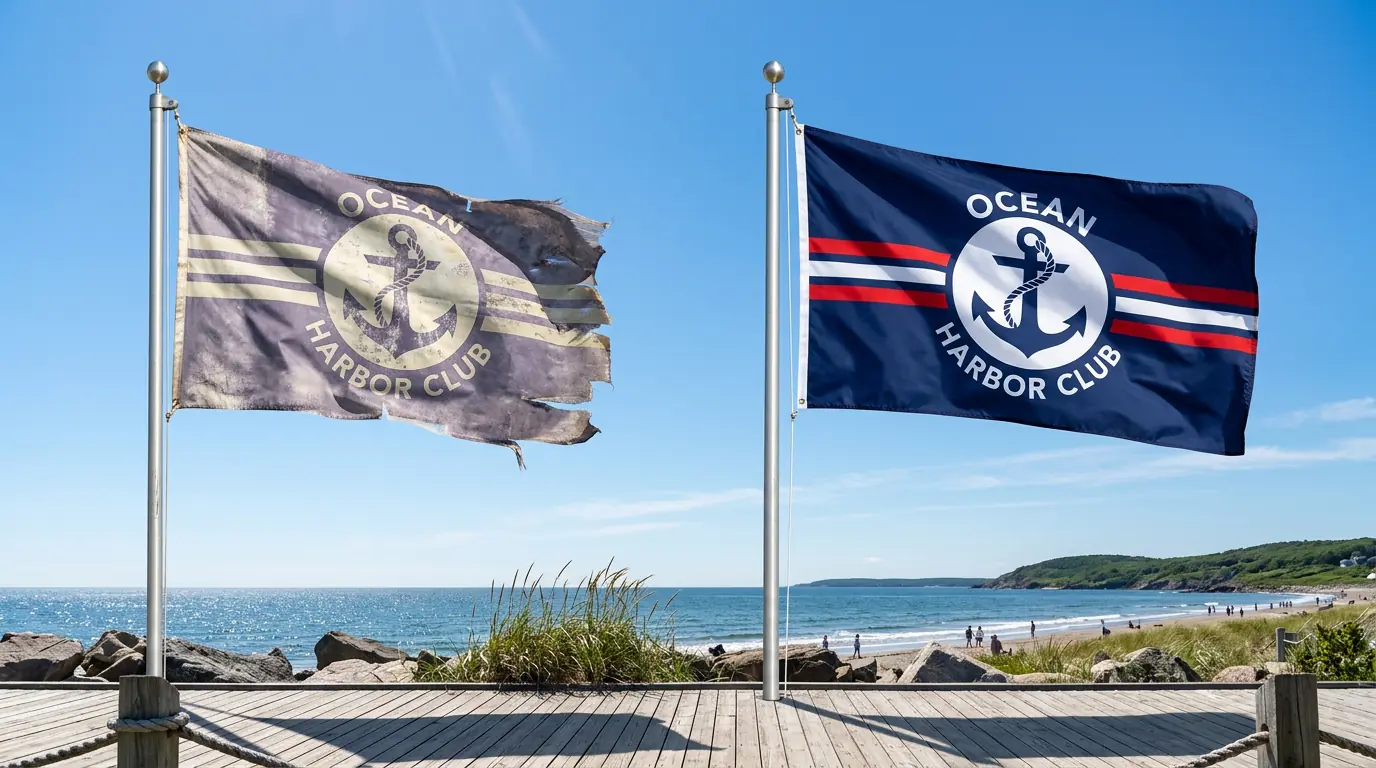
Sublimation locks you into polyester. Cotton doesn't work — the dye won't bond. Nylon is worse — colors sit on the surface and wash out fast. If your application requires a specific non-polyester material, sublimation isn't an option regardless of anything else.
For indoor use, durability is a non-issue. Trade show flags, lobby displays, event banners — sublimation on polyester can last one to five years without visible degradation. The problems start when you move outdoors.
In full sun, sublimated polyester flags show noticeable fading within two to six months. Partial shade extends that closer to twelve months. These aren't worst-case numbers — this is typical performance across standard 4 oz polyester substrates.
Here's where buyers miscalculate: they compare the initial price of a sublimated flag to a screen-printed nylon flag and pick the cheaper one. But if the flag flies outdoors full-time, you might replace a sublimated flag four to six times in a two-year period. A screen-printed nylon flag with UV-resistant inks won't look brand new after two years either, but it will still be recognizable. Factor in replacement costs and the "cheaper" option gets expensive fast.
Indoor / Short-Term Use
- Trade shows, lobbies, events
- Lasts 1-5 years without fading
- Vibrant, scratch-resistant colors
Permanent Outdoor Use
- Full sun: fades in 2-6 months
- Partial shade: up to 12 months
- Replace 4-6x over 2 years
The honest assessment: sublimation is built for vibrant short-term use or long-term indoor display. Permanent outdoor installation is its weakest scenario.
Sublimation vs. Screen Print vs. Digital — The Break-Even Points That Actually Matter
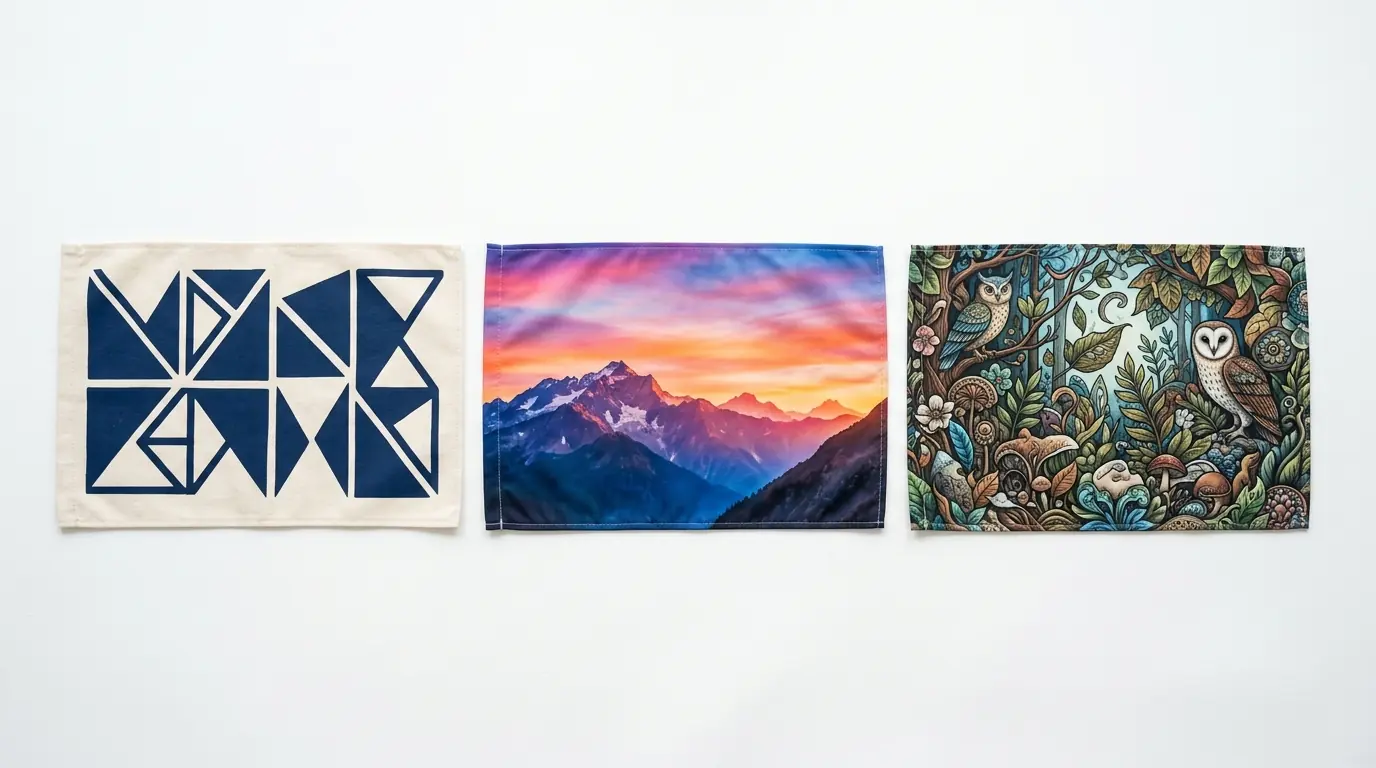
The method comparison gets overcomplicated online. Most of the decision comes down to three variables: flags, how many colors are in your design, and how long the flag needs to last.
Under 100 units with a full-color design, sublimation wins on both price and quality. At that range, screen printing's setup costs haven't been amortized, and digital methods run slightly higher per unit. This is sublimation's sweet spot.
Between 100 and 250 units, the methods converge. Screen printing starts pulling ahead, especially for simpler designs. A three-color logo at 200 units — screen printing will probably save you 30 to 40 percent per flag compared to sublimation.
Above 250 units with a simple one-to-three-color design, screen printing wins decisively. At 500 units, you might pay $6 to $10 per flag with screen versus $30 to $32 with sublimation. That gap is hard to justify unless you absolutely need photographic-quality color.
Digital printing (DTG/DTF) sits between the two but rarely wins outright for flags. Equipment costs are higher, per-unit consumable costs run $1.50 to $6.00, and the flag-specific ecosystem isn't as developed. It has its uses for specialty substrates, but for standard polyester flags, sublimation covers the same ground at lower cost.
<100
Sublimation Wins
Best price + quality for full-color designs
100-250
Methods Converge
Get quotes from both — vendor pricing matters more
250+
Screen Printing Wins
$6-10/flag vs $30-32 — hard gap to justify
The decision threshold I keep coming back to: if you're ordering under 100 units and your design uses more than three colors, sublimation is almost certainly the right call. Above that, run the numbers on screen printing first.
Three Scenarios Where Sublimation Is the Wrong Choice
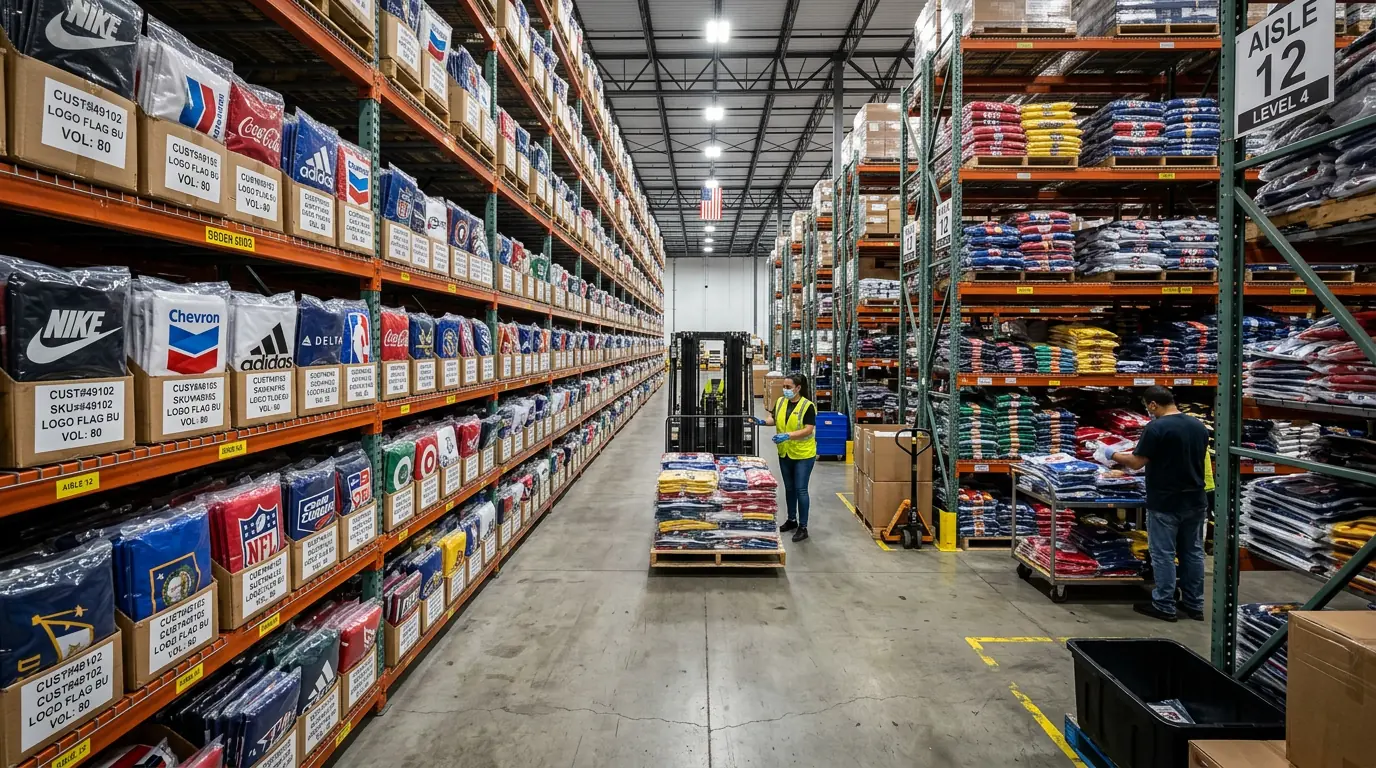
Not every flag order benefits from sublimation. These are the situations where a different method saves you real money or gives you better results.
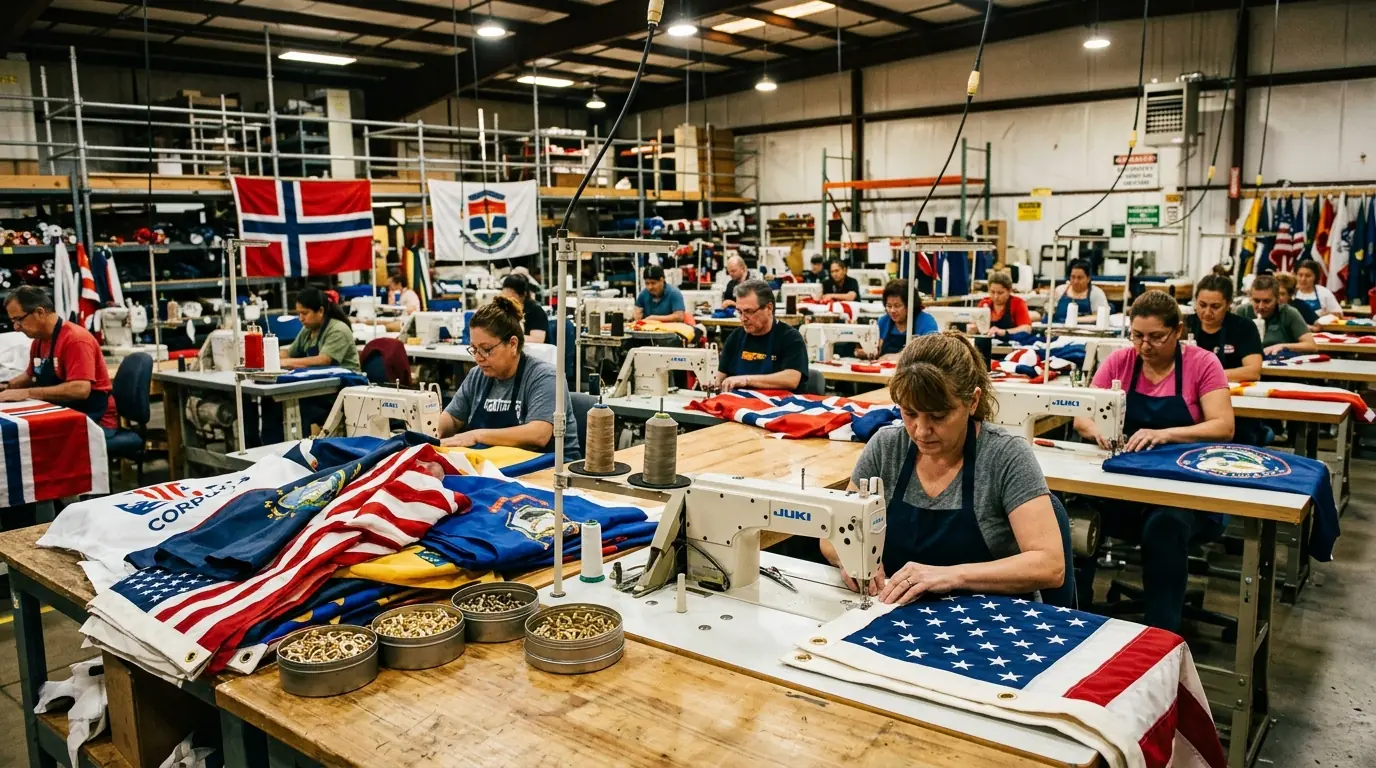
You need cotton, wool, or another natural fiber. This isn't a quality trade-off — it's a physical limitation. Sublimation dye doesn't bond to natural fibers. Period. Ceremonial flags, certain government applications, decorative bunting — if the material spec says cotton, you're looking at screen printing. Comparable pricing for a 2x3 ft screen-printed cotton flag sits around $125 for one to two units, which is in the same ballpark as sublimation anyway.
High-volume, simple design orders. If you're ordering 250 or more flags with a one- or two-color logo, sublimation's flat pricing works against you. The per-unit cost doesn't discount for fewer colors — you're paying for full-color capability whether you use it or not. At 500 units, the difference can reach $11,000 to $13,000 in total cost compared to screen printing. That's a hard number to ignore for what amounts to a simpler print job.
Permanent outdoor installations. Two-to-six-month fade in full sun means a flag that flies year-round will need replacing multiple times. Government buildings, permanent business signage, memorial displays — these applications need UV-resistant screen inks on heavy-duty nylon. The upfront cost is higher per flag, but total cost of ownership over two years tilts heavily toward the more durable option.
A smaller consideration: if your total budget is under $50 and you only need one or two flags with a simple design, semi-custom or stock options at $10 to $11 per unit undercut sublimation by an order of magnitude. Full-color custom only makes sense if full-color custom is what you actually need.
Need Bulk Pricing? For orders over 100 pieces, we offer volume discounts on both sublimation and screen printing. Contact us for a custom quote tailored to your exact specifications.
How to Decide for Your Specific Order
Strip away the technical details and the decision runs through a few filters. Work through them in order — most buyers can make the call after the first two.
1
Start with your design
One to two solid colors and a simple logo? Screen printing will be cheaper at almost any quantity. Three or more colors, gradients, photographic elements, or complex branding? Sublimation is likely your only cost-effective path. This single factor eliminates half the debate.
2
Check your quantity
Under 100 units, sublimation's lack of per-color fees and lower setup costs make it the default for full-color work. Between 100 and 250, get quotes from both methods — the gap narrows enough that vendor-specific pricing matters more than the method itself. Above 250, lean toward screen printing unless your design complexity forces sublimation.
3
Consider the environment
Indoor or short-term outdoor? Sublimation. Permanent outdoor? Screen on nylon. Seasonal outdoor that gets replaced annually? Sublimation works fine — just budget for annual replacement.
4
Look at your per-unit budget
Below $15 per flag, you're in stock or bulk territory — sublimation won't fit. Between $20 and $55, sublimation works well at 25 to 100 units. Above $100 per flag, you're in single-unit territory, and sublimation is only justified for designs that genuinely need full-color reproduction.
One rule of thumb that simplifies things: if the sublimation per-unit price comes within 20 percent of a screen-print quote for the same flag, choose sublimation for any design with more than two colors. The print quality difference at that price gap is worth the marginal cost.
Is Sublimation Worth It? The Short Version
For full-color designs under 100 units, especially for indoor or short-term outdoor use — yes, sublimation is worth it. The flat pricing regardless of color count, the embedded dye quality, and the faster turnaround without screen setup make it the practical choice.
For simple designs at high volume, permanent outdoor installations, or non-polyester material requirements — no. Screen printing on nylon will serve you better on cost, durability, or both.
Quick Decision Filter
If you're still on the fence, start here: count the colors in your design and check your quantity. More than three colors and fewer than 100 flags? Request a sublimation quote. Fewer than three colors or more than 250 flags? Get screen printing quotes first. That single filter resolves the decision for most buyers.
Your next step is straightforward — get two to three quotes specifying your exact flag size, quantity, and design file. Compare the per-unit cost at your actual order size, not at theoretical volume breaks you might never hit. The numbers will make the decision for you.
Related Articles