You're at a motorsport event for the first time. Cars are screaming past at speeds your brain barely registers. Then someone starts waving a yellow flag on a stick, and the entire dynamic of the race shifts — but you have no idea why.
Race flags are the original language of motorsport. They predate radio communication, digital dashboards, and in-car telemetry. For event organizers, sourcing race-quality national flags from a certified manufacturer is the first step to running a credible event. Every colored flag carries a specific message, and some of them can mean entirely different things depending on which racing series you're watching.
This guide breaks down every race flag you'll encounter, the cross-series inconsistencies that trip up even experienced fans, and exactly what to watch for if you're sitting trackside.
The Core Race Flags Every Motorsport Fan Must Recognize
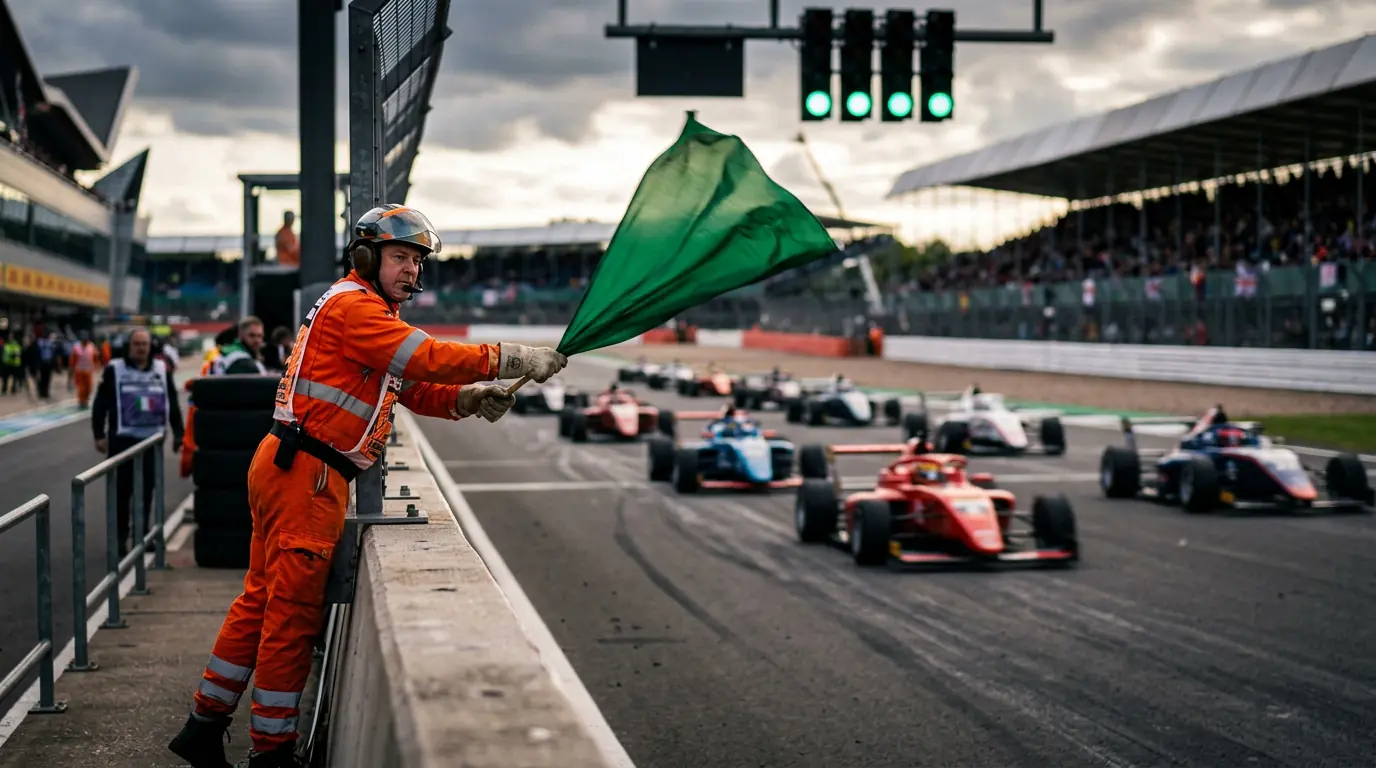
Most people know exactly two race flags: the green one that starts things and the checkered one that ends things. Everything in between? A blur of colors that might as well be abstract art flying past at 200 mph.
Here's the thing, though — that "abstract art" is actually a remarkably elegant communication system. Before radio headsets and digital dashboards, race flags were the only way officials could talk to drivers mid-race. And even now, with all our fancy technology, the flag system remains the backbone of motorsport safety.
The green flag does what you'd expect — it signals go. Race start, end of a caution period, pit lane is open. Simple enough. But here's where it gets more interesting.
Yellow flags come in two flavors, and confusing them is a rookie mistake. A stationary yellow means there's a hazard somewhere in that sector — maybe debris, maybe fluid on the track. You slow down, you stay alert, but it's not panic time. A waving yellow? That's panic time. That means immediate danger, right here, right now. Overtaking is forbidden under both, but the waving version means you should genuinely be prepared to stop.
The red flag shuts everything down. Full stop. Session suspended. Every car returns to the pits at reduced speed, and nobody races again until officials give the all-clear. Think of it as the motorsport equivalent of pulling the fire alarm.
Then there's the white flag, and this is where cross-series confusion gets genuinely messy. In NASCAR and IndyCar, it signals the final lap — a moment of pure adrenaline. But in FIA-sanctioned events across Europe, it just means there's a slow-moving vehicle ahead. Same color, completely different message. If you're watching multiple championships, this one trips people up constantly.
The checkered flag waves when it's over. No overtaking permitted after crossing the line. It keeps waving until every single car passes the start/finish line — a small ceremonial detail that most broadcast cameras skip right past.
Penalty and Warning Flags — What's Happening to That Specific Driver
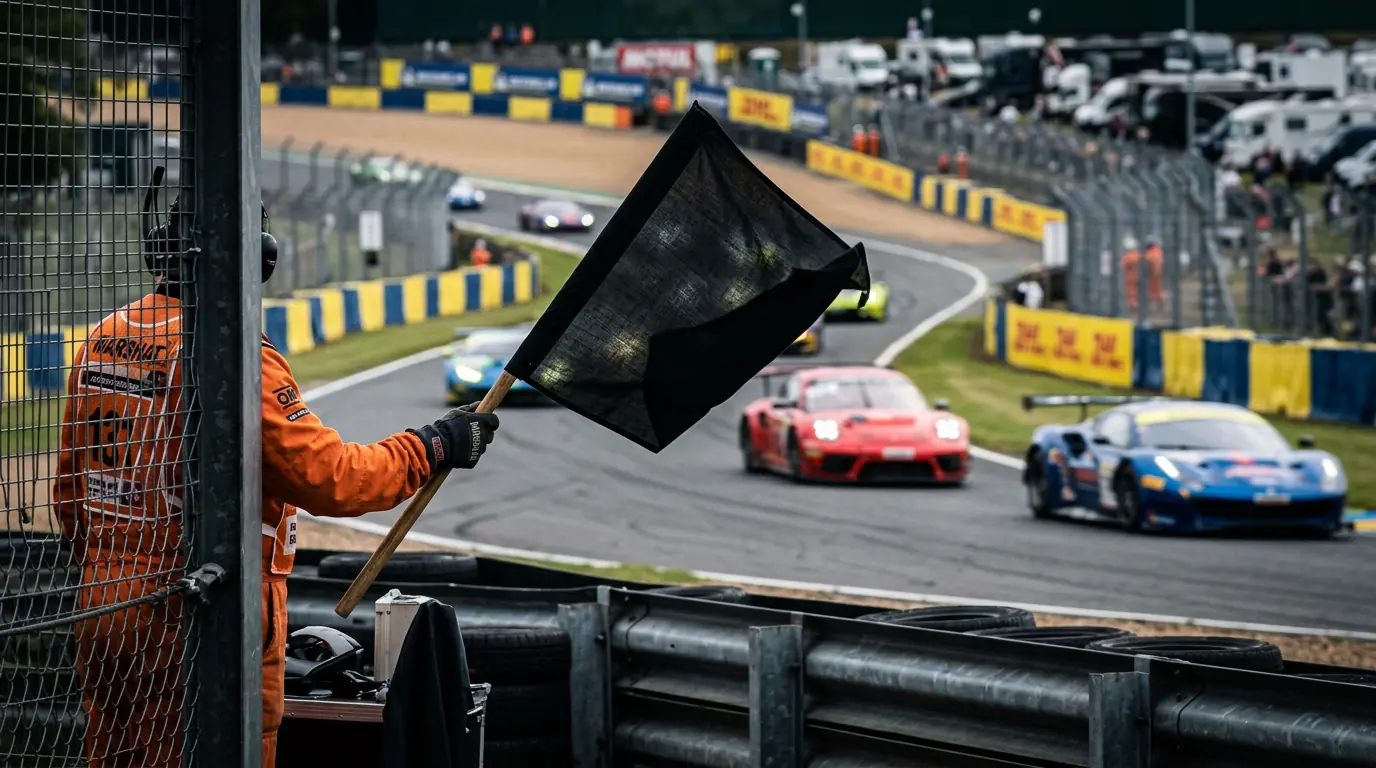
While the flags above apply to everyone on track, penalty flags are personal. They show up with a driver's number attached, and they basically mean "you, specifically, have a problem."
The black flag is the one nobody wants to see next to their number. It means return to the pits immediately — you've done something wrong. Could be dangerous driving, a jump start, or a Safety Car infringement. Lucas di Grassi got hit with one during the 2021 London E-Prix for a Safety Car procedure violation, which tells you how strictly officials enforce these protocols. In NASCAR and IndyCar, there's an even more dramatic variant: the black flag with a white X (saltire), which means outright disqualification. The regular solid black flag in FIA series is more of a "come talk to us right now" signal. Interestingly, Formula E has only shown the full black flag once in its entire 10-year history.
Then there's the meatball flag — officially a black flag with an orange disc, but the nickname stuck because, well, it looks like a meatball. This one isn't about punishment at all. It means your car has a mechanical problem making it unsafe: dangling bodywork, leaking fluids, something that could endanger other competitors. The distinction matters. A driver getting the meatball flag hasn't necessarily done anything wrong — their car is just falling apart in a way that concerns the marshals. Visibility matters here — professional flag printing and material selection can mean the difference between a driver seeing the signal at 150 mph or missing it entirely.
The black-and-white diagonal flag is motorsport's version of a formal warning. Charles Leclerc received one at the 2019 Italian Grand Prix for aggressive defending — specifically squeezing competitors off the racing line. It's the officials saying "we see what you're doing, and the next step is a real penalty." Ignore it, and you're looking at time penalties, drive-through penalties, or full disqualification. In Formula E, just three track-limit violations trigger this flag.
The penalty escalation system is worth understanding: pit lane speeding costs a $5,000 fine plus a 10-second stop-and-go penalty. Three consecutive ignored blue flags (more on those next) trigger a mandatory drive-through. If you get a black flag, you typically have 3 to 5 laps to comply before officials simply stop scoring your car.
Blue and Striped Flags — The Lapping and Track Condition Signals
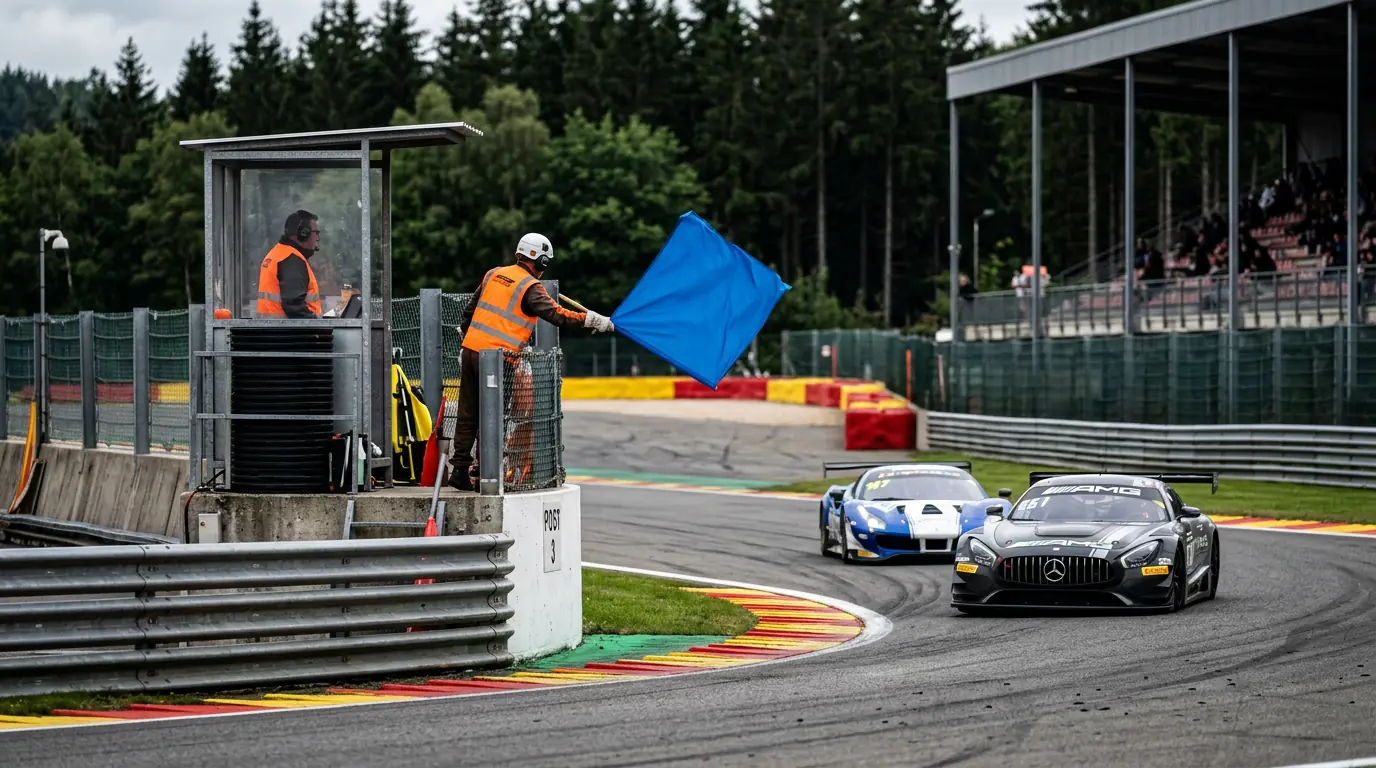
The blue flag might be the most misunderstood race flag in the sport, partly because its enforcement varies wildly depending on which series you're watching.
During a race, it tells a lapped driver to get out of the way — a faster car on the lead lap is closing in, and you need to yield at the earliest opportunity. During qualifying, the message is similar but gentler: keep your line, slow gradually, and don't ruin someone else's flying lap.
Here's where it gets genuinely fascinating: the three-flag rule. Lapped cars are expected to move aside by the time they've passed three blue flags. But this rule isn't actually written in the FIA International Sporting Code. It's an unwritten enforcement standard that functions as the threshold for "ignoring blue flags." Three flags, no yield, penalty incoming. Everyone in the paddock knows it, yet technically it doesn't exist on paper.
Enforcement tells you a lot about each series' philosophy. Organizations running their own events should invest in custom sports event flags from a bulk supplier to ensure consistent marshal equipment across every post. F1 takes it dead seriously — three ignored blue flags and you get a mandatory drive-through, plus potential team fines. NASCAR treats its blue flag (which adds a diagonal yellow stripe) as purely advisory. No penalty, no fine. You can ignore it entirely. IMSA falls somewhere in the middle, issuing warnings before any real consequences kick in.
The yellow-and-red striped flag addresses a more subtle danger: surface contamination. Oil slicks, coolant puddles, scattered debris that reduces traction but that drivers can't actually see. The key distinction from a yellow flag is important — yellows signal visible hazards like crashed cars or marshals on track. The striped flag warns about invisible grip-loss hazards, which is arguably more dangerous because there's nothing to visually brace for.
Some series also use a white flag with a diagonal red cross to indicate rain drops in a specific track section, often paired with the striped flag for extra clarity.
How Flag Meanings Differ Across Racing Series
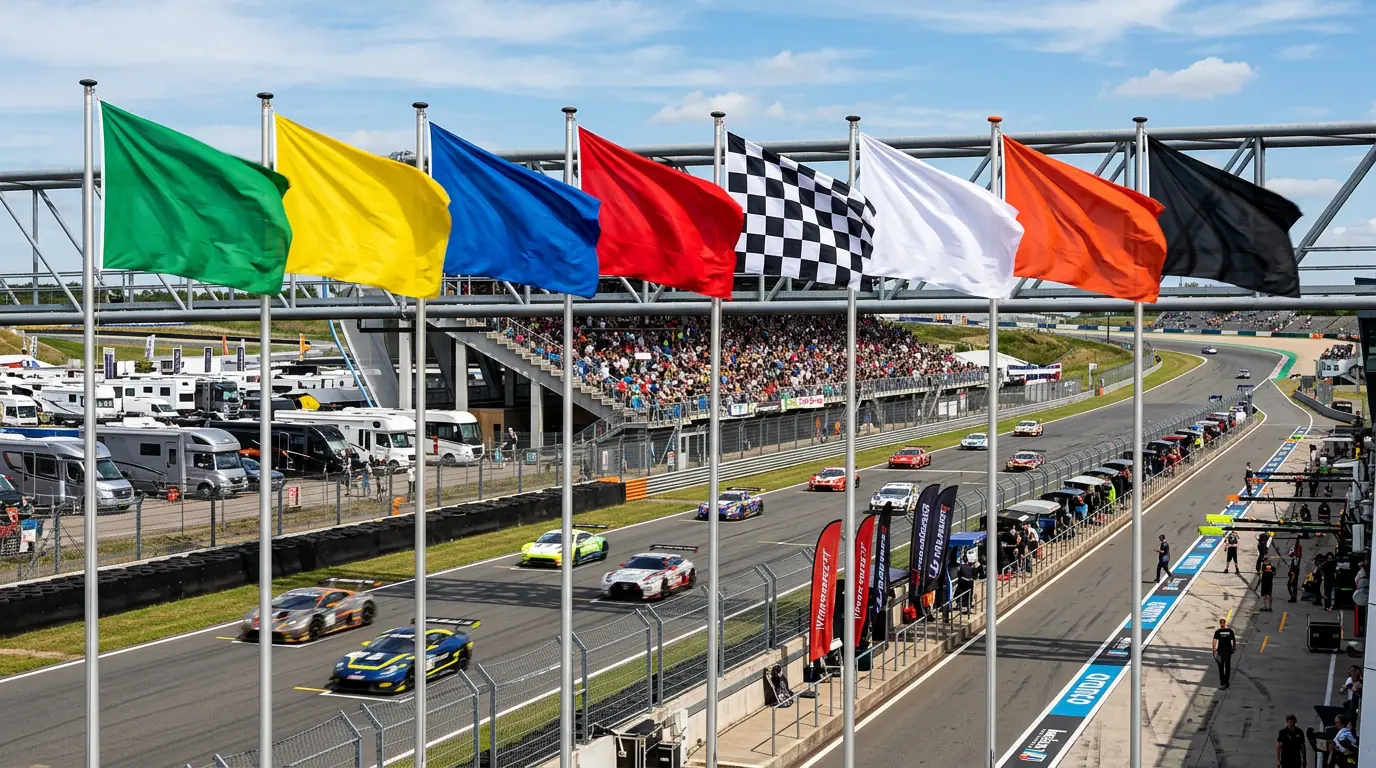
This is where things get confusing for fans who follow more than one championship, because the same piece of colored fabric can mean different things depending on who's organizing the race.
Take yellow flag protocol. In NASCAR, a yellow triggers a full-course caution — everyone slows down and follows the pace car, no exceptions. In FIA and IndyCar events, it's sector-specific. A single waving yellow means a hazard is on the racing surface itself; a stationary yellow means the hazard is nearby but not directly on the track. Road courses generally work on approximations: standing yellow equals roughly 70% speed, waving yellow drops you to about 40%.
The black flag story gets even more fragmented. FIA uses it to summon a specific driver to the pits — show up and sort out whatever you did wrong. NASCAR and IndyCar have that additional black-with-white-X variant for outright disqualification. Motorcycle racing under FIM rules uses it differently still, sometimes pairing it with other flags at the finish for lapped riders.
One protocol you won't find in F1 or NASCAR at all: the Code 60 flag, used in the 24H Series. Everyone slows to exactly 60 km/h (37 mph). No overtaking. It's a standardized speed-reduction approach that's cleaner than the safety car method but hasn't caught on in the bigger championships.
The SVRA (Sportscar Vintage Racing Association) has its own unique approach: displaying full-course yellow and black flags simultaneously, requiring all cars to stop. No other major series does this.
Even the green flag behaves differently by series. In the Supercars Championship, a green flag signals the end of caution in a specific sector only — not the full course. NASCAR uses a green-and-checkered flag to end stages, with an optional double checkered at the halfway point.
Whether you need a complete flag display system for event management or just want to understand what you're watching, these differences aren't trivial. They reflect fundamentally different safety philosophies, and knowing them is what separates a casual viewer from someone who actually understands what's unfolding on race day.
How Flags Are Displayed — Marshal Posts, LED Panels, and Starter Stands
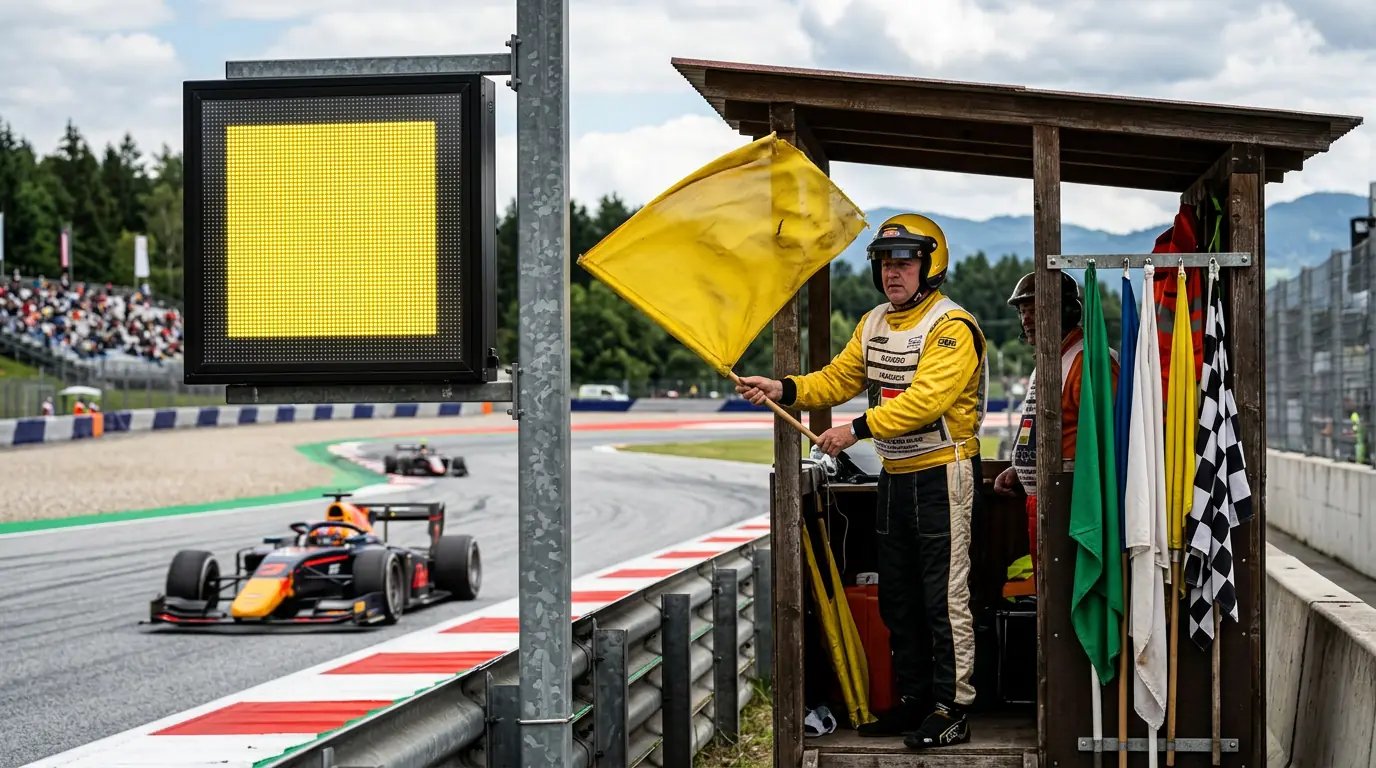
Understanding flag meanings only gets you halfway. Knowing where to look for them completes the picture.
Marshal posts are stationed around the entire circuit, and each one only covers its own sector. A yellow flag at Turn 7 says nothing about conditions at Turn 1. This is fundamental, but plenty of fans miss it — they see yellow at one post and assume the whole track is under caution. Not how it works.
The display modes at marshal posts carry specific meaning. A single waved yellow means a hazard is on the racing surface. A single stationary yellow means it's near but not on the track. Two flags waved simultaneously? The racing surface is blocked — think multi-car pileup — and drivers need to prepare to stop. When a safety car deploys, every marshal post switches to showing the "SC" board (white background, black letters). Radio-controlled posts display it instantly; manual posts show it when the safety car first passes their position.
LED panels are the modern supplement. F1 circuits now run LED marshal lights alongside traditional cloth flags. Digital displays activate faster and stay visible in rain, fog, and twilight — conditions where a wet cloth flag on a stick becomes surprisingly hard to read at 180 mph. These panels show specific codes: "SZ" with a flashing yellow border for slow zones, "SC" for safety car deployment, and green lights to supplement green flags.
But here's something many fans don't realize: LED panels don't replace cloth flags. Under FIA regulations, traditional flags remain mandatory. The digital system supplements them, but a marshal still stands there physically waving fabric, mounted on commercial-grade flag poles built for constant outdoor use. It's a redundancy-by-design approach — if the electronics fail, the analog system stays operational.
The starter stand at the start/finish line holds the highest authority. Whatever flag it shows overrides every marshal signal on the circuit. The race starter is a separate role from track marshals, and this position controls the checkered flag, the red flag, and the race start itself. A separate green flag at the pit entrance indicates whether pits are open.
What Fans at Trackside Should Watch For
Watching motorsport on TV is fine. The cameras catch everything, replays fill in the gaps, and commentators explain the flags for you. Trackside attendance is a completely different experience — more visceral, more exciting, and significantly harder to follow without knowing what to look for.
Seat selection matters more than most first-timers realize. Grandstands opposite the main straight give you a great view of the cars at full speed, but terrible visibility of marshal post flags. The distance and angle work against you. Seats near Turn 1 or the final chicane are better bets because multiple marshal posts are visible simultaneously from those positions. You'll also notice custom feather flags from outdoor advertising suppliers marking key spectator zones around the circuit. Elevated grandstands beat ground-level general admission for the same reason — better sight angles to the flag stations.
The waving-versus-stationary distinction becomes genuinely useful trackside. A waving flag means the hazard is right there in the marshal's sector — you can often spot the incident before TV cameras cut to it. A stationary flag means the hazard is in the sector ahead, and the current area is clear. Knowing this lets you predict on-track action a few seconds before the broadcast catches up. It's a small advantage, but it makes trackside viewing feel more connected to the race rather than passively watching cars go by.
NASCAR oval races simplify things: flags appear only at the start/finish line, and a full-course caution means every station shows the same signal. Fans anywhere around the oval see identical conditions. Road course events bring back sector-specific flags, so your view depends heavily on where you're sitting.
A practical approach that works: scan the start/finish flag stand first (highest authority), then check your nearest marshal posts for local conditions. Pay attention to flag motion intensity — vigorous waving means greater urgency. Cross-reference what you see with pace car deployment to distinguish local yellows from full-course cautions. And listen to the engines. Sudden deceleration across the field often hits your ears before the flag display reaches your position.
Making Sense of the Signals
The race flag system is one of those things that looks simple on the surface — green means go, red means stop — and then reveals genuine depth once you start paying attention. Cross-series differences in blue flag enforcement, the unwritten three-flag rule, the distinction between waving and stationary yellows — these details turn flag watching from background noise into a real-time information stream.
Start with the basics: green, yellow, red, checkered. Then layer in the penalty flags and the subtle ones like the meatball and the yellow-red stripes. Before long, you'll catch incidents at the track seconds before the TV broadcast, and you'll understand exactly why a driver just pulled into the pits unexpectedly.
If you're planning to attend a race or organize a motorsport event, having the right flags makes all the difference — and getting a free quote for bulk racing flags is the easiest way to start. You can source custom sports flags from a dedicated manufacturer to get race-quality materials that hold up under real track conditions. For larger events needing branded signage, our custom flag production process from design to delivery covers everything from marshal flags to spectator souvenirs.