Some races don't just end — they rupture something. A touchpad gets grazed by four millimeters. A relay anchor does the impossible on paper. A teenager from nowhere rewrites a world record that stands for decades. These aren't just sports moments. They're the kind of things people remember where they were — the way you remember a song the first time it made you cry. The 10 most iconic swimming races of all time stretch across continents and generations. Each one pushes right to the edge of what a human body can do in water. And every single one of them teaches something real about obsession, preparation, and the strange, electric beauty of a race fired on all cylinders.Behind performances like these is an entire ecosystem of competitive swimwear manufacturers and competition swimsuits suppliers, constantly refining how elite athletes move through water.
#1 Phelps vs. Čavić: The 4mm Miracle | Men's 100m Butterfly, Beijing 2008
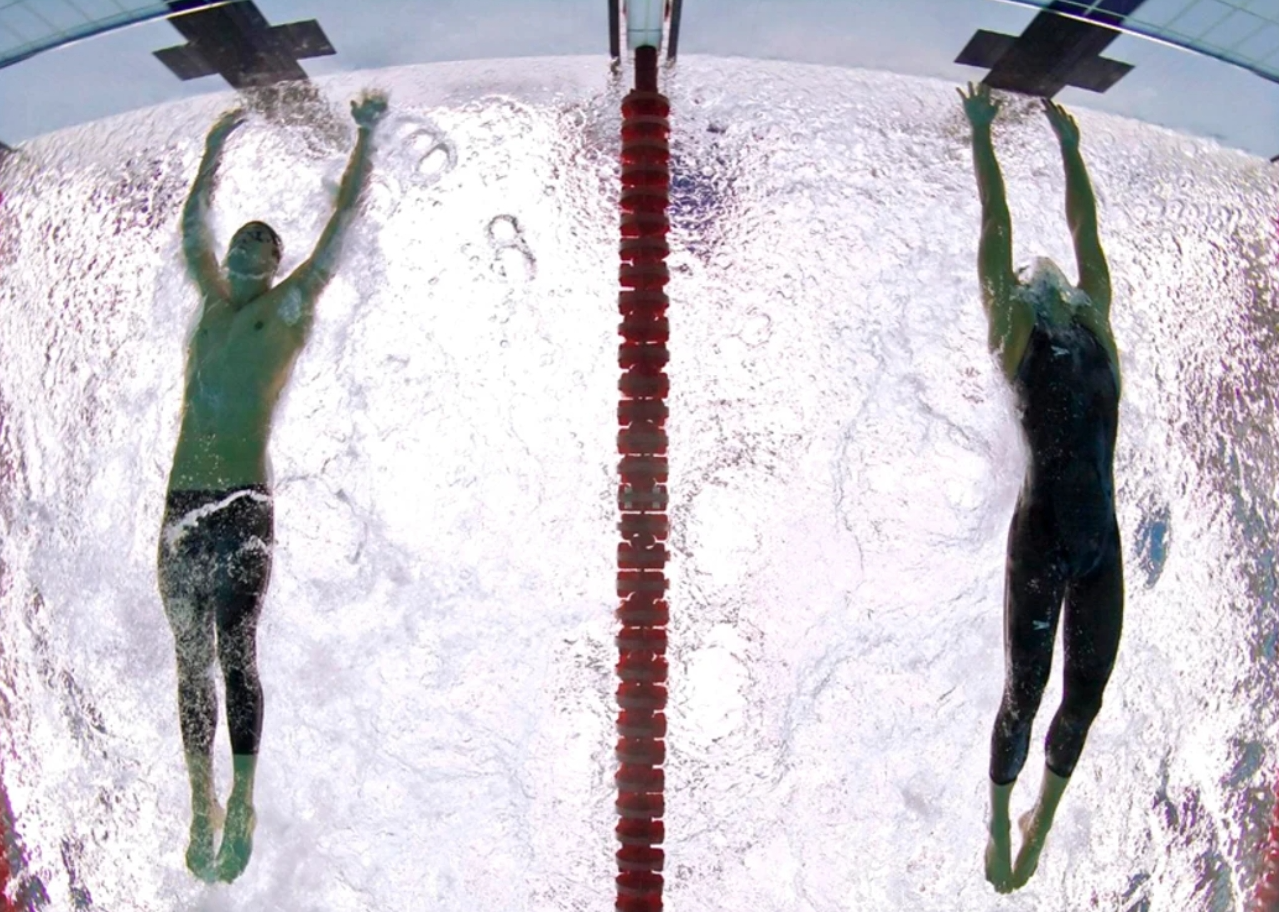
Four millimeters. The width of a fingernail. The margin that kept the greatest Olympic swimming legend alive.
Beijing, August 16, 2008. This was race seven of eight for Michael Phelps. A win here would tie Mark Spitz's record of seven gold medals — a record most thought no one would ever match. Milorad Čavić, the Serbian butterfly specialist, had other plans. He said it out loud before the final: "It would be better for the sport if Phelps lost."
Čavić meant every word. He led by 0.62 seconds at the 50m turn , moving with a long, smooth stroke index of 1.06. Phelps was seventh at the wall. Seventh.
Then came the last 15 meters. Phelps was worn out — this was his 16th race at the Games. He sensed Čavić's splash slowing down. So he threw in one extra half-stroke. His fingertips hit the touchpad in a short, sharp burst instead of gliding in. It looked like panic. It was a masterstroke.At this level, even marginal gains matter, which is why elite teams often rely on custom racing swimwear services to fine-tune fit and reduce drag by fractions.
Final times: Phelps 50.58s (Olympic Record). Čavić 50.59s (European Record). Ian Crocker, the world record holder, finished fourth.
Čavić came up from the water struggling to see straight. His body had burned through its oxygen. He looked at the scoreboard. Serbia filed a protest. FINA pulled up the Omega footage and reviewed it down to the ten-thousandth of a second. They denied the protest.
Phelps said it himself afterward: "To the naked eye, he won."
But touching and pushing follow different rules of physics. Čavić's hand slid across the pad. Phelps' fingers drove straight into it. Four millimeters decided everything — and opened the door to gold number eight.
#2 The Upset Heard Around the World: Australia vs. USA, Men's 4×100m Relay, Sydney 2000
Gary Hall Jr. said it straight: "We will smash them like we did the rugby team — like amateurs." Australia, the reigning rugby world champions, heard every word.
September 22, 2000. Sydney Olympic Park. The home crowd already knew what this meant before the starting gun fired.
The USA had won this relay at every single Olympics since 1964. Thirty-six years. An unbroken streak that felt less like dominance and more like gravity — just something that always happened. No one questioned it.
Then Michael Klim hit the water on Leg 1 and split a 48.18 — a new 100m freestyle world record, edging Alexander Popov's 48.21. Australia led by 0.71 seconds. The stadium didn't so much cheer as vibrate .
The race tightened across Legs 2 and 3. Jason Lezak pulled USA ahead at the 250m mark. Then it came down to one final exchange. Ian Thorpe entered the anchor leg 0.25 seconds ahead of Gary Hall Jr.
Hall closed the gap. Thorpe's legs were burning. The crowd noise went past loud — it was pressure made audible . In the final 15 meters, Thorpe surged hard and never looked back.Relay dominance at this level is often backed by support from a racing swimwear factory focused on consistency, compression, and performance under pressure.
Australia: 3:13.67 (World Record). USA: 3:13.86.
Thirty-six years, erased by 0.19 seconds. Hall's trash talk turned into the caption for his own defeat. The "air guitar" celebration that followed became one of Olympic swimming history's most enduring images.
#3 Final-Stroke Glory: USA vs. West Germany, Men's 4×200m Relay, Los Angeles 1984
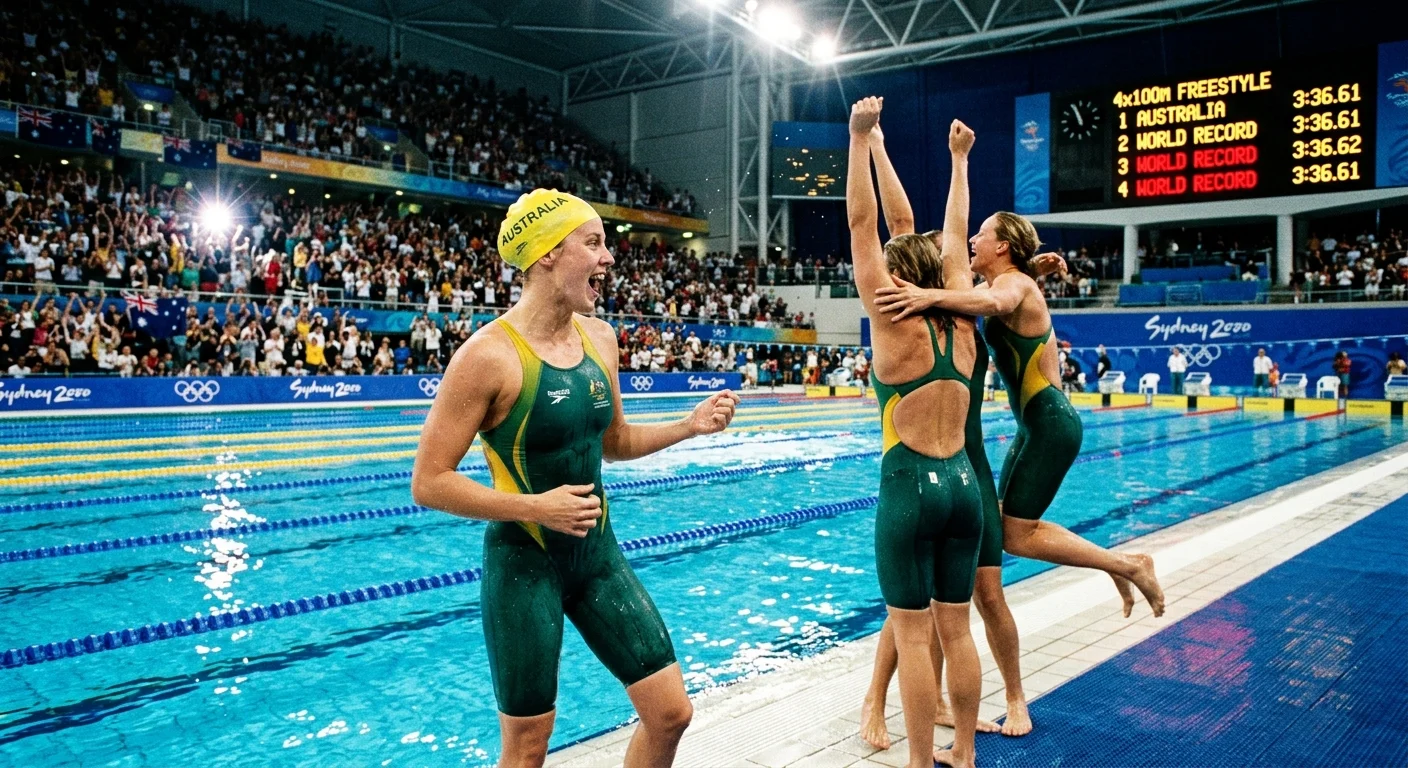
July 30, 1984. The Los Angeles pool smelled like history waiting to happen.
Michael Gross had a 7'4" wingspan and a nickname to match — "The Albatross." He held the 200m freestyle world record . His anchor split that night was 1:46.89 — the fastest leg in the entire final, run at near-world-record pace. By every reasonable measure, West Germany should have won.
They didn't.
Bruce Hayes entered the anchor leg 0.12 seconds behind . What he did next is hard to believe. He touched the wall in 1:48.41 . He matched Gross stroke for stroke, absorbed every surge, and finished 0.04 seconds ahead .Races decided by hundredths highlight why brands closely monitor racing swimwear wholesale prices when scaling performance gear for teams and federations.
USA: 7:15.69 (World Record). West Germany: 7:15.73.
The previous world record was 7:20.40 . They didn't just win — they crushed it by five seconds.
The Soviet-led boycott reshaped the field that year. That's a fact. But no asterisk touches what Hayes did in those final strokes. He chased down the Albatross. On the biggest stage. With everything on the line.
#4 Breaking the 50-Second Wall: Jim Montgomery's 49.99s, Montreal 1976
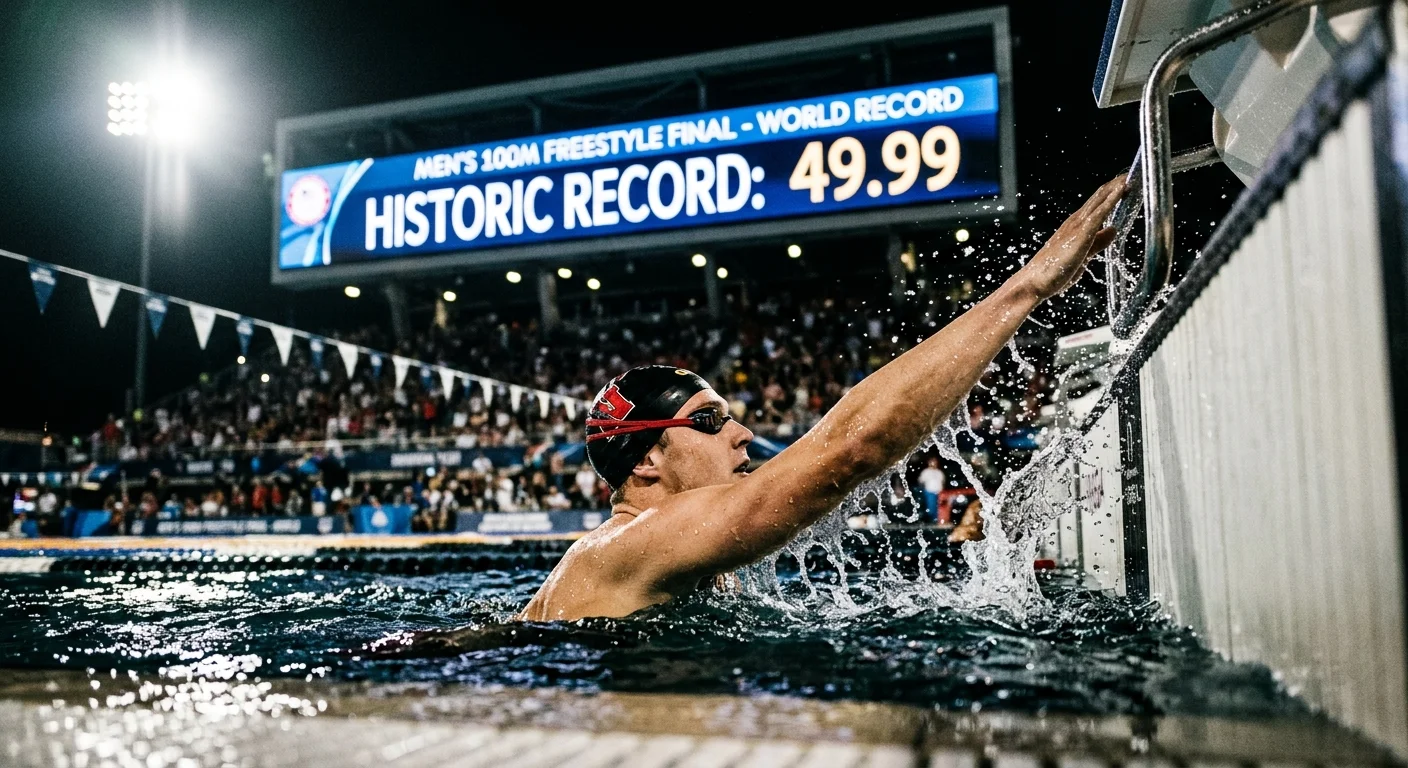
49.99. Not 50.00. Not 50.01. The last digit mattered more than the first two.
Montreal, July 25, 1976. Jim Montgomery touched the wall. He did what no human had ever done in competitive swimming. He broke the 50-second barrier in the 100m freestyle. Coach Doc Counsilman didn't hold back: "The best swim of the Olympics." He put it next to breaking the four-minute mile. That wasn't drama. That was fact.
Montgomery didn't show up unprepared. In the semifinals, he'd already posted 50.39 — a full second ahead of the second seed. The final felt settled before it started. Milestones like this continue to influence how modern competitive swimwear manufacturers approach fabric compression and hydrodynamics.Jack Babashoff took silver at 50.81 , a gap of 0.82 seconds . In a sprint race, that's not a margin. That's a statement.
Here's what makes it stranger. Montgomery had told himself he could hit 49.4 or 49.5 . He had relay splits to back it up. The 49.99 wasn't his limit — it was him holding back from his own ambition.
The record stood for 20 days . Jonty Skinner, kept out of the Olympics due to IOC apartheid rules, broke it by 0.55 seconds at a U.S. national meet in Philadelphia. Montgomery had raced a clock — not the man who would have pushed him hardest.
That detail stays with you. The wall got broken. But we'll never know what the real race could have been.
#5 Jason Lezak's Greatest Relay Leg in History: USA 4×100m Relay, Beijing 2008
The numbers don't prepare you. They can't.
USA trailed France by 0.59 seconds when Jason Lezak hit the water. Alain Bernard — the reigning 100m freestyle world champion — was already ahead by a full body length. France had trash-talked this one in advance, promising gold. They had every reason to feel confident.
Lezak was 32. His personal best from the blocks was 47.58 seconds . What he was about to do shouldn't have been possible. Not at that speed. Not at that age.
He tucked into Bernard's wake for the first 50 meters. Close enough to catch the turbulence. Not close enough to give himself away. Then, in that final 25 meters, something changed. Lezak's back half split 0.9 seconds faster than Bernard's . He touched the wall in 46.06 seconds — the fastest relay anchor split the sport has ever seen. That record still stands today.Performances like this drive demand for wholesale competition swimsuits that balance elite-level speed with broader team accessibility.
USA: 3:08.24 (world record). France: 3:08.32.
Eight hundredths of a second. The tightest margin in 4×100m relay history.
NBC's commentator screamed "UNBELIEVABLE — HE DID IT!" ESPN called it the greatest comeback in Olympic history. SwimSwam called it the greatest relay leg ever swum. Full stop.
Without Lezak, Phelps doesn't get eight golds. The whole story falls apart. One man's final 50 meters carried everything.
#6 A Dynasty's Final Chapter: Phelps vs. Lochte, London 2012
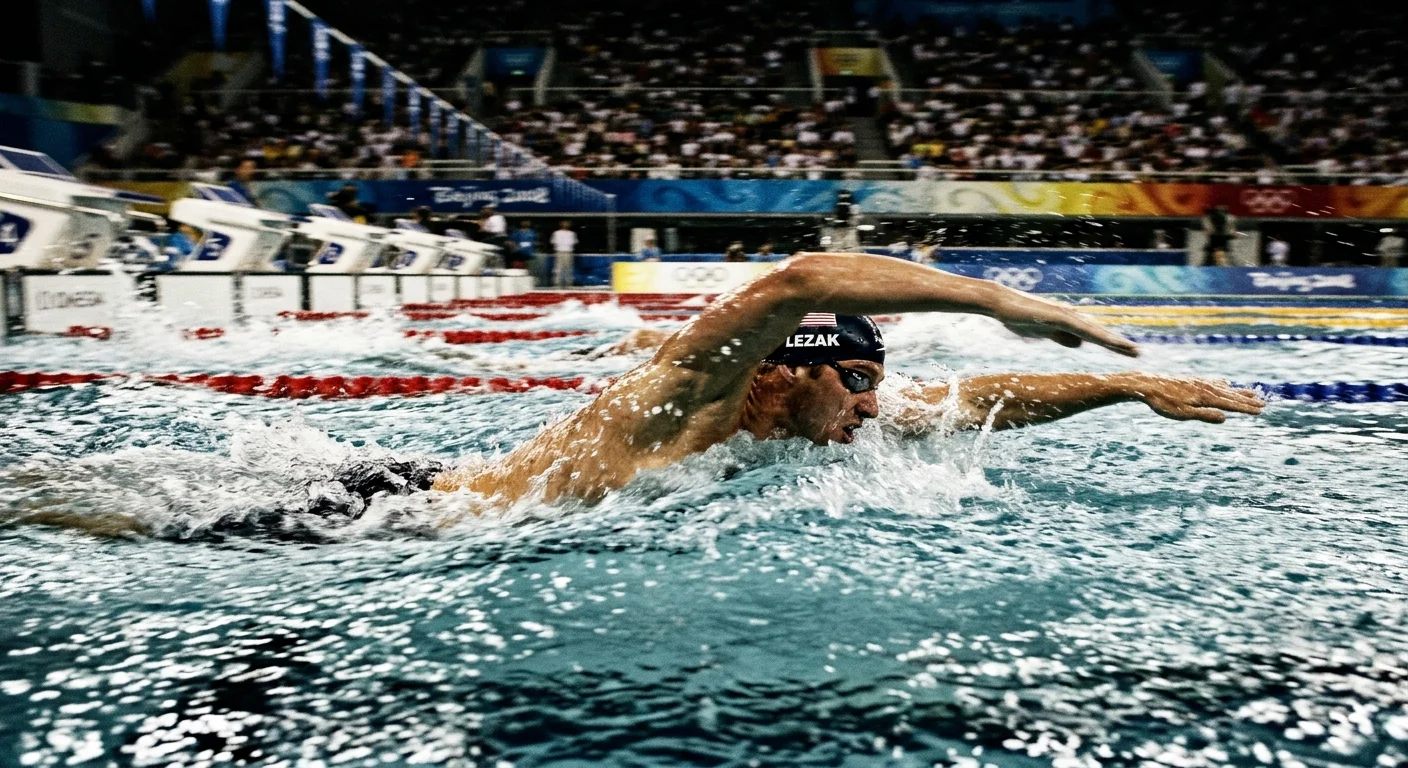
By August 2, 2012, everyone knew this was ending.
Phelps had said so himself — London would be his last Games. Ryan Lochte, his one true rival, had beaten him twice at these same Olympics. The 400 IM was a loss. The 200 Butterfly stung. A real question hung in the air above the Aquatics Centre: what if the dynasty doesn't close the way dynasties are supposed to?
Then came the 200m Individual Medley final.
Phelps led through the first 150 meters. Lochte pushed hard in the final stretch — 1:54.90 , fierce and honest. It wasn't enough. Phelps touched the wall at 1:54.27 . That made him the first man in history to win the same event at three straight Olympics — 2004, 2008, 2012.
The numbers tell the story: 22 total Olympic medals. Most decorated Olympian ever. Full stop.
Lochte took it well. "Can't complain," he said. He spent his entire prime racing in Phelps' shadow. Still, he walked away that day with 11 career Olympic medals — tying Spitz and Biondi on the all-time list.
This race was one person's ending. Clean endings like this one don't feel like loss. They feel like a long note that just found its resolution.
#7 Records That Outlasted a Generation: Mary Meagher's 1981 Butterfly World Records
Mary Meagher swam a 2:05.96 in the 200-meter butterfly in 1981. At the 2024 Paris Olympics — forty-three years later — that time would have earned fourth place. The bronze went to Zhang Yufei at 2:05.09. Meagher was faster than most of the field that night in Paris. She wasn't even in the water.
Brown Deer, Wisconsin. August 1981. No performance suits. No dolphin-kick training. No modern sports nutrition. In one single swim, she broke both the 58- and 59-second barriers in the 100-meter butterfly. She cut 1.33 seconds off her own world record and touched the wall at 57.93 . Her 200-meter mark moved from 2:06.37 to 2:05.96.
Both records held for 19 years .
Here's what makes this story hard to sit with: Meagher never got to race Moscow in 1980. The U.S. boycott kept her home. East Germany's Caren Metschuck won the 100-meter butterfly gold — at a time a full second slower than Meagher's previous record. Nine days later, Ines Geissler took 200-meter gold at 2:10.44. That's more than four seconds behind where Meagher already stood.
She went to Los Angeles in 1984 and swept both butterfly events plus the relay. The records fell in 1999 and 2000. By then, the sport had changed beyond recognition. She outlasted an entire era of the butterfly. The recognition that kind of run deserves never quite caught up to her.
#8 The Backstroke Dominator: John Naber's 4 Golds & 4 World Records, Montreal 1976
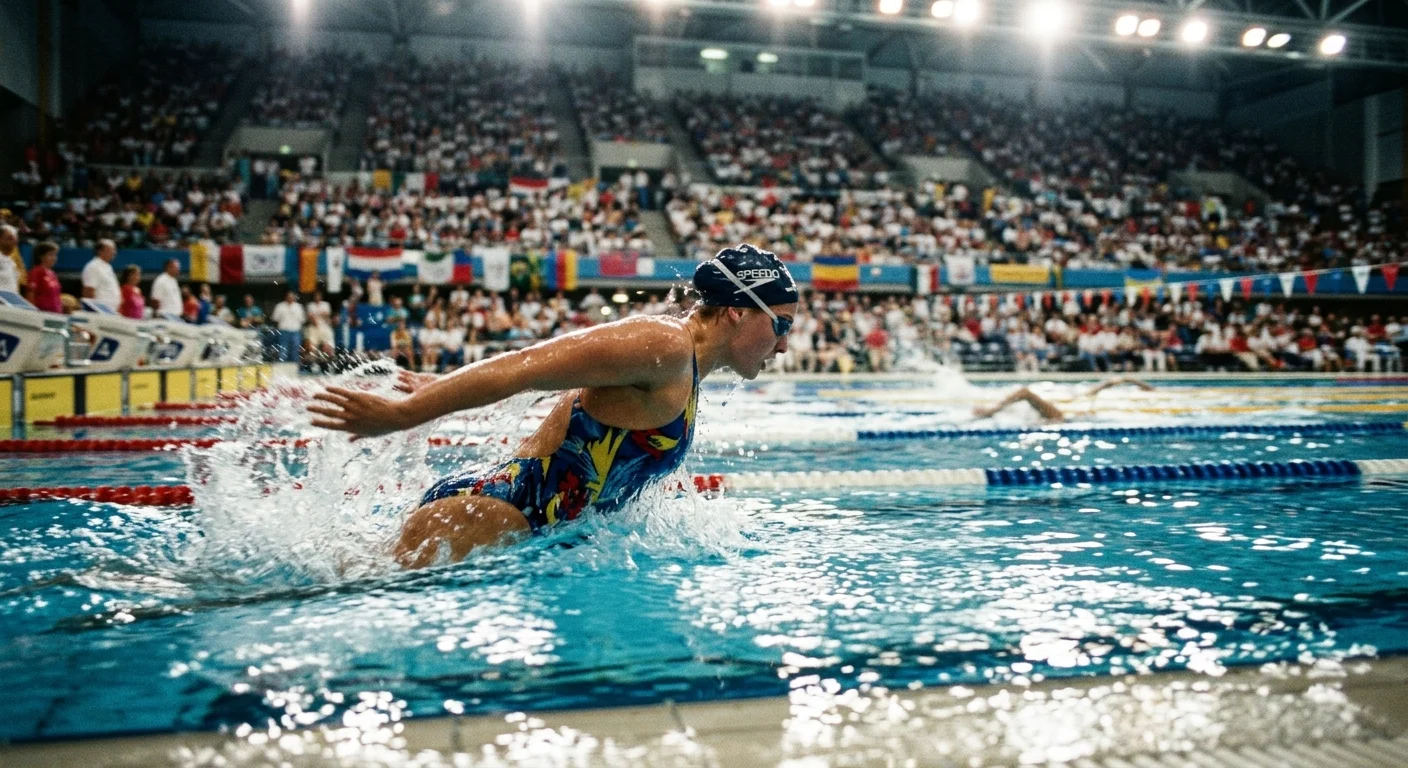
John Naber arrived in Montreal already holding Roland Matthes' world record — a record he'd broken at the U.S. Trials before the Games even started. That detail matters. He wasn't chasing history. He was building it in installments.
Five days. Four gold medals. Four world records. One silver. No one at the entire 1976 Games left with more. That includes the same Games where Jim Montgomery broke the 50-second barrier in the 100m freestyle.
The numbers speak clearly. In the 100m backstroke, Naber posted 55.49 — the first sub-56 in history — in the preliminary heats . A prelim. In the 200m backstroke, he went 1:59.19 , the first man ever under two minutes. His closest rival, Peter Rocca, finished 1.36 seconds behind . Rocca still beat the previous world record. That gap shows just how far ahead Naber was.
Nobody else was in the same conversation.
At 6'6", Naber used his wingspan the way Gross would a decade later — long, efficient, relentless. He also pioneered underwater dolphin kicks off the walls before the rules stepped in and restricted them. The records held for close to seven years. By the time they fell, the sport looked different. Performance suits had arrived. Rules had changed. The competitive landscape had shifted on multiple levels.
He won the 1976 World Male Swimmer award. Then the 1977 Sullivan Award — given to the top amateur athlete in the United States, across all sports. That kind of cross-sport recognition is rare for a swimmer. In Naber's case, it fit.
#9 Triple Crown of the Pool: Dawn Fraser's 3 Golds, Rome 1960
Dawn Fraser had already won the 100m freestyle at Melbourne in 1956. By the time Rome came around, she hadn't lost the event once. Not in four years. That kind of unbroken run goes beyond dominance. It becomes a fixed point — the thing you measure the sport against.
Rome 1960 made it even clearer. She touched the wall in 1:01.2 , an Olympic Record, beating Chris von Saltza by more than a full second. The margin wasn't close. It was emphatic.
She did this while sick. Rome's water was notoriously dirty. It gave her a gastric illness — "Rome tummy" — that dragged her 400m freestyle down to fifth place at 4:58.5. The illness cost her range. It didn't touch her signature event.
Her anchor split in the 4×100m freestyle relay was 60.6 seconds — another Olympic Record. Australia took silver behind the USA's world record 4:08.3. She delivered her split even knowing the gold was out of reach.
She came back at Tokyo in 1964 carrying real weight. A chipped vertebra. Nine weeks in a neck brace. Her mother had just died. She dove anyway. She won in 59.5 seconds — breaking the one-minute barrier she'd been chasing since 1960. She did it on the biggest stage possible.
Three straight Olympic golds in the same individual event. First swimmer in history to do it — male or female.
#10 The Blueprint for Greatness: Mark Spitz's 7 Golds, Munich 1972
Seven races. Seven gold medals. Seven world records. All of it inside eight days.
Mark Spitz came to Munich carrying the weight of 1968 — a Games where he promised the world and fell short. He returned with less noise but more focus. He had a target of six golds. What he delivered instead became the number every swimmer after him would spend a career trying to beat.
The sweep covered everything: individual sprints, distance, relays. 100m freestyle in 51.22. 200m butterfly in 2:00.70. Four individual golds. Three relay golds. Every single race broke the world record that stood before he touched the wall. No one had done that — not across seven events, not in one Olympics, not ever.
Then the Games shifted in a way no athletic achievement could match. On September 5, Palestinian militants killed eleven Israeli athletes in the Olympic Village. Spitz — Jewish, and done competing since September 4 — had left Munich by then. The record stood in the shadow of something that made records feel very small.
It didn't erase what he built. It just surrounded it.
Thirty-six years later, a thirteen-year-old from Baltimore — not yet born in 1972 — grew up staring at that number. Michael Phelps didn't just chase Spitz. He studied him as a structural blueprint — proof that one athlete could own individual events and relay legs inside a single Games. Proof that the body could carry that load without breaking.
Spitz's seven became the foundation Phelps built eight upon.
How Legendary Swimmers Train and What They Wear: The Gear Behind the Glory
Watching greatness is easy. Understanding it takes a closer look at the numbers.
Elite swimmers at the Olympic level train 8–10 km per day . Not the 12–14 km you might expect. Volume isn't the point. Intensity is. In the 25 weeks before a major competition, 86–90% of training stays at lactate levels below 4 mmol·L⁻¹ . That zone is controlled, deliberate, steady. The remaining 10–14% is where the real work hits: race-pace sets, sprint blocks, the kind of effort that builds the final 15 meters deciding everything.
Strength training follows the same idea. Dryland sessions focus on:
15–20 reps at 85% of 1RM
KB swings
Med ball slams
Dumbbell rows
Each drill targets the exact force demands your body faces in the water.
Then there's the suit.
The 2008 Speedo LZR Racer changed the sport. Polyurethane panels, bonded seams, 4–5% time savings — it connected to 21 of 25 world records broken at Beijing. FINA banned it by 2010. But what's legal today still makes a real difference:
4–8% drag reduction from hydrophobic fabrics
200–300% stretch recovery
Chlorine resistance beyond 500 hours of use
That spec isn't out of reach. berunclothes.com/training-suits carries pro training replicas built to those exact benchmarks. These are suits built to keep up with serious training — not just race day.
📊 Interactive Element: Which Race Deserves the #1 Spot?
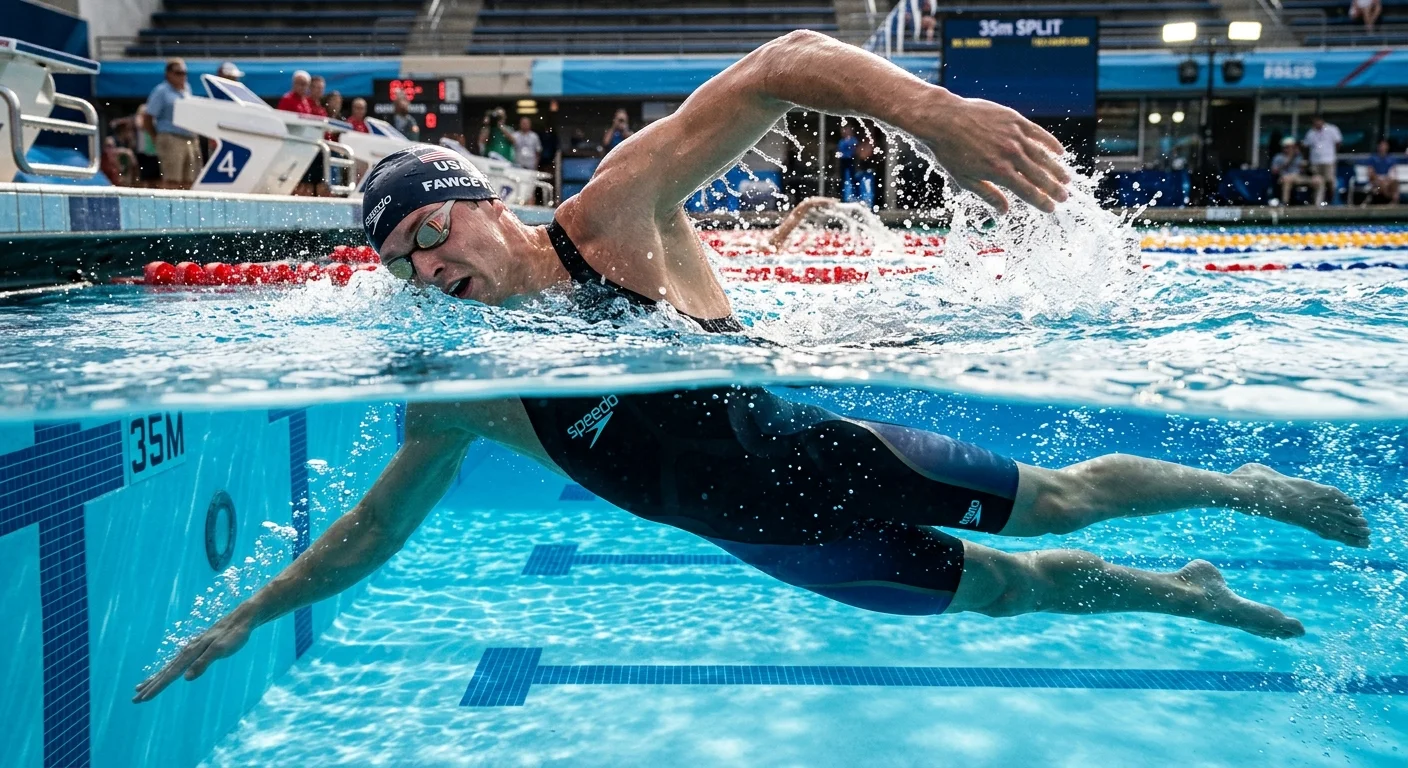
Ten races. One crown. You've read the arguments — now make yours.
Every list like this one is an invitation to disagree. Lezak's 46.06 anchor leg hits you in a different way than Phelps' four-millimeter finish. Mary Meagher swam a 1981 time that would have medaled in Paris 2024. That fact alone might be the one that stops you cold.
Cast your vote below and tell us which race you'd put at the top — and why.
💬 Which swim changed the way you think about what a human body can do in water?
Conclusion
Some races end in world records. Others end in something harder to measure — the kind of breathless, goosebump-raising moment that stops you cold. You know the feeling. You remember where you were sitting when it happened.
From Mark Spitz's impossible seven golds to that razor-thin 4mm margin separating Phelps from defeat, Olympic swimming history moments like these are more than sports statistics. They show what the human body can do at its absolute limit. It doesn't look real. But it is.
What makes them stick isn't the numbers. It's the wanting. The years of 4 a.m. practices, the suits, the goggles, the rituals — everything invisible that makes the visible moment possible.
This list is just the start. Go find the races you haven't watched yet. See them in full. Then sit with this question: what does it mean to move through water that fast?
Ready to train with that same focus? Explore the swimwear collection built for athletes who take their sport seriously.