The Core Problem With Flag Supplier Vetting In 2026

The flag wholesale market has a specific problem that most buyers underestimate until they get burned by it: the gap between what a supplier claims and what they actually deliver is wide, and the details that matter most — fabric weight, color accuracy, stitch construction — are invisible in a catalog photo. You cannot tell from a listing whether a flag is 90gsm or 150gsm, whether the stars are embroidered or screen-printed, or whether the fly end has four rows of stitching or two.
Two categories of misrepresentation dominate buyer complaints in this space. The first is fabric weight fraud: a supplier quotes 150gsm polyester, ships 90gsm. The flag looks roughly correct on arrival but deteriorates in a fraction of the expected time. The second is color inaccuracy: colors that do not match official Pantone specifications for national flags, which matters significantly for diplomatic, government, or institutional buyers. Neither problem shows up in a product photo or an initial quote.
For US-market buyers, the cleanest verification shortcut is FMAA certification and NIFDA membership. Only five manufacturers hold current FMAA certification, and that covers 100% domestic production, not just final assembly. NIFDA members are required to sell only US-made flags. If you are sourcing for a government procurement contract with domestic manufacturing requirements, these two credentials narrow the field quickly and reliably. For international supplier sourcing, the verification process is more layered — but it is not impossible to do well if you know what to look for.
Where To Find National Flag Suppliers By Market
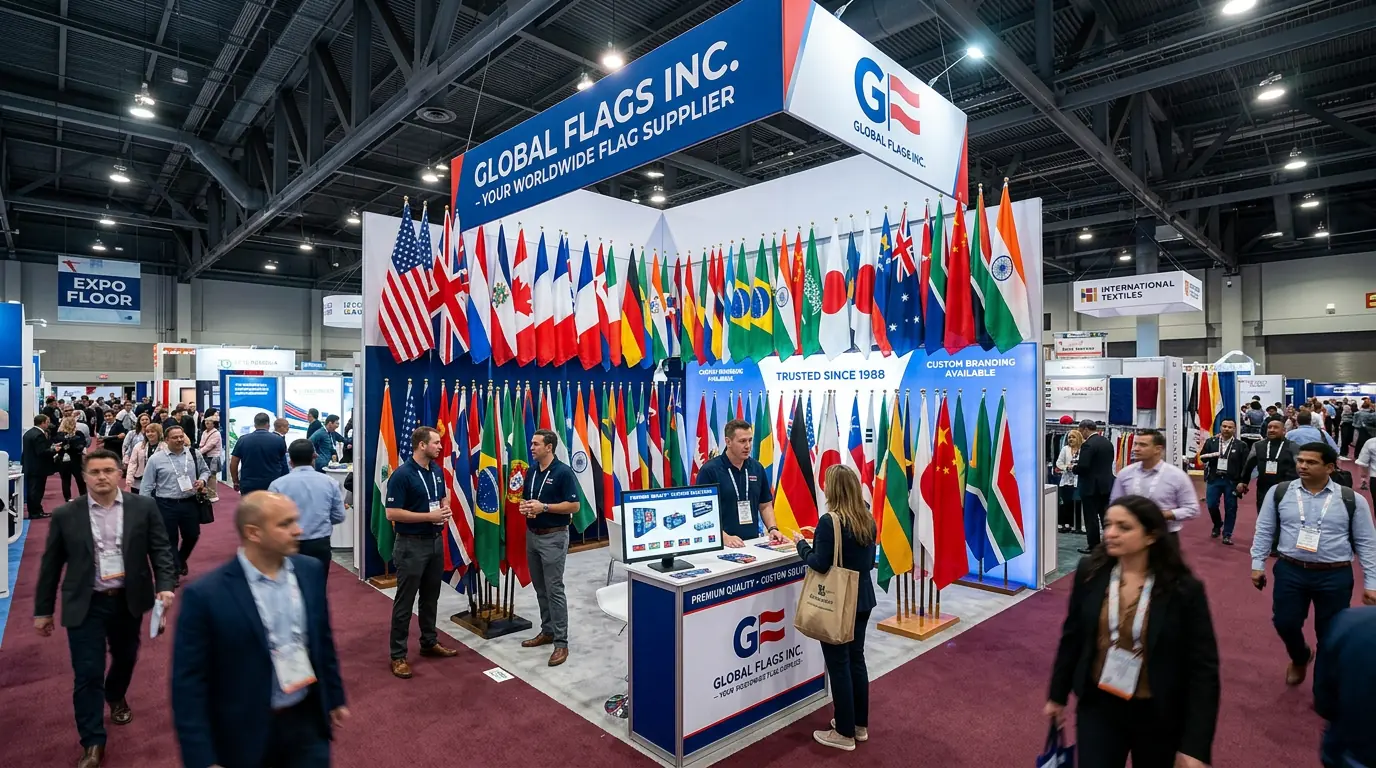
For US-market sourcing, the most direct starting point is the NIFDA member directory. The National Independent Flag Dealers Association requires members to sell only American-made flags, which pre-filters the credibility question before you even contact a supplier. The major domestic manufacturers — Annin Flagmakers, Valley Forge Flag, Allied Flag — are all accessible through this network, and their credentials are publicly verifiable. If you are building a wholesale operation focused on US-made flags for institutional clients, starting with the NIFDA directory is a more reliable shortcut than starting with Google search results.
For global sourcing, the major B2B platforms — Alibaba, Made-in-China, Global Sources — have the widest supplier selection but require more careful filtering. On Alibaba, the metrics worth prioritizing are on-time delivery rates above 95%, response times under four hours, and documented reorder history from existing customers. The "Gold Supplier" badge on Alibaba is a paid membership tier, not a quality certification — worth knowing before you treat it as a vetting signal. Suppliers with "VerifiedSupplierPro" status have undergone third-party audits, which is more meaningful. China's manufacturing strengths in this space are geographically concentrated: Guangdong for high-volume export production, Yiwu for competitive pricing on smaller runs, with Fujian and Shandong offering integrated supply chains for volume buyers.
Trade shows remain underrated for flag sourcing. The PPAI Expo (promotional products), ISA Sign Expo, and ASD Market Week are all venues where flag manufacturers and distributors exhibit. Meeting a supplier in person, seeing physical samples, and understanding their production capacity in a conversation is more efficient than weeks of back-and-forth emails. If you are evaluating a new supplier for a significant ongoing relationship, attending one trade show to meet candidates face-to-face often saves more time than it costs. You can also contact our sales team for wholesale rates to discuss sourcing requirements before committing to any supplier. Beyond national flags, buyers often source wholesale advertising flags for business campaigns from the same supplier network, making broader supplier relationships worth building.
Key Criteria For Evaluating A Flag Supplier
The production capability question is the most important one to get right early. In-house manufacturing and contract manufacturing are fundamentally different risk profiles. A manufacturer who owns their printing equipment, cutting machines, and sewing production lines has direct control over quality at every step. A trading company that outsources production to third-party factories introduces a layer where specifications can drift, quality control is indirect, and lead times are subject to their factory relationships rather than their own capacity. The distinction is not always obvious from a website — ask directly, and ask for photos of their actual facility, not stock images.
Industry credentials worth verifying: FMAA certification for US-made claims, ISO 9001 for general quality management systems, and ISO 105-B02 for colorfastness standards on UV-stabilized polyester or nylon. For EU market compliance, REACH and RoHS documentation matters if your clients have those requirements. Not every legitimate supplier will have all of these — but a supplier who cannot explain which certifications they hold and why is a supplier who has not been asked this question by buyers who matter to them. To understand what a professional manufacturer should be able to provide, reviewing what dye sublimation and screen printing services for flags look like at a facility with proper quality controls is a useful reference point.
The minimum viable proof of a supplier's actual track record is some combination of: verifiable government or institutional client references, documented reorder rates from existing customers, and a willingness to provide pre-production samples before bulk commitment. A supplier who is reluctant to provide samples, or who makes sample provision contingent on a large deposit, is telling you something about how they operate. A bulk national flag supplier with Pantone color matching worth working with should be able to provide a sample within a reasonable lead time at a cost that is credited toward the first bulk order.
Red Flags When Evaluating Suppliers
The easiest red flag to spot: no physical address or factory audit option. A supplier who cannot provide a verifiable factory address, or who deflects requests for an in-person or third-party audit, is a supplier who does not want you to see their actual production situation. This does not mean every supplier without a factory tour option is fraudulent — some legitimate operations do not do tours for practical reasons — but combined with other signals, it matters.
Pricing significantly below market average almost always indicates one of three things: fabric weight fraud (they are quoting the gsm you asked for but shipping lower), print process shortcuts (cheaper single-pass printing instead of the specified dye-sublimation method), or offshore-of-offshore subcontracting where quality control is multiple layers removed. The price difference between a legitimate 150gsm polyester flag and a 90gsm substitute is real and meaningful. A supplier who can undercut the market by 40% on a specification-matched product is either lying about the specification or running at a margin that makes quality control impossible to sustain.
Short company history combined with aggressive pricing and no verifiable customer references is the highest-risk combination for bulk orders. Newer suppliers are not automatically bad — but a company that has been operating for 18 months, quotes prices 35% below established competitors, and cannot point to a single documented reorder customer is a company that has not been tested under pressure. The first time something goes wrong — a color mismatch, a delayed shipment, a quality failure on delivery — you will find out very quickly whether they have the resources and the orientation to fix it.
The Sample Order Process: How To Test Before Bulk Buying
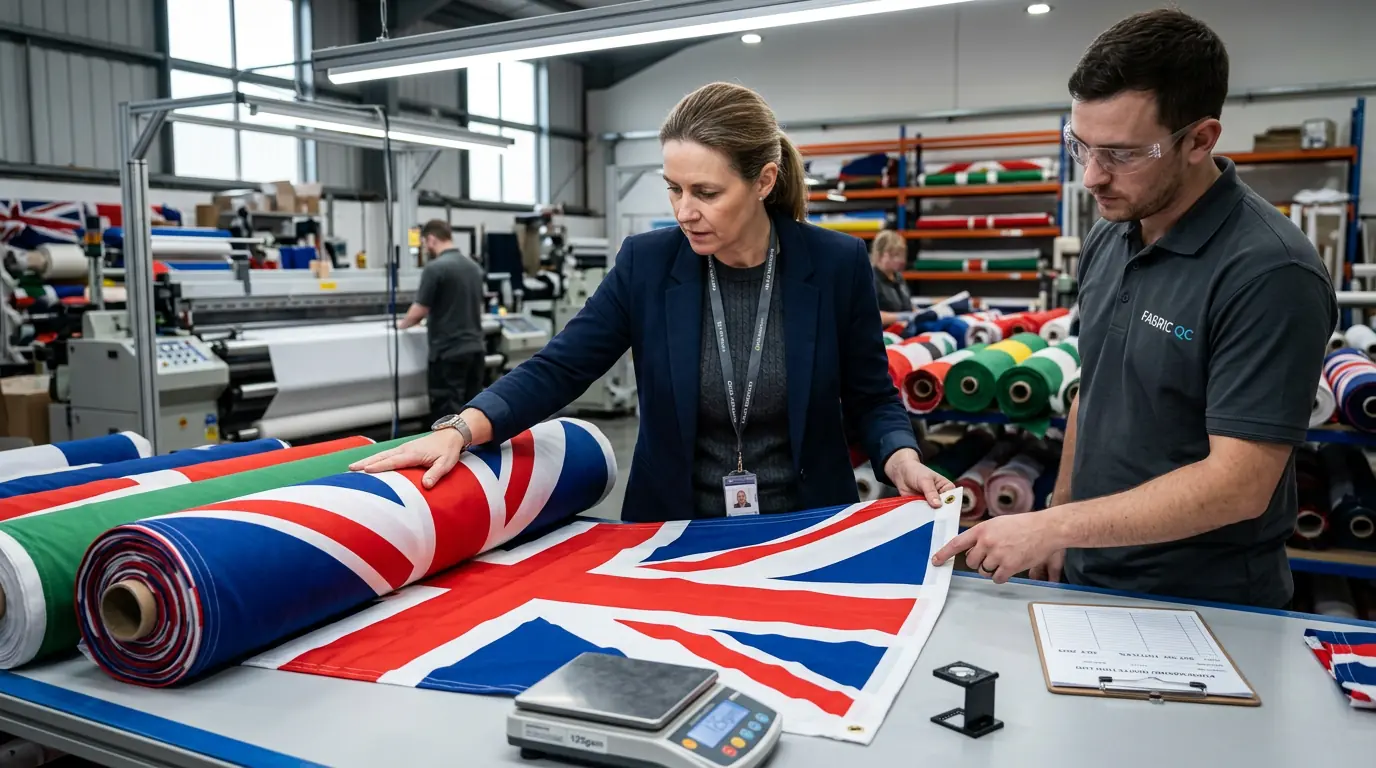
Three to five samples before a bulk order is the standard practice among buyers who have been in this business long enough to have gotten burned once. The sample evaluation process is not complicated, but it needs to be systematic. Test print clarity against the official Pantone specification for the national flag in question — official color references for most national flags are publicly available. Weigh a sample on a kitchen scale and compare to the stated gsm. A 3x5 foot flag in 150gsm polyester should weigh a specific amount you can calculate from dimensions and fabric density; significant deviation tells you the specification was not met.
Stitch quality inspection focuses on the fly end and the header seam. Four rows of stitching on the fly end is standard for quality outdoor construction; two rows is a cost-cutting indicator. The header should be reinforced canvas with brass grommets, not thin nylon with aluminum grommets. These details are not aesthetic — they are the failure points under wind stress, and they determine whether a flag lasts three months or eight. A quality national flag manufacturer for government and institutions should be able to provide written specifications for all of these construction details before you commit to a bulk order.
For outdoor durability testing: expose the sample to direct sun and weather for two to four weeks before committing if you have the lead time. This is not always practical for time-sensitive projects, but for ongoing supplier relationships it is worth building into your evaluation cycle. Fade resistance and seam integrity under UV exposure are the two most common failure modes for outdoor flags, and a few weeks of real-world exposure tells you more than any specification sheet.
Building Long-Term Supplier Relationships For Consistent Quality
The sourcing work does not end when you find a good supplier. The buyers who get the most consistent quality from their flag suppliers are the ones who communicate specifications precisely and consistently — not just on the first order, but on every subsequent one. That means providing vector artwork at the correct scale, Pantone color references in writing, fabric weight requirements, grommet specifications, and delivery requirements in documented purchase orders, not just email threads.
Annual purchasing agreements with locked specifications are worth the administrative overhead if you are placing multiple orders per year. A supplier who knows you are an annual buyer with fixed spec requirements has more reason to maintain your quality standard than one who treats each order as a transaction. Fixed specifications also give you something to point to if a delivery does not match — you are comparing against a document, not arguing about memory or email interpretation.
Supplier diversification is often framed as risk management, but the practical argument is simpler: maintaining relationships with two or three suppliers at different tiers — one domestic premium, one import value — gives you options when lead times compress or when a specific order type does not fit one supplier's strengths. A domestic supplier who can deliver in a week is worth knowing even if you usually source at import prices. To understand the OEM flag ordering process from design to delivery, documenting your requirements clearly at the outset is the most effective way to maintain quality across supplier relationships. For buyers comparing leading custom flag suppliers across domestic and international tiers, the goal is not finding one supplier who does everything — it is building a sourcing mix that covers different order profiles reliably. Corporate buyers often find that the same supplier network that handles national flags can also provide wholesale corporate flags with your logo for multi-location branding programs.