What "custom flag near me" means
People type this phrase into Google to find a local manufacturer, print shop, or sign company close by. They want custom-printed flags with logos, event branding, or personalized designs. The "near me" part shows they have different needs than online shoppers.
Why people search locally:
Speed matters. These customers need flags fast—sometimes same-week for an upcoming event, ribbon-cutting, or sports tournament. Many U.S. suppliers quote 6–8 weeks from final design approval to delivery. Local digital-print shops? They finish simple 3×5 ft flags in 1–2 weeks or faster.
Face-to-face proofing. People want to see fabric samples in person. They check color accuracy with their own eyes. They talk design tweaks with a production expert—not through emails with a call center.
Skip the shipping. Local pickup cuts freight costs and transit delays. Installing flags the day of an event? This saves the day.
What people order:
The typical "near me" customer needs small- to medium-volume runs. That's anywhere from a single ceremonial flag to a few hundred event banners.
The most-requested spec? A 3×5 ft outdoor flag in durable polyester or premium nylon. Digital printing supports almost any design complexity.
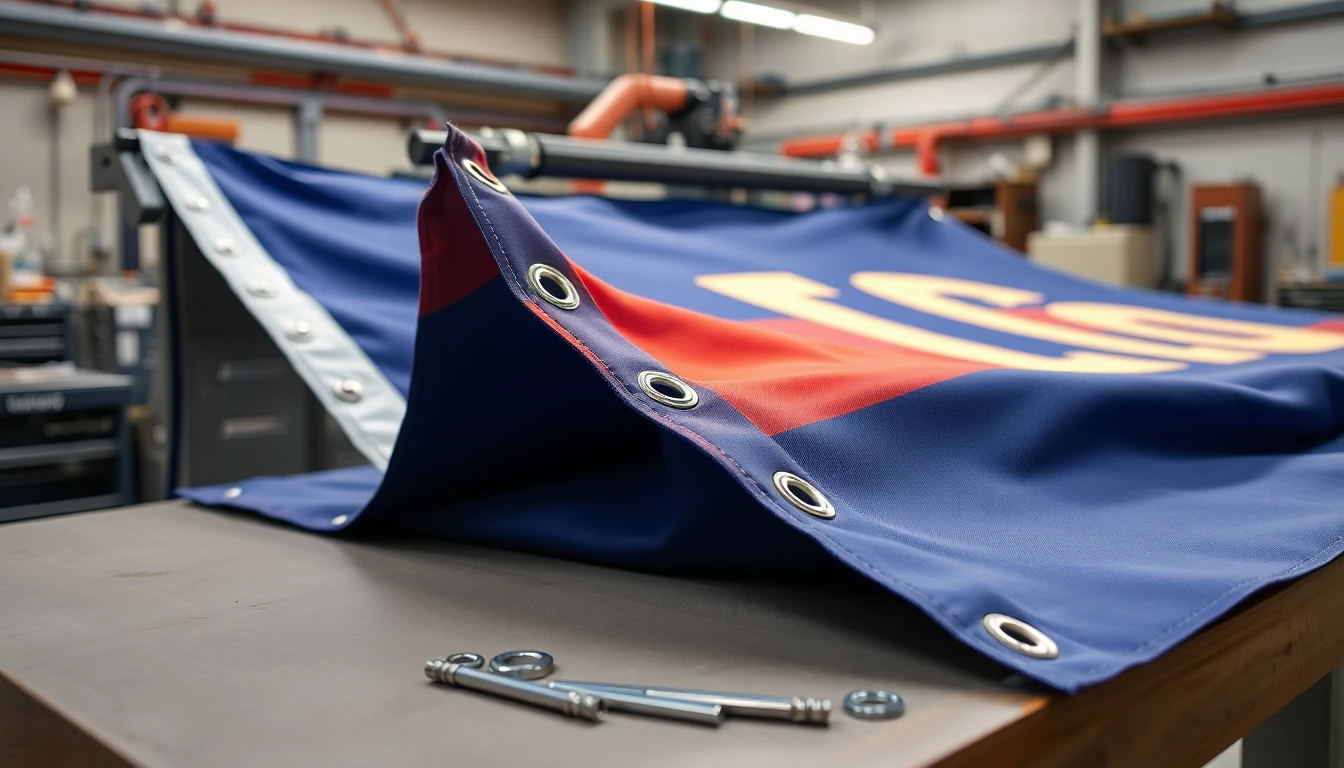
Standard options include single- or double-sided printing. Double-sided uses two fabric layers. It reads the same from both directions. Flags come finished with grommets or pole sleeves. You can hang them outdoors within days.
Main options for getting a custom flag made near you
Four types of businesses handle custom flag orders in most U.S. cities. Each one serves a different need.
Local sign shops handle one-off custom projects. They print onto fabric using wide-format dye-sublimation machines. You'll find them printing storefront banners and vehicle wraps. Flags are just another product they make. Most accept single-unit orders with zero fuss. Standard jobs finish in 2–7 business days. Need it faster? Rush service cuts that to 1–2 days. You'll pay extra though. Size limits depend on their printer bed. Most handle up to 5×8 ft as one piece. Larger flags get paneled and stitched together.
Embroidery and screen-print shops work best with simple designs. Bold logos work great. So do three or four solid colors and clean lines. Screen printing makes sense around 25–50 identical flags. Setup costs are too high below that number. Embroidery machines handle smaller flags well. Most top out around 3×5 ft because of hoop size. The benefit? You get rich color and a premium finish.
Authorized dealers for national flag manufacturers operate inside uniform shops, awards stores, and sign companies. They order standard sizes through regional production facilities. Common sizes include 2×3, 3×5, 4×6, 5×8, and 6×10 ft. These come with hardware packages already set up.
Event and trade-show display specialists stock feather flags, teardrop flags, pole systems, and weighted bases. They keep inventory ready. Their customers need things fast. Many offer same-week pickup for local orders. This helps a lot with last-minute outdoor events. Got three days' notice? They can usually help.
How to search for "custom flag near me"
The right search phrase saves you hours. Most people type "custom flags" and scroll through pages of wholesale catalogs. Wrong move. You need local vendors who pick up the phone and show samples fast.
Start with precise local searches. Google treats "near me" as a signal for nearby businesses. Add details to cut the clutter:
"custom flag near me same day" finds shops that handle rush orders
"3×5 custom nylon flag near me" filters by your exact size and material
"business promotional feather flags near me" targets your specific use
Size and material details work better than vague searches. "Double-sided custom polyester flag near me" shows Google you know your stuff. This pulls up vendors ready to produce, not stores selling ready-made flags.
Add city names and ZIP codes. These override Google's auto-location. Try "custom flags in [your city]" or "custom flags [ZIP code]" for tighter results. Need something close? Use "custom flags within 10 miles" or "local custom flag shop."
Example: "custom feather flags San Francisco Peninsula" brings up production studios like SpeedPro SF Peninsula. Branded, customizable, and nearby.
Search by flag type to skip junk listings:
"custom feather flags near me"
"custom pole flags near me"
"custom banner flags near me"
"custom boat flags near me"
Add quantity if it matters. "100 custom flags near me" finds bulk printers. "Single custom flag near me" shows shops that take single orders with no minimums.
Add technical terms to filter by production quality. "Full-color custom flag near me" or "double-sided print custom flag near me" identifies digital-print shops. "UV-resistant outdoor custom flags local" finds vendors using outdoor-rated materials.
Look for specs like 200D–250D polyester or "Polynex 250 denier" in listings. These indicate serious outdoor durability.
Material keywords speed up your search:
"nylon custom flag near me" (lightweight, handles wind well)
"polyester custom flag near me" (heavier, lasts longer)
"250 denier custom flag" (commercial-grade thickness)
"weather-resistant custom flags" or "outdoor-rated custom flags"
For city or municipal flags, try "[city name] flag manufacturer." These vendors often use 250 denier Polynex with eco-friendly inks. That's a quality standard worth noting.
Sort vendors by service type. Add business keywords:
"custom flag manufacturer near me" (production facility)
"flag & flagpole company near me" (full hardware plus printing)
"flag shop with custom printing near me" (retail plus custom services)
"wholesale custom flags near me" (bulk orders, reseller pricing)
Each phrase targets a different level. Manufacturers do volume. Flag-and-pole companies include installation. Retail shops help with design and provide samples.
Use review and directory filters. Add trust signals to your search:
"custom flags near me BBB" → cross-check Better Business Bureau listings for A+ ratings and verified US locations
"custom flag shop near me reviews 4.5+" → filters out low-quality vendors
In Google Maps, set distance ≤10–25 miles, rating ≥4.3/5, and minimum 20+ reviews. This combo weeds out sketchy operations and distant warehouses that claim to be local.
Add industry keywords. Professional shops mention affiliations or certifications:
"FMAA certified custom flag dealer near me" (Flag Manufacturers Association of America—ensures US-made standards)
"Annin flag dealer near me" (Annin is a major US supplier; dealers carry custom services)
"flagpole & flag company" or "custom flag co"
These terms help find vendors who focus on flags as their main business, not a side gig.
Scan for specific services in search results. Look for phrases like:
"can manufacture custom flags" or "custom flags for your organization"
"large team of seamstresses" and "create custom flags" (in-house production, not dropshipping)
"fully customizable feather flags" or "branded flags" (true custom work, not templates only)
Focus on listings that mention custom artwork handling, in-house sewing and finishing, or local install and pickup. These details show real production capacity.
Add urgency keywords for tight deadlines. Short on time? Try:
"rush custom flag near me"
"same-day custom flag printing"
"next-day custom flag pickup"
"local pickup custom flags" (no shipping delays)
Shops that advertise "same-week pickup" usually keep blank stock and run digital presses daily. Your best option for quick turnarounds.
One last tip: stack multiple filters in one search. "FMAA certified rush custom feather flag San Diego 4.5+ reviews" looks complicated, but Google handles it fine. You'll get fewer results, but they'll match what you need.
Types of Businesses That Make Custom Flags
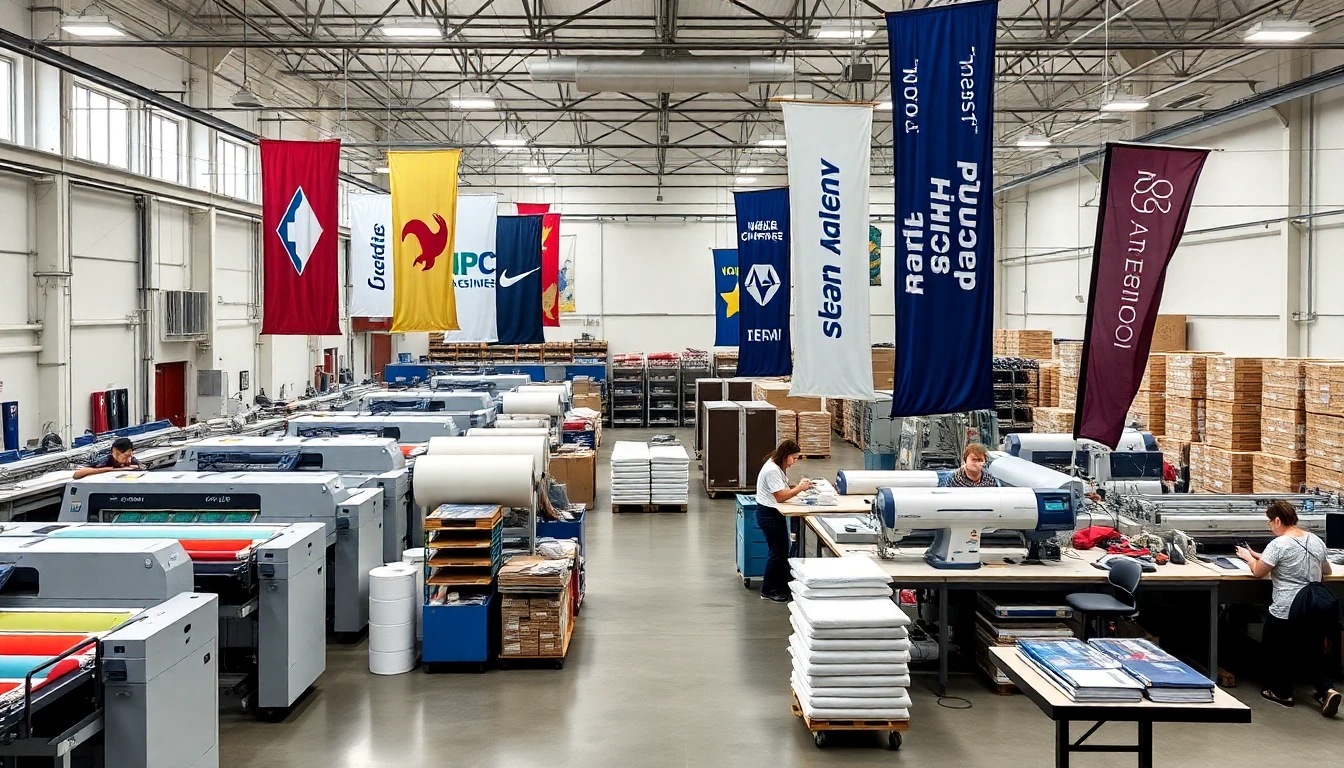
Custom flag production spans more industries than you might think. The work moves through specialized manufacturers, sign shops, and embroidery studios. Each takes a different slice of the market.
Dedicated flag manufacturers form the backbone of the industry. Companies like Valley Forge Flag, Eder Flag Manufacturing, Annin Flagmakers, and Carrot-Top Industries build everything around fabric and ink. A top US custom flag manufacturer brings in $75–100 million each year. They handle single ceremonial pieces and massive bulk runs. Their clients include government agencies, military units, school districts, corporate buyers, sports franchises, and resellers.
These manufacturers work both ends of the spectrum. One day they produce a single hand-sewn memorial flag for a veteran's funeral. The next day they run 10,000 identical corporate banners for a national retail chain.
Sign shops grabbed part of the flag market once wide-format printers got cheaper. A 2025 sign industry survey shows soft signage now ranks among core products for many full-service shops. This includes banners, feather flags, teardrop flags, and pole flags. They treat flags like oversized vinyl. Upload art, load fabric, hit print. Shops with dye-sublimation rigs handle short runs and custom event work easily.
Commercial print shops with wide-format digital equipment took the same route. They print trade show graphics Monday, event flags Tuesday, vehicle wraps Wednesday. Dye-sublimation and direct-to-fabric printers take on small-batch custom work. Traditional manufacturers skip these jobs because they're not profitable enough.
Promotional products distributors and screen printers bundle custom flags with T-shirts, pop-up tents, and table covers. Most send actual flag production to wholesale printers. But they own the client relationship. Their value comes from design help and order bundling, not fabric cutting.
Online custom-printing platforms own the on-demand space. Upload a logo, pick a size, approve the proof, wait for delivery. These web-to-print businesses do well with small batches and personal designs. Photo flags, wedding banners, memorial tributes—jobs traditional manufacturers won't touch.
Embroidery and sewing shops still do high-end ceremonial work. Military flags with appliqué, sewn memorial pieces, and custom regimental banners need hand-finishing skills. Digital printers can't copy this. Volume stays low. But profit per unit runs high.
Event production companies treat flags as disposable signage. They stock feather flags, beach banners, and avenue displays as part of bigger event packages. Most work with wholesale printers instead of running their own equipment. Speed and delivery matter more than production control.
Specialty outdoor advertising firms focus on roadside visibility. They supply car dealerships, real-estate offices, and retail stores with feather flags and flutter banners. Business models favor wholesale imports plus custom overprinting. This keeps costs low while offering enough custom options to close deals.
Behind all these customer-facing businesses sits a hidden wholesale layer. Wholesale custom flag printers produce bulk runs and ship directly to sign shops, distributors, online stores, and retail chains. Feather-flag wholesalers advertise 25–65% savings in bulk purchases versus small orders. That price gap powers an entire B2B reseller system.
Large textile factories—both US-based and overseas—make the raw volume. Polyester and nylon flags by the thousands, often unbranded or private-labeled. Retailers and online stores rebrand them. OEM manufacturers produce finished goods wearing someone else's logo. This feeds promotional chains and big-box stores that want inventory without production problems.
Example: local sign/print shop (AlphaGraphics–type model)
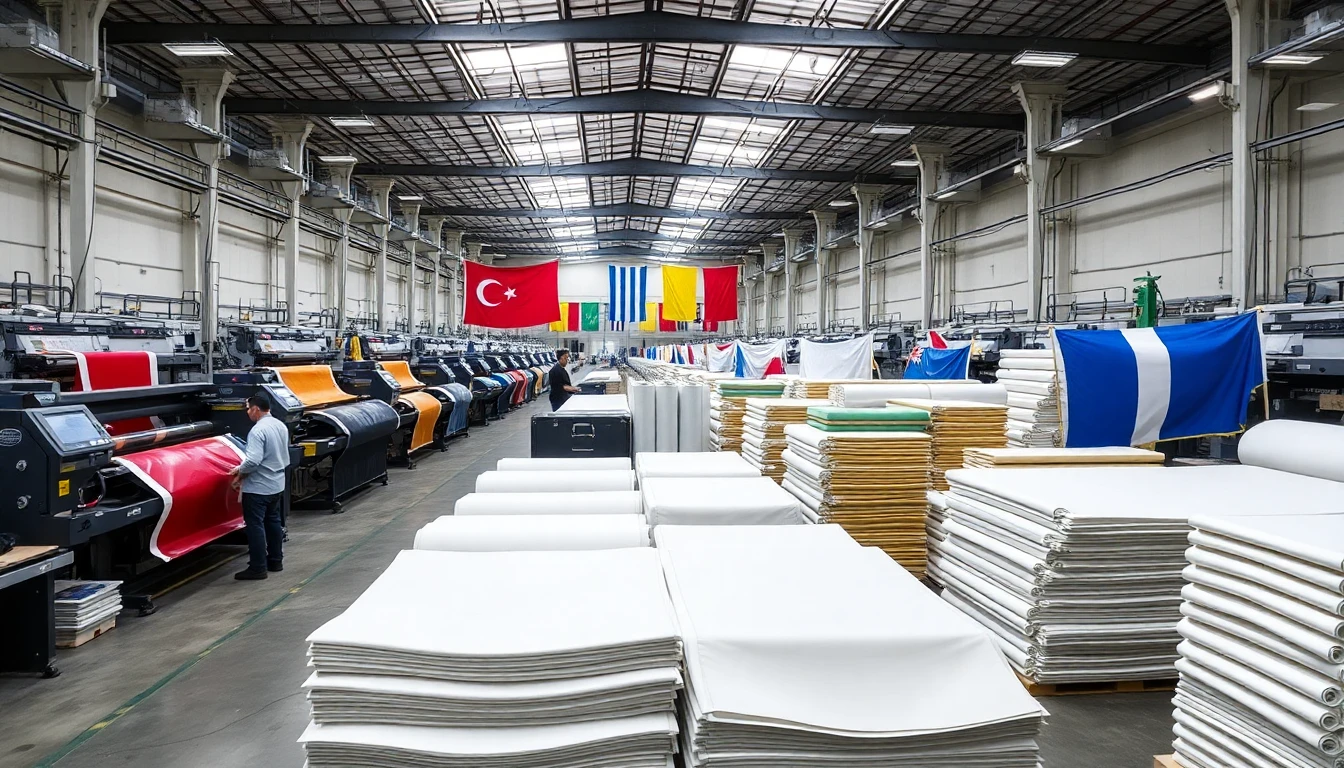
AlphaGraphics franchises set the standard for neighborhood print and signage services. The network runs about 300 locations across 8 countries. 249 active U.S. units appear in Entrepreneur's 2025 franchise database. Each center works as a full-service B2B marketing hub. Walk in and you'll find digital printing, offset printing, large-format fabric output, promotional products, design services, mailing fulfillment, and web-to-print portals—all in one place.
Custom flags fit into their large-format printing category. Most locations use dye-sublimation equipment. This handles polyester and nylon. You can order feather flags, teardrop banners, pole flags, and custom outdoor signage. Same-week turnaround is standard. These shops do well with short-run, high-mix work. Need five flags for a grand opening? They handle it. Need 50 branded banners for a trade show? Same machine, different batch.
The numbers show what it takes. Opening an AlphaGraphics-type franchise costs $291,639–$378,689 in total startup capital. You'll pay a $49,750 franchise fee upfront. The franchisor wants proof you can keep running: $350,000–$400,000 net worth and $100,000 minimum liquid cash. Royalties follow a step program. They drop from 7% to 3% as revenue grows. Add another 2.5% for marketing fund contributions.
Performance varies a lot across the system. The median U.S. center grossed $1,025,898 in 2024. The average hit $1,470,319. Top performers pulled that number up. The range ran from $115,489 to $9,498,138—a 82× gap between smallest and largest. Just 34% of centers hit or beat the system average.
The top quartile averaged $3.3 million each year. Their median sat at $2.78 million. The bottom quartile scraped by at $386,455 average and $399,168 median. Even among the top 25%, just 38% beat their quartile's average. Location, ownership skill, and market saturation drive results.
Profit margins show how shops operate. A group of 148 reporting centers showed median gross margin of 71.8% and median EBITDA margin of 13.9%. Common expenses: 29.3% payroll and 7.3% rent. A center hitting the median $1.2 million in gross sales makes about $166,000 in EBITDA before owner salary. Profitable? Yes. But it's hard work, not easy money.
These shops power "custom flag near me" search results. Local sign shops carry real overhead, real staff, and real equipment payments. They price to cover costs. Your custom 3×5 ft flag? Expect $85–$150. Fabric, sides, and rush fees affect the price. They profit from volume and repeat buyers, not single flag sales. Need something fast and local? They deliver.
Example: specialized custom flag printers
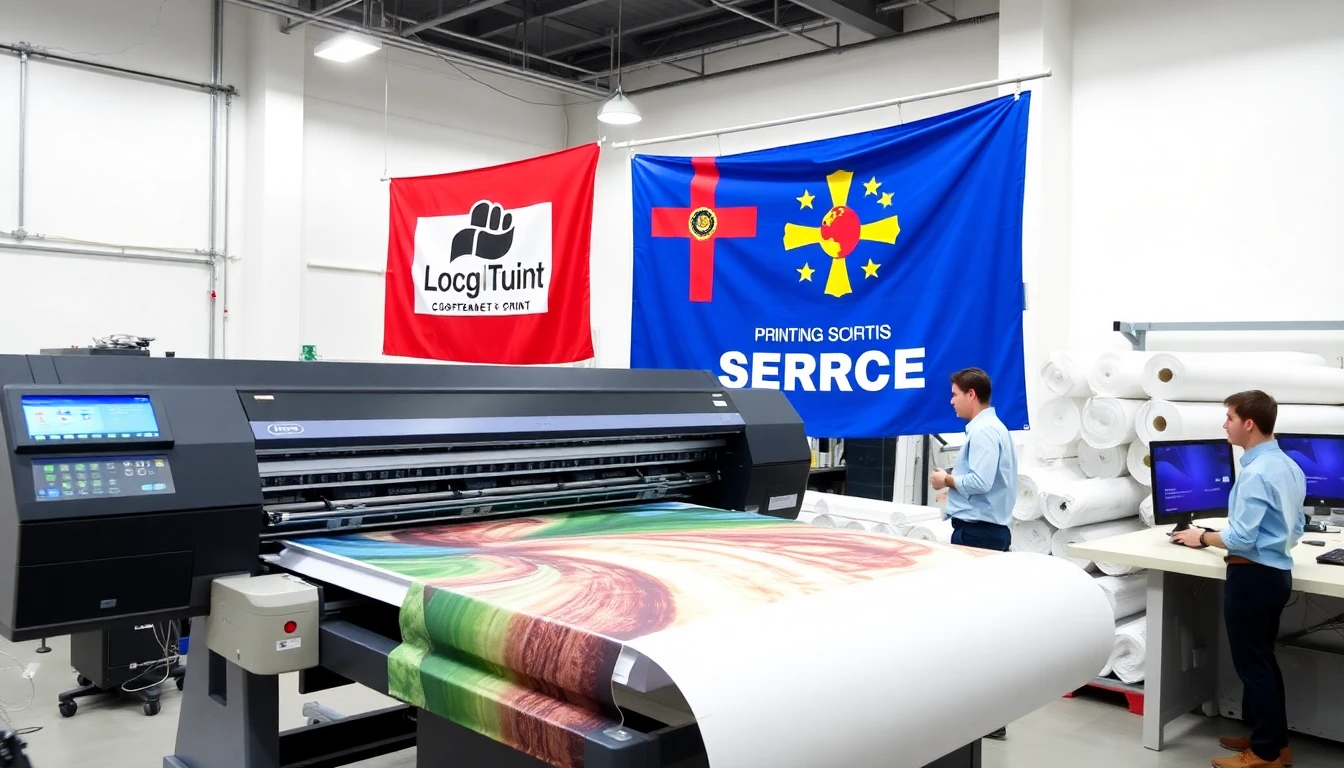
Specialized flag printers run a different game than general sign shops. Their profit model flips normal print economics upside down. A business card run delivers 20–35% margin on maybe $50 total. Custom flags? 70–80% margin on $200–$400 per order. A handful of flag jobs generates the same profit as dozens of low-margin print runs. The math changes everything.
Revenue builds fast. New flag shops pull 10–15 orders per month in the first quarter. That means $1,000+ profit each month while learning the ropes. By month four through eight, established shops hit 25–40 orders and clear $3,000–$5,000. Year two brings 50–75 orders each month and $6,000–$9,000 profit. You need good online ordering systems and steady local marketing to hit these numbers.
The broader market backs this focus. US custom printing hit $6.1 billion in 2023. Forecasts show $12.3 billion by 2032 at 10.5% annual growth. Printed signage adds another $8.86 billion in 2025, climbing to $10.26 billion by 2030. Flag-related markets grow too. The flagpole segment alone should reach $2.5 billion by 2033 at 6.2% annual growth. Flags need poles. Poles need flags. The ecosystem feeds itself.
How specialized shops gain an edge
They automate the front end hard. Web-to-print tools with real-time 3D previews deliver wins you can measure. Data shows +52% increase in completed online orders, –68% drop in reprint problems, +41% jump in average order size, and +94% customer satisfaction improvement. Shops get these numbers by letting customers design, proof, and approve flags on their own. No human steps in until production starts.
Automation cuts labor costs. It speeds fulfillment too. Customers upload artwork, adjust placement, see it on a waving flag, and click buy. The system enforces bleed zones, safe areas, and CMYK color profiles. Prepress problems vanish. Order status emails fire on their own: received, prepress complete, in production, shipped. No phone tag. No proof emails bouncing back and forth.
They standardize products hard. Most offer 2×3, 3×5, 4×6 ft as core sizes. Materials narrow to polyester, nylon, and mesh. Each has a set GSM weight and outdoor durability rating. Options split into single-sided, double-sided, feather flags, teardrop flags, and hand-held ceremony flags. That's it. Limited SKUs keep inventory simple. Pricing stays transparent.
Pricing tiers follow size, fabric, and volume. The goal: maintain ≥70% gross margin and push average order value into the $200–$400 zone. Shops that drift below 70% margin start looking like regular print houses. The profit edge disappears.
They enforce quality gates from the start. Minimum artwork resolution sits at 150–300 dpi at final size. Accepted formats: PDF, AI, EPS, high-res PNG or JPEG. CMYK color space required. Files that don't meet spec get kicked back before production. This stops color shifts and pixelation complaints. Fewer problems mean fewer refunds. Turnaround speeds up.
The traditional flag manufacturing sector tells a different story. The 134 US flag manufacturers saw $102 million market size in 2025. Revenue dropped –0.6% each year from 2020–2025. Imports grabbed more than half of domestic demand. Recent tariffs help. But the industry leans toward commodity flags and large government contracts. Small custom runs don't interest them. This gap creates space for nimble digital shops. They can own the local, fast-turnaround custom segment.
Business count grew +4.2% each year even while revenue fell. More players fighting over a flat pie. Specialized printers avoid this. They target high-margin custom work that big manufacturers ignore.
Example: national chain with local pickup (FedEx Office model)
FedEx Office runs more than 2,000 U.S. locations as custom printing hubs and shipping points. Each center links to the larger FedEx network—over 50,000 U.S. dropoff points that move 16 million packages each day. Order a custom flag online or walk into a Plano store. Either way, you tap into an $87.9 billion infrastructure built for speed and scale.
The model works by stacking retail services on top of shipping power. Need business flag printing for a corporate event? Upload your design through fedex.com (80+ million unique visitors each month). Approve the proof. Pick it up at your nearest FedEx Office within days. Most centers handle digital printing, large signs, banners, and promotional flags. They add grommets, pole sleeves, or hemming to finish jobs. Same equipment. Same quality control. Just different order sizes.
Local pickup cuts out shipping delays. Order Friday. Pick up Tuesday. No transit tracking. No porch pirates. Walk in and grab it. This helps with event flag printing and last-minute needs. FedEx processes over 500 million package-status requests each day. Pickup orders skip that whole line. You control the timing.
FedEx Office locations double as ship centers and OnSite partners. These include pharmacies, retailers, and business hubs that act as close-by pickup spots. This mixed network brings service to neighborhoods regular flag makers can't reach. The result? You get big-chain reliability with local-store closeness. A $68.5 billion package system backing your custom outdoor flags order seems like too much. But it works.
Pricing runs higher than wholesale but lower than boutique local shops. Expect $90–$180 for a 3×5 ft custom polyester flag. Price depends on design detail and turnaround time. Rush service adds cost. Volume discounts start around 10–25 units. The real value isn't lowest price. It's steady delivery, consistent quality, and backup support if things go wrong. That 12,000+ person FedEx Office team follows corporate standards, not small-shop hours.
Customization options to look for

Your flag supplier's customization menu shows whether they know the business or just own a printer. Compare feature lists side by side. The difference becomes clear fast.
Size flexibility separates real producers from template shops. Good vendors offer standard dimensions—2×3, 3×5, 4×6, 5×8, 6×10 ft—plus custom measurements. Need 42×68 inches for a storefront? They quote it. Want 8×12 ft for a stadium display? No problem. Desk flags at 18×24 inches? Done. Template platforms lock you into preset grids. Real custom shops cut fabric to your exact spec.
Material choices matter more than most buyers realize. Polyester works for most outdoor jobs. Nylon handles wind better but costs more. Mesh fabric solves high-wind problems. Think coastal locations or rooftop installations. Indoor ceremonial flags use satin or cotton for richer colors and drape. Advanced shops stock 200D, 250D, and 300D polyester in different weights. They explain which weight fits your situation. Budget vendors offer "polyester" with no denier rating. That's a red flag.
Printing methods change what designs you can produce. Dye-sublimation handles photo detail and unlimited colors. Screen printing works for bold graphics with 3–4 solid colors. Digital direct-to-fabric gives you speed and short runs. Appliqué and embroidery add texture for ceremonial work. Shops with multiple printing methods can match technique to design. Single-method shops force your art into their production limits.
Finishing options complete the job. Grommets suit pole mounting. Pole sleeves work for vertical displays. Reinforced edges stop fraying. Double-stitched hems hold up in weather. Canvas headers add strength to large flags. Rope-and-toggle systems help with frequent raising and lowering. These choices determine how long your flag lasts. They also affect how easy it installs.
Real-time design tools save back-and-forth emails. The best vendors run 3D preview configurators that show your artwork waving in simulated wind. You upload a logo. You adjust placement. You see bleed zones highlighted. You approve the proof yourself. No waiting for a designer to wake up in another timezone. 70% of shoppers prefer customized products, but the customization process can't feel like homework. Instant visual feedback keeps orders moving.
File handling shows technical depth. Professional shops accept AI, EPS, PDF, high-res PNG, and layered PSD files. They enforce minimum 150–300 dpi at final size. They flag CMYK vs RGB issues before printing. Amateur operations ask for JPEGs and wing it. You get washed-out colors and pixelated logos. A vendor that rejects bad files upfront saves you from expensive do-overs.
Quantity flexibility reveals their pricing model. Can you order one flag or do they force minimums? Single-unit pricing shows they handle small jobs without penalty. Volume discounts starting at 10–25 units signal bulk capacity. Tiered pricing—different rates for 1, 10, 50, 100+ flags—means they've thought through economies of scale. Flat per-unit pricing regardless of quantity? They're either absorbing setup costs or charging you for 100 even when you need 5.
Turnaround options separate serious vendors from hobbyists. Standard production runs 5–10 business days. Rush service cuts that to 2–3 days for a fee. Same-day emergency printing exists but costs double. Vendors offering clear timelines for each service tier know their production schedule. Vague "we'll get it done as fast as we can" promises mean chaos behind the scenes. 76% of consumers say personalization influences their purchase—but delivery timing must match their need.
Color-matching capabilities protect brand consistency. PMS color matching ensures your corporate red prints the same on flags, banners, and vehicle wraps. Vendors with spectrophotometers can hit exact brand colors. Budget shops eyeball it and hope. Ask whether they guarantee PMS matches or just approximate them. The answer tells you everything about quality control.
Customization constraints show professionalism. The best vendors publish clear limits: maximum design area, minimum text size, color count restrictions, bleed requirements, safe zones for grommets. 97% of companies deliver some form of personalized experience, but constraints keep projects realistic. A vendor who promises "anything you can imagine" either hasn't thought it through or plans to disappoint you later.